
Engineered hardwood flooring cost: 6 factors that change it
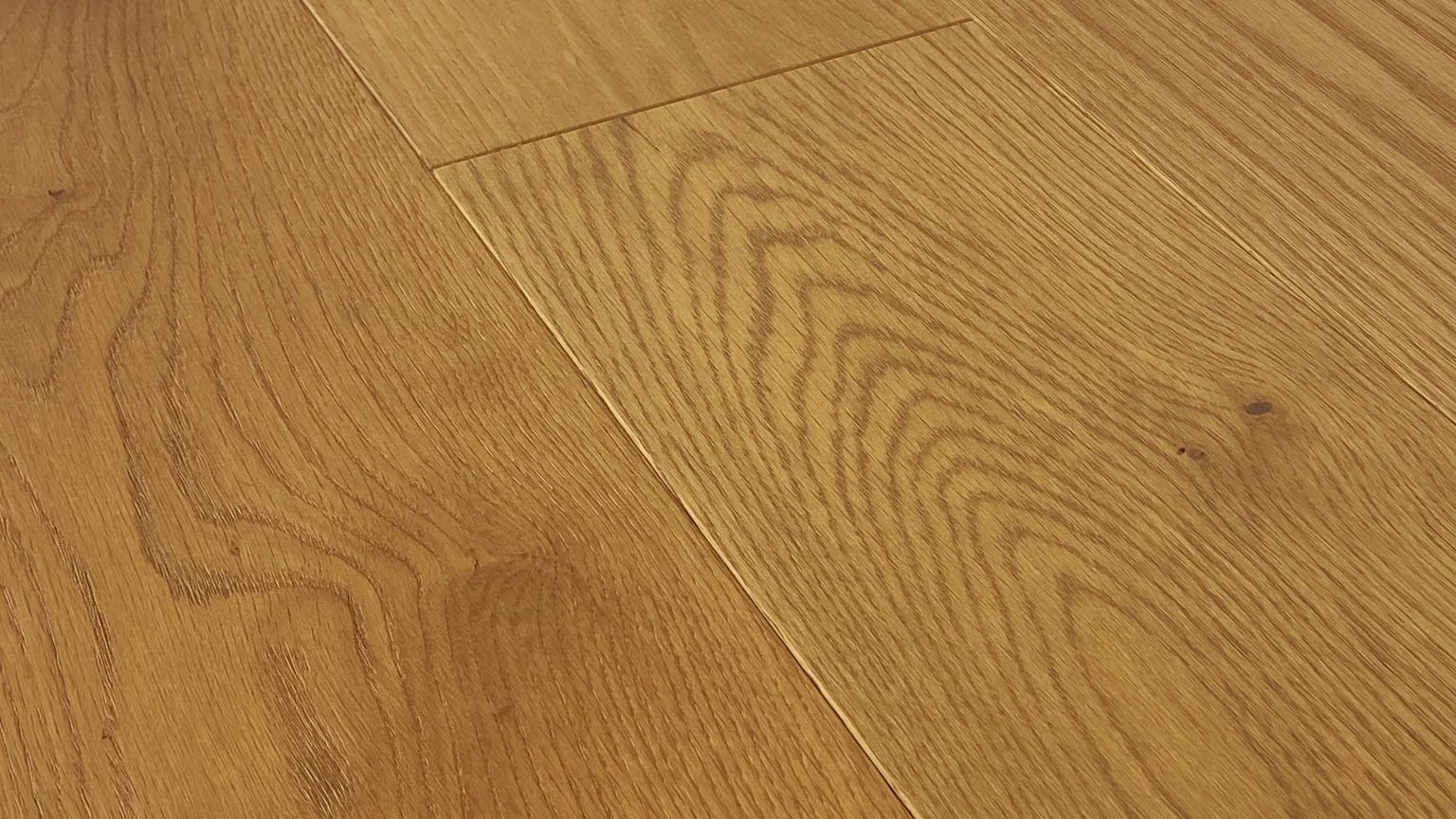
Two engineered hardwood floors can look almost the same in a photograph and still sit far apart on a quote. The cost of engineered hardwood flooring comes down to six factors:
- the wear layer
- the core
- how wide and long the planks are
- the laying pattern
- the species, grade and finish of the wood
- the work your home needs before installation
This guide explains each one using real floors we carry. It does not quote prices. Flooring is priced on request, prices move over time, and the figure worth planning around is the one for your own rooms.
The wear layer: how much face wood you are buying
The wear layer is the solid hardwood on top of each plank: the oak, hickory or maple you see, walk on and could one day sand. The layers beneath it are often wood too, but their job is to hold that face layer flat. Some makers specify a sawn wear layer. That means it is cut from the log like a solid board rather than peeled or sliced, so it looks and sands like solid wood.
Across the floors in this guide, the wear layer steps up like this:
- Garrison Competition Buster Hickory Antique has a 1.5 mm wear layer.
- Garrison Carolina Classic Beaufort has a 2.4 mm wear layer.
- Monarch Plank Lago Belviso has a 3 mm sawn wear layer.
- Duchateau CHATEAU Bravone has a 4 mm wear layer.
- Monarch Plank Domaine II Lorraine has a 6 mm sawn wear layer.
A thicker wear layer costs more to make, because it uses more of the face species. Brand, core and finish move the cost too, so read that list as a scale of face wood, not of price.
What a thicker layer buys you is mostly in the future. Most factory-finished floors can have their finish refreshed, but a very thin wear layer leaves little or no wood to sand back. A thick sawn layer leaves room to sand and refinish later. How many times a particular floor can be refinished depends on the manufacturer, and sanding removes any wire-brushed or hand-scraped texture.
Wear layer thickness does not decide how well a floor resists everyday scratches. That comes from the finish, the surface texture and the hardness of the wood.
What sits underneath: the core
Below the wear layer is the core. Its job is to limit the seasonal movement that causes cupping and gaps as the air in your home gets wetter and drier. It works best alongside reasonable indoor humidity and an installation that follows the manufacturer's guidance.
The floors in this guide show a few different approaches:
- Monarch Plank Lago Belviso puts its 3 mm sawn wear layer on hardwood plywood backing.
- Monarch Plank Regent Carolina puts a 4 mm sawn wear layer on hardwood lumber (Hevea) backing.
- Monarch Plank Domaine II Lorraine puts its 6 mm sawn wear layer on hardwood lumber backing.
- Riva Metro Crystal is built on a birch plywood core.
Plywood cores are thin sheets glued with the grain crossing, so no single layer can easily pull the plank out of shape. Lumber cores use strips of solid wood instead. Different core builds cost different amounts to make, and none of them shows once the floor is down, so ask what is underneath before you choose.
Plank width and length
Wide planks tend to cost more. A wide board needs a wider piece of face wood from a larger log, so fewer come from each tree. In the cleaner grades there is also less room to cut around knots.
Across the floors in this guide, widths step up like this:
- Garrison Carolina Classic Beaufort is 5 inches wide.
- Monarch Plank Lago Belviso is 7 inches wide.
- Duchateau CHATEAU Bravone is 7-1/2 inches wide.
- Duchateau GRANDE SAVOY Marquis is 9-1/2 inches wide.
- Riva LA/Riva Azure is 14 inches wide.
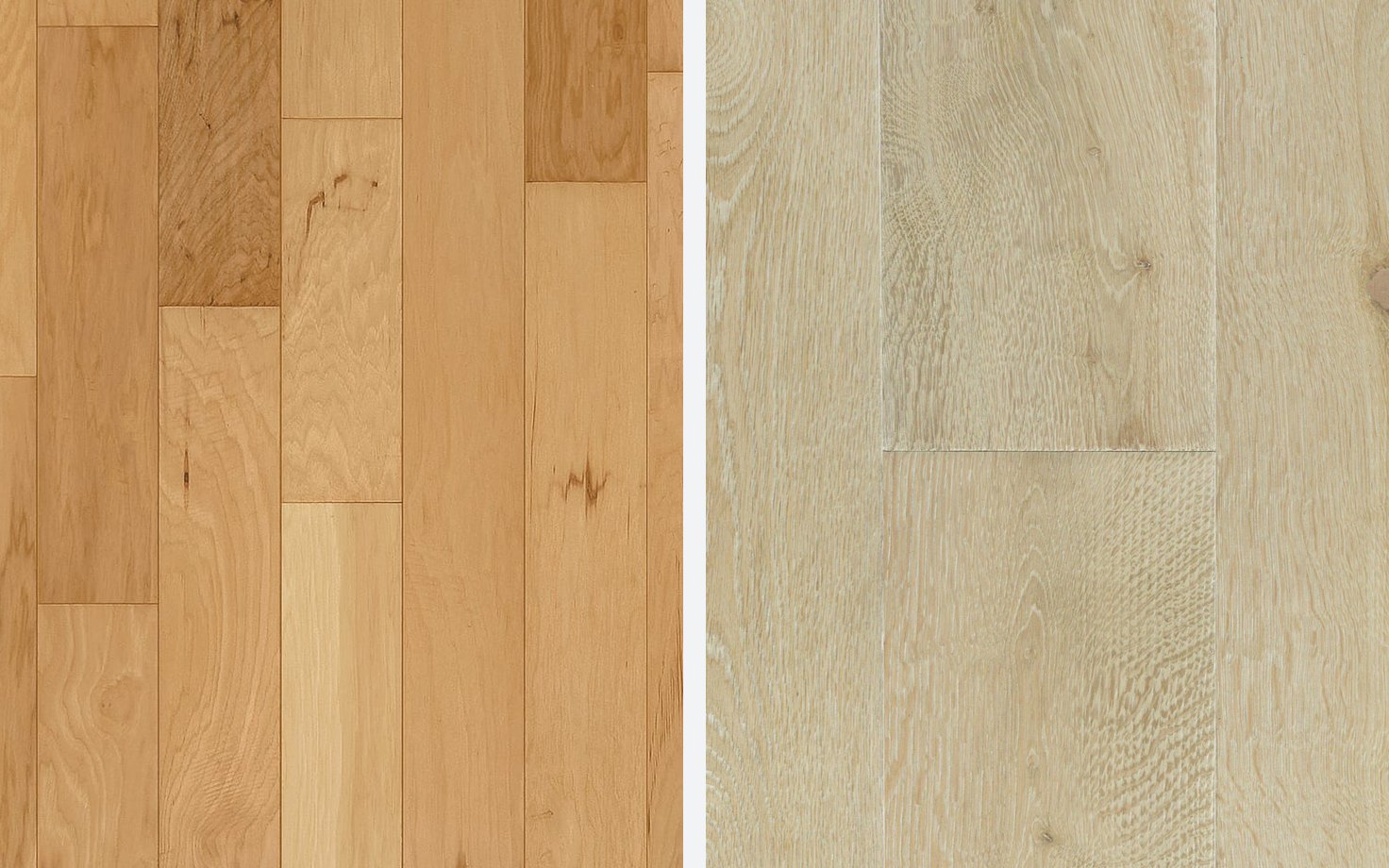
Length matters too. Floors sold in longer lengths use longer stock and tend to cost more than short random lengths, and they show fewer end joints across a room.
Width and length also change the installation. The wider and longer the plank, the flatter the subfloor needs to be, because a wide board cannot flex to follow humps and dips. Wide boards also move more across their width as humidity changes, and on an uneven floor they can add leveling work.
Straight planks versus herringbone
Pattern changes the cost of the same wood, and two floors in our range show it clearly. Monarch Plank Lago Belviso, the floor in the photograph at the top of this page, shares its European oak, wear layer, backing and finish with Monarch Plank Lago Herringbone Belviso. Lago Belviso is laid as straight planks 7 inches wide, and the herringbone is cut into pieces 4-3/8 inches wide.
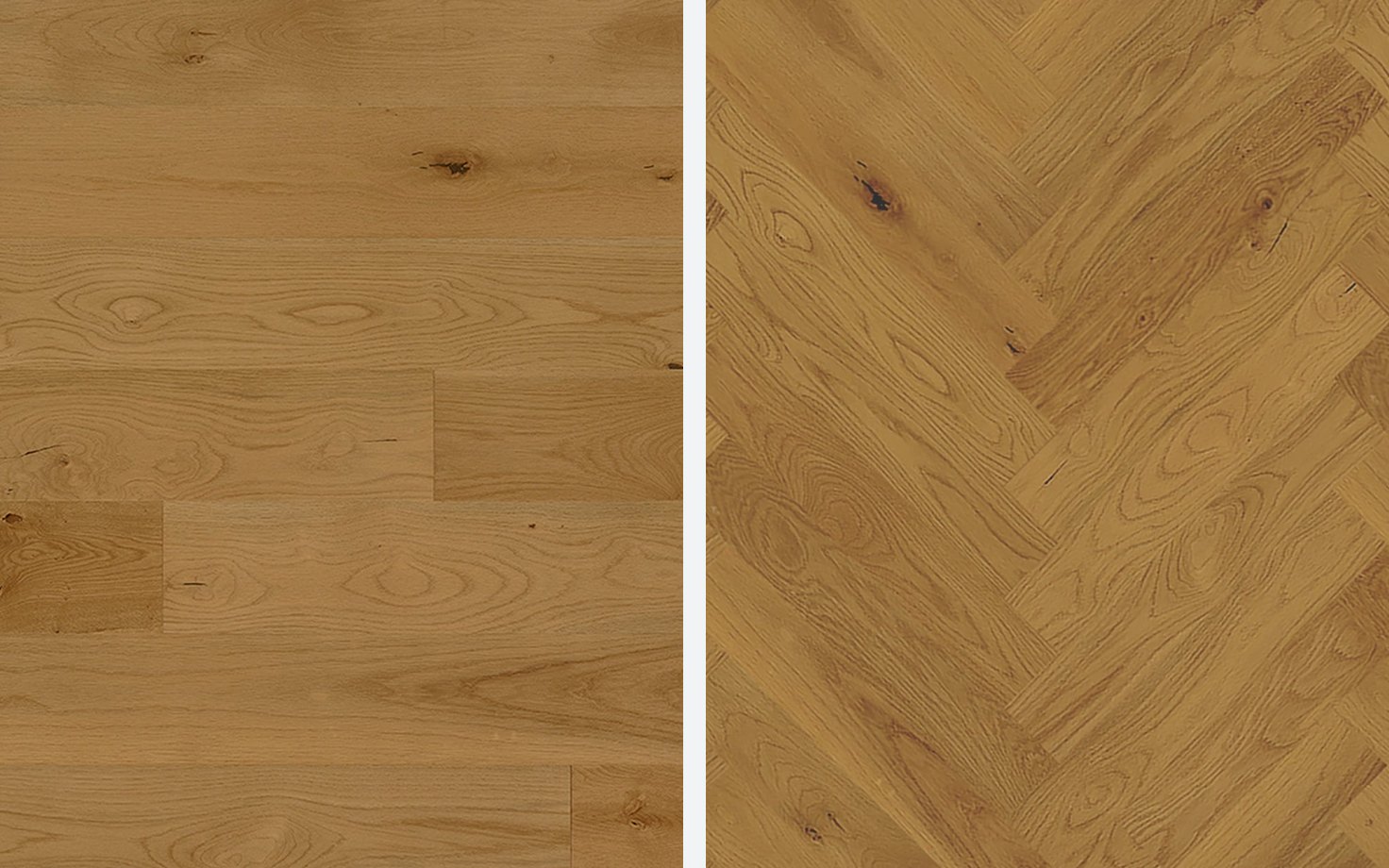
Herringbone is a bigger job. The layout is set out from a center line, and each piece is set at an angle and aligned as the floor goes down. The angled cuts along the walls also leave more offcuts, which is why the quantity calculator on the herringbone product page offers a larger waste allowance.
Species, grade and finish
Most of the floors in this guide are European oak, which takes stain well and hides everyday wear. Garrison's Carolina Classic line brings a different look, with Beaufort in hickory and Durham in maple. Hickory is known for strong contrast between light and dark wood, and maple for a finer, more even surface.
Grade describes how much natural character the boards may show. Character grades keep knots, mineral streaks and color variation, while cleaner grades are selected for a more uniform look. Clean, knot-free boards make up a smaller share of each log, which is one reason they can cost more.
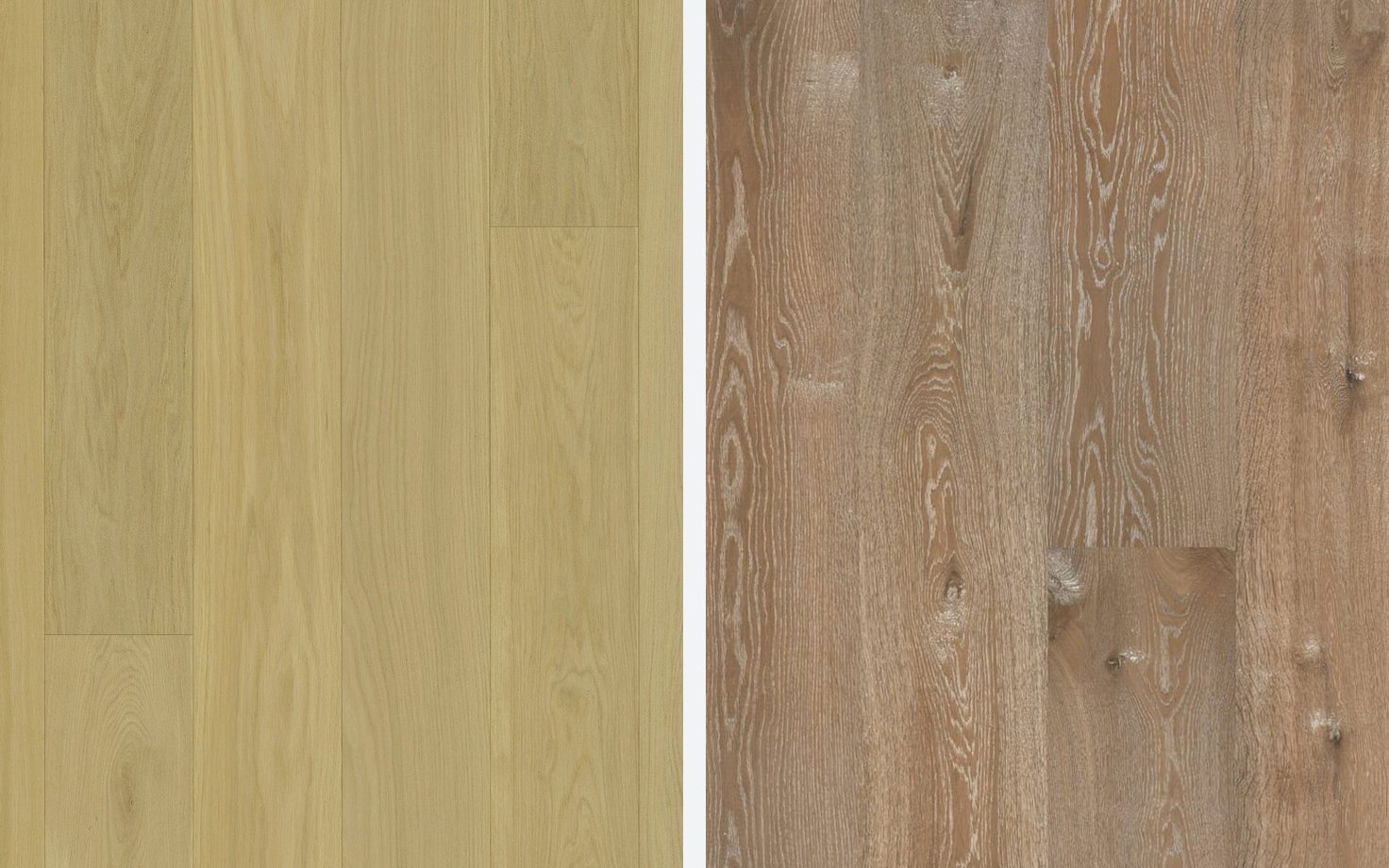
The finish is a choice about upkeep as much as looks. Four finishes appear across the floors in this guide:
- UV urethane with an ultra-matte look, on the Monarch Plank floors
- Urethane with aluminum oxide, on the Garrison floors
- UV oil over a wire-brushed surface, on the Duchateau floors
- UV lacquer with reactive stain, on Riva LA/Riva Azure
Urethane and lacquer finishes form a hard coat on top of the wood and are usually refreshed across a whole room at once. Aluminum oxide finishes need particular preparation before they can be recoated. Oiled finishes soak into the wood instead, so they can often be touched up in one spot, but they need periodic maintenance.
For everyday scratches, a matte or wire-brushed surface and a harder species such as hickory usually hide wear better than a smooth, glossy one.
What your home adds to the job
Material is only part of a quote. The rest depends on your home, and much of it cannot be seen until someone looks.
- The subfloor. Dips, humps and loose boards have to be dealt with first, and wide planks are less forgiving of them.
- Moisture. Concrete slabs and crawl spaces can hold moisture, so check them before any wood goes down. None of the engineered hardwood we carry is listed as waterproof.
- Condos and shared buildings. Some HOAs require a sound-rated underlayment or adhesive under hard floors, which can decide the installation method.
- What is already there. Taking up and disposing of carpet, tile or an old glued-down floor is its own piece of work.
- Trim, transitions and stairs. Floors leave a small gap at the walls that trim covers, so baseboards or shoe molding may come off and go back on. Transitions and stair treads add time too.
- Room shape. Long hallways, closets and angled walls mean more cutting and more waste than a simple rectangle.
- Installation method. Engineered hardwood can be floated over an underlayment, glued down or nailed down, depending on the product and subfloor, and each method has different labor and material needs.
What to check is on any quote
When you compare quotes, check that each one covers the same things:
- enough material for your rooms, plus a waste allowance
- underlayment or a moisture barrier, where the floor needs one
- taking up and disposing of the old floor
- subfloor leveling or repairs
- transitions, trim and stair treads
- whether moving furniture is included
A quote that leaves out several of these is not really cheaper. If you already have a written quote from elsewhere, see how our price match works.
See the material before you decide
Photographs and screens change how wood looks, so see real boards in the room they are going into, at the time of day you use it most. The product pages for the floors in this guide each have a sample button, and you can order up to 5 flooring samples per order.
A character grade varies from board to board, so one sample cannot show its full range. Wood also mellows in color where sunlight reaches it, so expect a new floor to shift a little over its first months.
To compare more options, browse the flooring we carry.
Engineered hardwood cost questions
Is engineered hardwood real wood?
Yes. The wear layer on top is solid hardwood, and the core underneath is often wood as well, such as hardwood plywood or lumber. The thickness of the wear layer tells you how much face wood each plank carries.
Does a thicker wear layer make the floor more durable day to day?
Not for scratches and dents, which depend on the finish, texture and hardness of the wood. A thicker sawn layer matters if you may want to sand and refinish one day.
Can engineered hardwood go over concrete?
Often, yes, and it is one of the practical differences between engineered and solid hardwood. Concrete can hold moisture, so the slab should be tested first, and the installation method has to suit it.
Can I use engineered hardwood in a kitchen or bathroom?
Take care anywhere water is likely to reach the floor. For a bathroom or laundry room, compare waterproof flooring before you decide. For a kitchen, check the manufacturer's guidance for that specific floor.
Why do two floors that look the same cost different amounts?
Much of what separates them does not show in a photograph: the wear layer, the core and how clean the grade is. Width and pattern change the job as well.
Do you install as well as supply?
Yes, with delivery and professional installation available across our service area. Installation is carried out by licensed, insured, background-checked local installation partners.
Where to start
The next useful step is to price your own rooms. Begin with an instant quote. We cover 81 cities across the Bay Area and out into the Central Valley. There, installation quotes start with a free in-home laser measurement, so the figure is for your rooms rather than an average.