
Hickory or white oak for dogs: which holds up
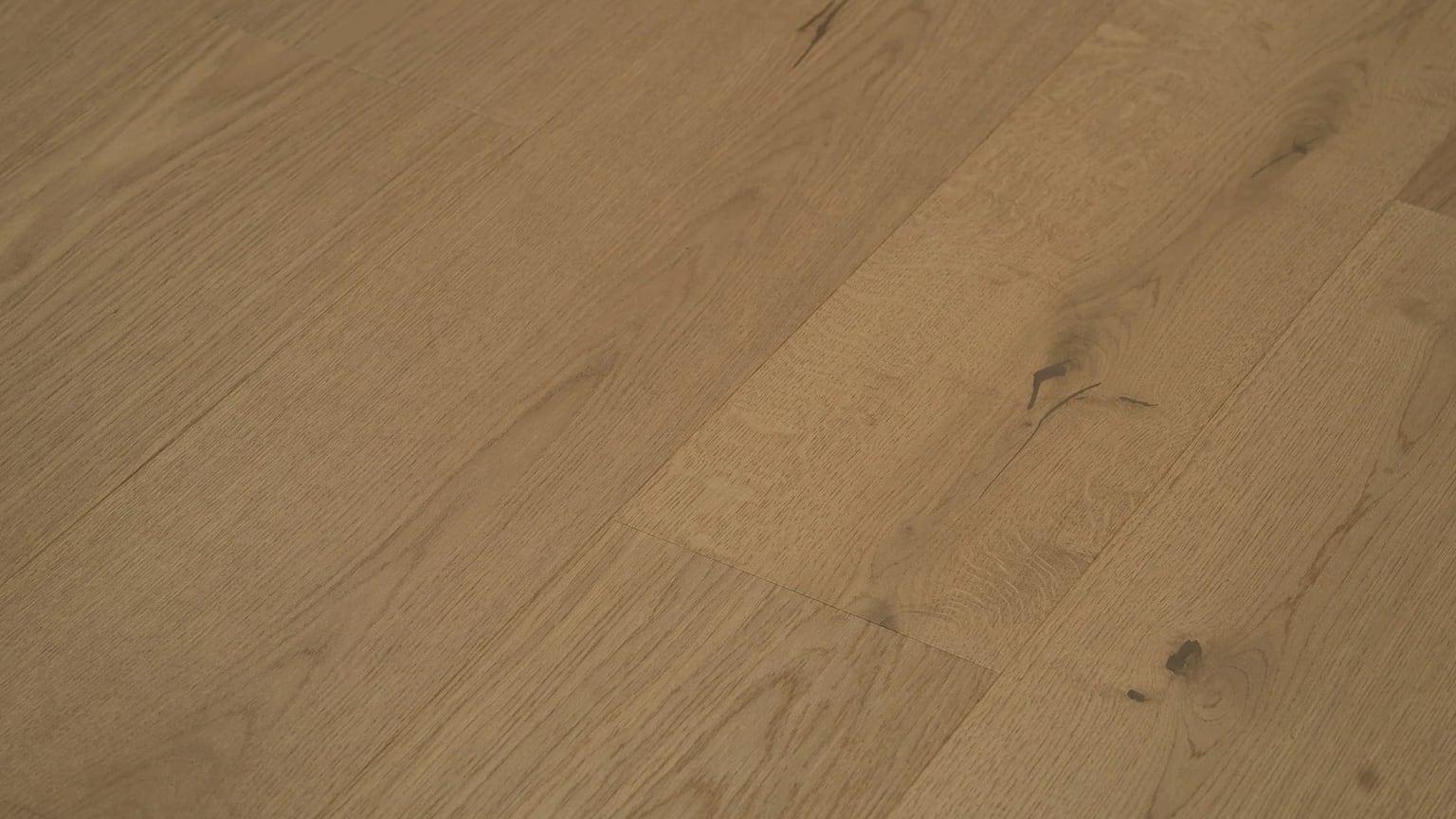
Hickory or white oak for dogs comes down to two different problems. Hickory is the harder wood, so it resists dents, and its busy grain makes scratches harder to spot. European white oak is calmer in colour and, on the boards we list, carries a thicker wear layer that a professional can discuss refinishing.
If your dog is large, young or lively and you want the floor to look the same later, hickory with a distressed surface is the safer choice. If you want a quiet look and a floor you can renew after long wear, choose white oak with a matte finish. Either way, the water bowl needs a mat, because neither floor is meant to sit under standing water.
What dogs actually do to a floor
Dogs damage a floor in four ways, and each one is answered by a different line on the spec sheet. Claws scratch the finish. Heavy paws and dropped bones dent the wood. Water bowls and accidents put moisture on the surface. Grit carried in on paws acts like sandpaper under every step.
Scratches and dents are different problems. A scratch cuts the finish and sometimes the top of the wood. A dent compresses the wood, and hardness is the measure for that. Choosing a floor for dogs means deciding which of the two worries you more.
Hardness is reported on the Janka scale, which measures how much force it takes to press a steel ball into the wood. It tells you about dents. It tells you very little about scratches, which depend mostly on the finish and the texture.
Hickory: hardness, grain and the thin-layer trade-off
Garrison Competition Buster Hickory Antique lists a Janka rating of 1820. That is the figure for hickory on this board, and it is why hickory has a reputation for taking knocks. The surface is hand-scraped with beveled edges, and the finish is urethane with aluminum oxide.
Texture is the second thing hickory has going for it. A hand-scraped, distressed surface already looks marked, so a new scratch blends into the pattern instead of standing out on a smooth sheet. Strong grain contrast between boards helps for the same reason.
The trade-off is the wear layer. This board lists a 1.5 mm wear layer on a 3/8" board, which leaves little wood for a sanding machine. In a house with dogs, hickory's toughness has to do most of the work, because a deep gouge is hard to sand out later.
Aluminum oxide in the urethane is a hard additive meant to resist abrasion. It helps against grit and light scratching, but it does not make a finish claw-proof, and no floor is.
European white oak: calm colour and a thicker wear layer
Bergamo Oak Lasa Bene is European White Oak in Light Character grade, 9.5" wide and 5/8" thick, with a 4 mm wear layer. Bergamo Oak Pisa Premio shares that construction in Prime grade.
The thicker wear layer is the main advantage for a dog household. It leaves real wood above the plywood base, so a professional can assess whether a marked floor can be refinished. Our guide to what the European white oak label means explains what you are buying.
Oak is softer than hickory, so it dents more easily under heavy paws. For most dogs that difference is small, and a floor that can be renewed is a sound answer to ordinary wear. Lasa Bene shows open cathedral grain and visible knots, which break up the surface in a similar way to a hand-scraped texture.
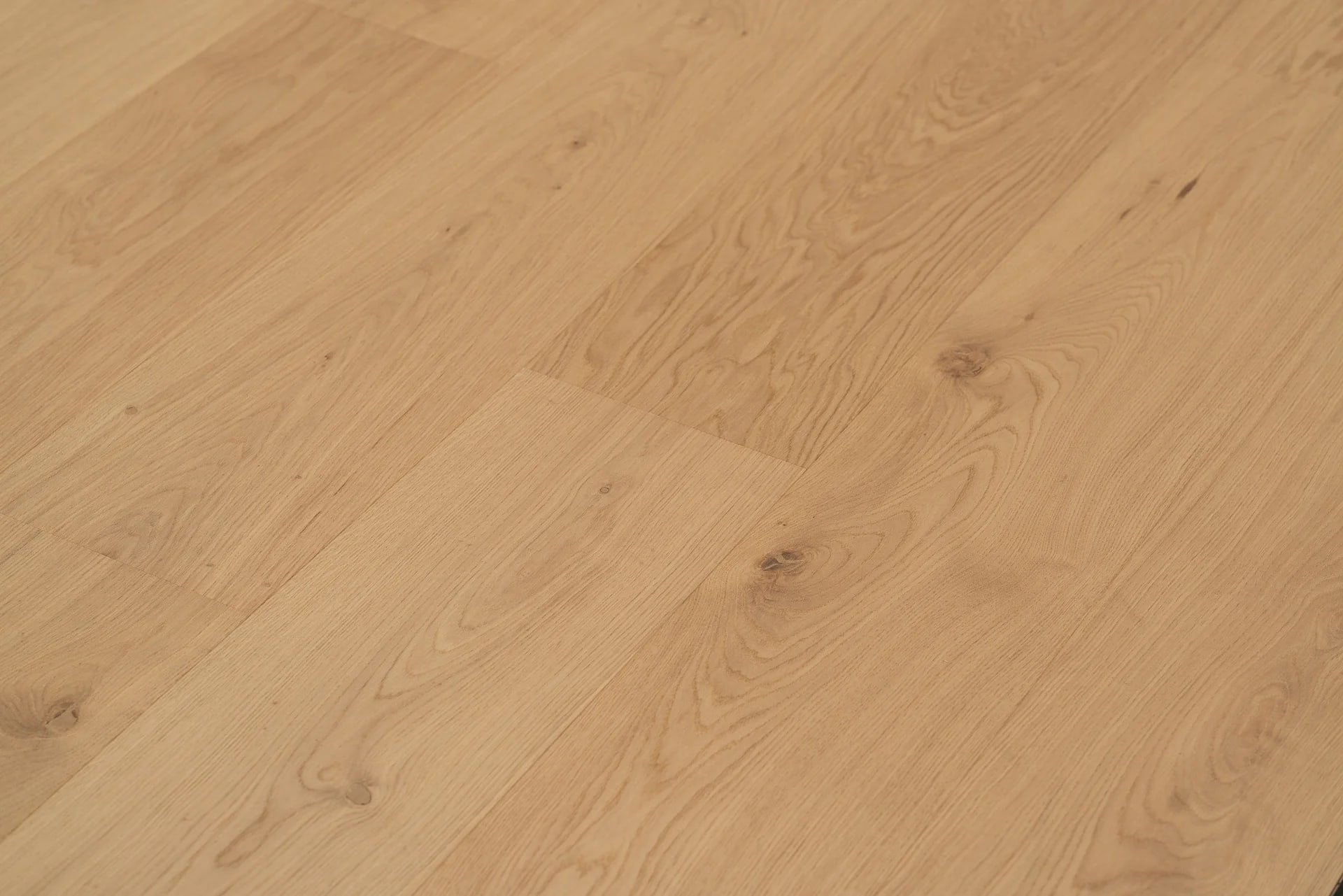
Finish and texture matter more than the species
The finish decides how scratches look. Both Bergamo boards list a matte-brushed UV-cured water-based polyurethane. Matte finishes scatter light, so fine scratches show less than they do on a glossy surface. Our guide to the matte brushed polyurethane finish explains what that wording covers.
Colour matters too. On a dark floor a scratch shows as a pale line, and dust and hair show more. A pale floor hides fine scratch lines better, although mud and dirt show sooner. Neither is perfect, and the honest answer is to pick the trade-off you can live with.
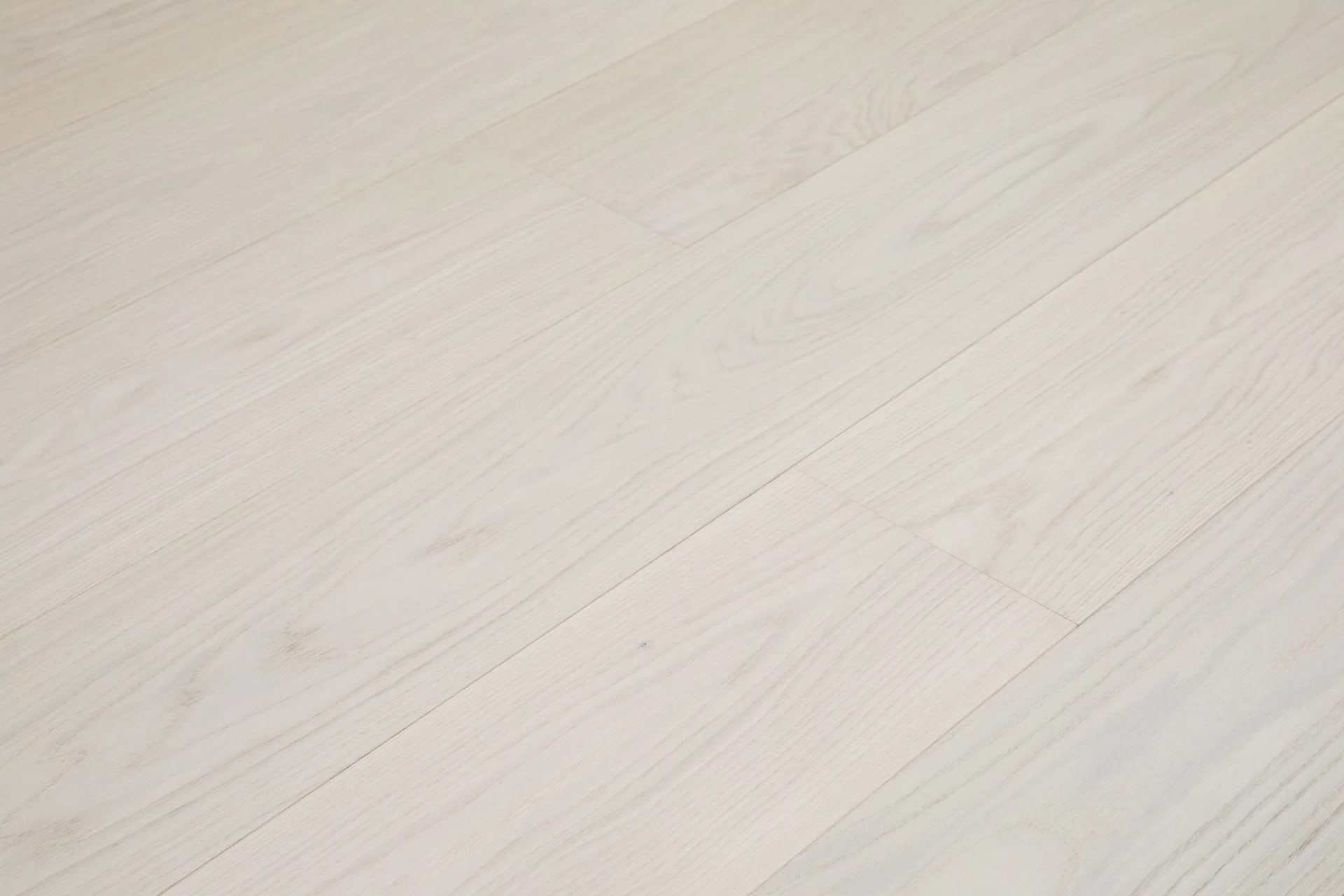
Texture is the quiet advantage. A smooth, uniform surface shows every mark, and a brushed or scraped surface forgives them. If you want the least visible wear, choose texture first and species second.
Water bowls, accidents and the floor under them
Standing water is the real threat to any wood floor, and it does more harm than claws. Both boards here are engineered wood, which limits seasonal movement but does not make the floor waterproof. Water that sits at an edge or a joint can still cause damage.
Put the bowl on a mat or a tray with a lip, and wipe splashes when you see them. Accidents should be cleaned promptly, because liquid left on a floor works its way into seams. Our guide to which floors handle water in each room goes room by room.
If you cannot accept any visible marking at all, wood is the wrong material, and a harder-surfaced floor may suit you better. That is a fair conclusion, and we would rather say it before you order than after.
What we would ask before recommending one
Start with the dog. A large, active dog with long claws needs a different answer from a small, quiet one. Ask how much of the day the dog spends indoors, and whether it runs through the entry on wet days.
Then ask about the house. Where does the water bowl live, and is there a mat at the door? Is the floor going into one room or the whole ground floor? A single hallway in hickory is a different decision from a whole open-plan space.
Finally, ask how you feel about wear. Some owners like a floor that develops marks, and some want it to look new. The first group suits hickory with texture, and the second group suits a floor that can be refinished. A trimmed claw does less harm than any finish can prevent, so keep nails short whichever you choose.
Questions about hickory or white oak for dogs
Does hickory scratch less than white oak?
Not exactly. Hickory dents less, because it is harder. How visible a scratch is depends mostly on the finish, the texture and the colour of the floor, so a matte, textured oak can hide scratches as well as a smooth hickory.
Can I refinish either floor?
It depends on the wear layer. The Bergamo boards list a 4 mm wear layer and the Garrison hickory board lists 1.5 mm, so the oak leaves more wood to work with. Ask a professional to assess the exact board before you rely on refinishing.
Do pale floors show dog damage less?
Pale floors hide fine scratch lines and dog hair better than dark floors. They show mud and dirt sooner. A matte finish helps on any colour.
Where should the water bowl go?
Put it on a mat or a lipped tray, away from the edges of the room where the floor meets the wall. Wipe splashes quickly, and move the bowl if you see water creeping toward a seam.
How do I see the floor in my own room before I choose?
Order samples of each and leave them on the floor through ordinary daily use. Your own light, your own dog and your own routine show more than a showroom can.
Seeing it in your own room
To compare real boards against your own floor and light, send a request for a quote and ask for the free in-home laser measurement. Our coverage is simple: delivery and professional installation available across our service area, through local installation partners.