
Flooring for a north-facing room with no direct sun
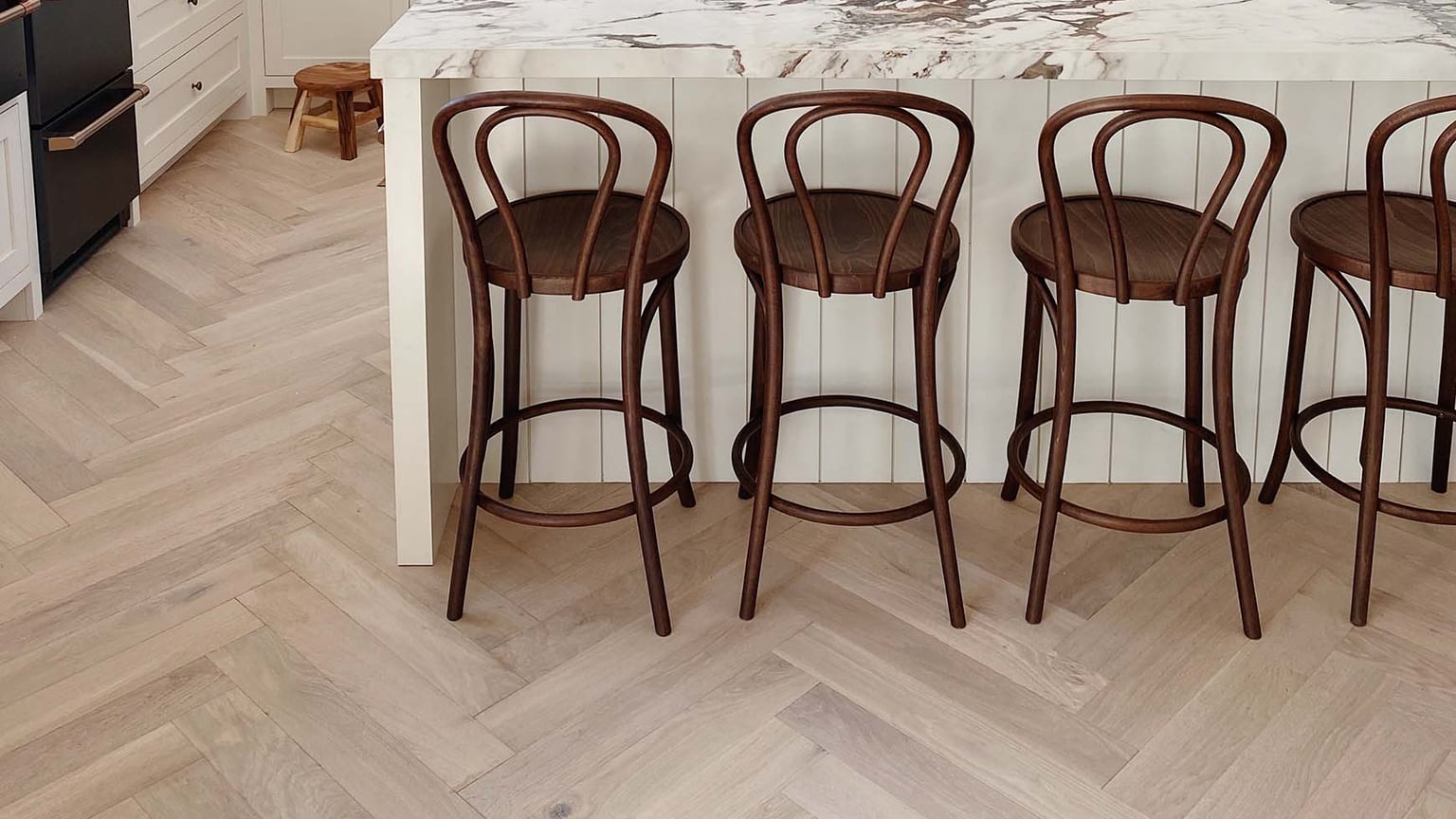
Flooring for a north-facing room should be chosen in that room's light, not in a showroom. North light is soft, steady and cool, so many floors read darker, greyer and flatter there than they did on a bright display board.
In practice that means leaning toward warm or mid-tone oak, a low-sheen finish and enough natural variation to keep the surface from going flat. Cool greys and very dark stains are where north rooms tend to go wrong. Test samples on the floor, at several points in the day and under your own bulbs, before you decide.
What north light does to a floor
In the northern hemisphere, a north-facing window gets little or no direct sun. The light it lets in has bounced off the sky and nearby surfaces first, so it arrives diffuse, even and cool in colour.
That has three effects on a floor. Colours shift toward their cooler side, so a greige can read grey and a grey can read blue-grey. Contrast drops, because soft light casts few shadows across grain and texture.
The third effect is simply less light. Mid-tone and dark floors absorb much of what arrives, so a room that already feels dim can feel smaller once a dark floor goes down.
The upside is consistency. Light from the north changes little across the day, so a floor that looks right in that room at midday tends to look right for much of the day.
Why the showroom sample looked different
Showrooms and product pages are lit to show the material well. Bright, warm or directional light brings out grain, warms the tone and makes texture easy to see.
Carry the same board into a north-facing room and it can look like a different product. The difference is the light, not the floor. The two photographs below show the same product, Monarch Plank Tableau Matisse, taken in different light.
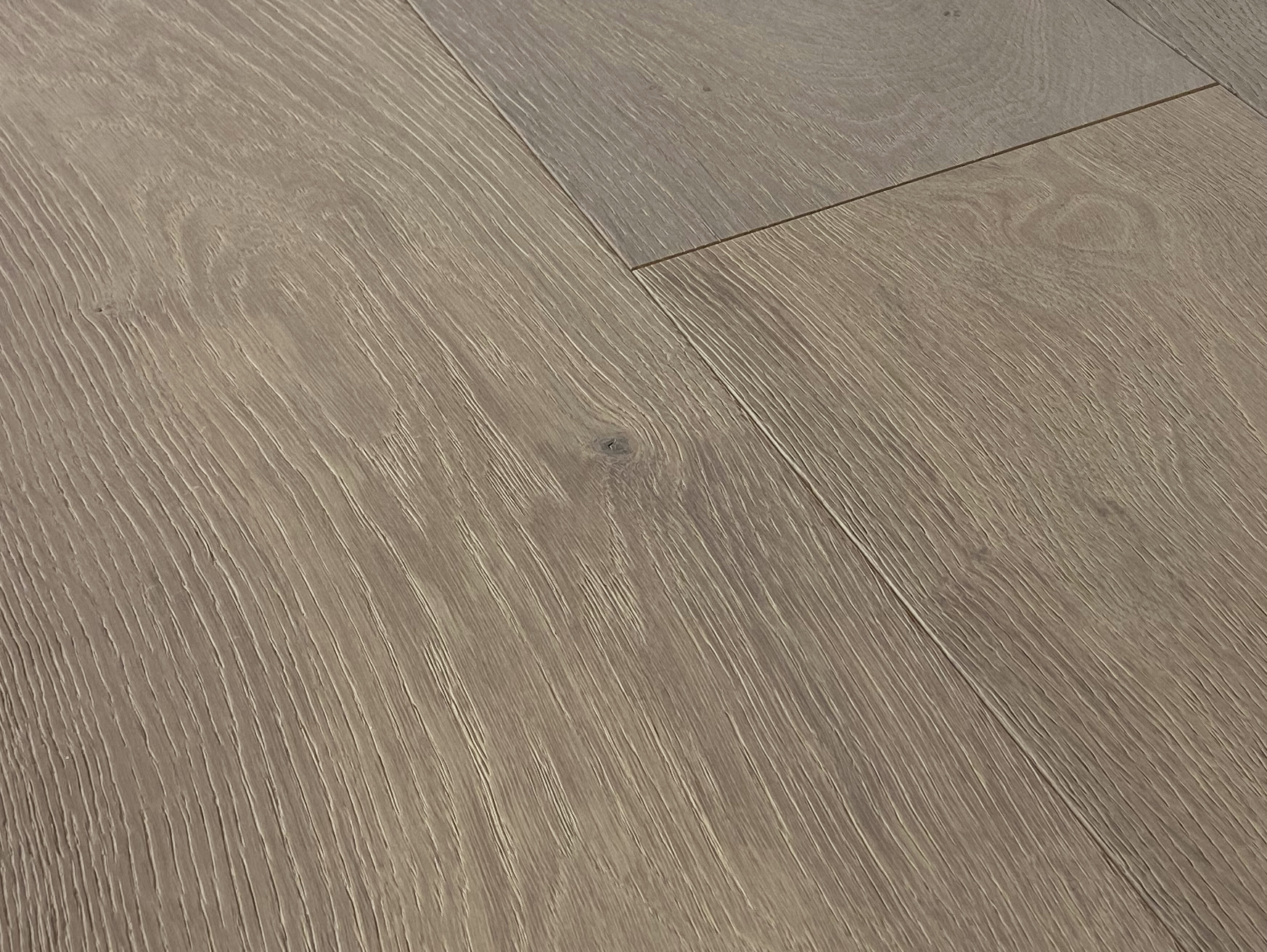
In the first, the tone leans warm and the brushed texture stands out. In the second, flatter light pulls the same boards toward a cool grey, which is closer to how a north room tends to show them.
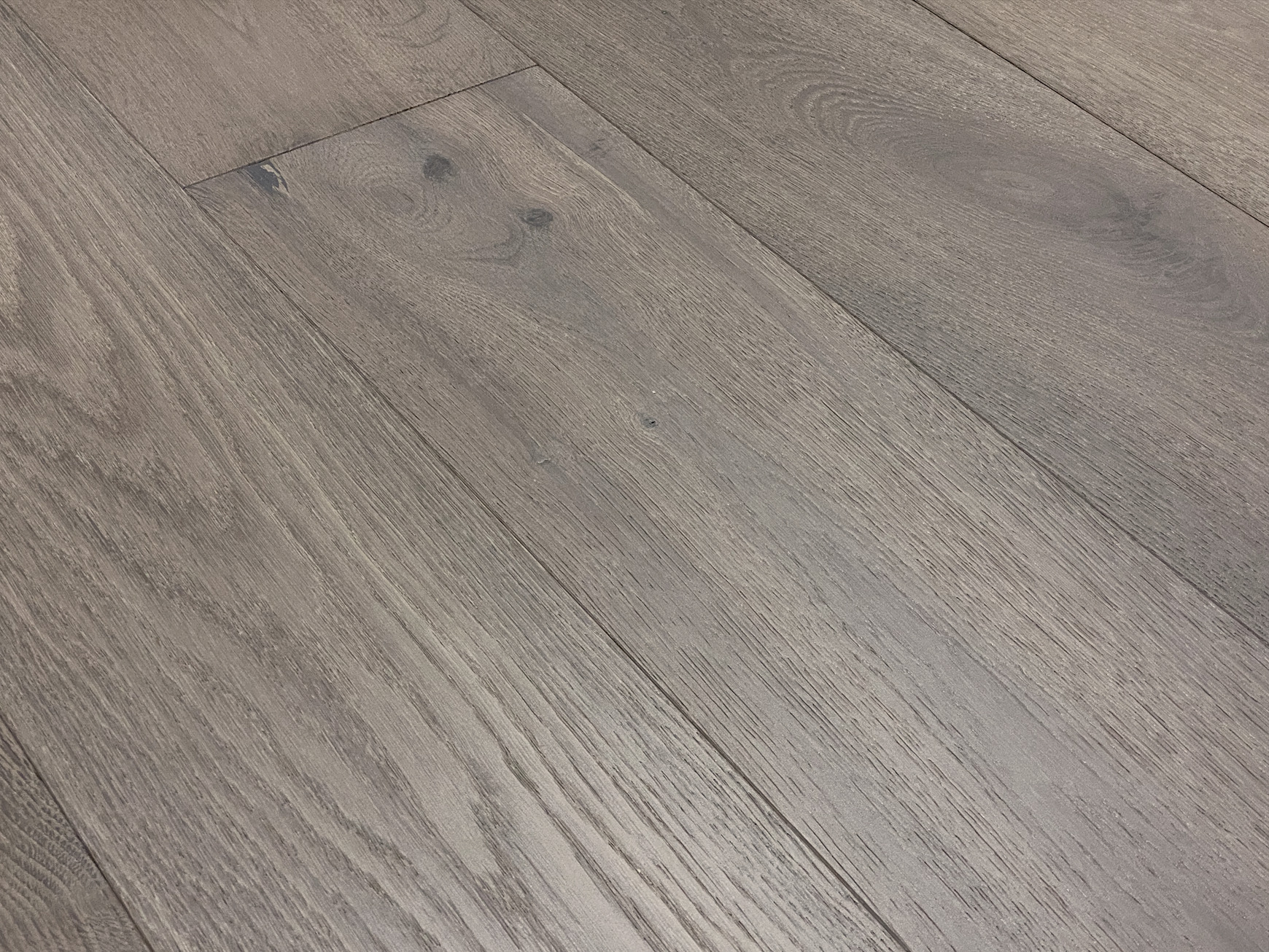
Neither photograph is wrong. Together they are a reminder that a picture on a screen, including ours, is a starting point for a flooring decision rather than the end of it.
Colour: lean warm, and test grey hard
Warmth is what a north room is short of, so the floor is a good place to add it back. Oak with a honey, tan or mid-brown undertone tends to hold its colour in cool light instead of drifting grey.
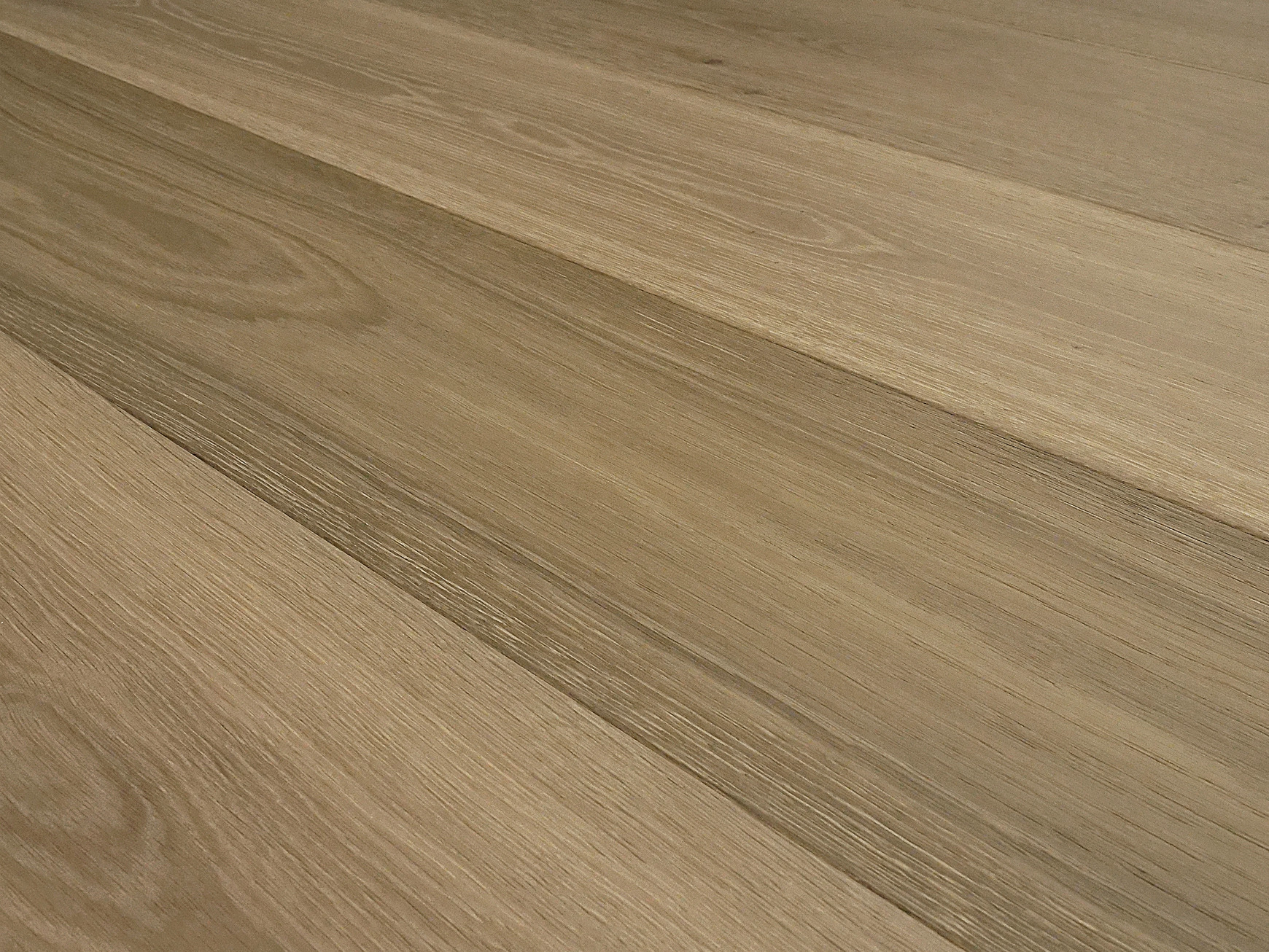
Monarch Plank Tableau Cassatt is a useful reference. In the close-up below it reads as a warm mid-brown, with visible tone changes from one plank to the next.
Species matters too. Monarch Plank Premio Vista is Red Oak, which tends to carry a warmer, slightly pink undertone than European Oak. In a cool room that warmth can help, but beside warm walls and warm cabinets it can tip too far.
Grey is the colour to test hardest. A grey or greige floor that looked soft and modern under showroom light can read cold, or faintly blue, beside a north window. If you love grey, pick one with visible warmth in it and compare it against a warmer oak in the same spot.
A cool grey floor with cool white walls is the wrong combination for a north-facing room if you want it to feel comfortable. Everything in the room lands on the cold side at once, and nothing in the light pulls it back.
Light or dark: how much the floor gives back
A lighter floor reflects more of the available light back into the room. In a north room with small windows, that can be the difference between a space that feels open and one that feels closed in.
Monarch Plank La Grande Thyon photographs as a pale, low-contrast oak, and at 11-3/8" wide it puts fewer seams across the room. The trade-off is that soft north light can flatten a pale, low-contrast floor further, so it reads calm rather than full of character.
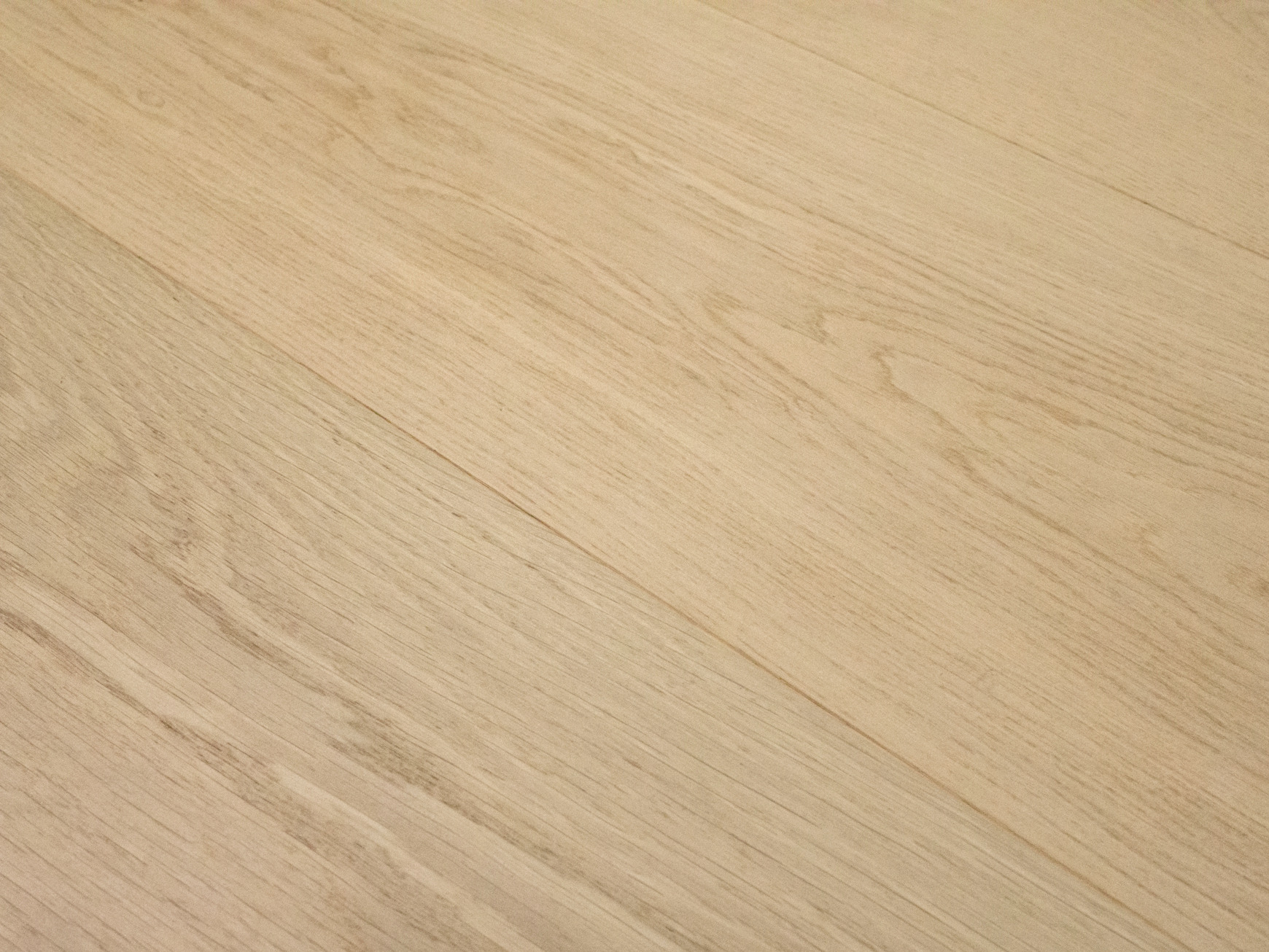
Some people want exactly that calm. Others want the floor to carry more interest, and for them grain and plank width do the work that texture cannot.
Riva LA/Riva Azure is 14” wide with a UV Lacquer + Reactive Stain finish. Wide boards like that show long runs of grain between seams, which gives a softly lit floor something to look at.
Very dark floors are the harder choice here. They absorb light, they show dust and pale pet hair clearly, and soft light hides the grain that makes a dark floor interesting.
Finish and texture in soft light
Sheen behaves differently when light is soft. A glossier finish picks up the window as a pale reflection, which can make the floor near the glass look lighter than the rest.
Every Monarch Plank floor named here lists a UV Urethane, Ultra-Matte finish. Low sheen keeps the floor reading as its own colour from across the room, with less of a bright band by the window.
Texture is the other thing soft light hides. A brushed surface relies on raking light to cast small shadows, and north light rarely rakes. Expect texture to look quieter in the room than on a sample held up to a bright window.
Reward URBANO Euro Oak Ravenna lists a Smooth finish and a Light Rustic grade. Its character comes from knots and grain rather than surface texture, which does not depend on raking light to show.
Your bulbs matter as much as the window
A room with no direct sun spends a lot of its life under electric light, especially on winter afternoons and in the evening. The colour of those bulbs changes the floor as much as the window does.
Warm-white bulbs pull oak toward honey, while cool-white or daylight bulbs push it toward grey. Before you judge a sample, turn on the lights you actually use in that room.
If you plan to change the bulbs as part of the project, decide that first. Then choose the floor under the light it will live with.
How to test a sample in a north-facing room
A sample tells you a great deal, as long as you look at it the right way.
- Lay it flat on the floor where it will be installed, not propped against a wall or held up to a window.
- Look at it in the morning, around midday and after dark with the lights on.
- Stand back and view it from standing height, the way you will see the floor every day.
- Put it beside the wall paint, the cabinets or the trim it has to live with.
- Compare two or three candidates side by side, including one warmer than you think you want.
You can order samples of the oak floors you are comparing and run this test in your own room. Treat a sample as a guide to tone, and remember that a whole floor of one colour can read stronger than a single board.
Before we suggest anything for a room without direct sun, we ask about window size, wall and cabinet colours and the bulbs in use. We also ask whether the floor continues into sunnier rooms. That last question matters, because a floor chosen for the north room also has to work in the bright kitchen next door.
Common questions about north-facing rooms
Should a north-facing room have a light or dark floor?
Light to mid-tone usually works better, because it returns more of the soft light to the room. A dark floor can work in a large room with generous windows, but expect it to read darker than the sample did.
Are grey floors a mistake in a north-facing room?
Not always, but they need careful testing. Cool light pushes grey toward blue. A grey with warm undertones, checked beside your own walls, is far safer than a cool one chosen from a photo.
Does a floor fade in a room with no direct sun?
Much more slowly. Colour change in wood is driven largely by strong sunlight, so a north room is one of the gentler places for oak. Indirect daylight still changes it gradually over the life of the floor.
Does wide plank or herringbone suit a north room better?
Either can work, and the choice depends more on the room's size and style than on the light. Wide planks show longer runs of grain, while herringbone adds movement through its pattern, and both help a floor that soft light would otherwise flatten.
What finish should I look for?
Look for low sheen, such as the ultra-matte finish on the Monarch Plank products in this article. Glossier finishes mirror window light and can make the floor look uneven in tone.
Choosing with the room in mind
The pale oak herringbone at the top of this page is Monarch Plank Lago - Herringbone Como, photographed in a bright kitchen. In a north-facing room the same floor would likely read cooler and quieter, which is exactly why the room gets the final say.
Compare warmer and cooler oaks across the full flooring range, and bring a shortlist home as samples. When one holds up in your own light, request a quote and book a free in-home laser measurement.