
Hard floors and allergies in a bedroom

If you are weighing hard floors and allergies for a bedroom, the honest answer is that a hard floor helps, but less than people are often told. Carpet holds dust, pet dander and pollen in its pile, where a vacuum reaches only part of it. A hard floor keeps that material on the surface, where you can see it and remove it. The difference is real and modest, and it depends more on cleaning, texture and the rest of the room than on the floor alone.
This article covers what a hard floor changes in a bedroom, what it does not, which finish and surface details matter, and what we would ask before recommending one. We supply and install flooring, so we speak about materials, not medicine. If allergies shape how you run your home, your own doctor is the right person for the health side of the question.
What a hard floor actually changes
Carpet works like a filter that you can never fully empty. Its fibres catch fine particles as they settle, and footsteps push some of them back into the air. A vacuum lifts what sits near the top of the pile, while some of it settles deeper, close to the backing and the pad.
A hard floor has no pile. Dust lands on a sealed surface and stays there until it is vacuumed, mopped or wiped. That makes it easier to remove, and it also makes it visible, which many households find useful in its own right.
What a hard floor does not do is reduce how much dust the room makes. Bedding, curtains, clothing and upholstered chairs shed fibres every day. Pets, open windows and the hallway outside bring more in. The floor changes where that material ends up and how easily it leaves, not how much of it there is.
That is why we describe the change as modest. Swapping carpet for wood in one room, while the bed, the curtains and the hallway stay the same, removes one reservoir out of several. It is worth doing, and it works best as part of a wider routine.
Why the bedroom asks something different
The bedroom is where you spend the longest stretch of time in one place, close to fabric. In most bedrooms the bed itself holds more dust than the floor does. Changing the floor without changing how the bedding is washed will feel like a smaller improvement than you hoped for.
A bedroom also asks less of a floor than a hallway or a kitchen does. There is little grit from shoes, few spills and slow, barefoot traffic. Warmth underfoot and quiet matter more here than resistance to abrasion. A floor specified for an entry can be over-built for a bedroom, and the money may do more good on the finish or the underlayment.
Bare feet change the brief too. A sealed wood floor feels cooler to the touch than carpet, especially first thing in the morning. A rug beside the bed answers that, and a washable rug follows the same logic as the hard floor: it can be cleaned properly and often.
Finish and texture: where dust actually sits
On a hard floor, dust gathers in two places. One is the flat face of each board. The other is the seams and textures between and across the boards, and that is where the choice of product starts to matter.
Edges come first. A micro-beveled edge leaves a shallow channel along each seam. A hand-scraped beveled edge leaves a deeper, irregular one. Every channel is a place where fine dust collects, and a dry mop tends to skip straight over it.
Surface texture comes second. A wire-brushed board has its softer grain lifted out, so the face carries fine ridges. A distressed board carries tool marks and chatter. These textures hide scratches and everyday wear, which is why people choose them, and they also hold a little more dust in their hollows than a smooth face.
The Garrison Competition Buster Hickory Antique shows the trade-off clearly. It has a hand-scraped beveled edge and a distressed with chatter surface treatment, under a urethane with aluminum oxide finish. That character forgives a lot of wear, and in a bedroom it asks for a vacuum with a soft brush head rather than a dry mop alone.
Colour plays a part as well, though not the one people expect. A dark floor shows pale dust and lint whenever low sun crosses it, and a pale floor shows dark hair and grit. Neither colour holds more dust than the other; each simply shows a different kind.
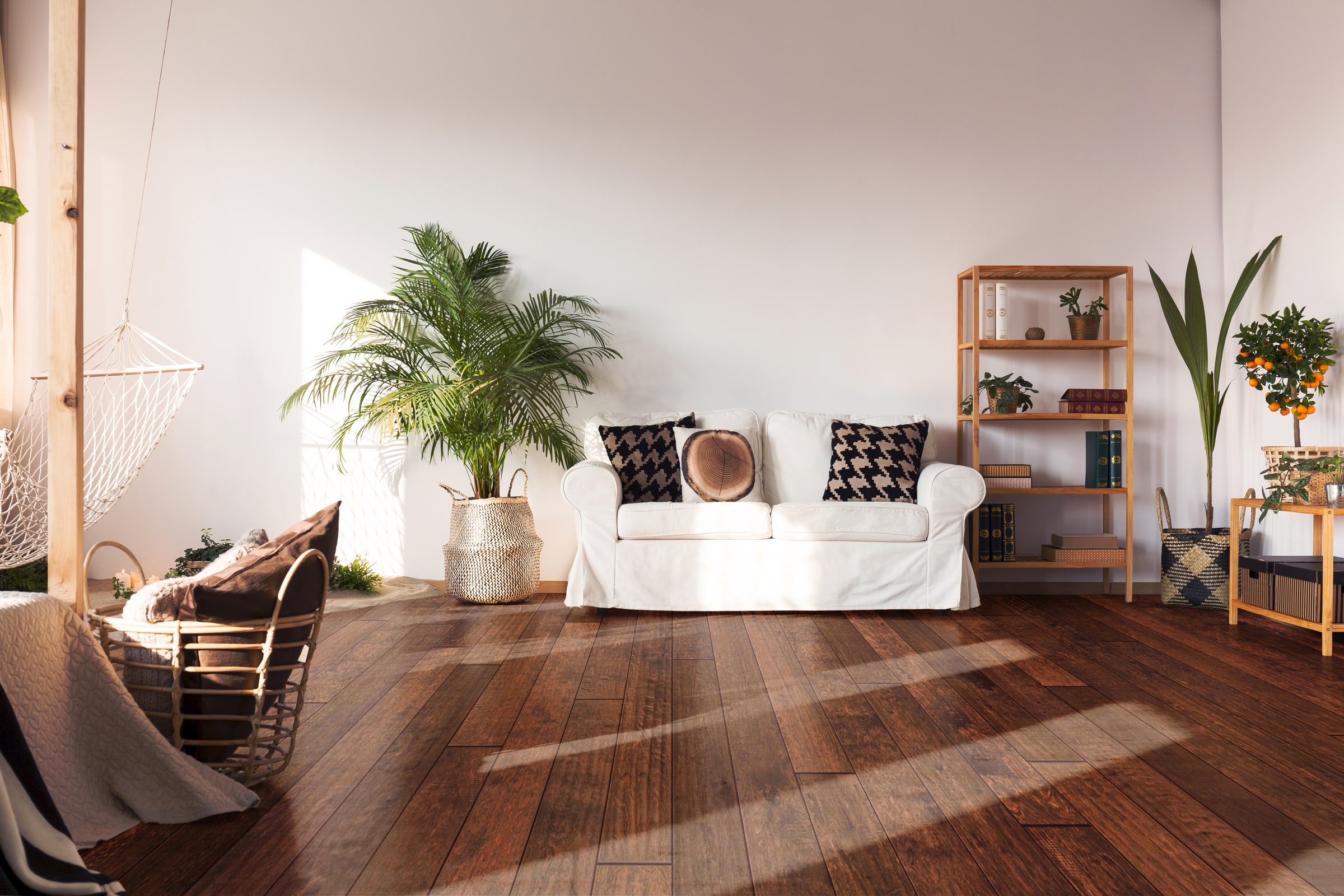
The finish is the layer that dust actually touches. A urethane with aluminum oxide finish forms a hard, closed film, so dust wipes off and liquids sit on top. A hard-wax oil soaks into the wood and leaves a more open, natural surface that is refreshed with maintenance oil rather than recoated.
Both can be kept clean; the routine is what differs. Our piece on matte brushed polyurethane finishes explains how the finish names on a spec sheet relate to each other.
If an oiled floor appeals to you, the Duchateau RIVERSTONE Thames is European oak with a hard-wax oil finish, a light wire brush surface and a 4 mm wear layer. It suits a household that does not mind a regular care routine with the products its maker names. The full specification is on the RIVERSTONE Thames product page.
Dust that comes from the rest of the house
Much of the fine material in a bedroom does not start there. It arrives on socks and shoes, drifts in from the hallway and blows through open windows. If the hall is carpeted and the bedroom is not, the hall carpet becomes the reservoir that keeps refilling the bedroom.
Running the same hard floor from the hall into the bedroom removes a threshold strip where dust likes to gather. It also means one cleaning tool covers both rooms in a single pass. Our guide to hallway and stairs flooring covers what that longer run asks of the material.
The Garrison Beverly Hills Canon is one option for that kind of continuous run. It is Euro Oak with a urethane with aluminum oxide finish, a light wire brushed face and a micro-beveled edge. Its 4 mm wear layer leaves room for the heavier traffic of a hall, and its closed finish keeps cleaning simple in the bedroom beyond it.
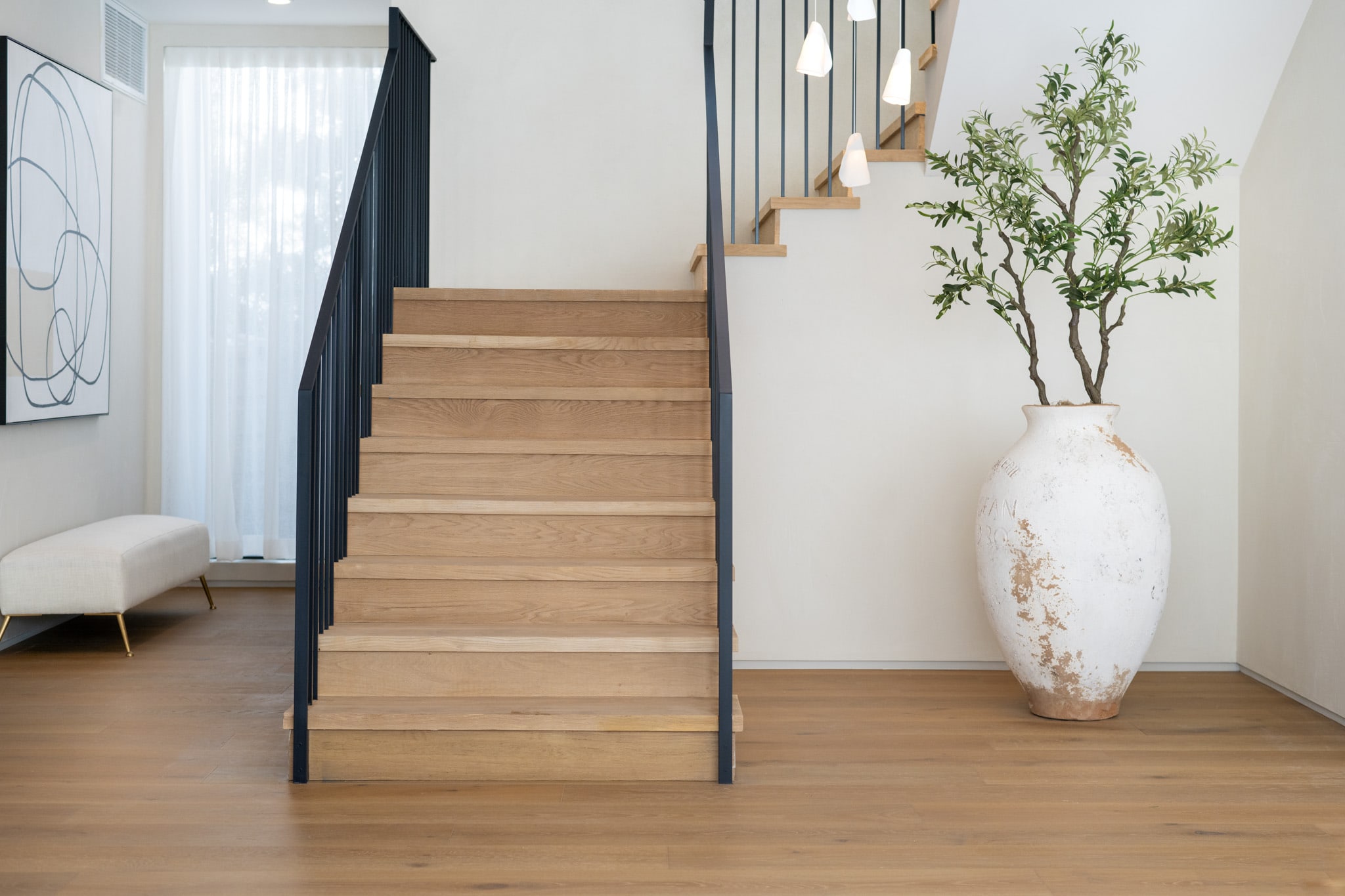
You can compare its edge, finish and installation methods on the Beverly Hills Canon product page before you order a sample.
Cleaning a hard bedroom floor so it actually helps
A hard floor only helps if the dust actually leaves the room. A broom tends to lift fine dust into the air, where it settles again on the bed and the furniture. A vacuum with a sealed, filtered body and a soft brush head removes it instead, and the brush reaches into bevels and texture.
Work from the top down. Wash the bedding, wipe the surfaces, and do the floor last, so that whatever falls during cleaning gets collected. Pay attention to the space under the bed, which collects more than any other part of the floor and is the part most often skipped.
A microfibre dry mop is useful between vacuums on a smooth floor. On a textured or hand-scraped floor, it picks up the face and misses the hollows, so it complements the vacuum rather than replacing it.
When you damp mop, use a well-wrung mop and the cleaner the floor's maker recommends. Standing water is hard on any wood floor, and some finishes react badly to steam or to general household cleaners. Follow the manufacturer's care instructions for the product you choose.
What we would ask before recommending a floor
Before we suggest anything for an allergy-conscious bedroom, we want to understand the room and the people in it. These are the questions we would ask.
First, what is the main concern: household dust, pets or pollen through an open window? Pets that sleep in the room change the answer more than anything else, because they bring in material every night.
Second, how do you prefer to clean? Someone who vacuums often with a brush head can live happily with a textured, hand-scraped floor. Someone who prefers a quick dry mop will be happier with a smoother face and a tighter edge.
Third, what sits underneath? A concrete slab and a wood subfloor allow different installation methods, from glue down to floating to nailing, and each product lists the methods its maker approves. That is settled properly at a free in-home laser measurement, not guessed from a photograph.
Finally, look at the samples in your hand, not on a screen. Order a few from the samples page, run a fingertip and a dry cloth across each one, and notice which seams and textures catch.
Questions about hard floors and allergies
Is a hard floor better than carpet for allergies?
It is easier to keep clean, because dust stays on a sealed surface instead of sinking into a pile. The improvement is real and modest. It works best alongside regular washing of bedding and a vacuum with a good filter.
Does a textured floor hold more dust?
A little more, in its hollows and deeper seams. Wire-brushed and hand-scraped faces hide wear well, so the trade is easier upkeep of scratches against slightly more careful cleaning. A soft brush head on the vacuum handles both.
Is an oiled floor worse for dust than urethane?
Not in itself. An oiled surface is more open and is refreshed with maintenance oil, while a urethane film is closed and wipes clean. Both stay clean with the right routine; follow the care products each maker names.
Should I keep a rug in a bedroom with a hard floor?
A rug beside the bed is reasonable for warmth and comfort. Choose one you can wash or shake out often, so it does not become a smaller version of the carpet you removed.
Does the floor colour change how much dust there is?
No. Colour changes what you see, not what is there. Dark floors show pale dust and lint in sunlight, and pale floors show dark hair and grit, so choose the colour that suits your room and your household.
The next step
A hard bedroom floor is a sensible part of keeping dust down, as long as you choose the edge, texture and finish with cleaning in mind. When you are ready, browse the flooring range and shortlist two or three boards you could live with.
Then request a quote, and we will arrange a free in-home laser measurement to confirm the subfloor and the installation method. We serve the Bay Area and out into the Central Valley, with delivery and professional installation available across our service area.