
Ceramic bead vs matte finish in a living room
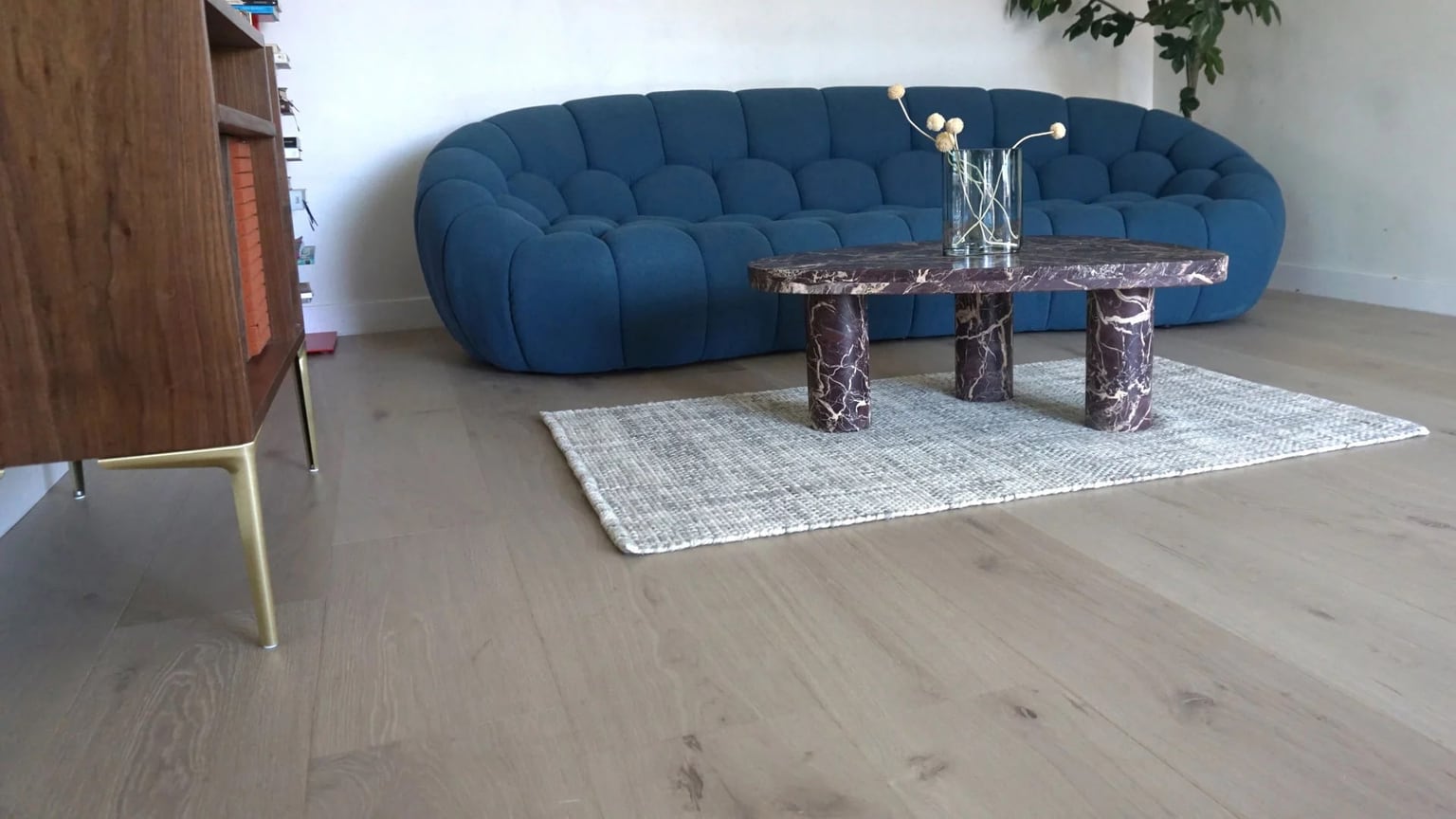
In a living room, the ceramic bead vs matte finish choice comes down to two things: what the room does to the floor, and how you will repair it. A matte-brushed UV-cured water-based polyurethane hides the fine scratches and dust a living room collects, and it keeps the oak grain easy to read. A ceramic bead with UV coating is built to resist abrasion from grit, which matters more at a garden door than beside a sofa.
If your living room is a calm, shoes-off room, the matte-brushed finish is the one we would put down. If the room opens straight to the outside, the answer is less simple, and the rest of this piece explains why.
What each finish actually is
Both finishes are applied and cured in the factory under ultraviolet light, before the boards are boxed. That is what "UV-cured" means on a spec sheet. The coating is hardened on the production line rather than drying in your house, so the floor arrives finished.
A matte-brushed UV-cured water-based polyurethane is really two steps. The boards are wire-brushed first, which lifts the softer grain and leaves a slight texture you can feel underfoot. The water-based polyurethane then seals that surface in a low-sheen coat, so the floor reads as wood before it reads as finish.
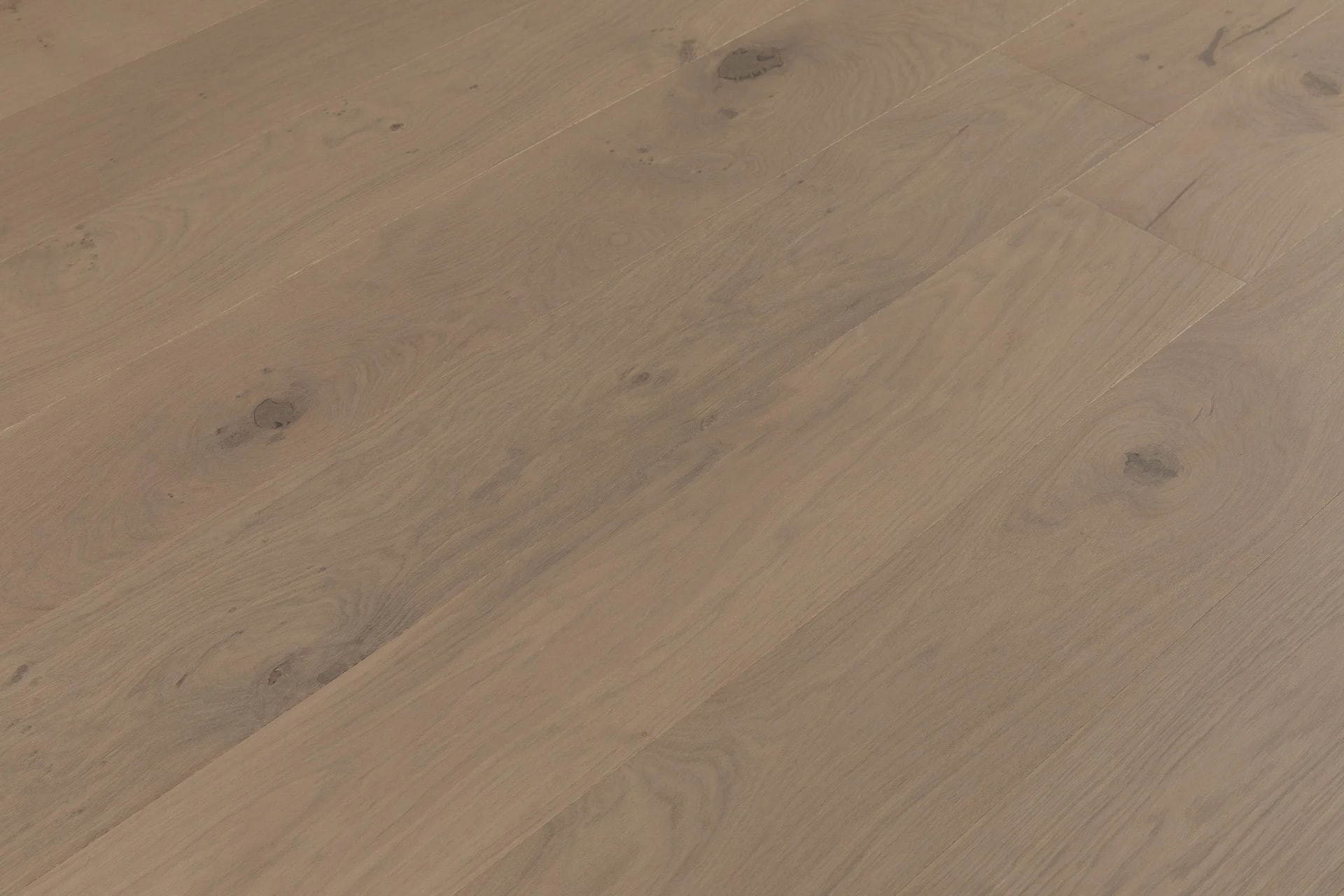
A ceramic bead with UV coating adds hard ceramic particles to the finish layers. The particles are there to resist abrasion, which is the scuffing grit does when it is dragged underfoot. The name tells you the purpose of the coating, not its sheen, so two ceramic bead floors can look quite different in a room.
The floors we name further down all carry the matte-brushed finish. For any ceramic bead floor you are weighing against them, ask for the maker's spec sheet and check the points in the last sections of this article.
How a living room wears a floor
A living room usually takes gentler wear than an entry or a kitchen. Much of what it does is slow: chair legs shifting, a coffee table nudged, socks and bare feet crossing the same path to the sofa. The damage that shows is fine surface scratching and dull traffic lanes, not deep gouges.
That pattern favours a finish that hides wear over one that only resists it. A matte, brushed surface scatters light, so a fine scratch does not flash back at you the way it can on a smoother, shinier coat. The brushed texture also breaks up dust and pet hair, which on a living room floor is much of what you notice from one week to the next.
The exception is a living room with a door straight to a patio, a garden or a garage. Grit carried in on shoes acts like sandpaper, and that is the wear a ceramic bead coating is designed for. Our guide to entryway flooring and what grit does to a finish covers that zone in detail, including mats and where to stop the grit before it reaches the room.
Sheen, light and what you see every day
Sheen is the thing you will look at daily, long after the question of abrasion has been forgotten. A matte-brushed finish keeps glare down when low sun crosses the room. It also lets the grain and knots of white oak read clearly, which is the reason many people choose oak in the first place.
Ceramic bead coatings come in a range of sheens, so ask for the gloss level rather than assuming one. A higher sheen makes a room feel brighter and a new floor look crisp at first. It also shows fine scratches, footprints and dust lines in raking light, which is the light a living room with large windows gets every afternoon.
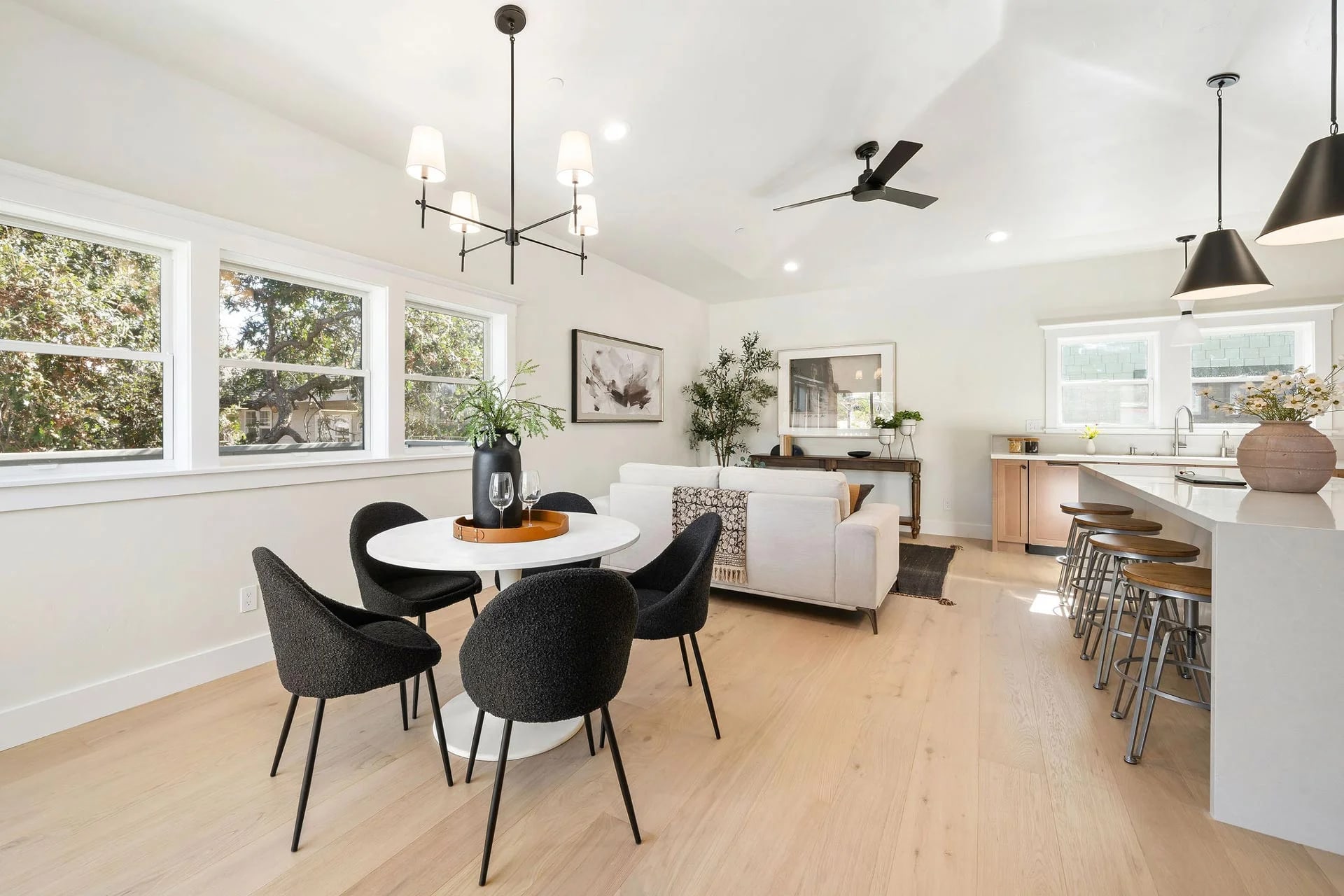
Hold a sample at floor level near your own window, at the time of day you use the room. Look along the boards toward the light, not straight down at them. That low angle is the one that shows wear, so it tells you how the finish will look once the room has been lived on.
Window direction changes this choice more than people expect. Our article on living room flooring, plank width, light and wear goes further on how the light in the room should steer the floor.
Repair and recoat: where the two finishes part ways
This is the part of the decision that showrooms tend to skip. A living room floor will pick up scratches eventually, and what matters is what you can do about them without replacing anything.
A UV-cured water-based polyurethane can usually be deep cleaned, lightly abraded and given a maintenance coat when traffic lanes go dull. Ask the maker which maintenance product is compatible before anyone opens a can, because the wrong product will not bond. Done properly, the room keeps its matte look and the repair blends in.
A ceramic bead coating is harder to bond to, by design. The same particles that resist abrasion also resist the light sanding a maintenance coat needs, so recoating can take more work and a specific product. When a ceramic bead floor does wear through, the usual answer is a full sand and refinish, and the factory finish goes with it.
Both kinds of floor are often engineered, so the thickness of real wood above the core decides how much sanding the floor can take. The floors named below carry a 4mm wear layer of European White Oak. Follow the manufacturer's guidance on how far that layer can be sanded, and plan maintenance coats so a full sanding stays a rare event.
What the named floors offer by their specs
The floors below share one construction: a 4mm European White Oak top layer on multi-ply cross-bonded Baltic birch plywood, 5/8 inch (15mm) thick overall. Each carries the matte-brushed UV-cured water-based polyurethane finish, micro-bevelled long sides and square-edge short ends. They are made in Italy and certified Indoor Air Comfort Gold, which is worth knowing for a room where you spend long evenings.
What changes between them is width, grade and pattern, and each one changes how the finish behaves in the room.
Width. Bergamo Oak Treviso Bene is a 9.5 inch (242mm) plank in Light Character grade. Wider boards mean fewer seams across a large living room, so the matte surface reads as one calm plane. Bergamo Oak Capri, Bergamo Oak Modena and Bergamo Oak Sorrento are 7.5 inch (192mm) planks in the same grade, which sit comfortably in a smaller room.
Grade. Bergamo Oak Usini Premio is Prime grade at 9.5 inch (242mm), for a quieter, more even face. Light Character grade shows knots and more grain movement. Under a brushed matte finish that variation reads as texture, and it gives everyday marks somewhere to disappear.
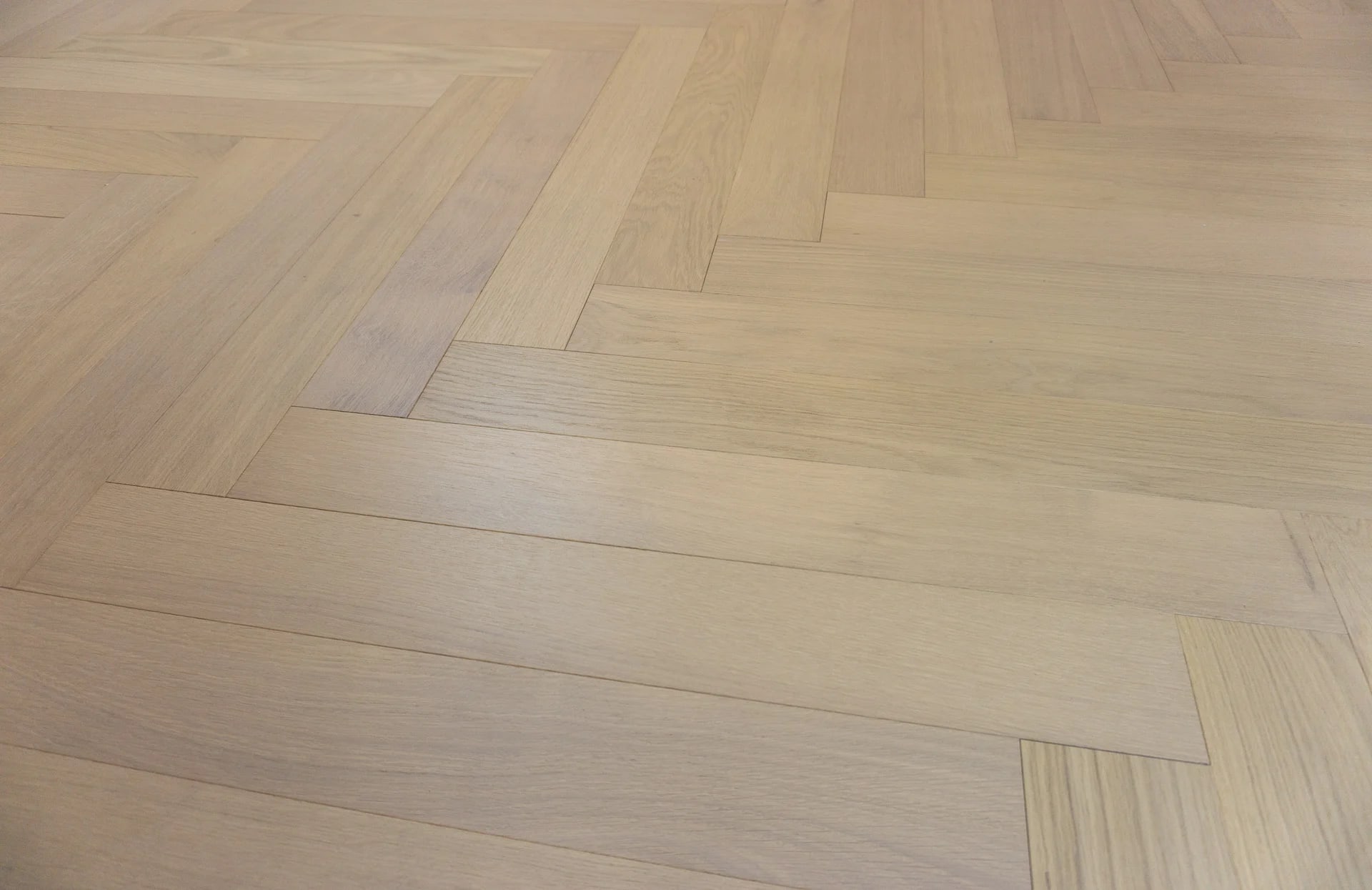
Pattern. Bergamo Oak Turin Herringbone is Prime grade in a herringbone pattern, 4 inch (100mm) wide, with the same finish and wear layer. Herringbone turns the grain at alternating angles, so light and wear scatter across the room instead of running down one lane.
None of these is the right floor for every living room. Say the room takes heavy grit from an outside door. If you want the factory surface left untouched for as long as possible, compare a ceramic bead floor on its own spec sheet. If you value a floor that hides marks and can be refreshed in place, the matte-brushed finish is the stronger fit.
What to check in your own living room
Before you choose a finish, walk the room and answer a few plain questions. Each one moves the decision in a specific direction.
- Where do people come in? A door from the garden or garage into the living room points toward abrasion resistance. A room reached only from a hallway points toward the matte-brushed finish.
- Which way do the windows face? Low afternoon light across the floor shows sheen and scratches. The more raking light the room gets, the more a matte surface earns its place.
- What sits on the floor? Heavy chairs that slide, a rocking chair or a desk chair on casters will mark any finish. Felt pads and a chair mat matter more than the coating.
- Do you have a dog? Claws dig rather than abrade, so neither finish prevents a deep mark. A brushed matte surface hides those marks better than a smooth, shinier one.
- How do you want to repair it? If you would rather refresh a floor with a maintenance coat than live with wear until a full refinish, choose the finish that allows it.
Underneath all of this sits the subfloor. A flat, dry, sound subfloor matters more to how the floor lasts than either coating, and we check it during our free in-home laser measurement.
Common questions about ceramic bead and matte finishes
Is a ceramic bead finish more scratch resistant than matte polyurethane?
It is designed to resist abrasion from grit. That is not the same as hiding scratches. A brushed matte surface disguises fine scratches well, while a shinier ceramic bead coat can show the few it gets.
Can a matte-brushed UV-cured floor be recoated?
Usually, yes. The floor is deep cleaned, lightly abraded and given a compatible maintenance coat. Ask the maker which product to use, and follow the manufacturer's instructions for the work.
Does a matte finish show dust and footprints?
Less than a glossier coat does. Low sheen and a brushed texture break up dust, pet hair and footprints, so a matte living room floor looks clean for longer between sweeps.
Is ceramic bead worth it in a living room with a dog?
Not usually for the dog alone. Claw marks are dents and gouges rather than abrasion, and a ceramic bead coating does not stop them. A matte-brushed finish makes them harder to see.
How should I clean either finish?
Dry-sweep or vacuum with a hard-floor head, then use a damp, well-wrung mop with the cleaner the manufacturer recommends. Avoid steam mops, wax and standing water on any engineered wood floor.
Can I see both finishes before deciding?
Yes, and you should. Look at samples on your own floor, near your own window, at the hour you use the room. A finish that looks right in a showroom can read very differently in raking living room light.
The next step
For a calm, shoes-off living room, start with the matte-brushed white oak floors in our flooring range and compare width and grade on each product page. Order a few from our samples page and lay them by the window before you decide. When you are ready, request a quote and we will book a free in-home laser measurement.