
Matte brushed polyurethane finish: what it means
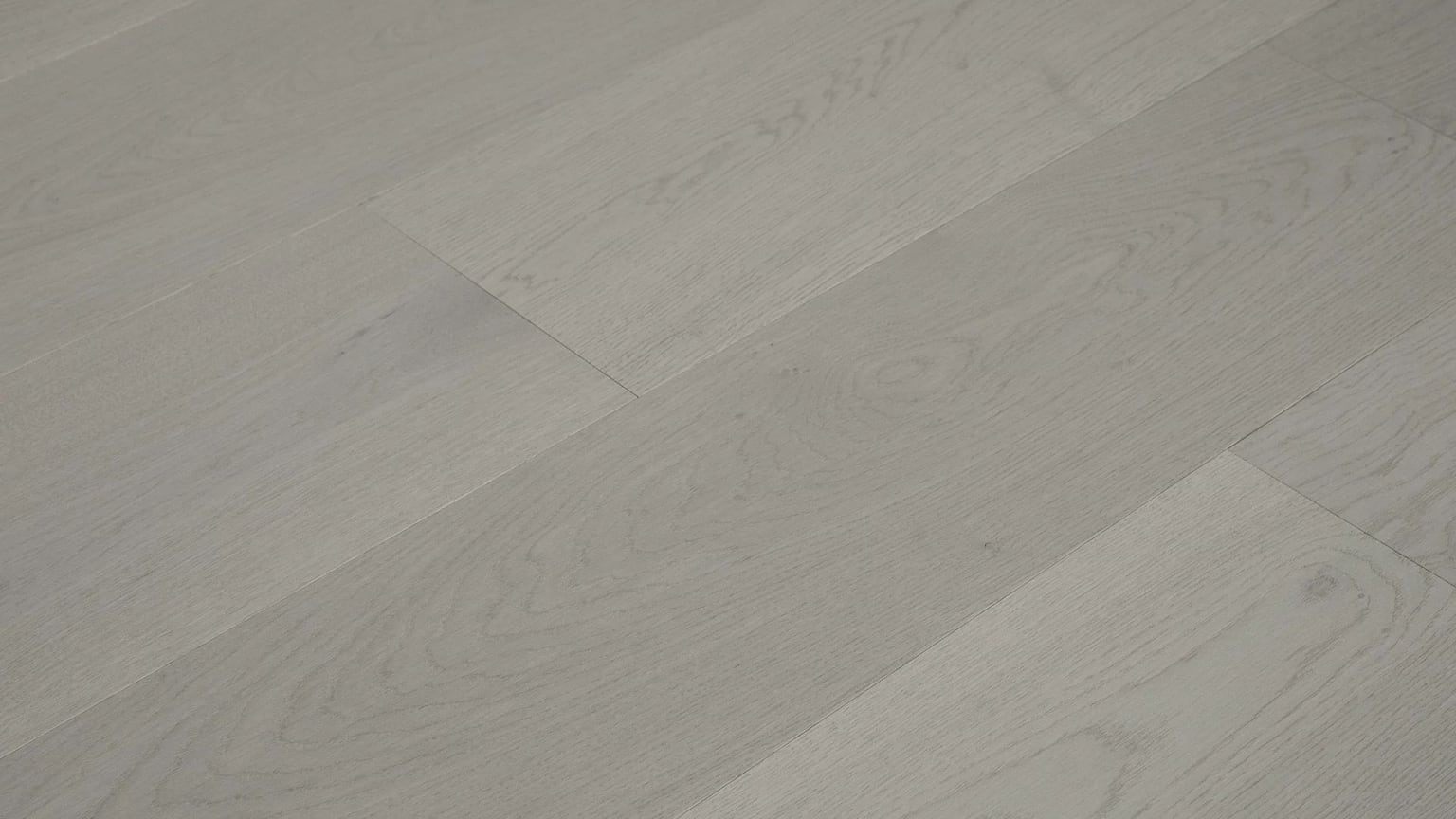
A matte brushed polyurethane finish is a clear protective coat with very little shine, applied over oak whose surface has been lightly brushed to open the grain. On a spec sheet it often appears in full as "Matte-brushed UV-cured water-based polyurethane". That adds two facts: the coat was hardened at the factory under ultraviolet light, and it is a water-based formula rather than a solvent-based one.
In practice, you get a floor that hides fine scratches and dust well and keeps the oak close to its natural colour. The finish arrives already cured, so nothing is coated in your house. The trade-off is that a film finish is harder to touch up in one spot than an oiled floor.
Below, each word of the phrase is taken in turn. After that comes what it changes about cleaning, repair and the rooms it suits.
Matte: how much light the floor gives back
Sheen is how much light a finish reflects back at you. Gloss acts close to a mirror, satin sits in the middle, and matte gives back very little, so the floor reads as bare wood rather than wood under a coat.
Low sheen matters most in rooms with strong side light. Light skimming across a glossy floor picks out every fine scratch, footprint and patch of dust, while a matte surface scatters that light and lets small marks fade into the grain.
It is not invisible, though. A deep scratch that cuts through the coat still shows on any sheen, and a matte floor can look patchy where a cleaning product has left a residue. Our comparison of matte and gloss floor finish sheen goes further into how sheen behaves room by room.
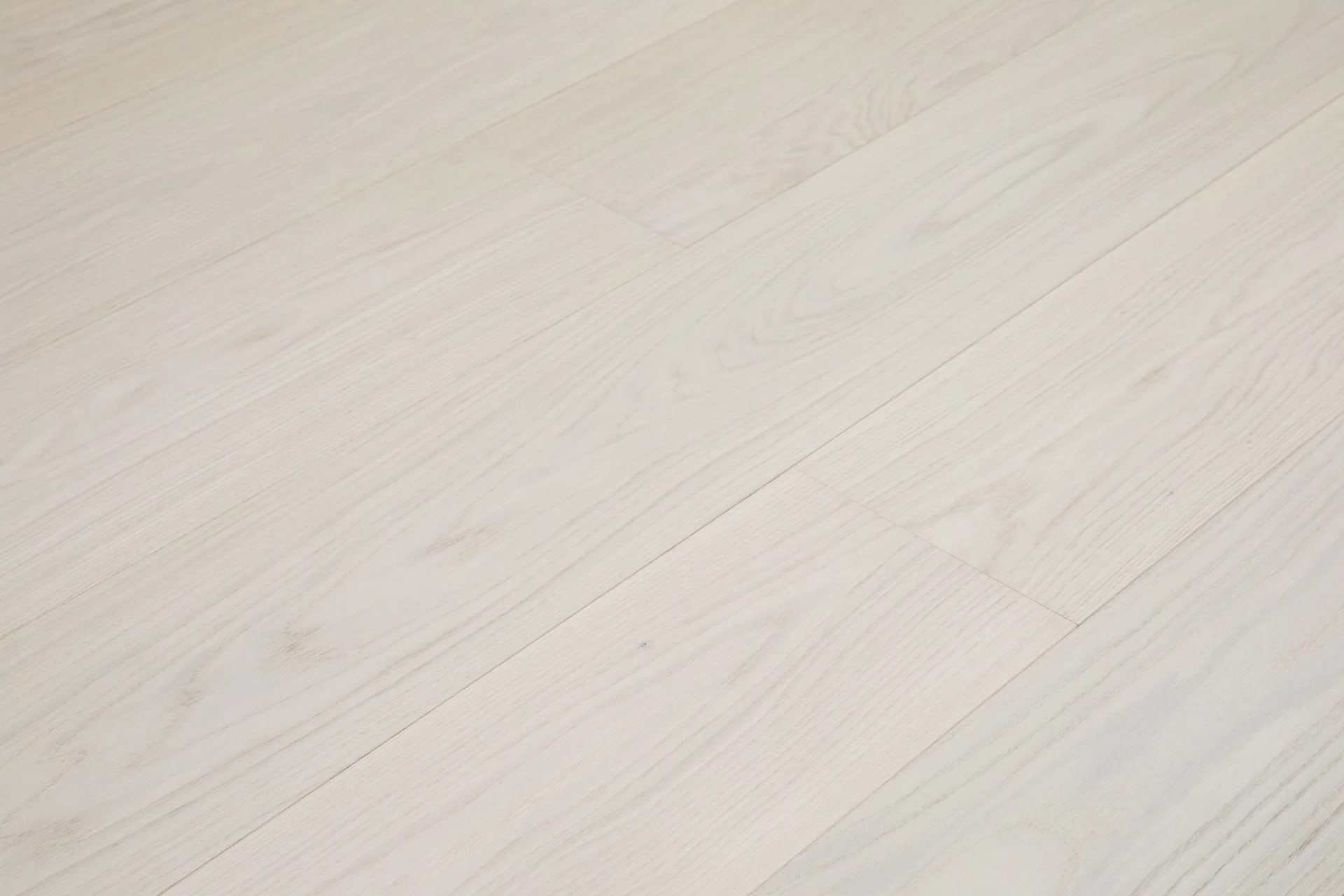
A pale floor under soft daylight is where matte earns its place. There is little glare, so the grain carries the look instead of the reflection.
Brushed: a texture in the wood, not in the coat
Brushing is done to the wood before any finish goes on. A wire or nylon brush runs along the boards and pulls out some of the softer grain between the harder growth lines, leaving a gentle texture you can feel underfoot.
The texture does two jobs. It gives the eye something to read other than the surface coat, and it helps light wear blend in, because a scuff lands on a surface that was never perfectly smooth.
Brushed is not the same as hand-scraped or distressed. Those words describe deeper, deliberate tool marks, while a brushed board stays flat and calm with the texture running along the grain. If you want a floor that looks hand-worked, a brushed oak will read as too quiet.
The trade-off is cleaning. Open grain holds a little more fine grit than a smooth board, so a soft-bristle vacuum head or a dry microfibre mop matters more than a damp wipe alone.
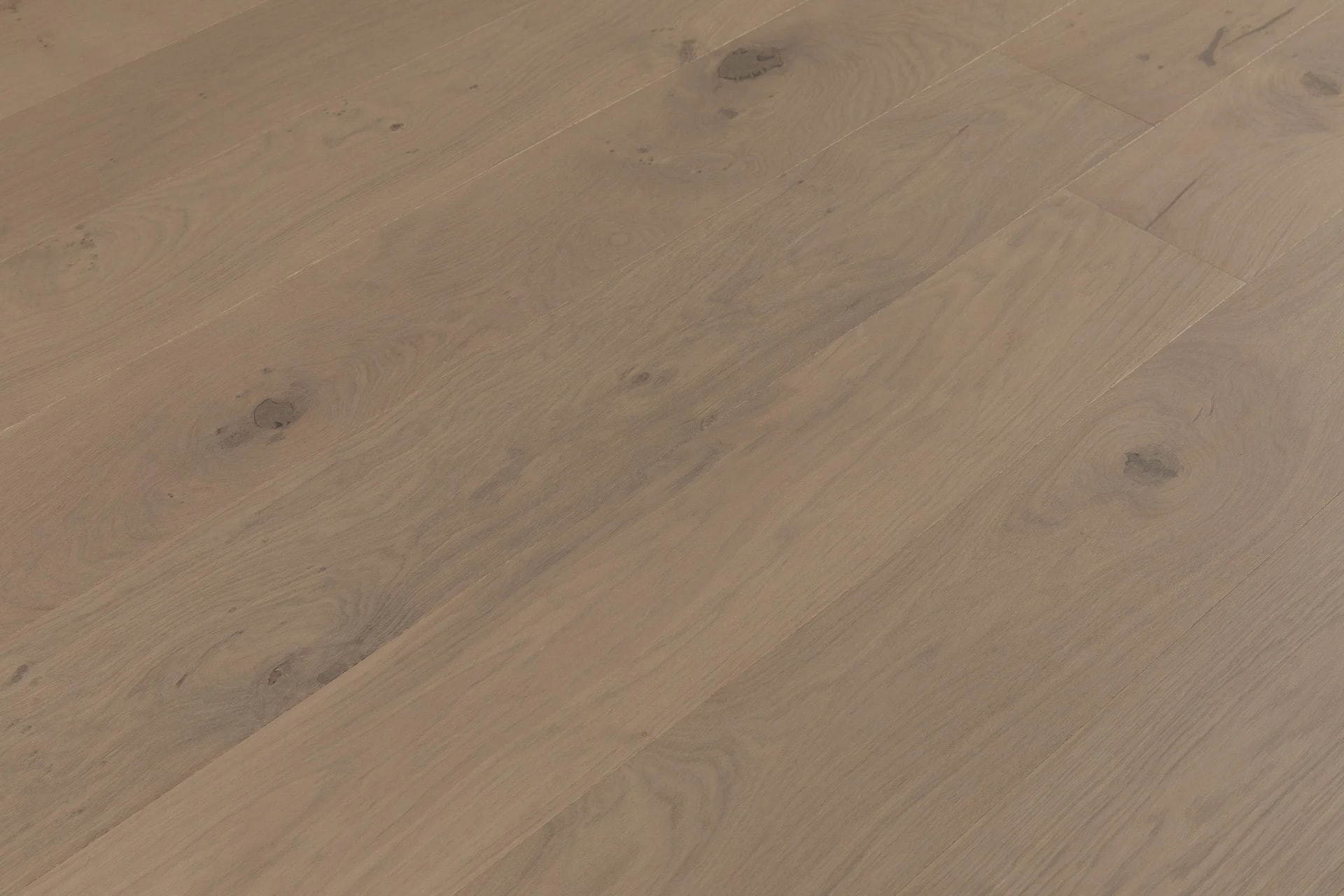
On a taupe board with filled knots like this one, the brushing is what you notice up close. From standing height the floor simply looks soft and even.
UV-cured: finished in the factory, not in your house
UV-cured describes how the coat hardens. At the factory the finish is rolled onto the boards and passed under ultraviolet lamps, which set it almost at once instead of leaving it to dry in the air.
For you, that changes installation more than appearance. There is no finishing step in the house, no coating smell to wait out, and no drying between coats before furniture goes back.
It also means the coat goes on in a controlled setting, in thin even layers, on every board before it is packed. A finish applied on site can be excellent, but it depends far more on the day, the dust in the air and the person holding the applicator.
What UV-cured does not mean is unbreakable. It is still a coat on top of wood, and grit under a chair leg will mark it the same way it marks any other film finish.
Water-based polyurethane: the coat that sits on top
Polyurethane is a film-forming finish. It sits on top of the wood as a clear layer, unlike a penetrating oil that soaks into the fibres and hardens inside them.
Water-based means the resin is carried in water rather than in solvent. The practical result is colour: water-based coats stay close to clear, while oil-modified polyurethane tends to amber, so a pale oak keeps its pale tone.
That is why you see this finish so often on light and grey-toned oak. On a near-white board, an ambering coat would slowly pull the colour toward yellow, which is the opposite of what the board was chosen for.
Some factory finishes add hard particles such as aluminum oxide to the coat. This spec phrase does not mention any, so do not assume them; our guide to aluminum oxide floor finish labels explains what that addition changes.
What the finish line does not tell you
A finish line on a spec sheet describes the top skin only. Three other lines decide how the floor lives and ages, and they are worth reading in the same sitting.
The first is the wear layer: the real oak above the core, which is what gets sanded if the floor is ever refinished. Bergamo Oak Pisa Premio lists a 4mm wear layer on a 5/8" (15mm) engineered plank built on multi-ply cross-bonded Baltic birch plywood.
The second is grade. Prime grade, as on Pisa Premio, is the cleaner board, while Light Character grade, as on Bergamo Oak Treviso Bene, shows knots and natural marks that the brushing brings forward.
The third is the edge. Most of these planks list micro-bevelled long sides with square short ends, which gives each board a faint shadow line along its length without deep grooves that collect dirt.
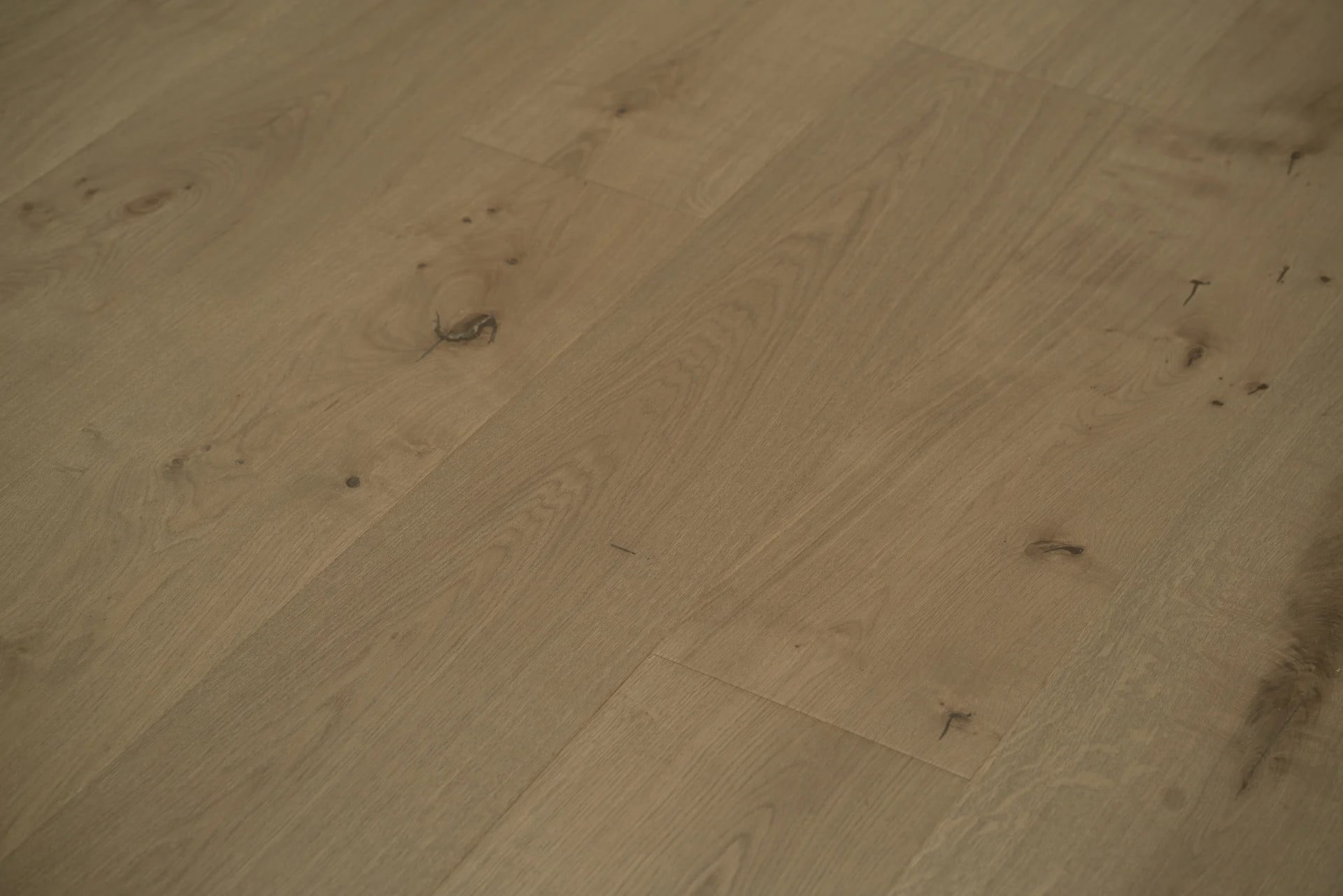
Character grade and a brushed surface work together. The texture runs into the knots and streaks, so the floor reads as one surface rather than a coat over a pattern.
Living with it: cleaning, scratches and repair
Day to day, the routine is simple. Sweep or vacuum the grit that scratches any floor, then clean with a lightly damp mop and a cleaner the flooring manufacturer approves for its finish.
Avoid products that leave a film. Wax, oil soaps and polish-and-shine products can build up on a matte surface, leave it cloudy or streaked, and complicate a future recoat.
Steam mops are a poor match for any wood floor, because heat and moisture are pushed into the joints between boards. Felt pads under chairs and a mat inside each exterior door do more for this finish than any cleaner.
Repair is where the trade-off sits. A film finish cannot be touched up invisibly in one spot, the way an oiled floor often can. A worn area usually means lightly abrading and recoating the whole room.
A gouged board can be replaced, which is one reason to keep a box of spare planks from the original order. If the floor is ever fully sanded, the wear layer is the oak you are sanding into, so read that line before you buy.
Where this finish fits, and where it does not
It suits living rooms, bedrooms, halls and open-plan spaces where daylight is strong and you want oak to look like oak. On a pale floor in a busy house, matte and brushing together hide the light marks that show first.
It is a weaker fit where water stands. A polyurethane coat resists spills that are wiped up, but standing water at a dishwasher or on a wet bathroom floor works into the joints of any wood floor.
If you want a floor you can spot-repair yourself with a little oil, an oiled or hardwax finish is the closer match. If you are weighing two low-sheen coats against each other, our piece on how two brushed matte finishes compare sets them side by side.
The same finish appears on patterned floors too. Bergamo Oak Turin Herringbone carries it on Prime grade boards 4" (100mm) wide, where the low sheen keeps the pattern from glinting as you walk past.
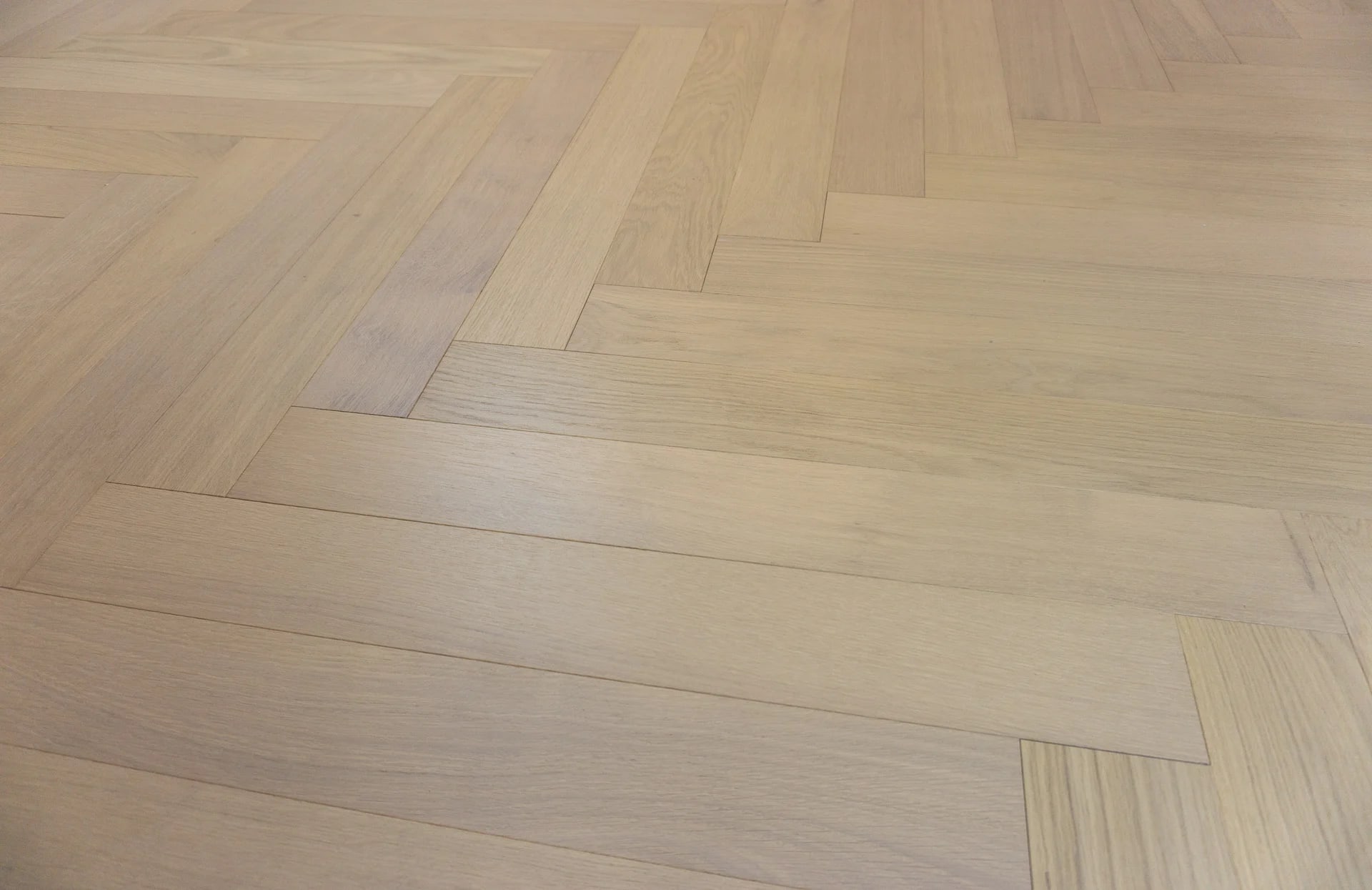
On a pattern, each board meets the light at a different angle. A high-sheen coat would flicker across the floor, while matte keeps the whole surface even.
How to judge the finish before you choose
A photograph cannot show sheen honestly, because camera exposure changes it. Put a sample on the floor of the room it is for, near the window, and look at it from standing height in morning and evening light.
Then crouch and look along the floor toward the window, at a low angle. That is where sheen and brushing show most, and where a matte coat should still read as wood rather than as shine.
Run a hand over it as well. Brushing you can feel lightly is normal, while a surface that catches a sock is a deeper texture than this phrase describes.
Common questions about matte brushed polyurethane
Is a matte brushed polyurethane finish durable enough for a family home?
It handles everyday traffic well, and the low sheen and texture hide the fine marks that show first. Deep scratches and dents still happen, so pads, mats and regular sweeping matter more than the finish choice.
Does matte polyurethane need waxing or oiling?
No. Wax and oil products can leave a film on top of the coat and make a later recoat harder, so use a cleaner the flooring manufacturer approves.
Can the finish be recoated later?
Generally yes, by lightly abrading the surface and applying a compatible coat across the whole room. Follow the manufacturer's maintenance instructions, since the new coat has to bond to the factory finish.
Will a water-based polyurethane turn yellow?
It stays much closer to clear than an oil-modified coat. The oak itself still shifts colour slowly in daylight, which no finish fully stops.
Is brushed oak harder to clean?
Slightly. The open grain holds a little fine grit, so vacuum with a soft brush head before you mop, and expect small scuffs to blend in rather than catch the light.
Does UV-cured mean the floor can be used straight away?
The finish is fully cured at the factory, so nothing has to dry in the house. Follow the installation instructions for when furniture and rugs can go back, especially on a glued installation.
Choosing a floor with this finish
Read the finish line together with the wear layer, the grade and the width, then judge the board in your own light. You can compare every oak that carries this finish across the engineered flooring range. When you have a shortlist, request a quote and book a free in-home laser measurement, so the room is measured before anything is ordered.