
Water flooring: which floors handle water in each room
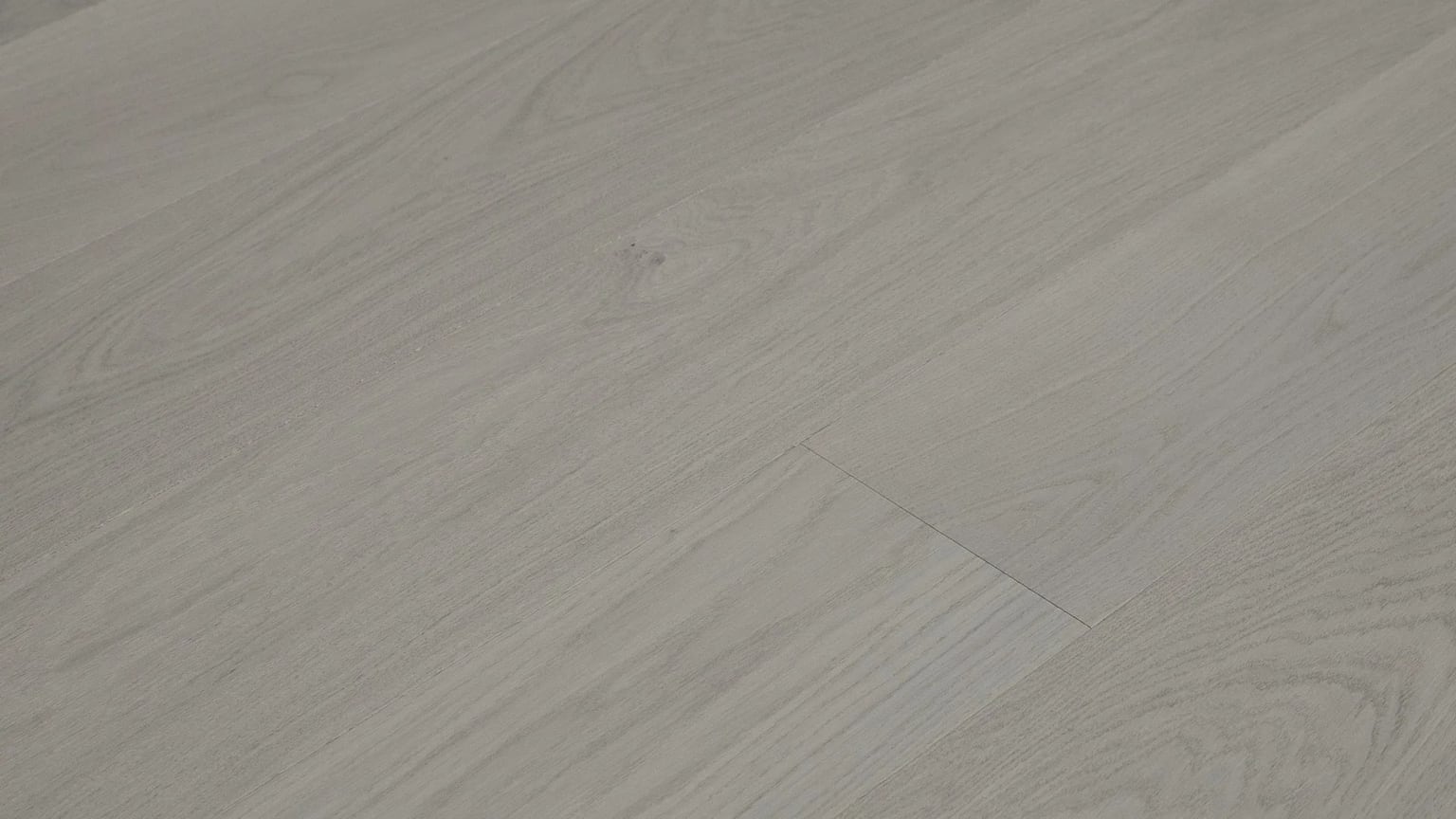
If you are searching for water flooring, the honest answer depends on how the water arrives. A spill wiped up soon after it lands is something a factory-finished engineered oak floor handles every day. Standing water, a leaking dishwasher, a wet shower floor or a slab that pushes moisture up from below are different problems. For those, a wood floor is the wrong choice, and a rigid vinyl or tile floor is the right one.
So the decision is not "waterproof or not" in the abstract. It is which kind of water your room actually sees, how often, and how quickly someone notices. The rest of this piece works through that room by room and explains what the labels on a spec sheet promise. It ends with the questions we would ask before recommending a floor.
Three kinds of water, three different floors
It helps to separate water into three kinds, because each one asks something different of a floor.
The first is surface water: a dropped glass, a wet dog, rain tracked in through the door. It sits on top of the finish. If the finish is intact and the water is wiped up, almost any finished floor survives it.
The second is standing or flooding water: a burst supply line, an overflowing tub, a slow leak under a sink that nobody sees. It finds the seams between boards and gets underneath. This is the water that ruins wood floors, whatever the finish says.
The third is vapour from below: moisture rising out of a concrete slab or a damp crawlspace. You never see it pooling. It shows up slowly as cupped boards, a lifted edge or adhesive that lets go.
A floor that is good for the first kind can still fail badly at the second or third. When people say they want water flooring, they usually mean a floor that will not be damaged by the second kind. That is a much narrower list.
What engineered oak can take
Engineered oak is a real wood top layer bonded to a cross-layered core. The core holds the board flatter than solid wood as humidity changes, which is why it is the usual choice over slabs and in rooms that see seasonal swings. It does not make the board waterproof.
Take the Bergamo Oak Treviso Bene as an example. Its spec sheet lists a 4mm hardwood top layer on multi-ply cross-bonded Baltic birch plywood, a 5/8" (15mm) thickness and a Matte-brushed UV-cured water-based polyurethane finish. That is a well-built board. It will shrug off a spilled drink in a living room. It will not shrug off a dishwasher leak that runs overnight.
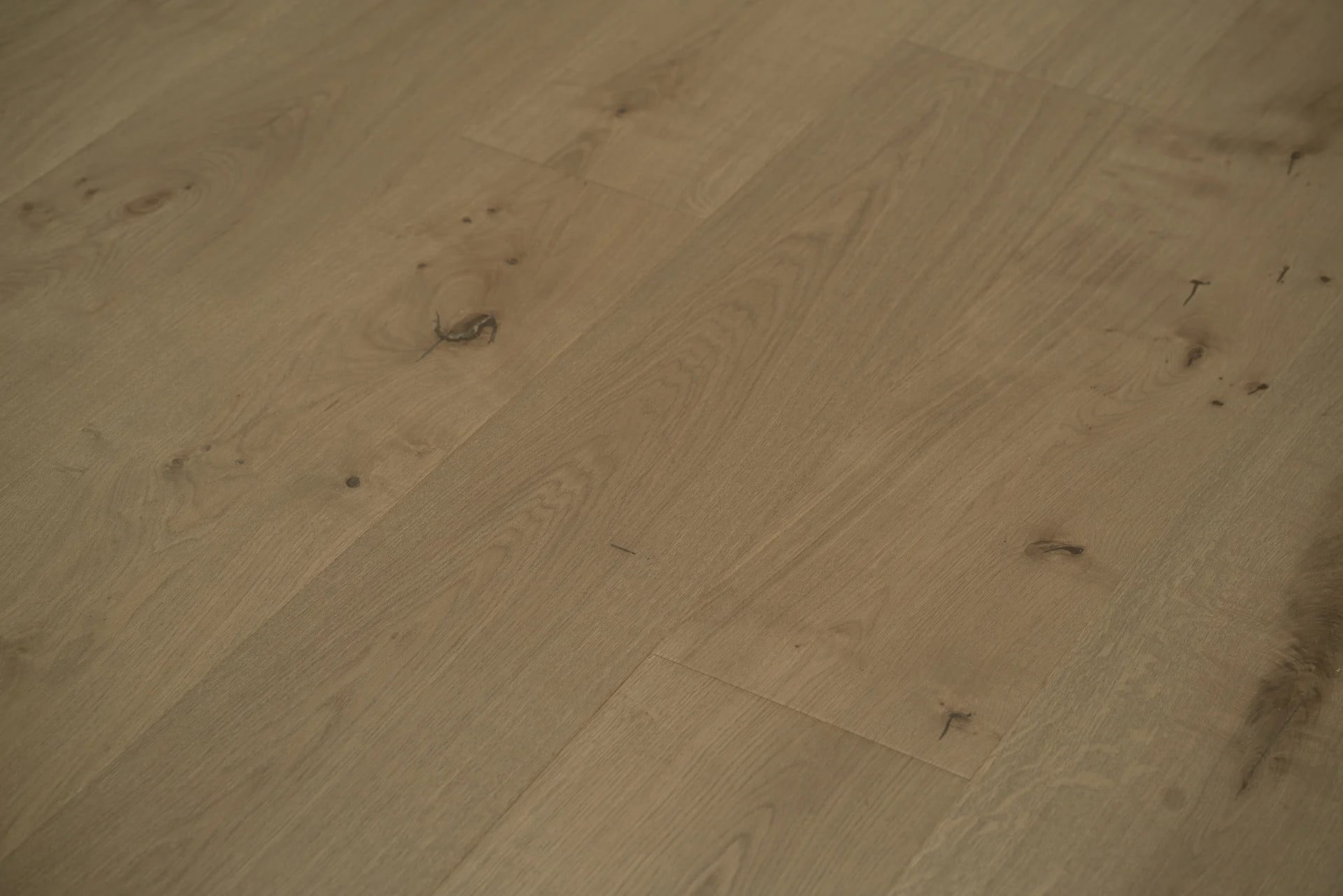
The factory finish is what protects the face of the board. A cured, factory-applied finish seals the top surface far more evenly than most site-applied coats. What it cannot seal is the edge of each board, where water travels once it gets into a seam. The micro bevel along the long sides that gives the floor its texture is also a small channel that holds water a little longer if it is not wiped up.
Wood is also forgiving in one way vinyl is not. A wood floor with a thick enough wear layer can be sanded and refinished after surface wear. A 4mm top layer leaves room for that. Water damage that reaches the core, though, usually means replacing boards, not refinishing them.
What "water-based" on the label actually means
This is the label that confuses people most. Many oak floors list a water-based finish, such as the Treviso Bene's polyurethane or the Garrison Allora 9-1/2" European Oak Doma Select with its Water-based matte UV lacquer.
"Water-based" describes the chemistry of the finish when it was applied, not how it behaves around water. It means the finish was carried in water rather than a solvent, then cured. Once cured, it is a protective film like any other. It does not make the floor more water resistant than a solvent-based finish, and it does not make it less.
The words that matter for water are different ones: waterproof, water-resistant, and the installation method. None of the oak floors named here claim to be waterproof, and you should treat any wood floor that does with some caution. If waterproof construction is what the room needs, the floor has to be built for it, with a core that does not absorb water. That is the territory of rigid vinyl and some laminates, which our piece on SPC vs vinyl flooring explains.
Room by room: where oak works and where it does not
Here is how we would think about it for the rooms people ask about most.
Living rooms, bedrooms, dining rooms and hallways: engineered oak is a sound choice. Water arrives as occasional spills. Wipe them up and the floor will be fine. A rug at the front door and a tray under plants do more for these floors than any coating.
Kitchens: engineered oak can work, with conditions. The risk is not the spill at the counter, it is the slow leak from the dishwasher, the fridge water line or the sink trap. A leak detector under the sink and behind the fridge is simple insurance. Our guide on engineered hardwood in a kitchen covers the checks in detail.
Entryways and mudrooms: wood works if wet shoes and umbrellas have somewhere to go. A matte, brushed surface hides grit marks better than a smooth one. The bigger enemy is grit, not water.
Full bathrooms and laundry rooms: this is where we would steer you away from wood. A bathroom sees water every day, often standing around the tub or shower, and a laundry room has a washer that can fail without warning. A floor with waterproof construction, or tile, is the right material here. Our piece on flooring over radiant heat in a bathroom covers what can go down in those rooms.
Powder rooms are the one grey area. With no shower and little splashing, engineered oak can run through from the hallway, as long as the toilet and sink connections are sound and you accept the risk.
The water you do not see: slabs and subfloors
Many houses sit on a concrete slab, and many others sit over a crawlspace. In both, the water that harms a floor most often comes from below, not from a spill.
A slab can hold moisture for a long time and release it slowly as vapour. Under a wood floor, that vapour has nowhere to go, and the boards take it in from underneath. The result is cupping, where the edges of each board rise above its centre. Over a crawlspace, poor ventilation or a missing vapour barrier does the same thing more slowly.
That is why moisture testing comes before any wood floor goes down. Follow the manufacturer's installation instructions for testing and for the vapour retarder or underlayment they specify. If the readings are high, the answer is either to deal with the moisture first or to choose a floor that does not mind it. Our piece on laminate or vinyl on a slab goes into that choice.
Installation method matters here too. The Doma Select lists Glue Down, Floating. A glued floor over a slab depends on the adhesive and the moisture barrier beneath it, so testing is not optional. A floating floor sits on an underlayment, which can include a vapour barrier, but it still needs a dry, flat slab.
What we would ask before recommending a floor
Before recommending anything for a room where water is the worry, these are the questions we would ask.
- Which room is it, and does water arrive as spills, splashing or a possible flood?
- What is under the floor: a concrete slab, plywood over joists, or a crawlspace?
- Has the slab or subfloor been tested for moisture, and what did it show?
- Where are the water lines: dishwasher, fridge, washer, toilet, sink?
- Would you rather have real wood with some care, or a floor you never think about?
- Does the floor need to run continuously from a dry room into a wet one?
The last question decides a lot. If you want one floor through a kitchen and living area, engineered oak can do it with care. If the same run continues into a laundry room or full bathroom, it is usually better to change material at that doorway than to stretch wood into a room it cannot handle.
The most useful step before deciding is to see the material in your own room. Order a few flooring samples, put one by the sink and one in the living room, and live with them for a while.
Common questions about water and flooring
Is engineered oak waterproof?
No. Engineered oak is more stable than solid wood as humidity changes, but the top layer is real wood and can be damaged by standing water. Wipe spills up promptly and keep it out of wet rooms.
Does a water-based finish protect against water?
It protects the surface like any cured finish. The phrase describes how the finish was made, not extra water resistance. The seams between boards are still the weak point.
Can I put wood flooring in a kitchen?
Yes, with care. The risk is a slow leak from an appliance, not everyday spills. Leak detectors under the sink and behind the dishwasher and fridge reduce that risk considerably.
What should I use in a full bathroom?
A floor with waterproof construction, such as rigid vinyl, or tile. Daily water on the floor is outside what an oak floor is built for.
What happens if my wood floor gets flooded?
Stop the water, remove it quickly and dry the room. Boards that have cupped or lifted often need replacing. A floor with a thick wear layer can be refinished after surface marks, but not after water reaches the core.
Choosing a floor for the water your room will see
Water flooring is really a question about the room. Engineered oak with a factory finish suits rooms where water arrives as the odd spill. Bathrooms, laundry rooms and damp slabs need a floor built for water. When you are ready, request a quote and we will book a free in-home laser measurement, check the subfloor for moisture, and help you choose the right floor for each room.