
Living room flooring: width, light and wear
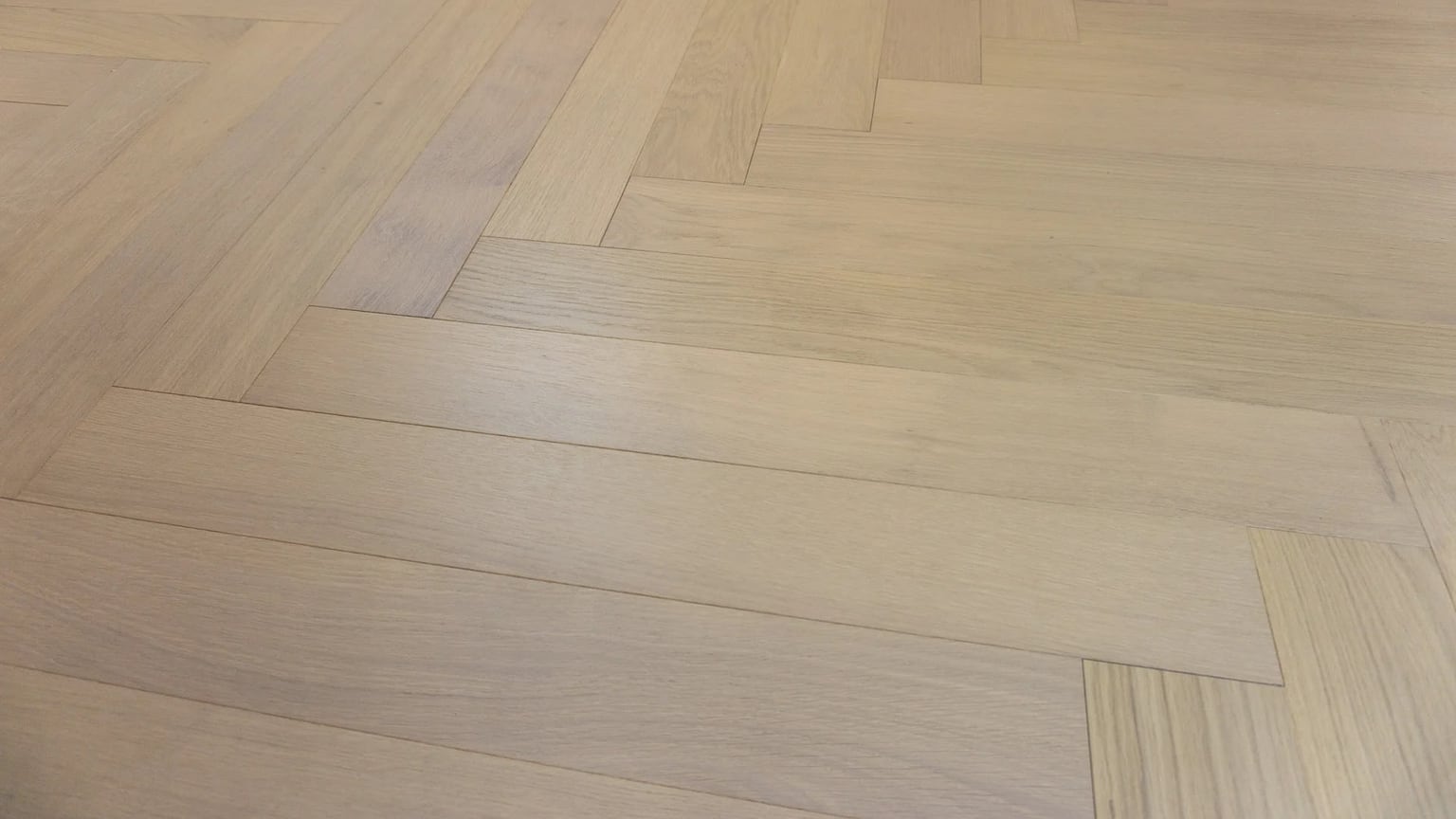
Good living room flooring answers what the room actually does. It takes daylight from big windows, it carries furniture that gets pulled and pushed, and it sets the scale for the rest of the house. So choose the plank width for the room's proportions, the finish for its light, and the wear layer for how long you plan to live with it. Colour comes after those three, not before.
The living room is the floor people choose on appearance, which is exactly why the construction question gets skipped. This guide walks through what to check in your own room first, using real specifications from the range.
What the living room actually does to a floor
A living room is not a hard-working room in the way an entry or a kitchen is. Grit arrives on shoes, but much of it has been dropped before people reach the sofa. Spills happen, yet they are occasional rather than daily.
What the living room does instead is slower. Furniture legs press into the same spots for years, and chairs slide back and forth over the same boards. Sunlight crosses the floor every afternoon and changes the tone of anything left uncovered.
The other thing it does is spread. In a lot of houses the living room opens into a hall, a dining area or the kitchen. That means the floor you pick here often becomes the floor for half the house, and every decision below carries into those rooms too.
Plank width and the size of the room
Plank width is the first thing the eye reads, because it sets how many seams cross the room. Wide boards mean fewer seams and a calmer surface. Narrow boards mean more lines and a busier one.
The range runs from narrow to very wide. The Reward COSTA boards are 7-1/2" wide, which suits a modest living room without looking crowded. The Bergamo Oak Tramonto Premio is 9.5" wide, a width that suits a larger room or an open plan. The Monarch Plank La Grande Parsenn is 11-3/8" wide, which fills a long room with very few seams.
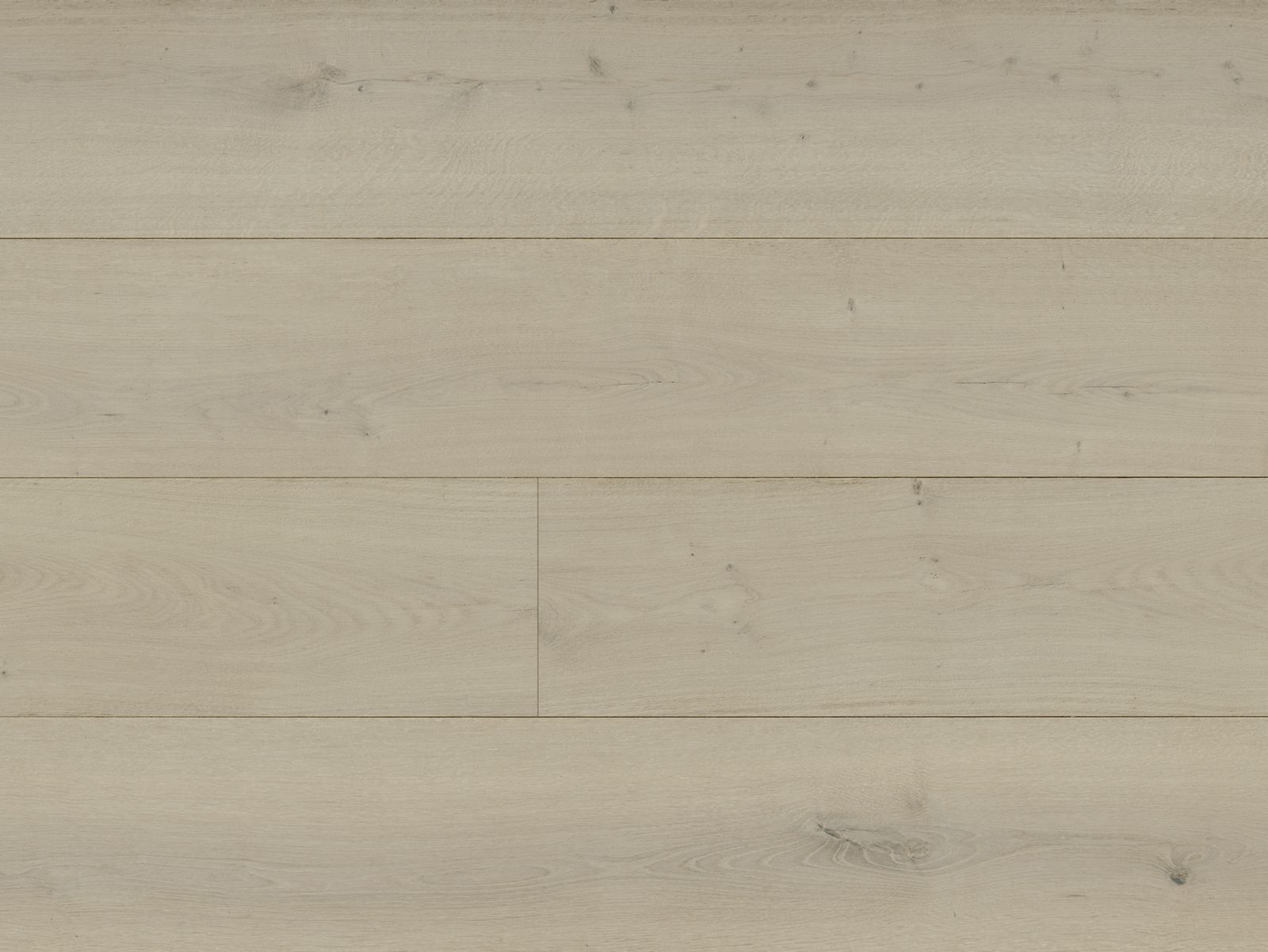
A wide board is not wrong for a small room, but it changes what you notice. In a narrow space you see only a few boards across, so each board's grain and colour matters more. Look at a full board, not a cut sample, before you commit to a very wide plank.
Direction matters as much as width. Planks usually run along the long axis of the room or toward the main window, so light travels down the boards rather than across the seams. If the living room opens into a hall, the run is often set by the hall instead, because changing direction at a doorway reads as a mistake.
Finish and sheen: what the windows will show
A living room usually holds the main windows of the house. Low afternoon light rakes across the floor and shows every fine scratch, footprint and patch of dust on a shiny surface. Sheen is the setting that decides how much of that you see.
An ultra-matte finish scatters light rather than reflecting it, so daily marks fade into the surface. The Reward AVALON boards are listed as Ultra-matte, and the Reward COSTA boards carry an Ultra-matte UV Urethane finish. The Bergamo boards use a matte-brushed UV-cured water-based polyurethane. For more on what those labels mean, read what an ultra-matte UV urethane finish is.
Texture helps too. A wire-brushed surface opens the grain, so a light scratch reads as part of the wood rather than a line across it. The AVALON and ISLANDS boards are listed as wire-brushed, and the COSTA boards add a subtle hand-scrape.
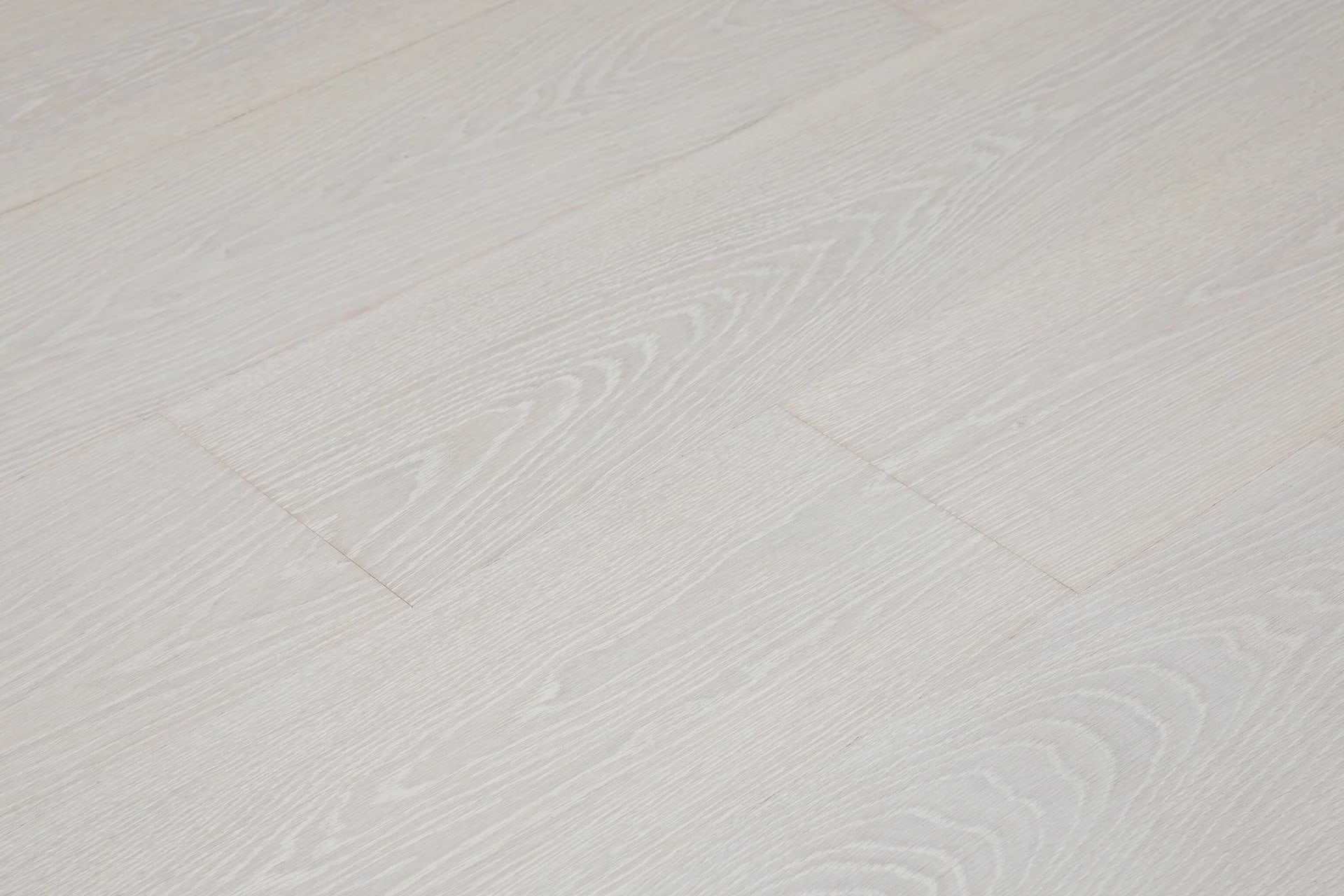
Colour is the other half of the light question. Very pale and limed floors hide dust and pet hair, while a dark floor shows both within a day. Pale floors do show darker grit in an entry, but in a living room that trade-off usually favours the lighter tone.
Wear layer: the decision you cannot see
The wear layer is the real hardwood on top of an engineered plank. It is what you sand when the floor needs renewing, so it decides whether a full resand is possible later. In a room where furniture marks build up slowly, that option has real value.
The listed wear layers vary widely across the range. The Reward AVALON boards carry 1.5mm, and the Reward ISLANDS boards carry 2mm. The Reward COSTA and Bergamo boards carry 4mm, and the Monarch Plank La Grande boards carry 6 mm.
A thinner wear layer is not a bad floor. It simply limits you to refreshing the finish rather than sanding back to bare wood. If you expect to stay in the house a long time, or the room takes heavy furniture, a thicker layer keeps more options open. Our guide on how much wear layer you need goes into the detail.
Overall board thickness matters for a different reason. The AVALON boards are 3/8" thick, the COSTA boards are 5/8", and the Monarch Plank La Grande boards are 25/32". If the living room meets an existing floor in the hall, a large change in height means a transition strip or a ramp at the doorway.
Grade and character: how busy the floor reads
Grade describes how much natural character the boards are allowed to show. Prime grade keeps knots and colour variation to a minimum. Rustic grade lets knots, filler and tone changes through.
In a large living room with little furniture, a Prime floor reads calm and even. That same calm surface shows every dent and scratch, because nothing on the board competes for attention. A Rustic floor reads busier, but it hides the slow damage a living room collects.
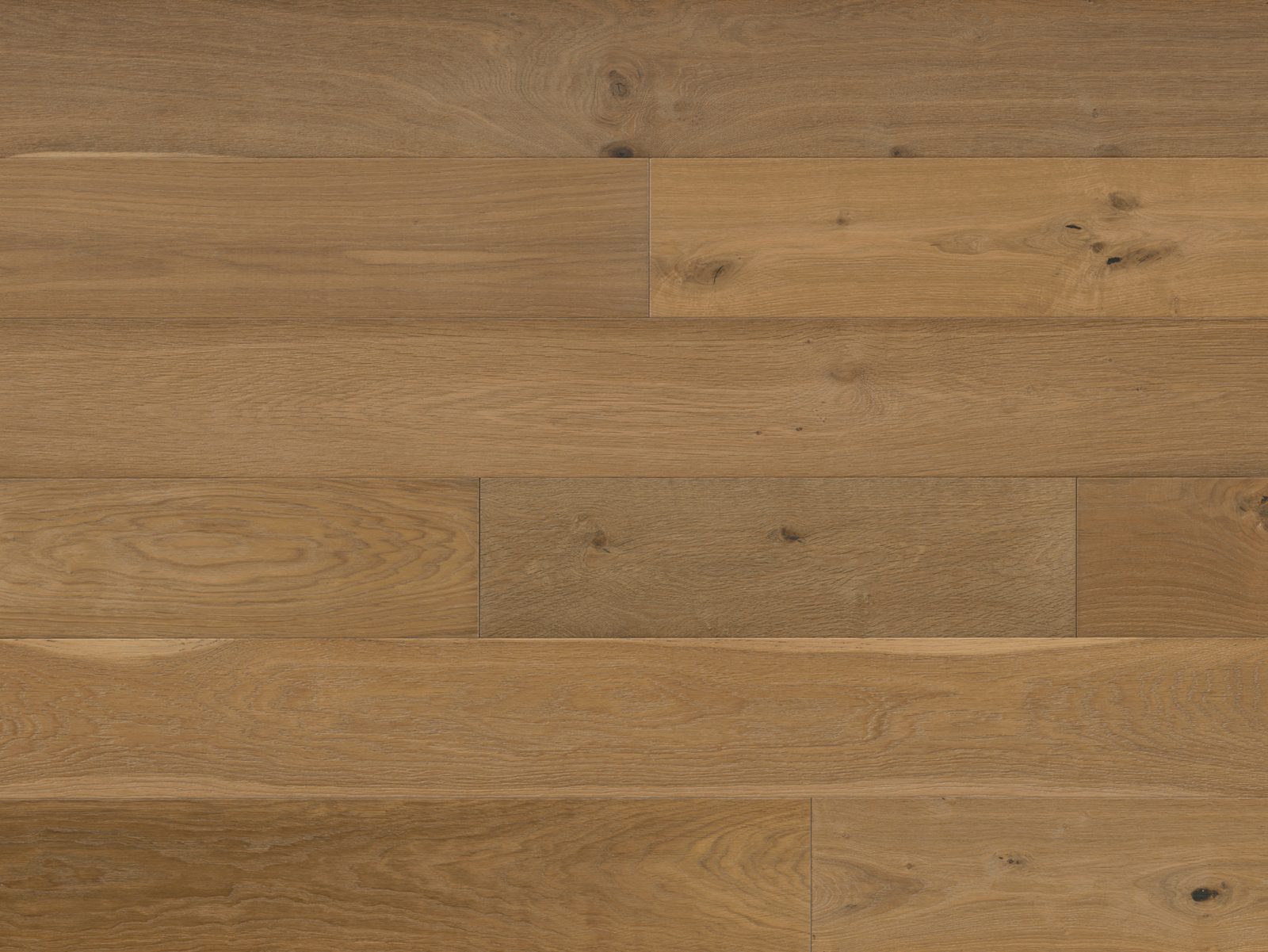
The Reward AVALON Euro Oak Gareth is a Rustic board with cathedral grain and live knots. It suits a family room that will be used hard rather than admired. The Bergamo Oak Usini sits between the two as Light Character grade.
Herringbone in a living room
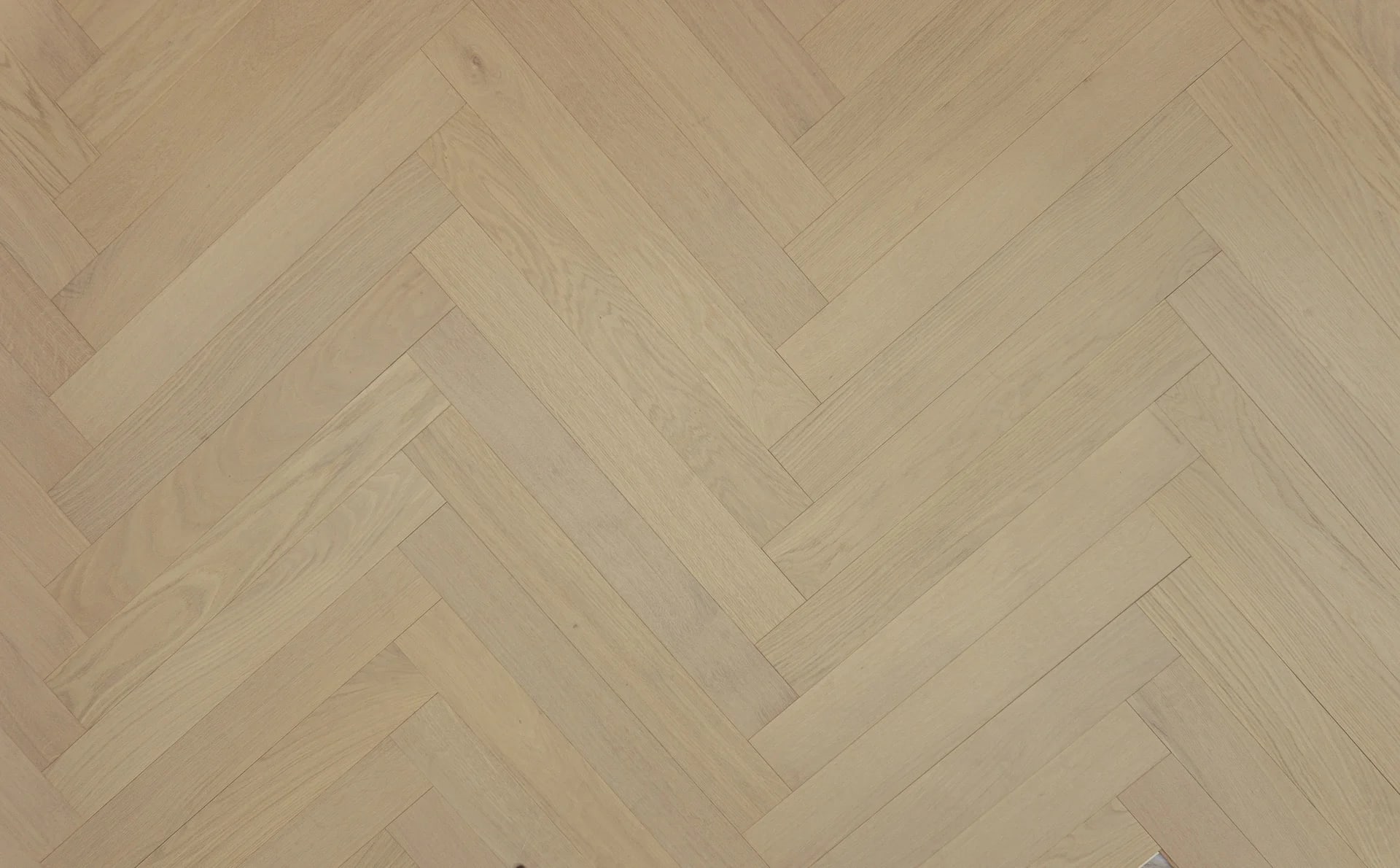
Herringbone turns the floor into a feature rather than a background. The pattern draws the eye and makes the room read as its own defined space. That works well in a living room with walls and a doorway, and less well in a fully open plan.
The Bergamo Oak Turin Herringbone is a Prime grade European White Oak with a 4" (100mm) width and a 4mm wear layer. Its short pieces make a fine, regular zigzag that suits a traditional room or a calm modern one.
The trade-off is labour and planning. Every piece is laid by hand to a centre line, and the edges of the room need careful cutting. Where herringbone meets straight planks in a hall, you need a border or a clean stop at a doorway.
What is under the floor
The subfloor decides more about a living room floor than the boards do. A ground-floor living room on a concrete slab needs a moisture check before any wood goes down. If the slab holds damp, read our comparison of flooring for a damp slab before choosing.
Engineered construction is the usual answer over a slab. The Bergamo boards are a 4mm hardwood top layer on multi-ply cross-bonded Baltic birch plywood. The Reward boards are built on hardwood plywood. A cross-bonded core moves less with seasonal humidity than a single piece of wood.
Flatness matters as much as moisture. Wide planks show dips and humps in the subfloor that a narrow board would hide. Whatever you choose, follow the manufacturer's installation instructions for subfloor preparation and acclimation.
What we would ask before recommending
Before we suggest a floor for a living room, we ask a few plain questions. Which way do the main windows face, and how much direct sun reaches the floor? Does the floor continue into the hall, the dining area or the kitchen?
We also ask about the people in the room. Children, dogs and heavy furniture all push toward a textured, matte, character-grade floor with a thicker wear layer. A quiet room for adults gives you more freedom with a Prime grade or a herringbone.
Then we measure. A free in-home laser measurement gives the real square feet of the room and any connected spaces, including closets and alcoves. It also lets us check the subfloor and the height of every doorway the new floor will meet.
Living room flooring questions
Should the living room floor match the rest of the house?
Where the living room opens into a hall or dining area, one continuous floor usually looks calmer. A change of floor works best at a door frame, where the eye expects a break.
Which way should the planks run in a living room?
Usually along the long walls or toward the main window. If the room opens onto a hall, the hall's direction often decides it, so the boards run through without a turn.
Is a wide plank too much for a small living room?
No, but it changes what you see. With only a few boards across the room, each board's grain stands out, so judge a full board before you decide.
Can I use vinyl in a living room instead of wood?
Yes, and it suits a room that takes a lot of water or abuse. Wood brings a sandable surface and the grain of the species, which vinyl cannot match over a long life.
How thick should the wear layer be for a living room?
That depends on how long you plan to stay. A thinner layer can be refreshed, while a thicker layer such as 4mm or 6 mm can be sanded back to bare wood.
Your next step
Start with the room, not the colour: its light, its size and what sits on it. When you have narrowed it to a width, a finish and a grade, browse the flooring range and compare the specs side by side.