
Floor finish sheen for a living room: matte or gloss
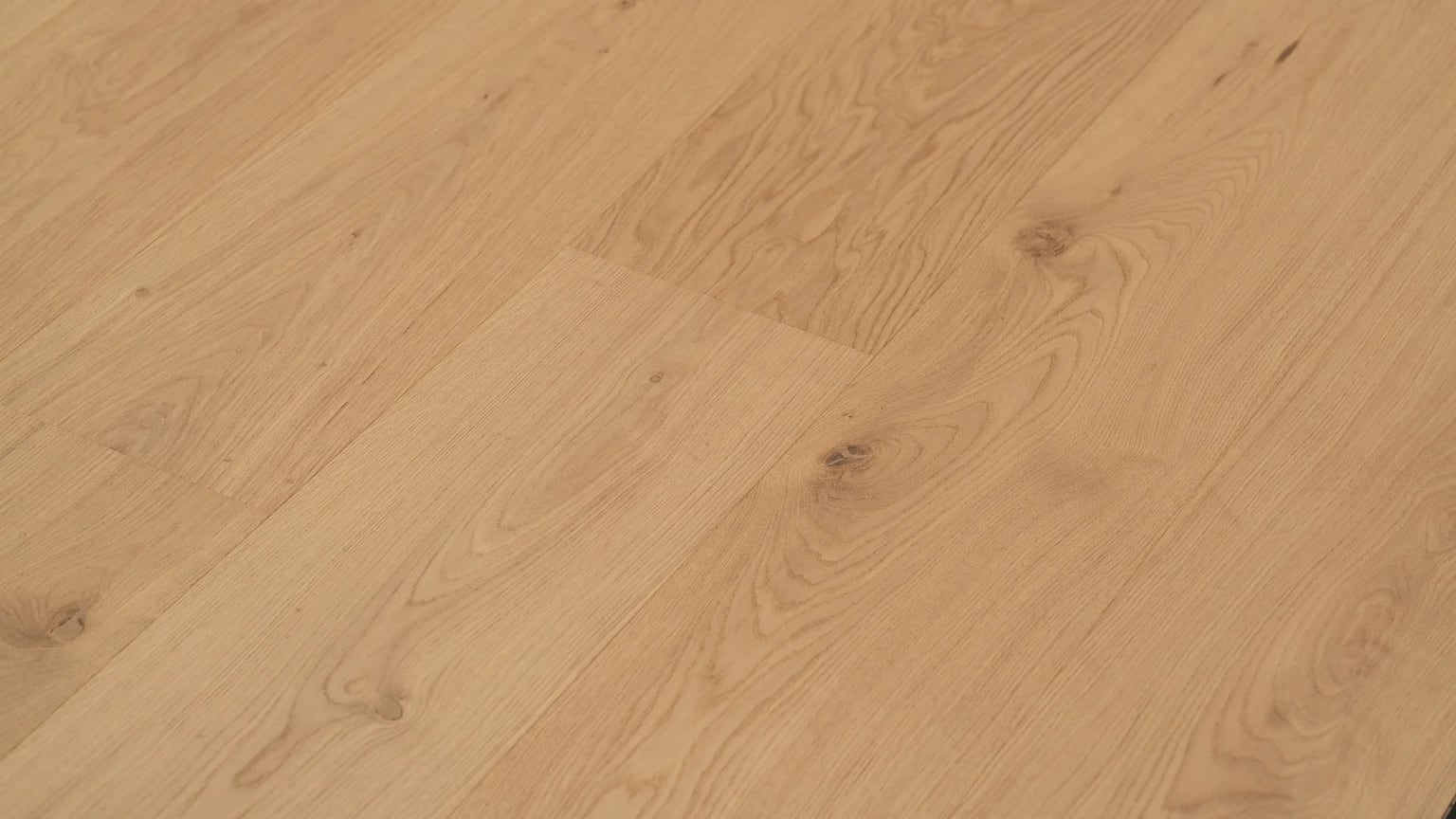
For most living rooms, matte-brushed is the safer floor finish sheen. It hides the fine scratches, dust and footprints that a large, busy floor collects, and it reads as wood rather than as a coating under window light. Semi gloss suits a formal room with little traffic and an owner who likes a reflective, wiped-clean look.
Smooth is a texture rather than a sheen, and a smooth board shows more marks than a brushed one at any sheen level.
That is the short answer. The rest of this piece explains why, where the short answer is wrong, and what to check in your own room before you decide.
What sheen and texture mean on a spec sheet
Sheen is how much light the cured finish throws back at you. A semi gloss coat gives a clear reflection of a window or a lamp. A matte coat scatters that light, so you see the grain of the board instead of the surface of the finish.
Texture is a separate choice that often gets folded into the same word. A brushed board has had its softer grain worked out before finishing, which leaves the harder grain standing slightly proud. A smooth board is sanded level, so every mark sits on one flat plane where light can find it.
The finish on the Bergamo engineered oak we carry reads "Matte-brushed UV-cured water-based polyurethane". That one line covers four things: low sheen, brushed texture, a coating hardened under ultraviolet light in the factory, and a water-based polyurethane. Water-based finishes generally stay clearer than oil-based ones as they age, which matters if you chose a pale oak for its colour.
Why a living room is hard on a reflective floor
The living room usually carries more glass than any other room in the house. Late in the day, low sun skims across the floor at a shallow angle, and raking light is what turns a shiny surface into a map of every scratch. On a matte surface the same scratch scatters light much like the finish around it, so most of it disappears.
Then there is the traffic pattern. People cross the room in shoes, pull chairs out, slide an ottoman and drag the coffee table to vacuum. Grit carried in from the entry works like fine sandpaper underfoot, and it concentrates in the lane between the door and the sofa.
On semi gloss, that lane dulls first while the edges under the furniture stay bright. The contrast between dull and shiny is what you notice, not the wear itself. A matte floor starts low, so the lane has less shine to lose and the room keeps an even look for longer.
Screens add one more problem. A reflective floor can mirror a television or a bright window onto the floor plane, which reads as glare from the sofa. Matte keeps the floor in the background, where most people want it in a room built for sitting.
Where semi gloss still makes sense
Semi gloss is not a mistake in every living room. Its surface is closed and level, so dust and crumbs sit on top and a damp mop lifts them in one pass. It also deepens the colour of a darker oak and gives a formal room a polished, finished edge.
It works when the room is used lightly, shoes come off at the door and there are no pets. It also helps in a small, dim room lit mostly by lamps, because the floor bounces a little light back up into the space.
It is the wrong choice for a living room with a wall of glass, a dog and a family that walks through in outdoor shoes. In that room you would see every pass of grit within a season of use, and the floor would look older than it is.
Smooth or brushed: the texture question
A smooth board feels flat and cool underfoot. Socks slide easily, crumbs sweep off with no resistance, and the grain reads as a picture under the finish rather than something you can feel. The trade-off is that dents and scratches sit on a level plane, so raking light finds them at any sheen.
A brushed board gives you a slight ripple you can feel with bare feet. Small scratches fall into the grain pattern and read as part of the wood. Fine dust can settle into the open grain, so a vacuum with a soft brush head does a better job than a dry mop alone.
Brushing also suits a board with visible character. Knots, filled checks and strong cathedral grain look natural on a textured surface, and the texture gives the eye something to follow besides the marks of daily life.
What the board under the finish changes
Sheen and texture do not act alone. The grade and width of the board decide how much the finish has to carry, and in a large room those choices show from across the floor.
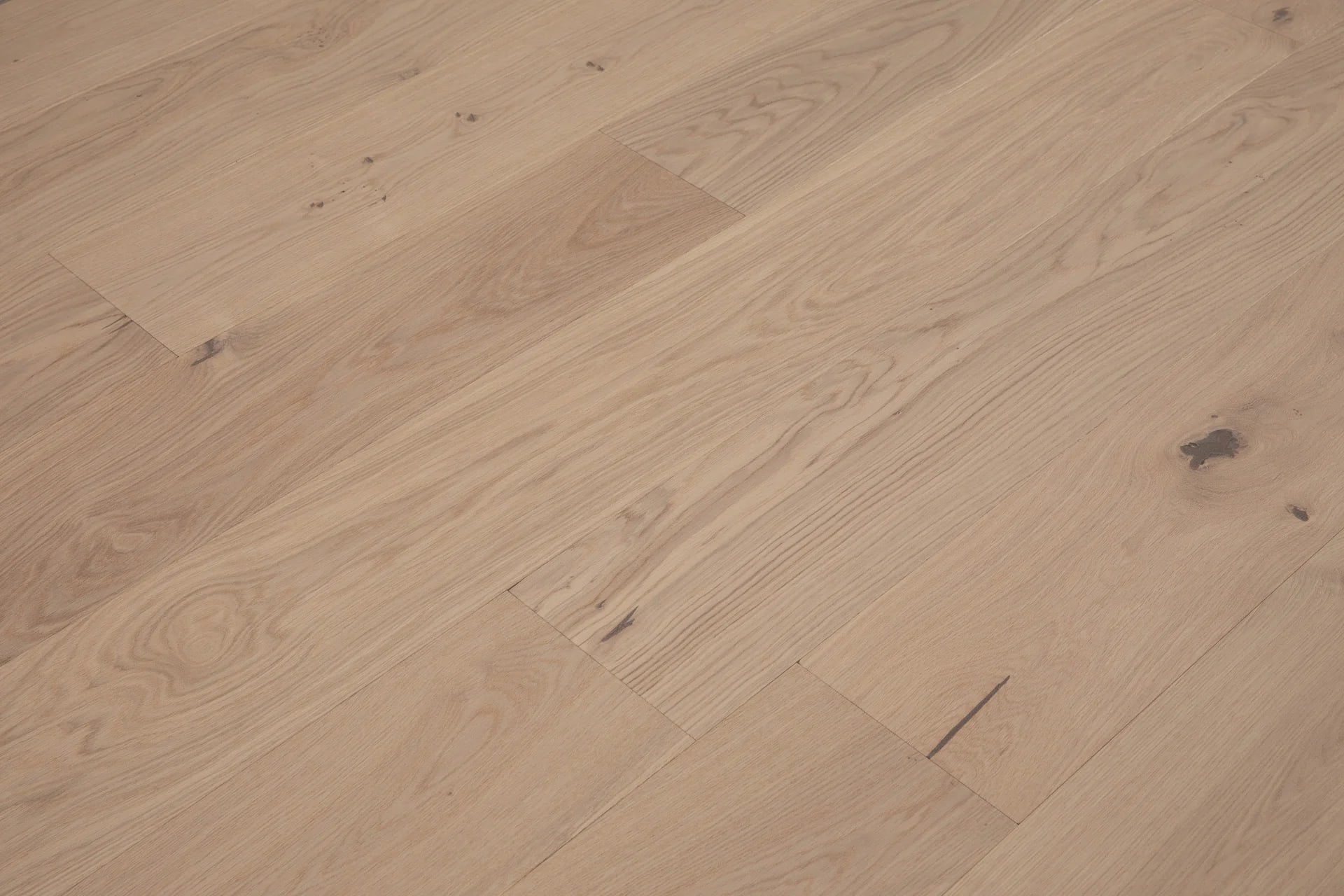
A character grade board does part of the hiding for you. Bergamo Oak Lasa Bene is Light Character grade European White Oak, 9.5" wide, with micro-bevelled long sides and square short ends. Its knots and grain movement break up the surface, so a small scratch has plenty of company.
A Prime grade board is quieter, which puts more weight on the finish. Bergamo Oak Pisa Premio is Prime grade at the same 9.5" width. On a calm board like this, matte-brushed is doing real work: a glossy coat over quiet grain would show every mark from the hallway.
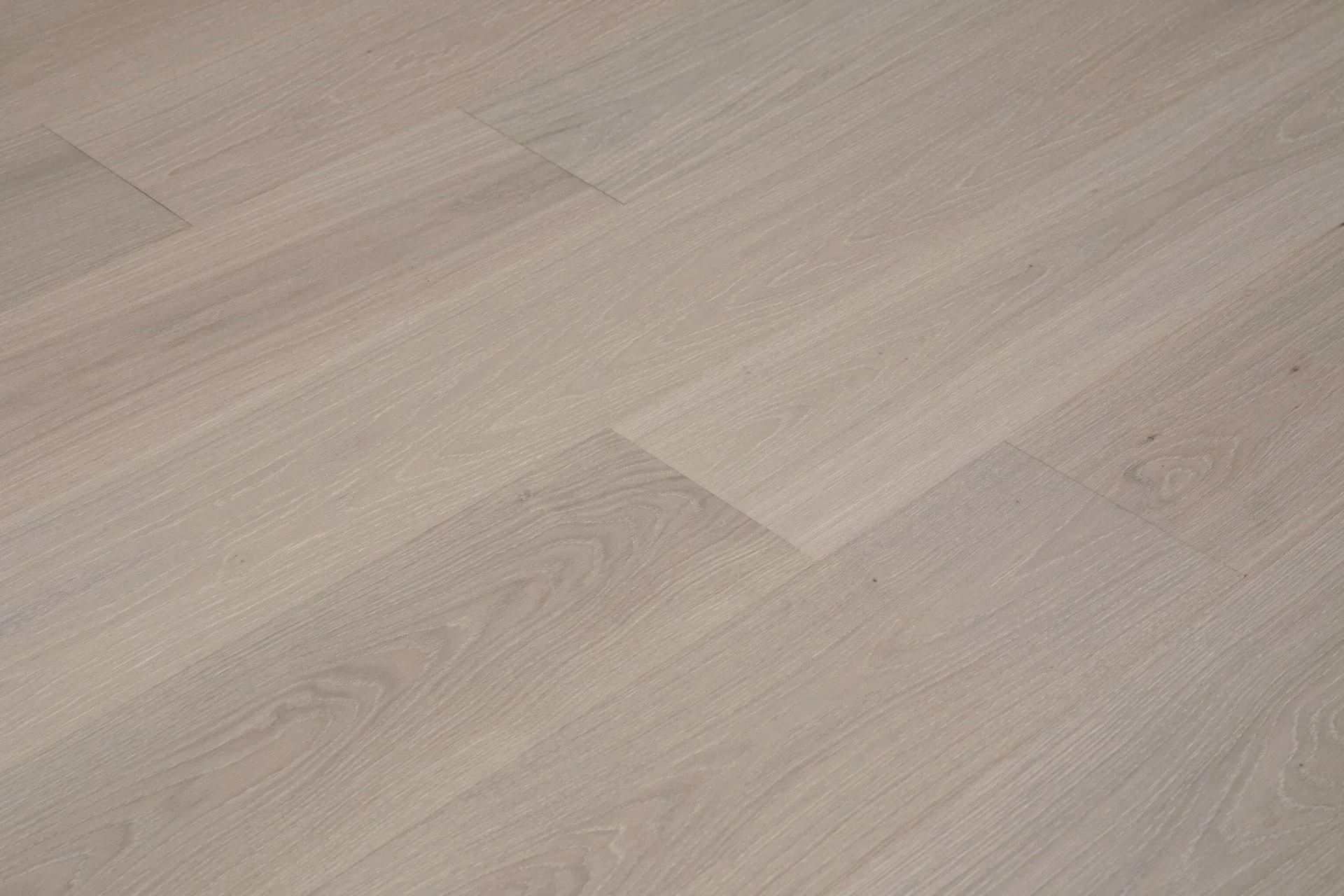
Bergamo Oak Venosa Premio makes the same point at the pale end, with whitewashed boards and fine, subtle grain. Pale, quiet oak is where a low sheen earns its place.
Underneath the finish, every Bergamo board named here has a 4mm hardwood top layer on multi-ply cross-bonded Baltic birch plywood, 5/8" thick overall. The finish is the first thing a chair leg meets. The wear layer is what is left to work with if the surface ever needs attention, and any sanding should follow the manufacturer's instructions.
The 7.5" boards, such as Bergamo Oak Modena, give a busier floor with more seams. The 9.5" boards give a calmer one. On a matte-brushed surface, both read as wood first, which is why width becomes a question of the room's proportions rather than of sheen.
How to judge sheen in your own room
Start with your light, not a showroom's. Stand at the far end of your living room in late afternoon and look across the floor toward the windows. If you see a bright sheet of glare on the current floor, a semi gloss replacement will show that glare and every mark inside it.
Open-plan rooms need extra care. A living area that flows into dining and kitchen space puts one floor under several kinds of light at once, from the window wall to the pendant over the table.
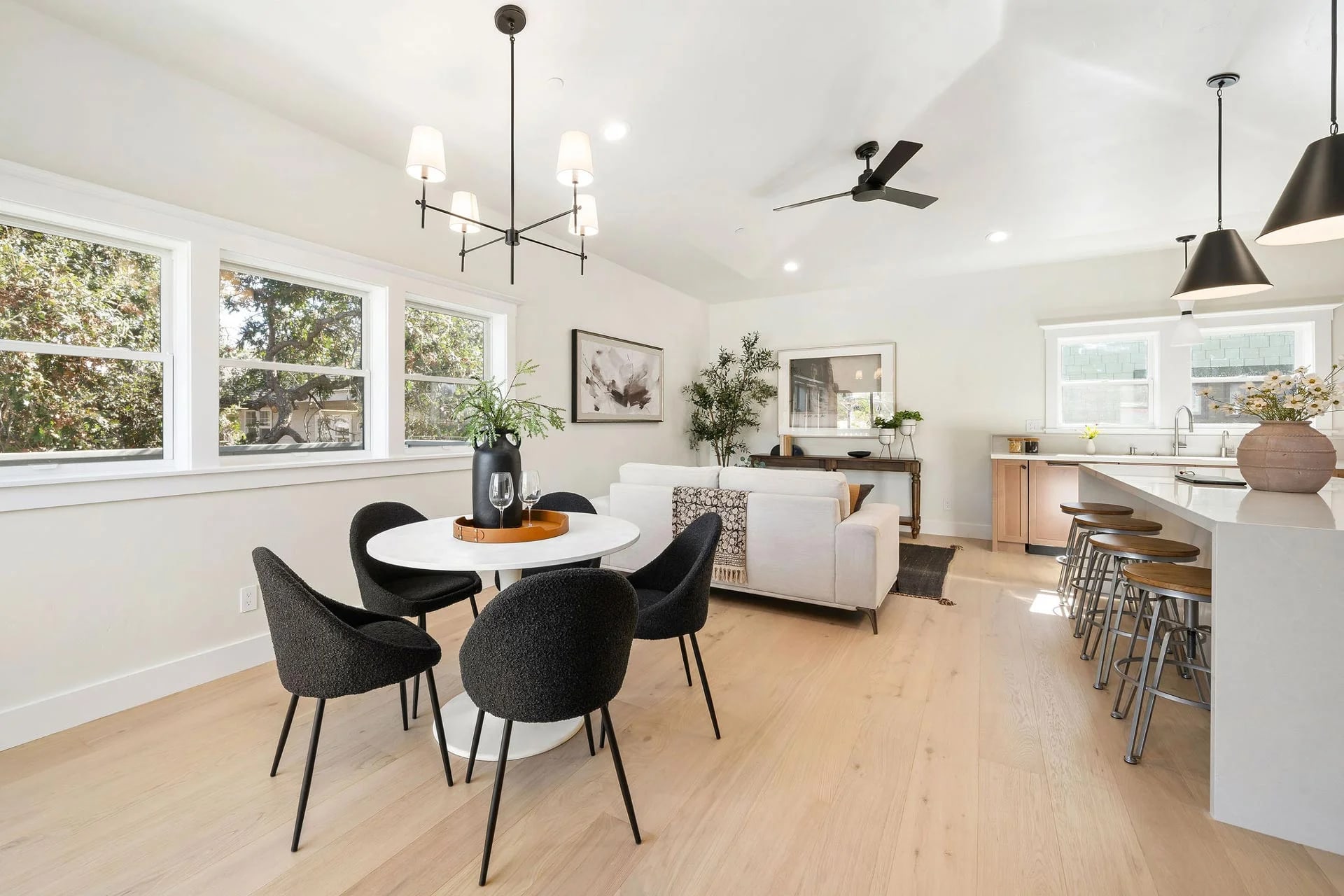
Next, look at who uses the room. Count the people who walk through in outdoor shoes, any pets, and how often furniture moves. Each of those pushes the decision toward matte and brushed.
Then think about cleaning. If you want one damp pass and nothing else, a smooth surface is easier. If you already vacuum once or twice a week, brushed texture costs you almost nothing.
Finally, put the real board in the real room. Order samples and lay them near the window, then look from standing height and from the sofa in morning and evening light. A sheen that looks soft in a hand can look very different across a whole floor.
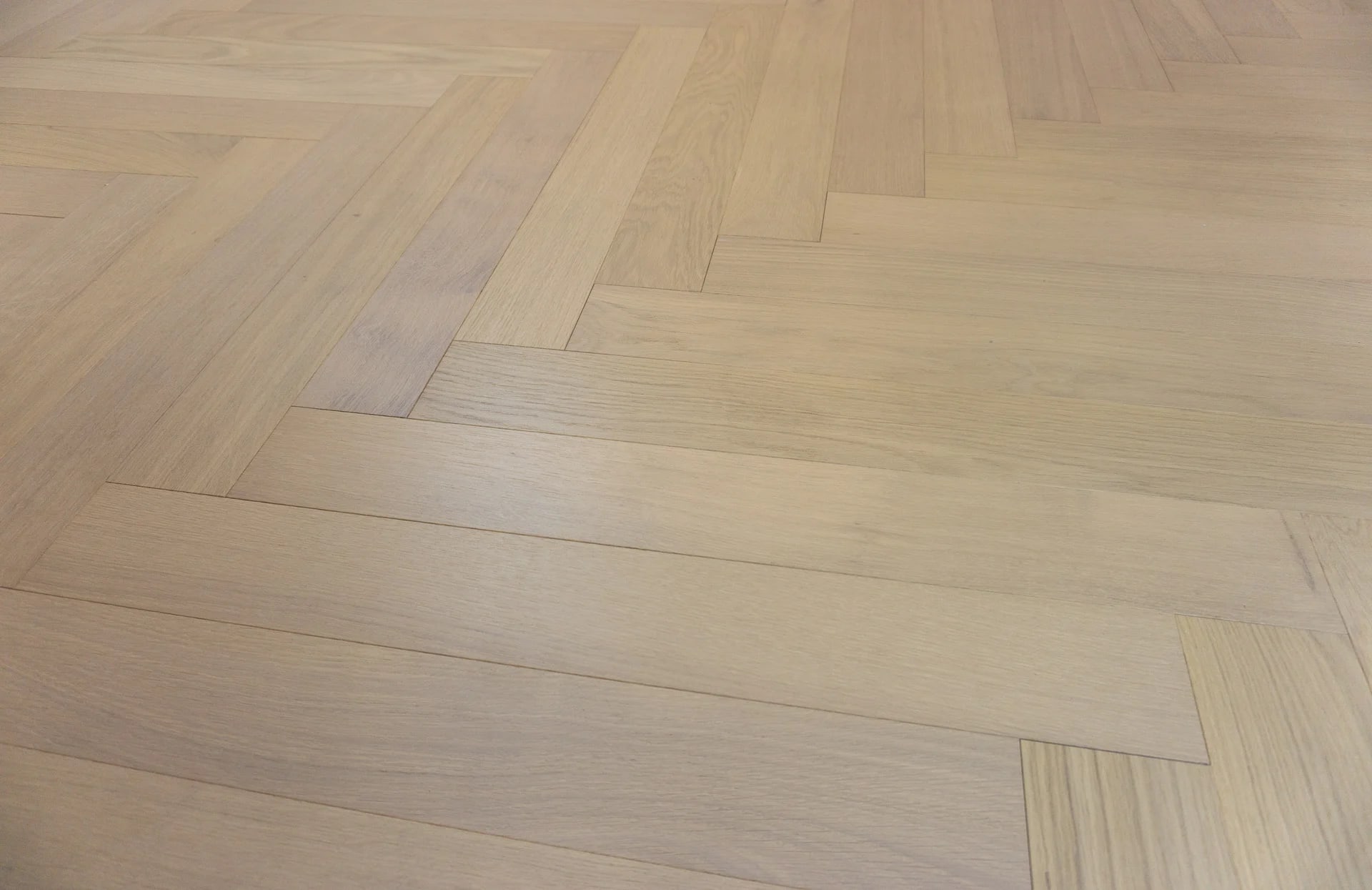
Pattern changes the result too. In herringbone, neighbouring boards run in different directions, so each one catches light differently. On a glossy floor that creates a flicker as you move through the room; matte-brushed keeps the pattern readable without the flashing.
What we would ask before recommending one
Before we suggest a finish, we ask which way the main windows face and whether the room gets low sun. We ask what floor sits in the hallway and kitchen, because a sheen change at a doorway is easy to see. We also ask about shoes, pets and how the room is cleaned.
The answers usually point to matte-brushed for a living room. When they do not, we say so, because a quiet, low-traffic formal room can carry semi gloss well. We then confirm the square footage with a free in-home laser measurement before anything is ordered.
For the wider decision about plank width and wear in this room, our guide to living room flooring and how width, light and wear interact covers the parts this piece leaves out.
Common questions about floor finish sheen
Does a matte finish wear out faster than semi gloss?
Not because of the sheen. How long a finish lasts depends on the coating and how it was cured, not on how much light it reflects. Matte simply shows wear later, because it has less shine to lose.
Is a matte-brushed floor harder to clean?
It is a little different rather than harder. Fine dust can rest in the open grain, so use a vacuum with a soft brush head before a damp mop. Spills wipe up the same way they do on any sealed floor.
Can I change the sheen later?
Only by sanding and recoating, which replaces the factory UV-cured finish with one applied in your house. That is a real refinishing job, so ask before you plan on it and follow the manufacturer's instructions.
Will a matte floor make my living room look darker?
It bounces slightly less light, which most people do not notice in a room with good windows. If the room is dim, a pale board such as Bergamo Oak Venosa Premio offsets the effect better than a glossy coat would.
Should the living room match the sheen of the rooms next to it?
Where the floor runs continuously, yes. A change in sheen at an open doorway reads as a mistake, even when both floors are the same species and colour.
Where to go from here
A reliable way to judge sheen is under your own windows, with the board you are considering. Start by comparing grades, widths and finishes across the engineered oak and other floors in our range, then bring two or three samples home before you commit. When you are ready for a number, request a quote and we will book the measurement.