
White oak or walnut flooring for a living room
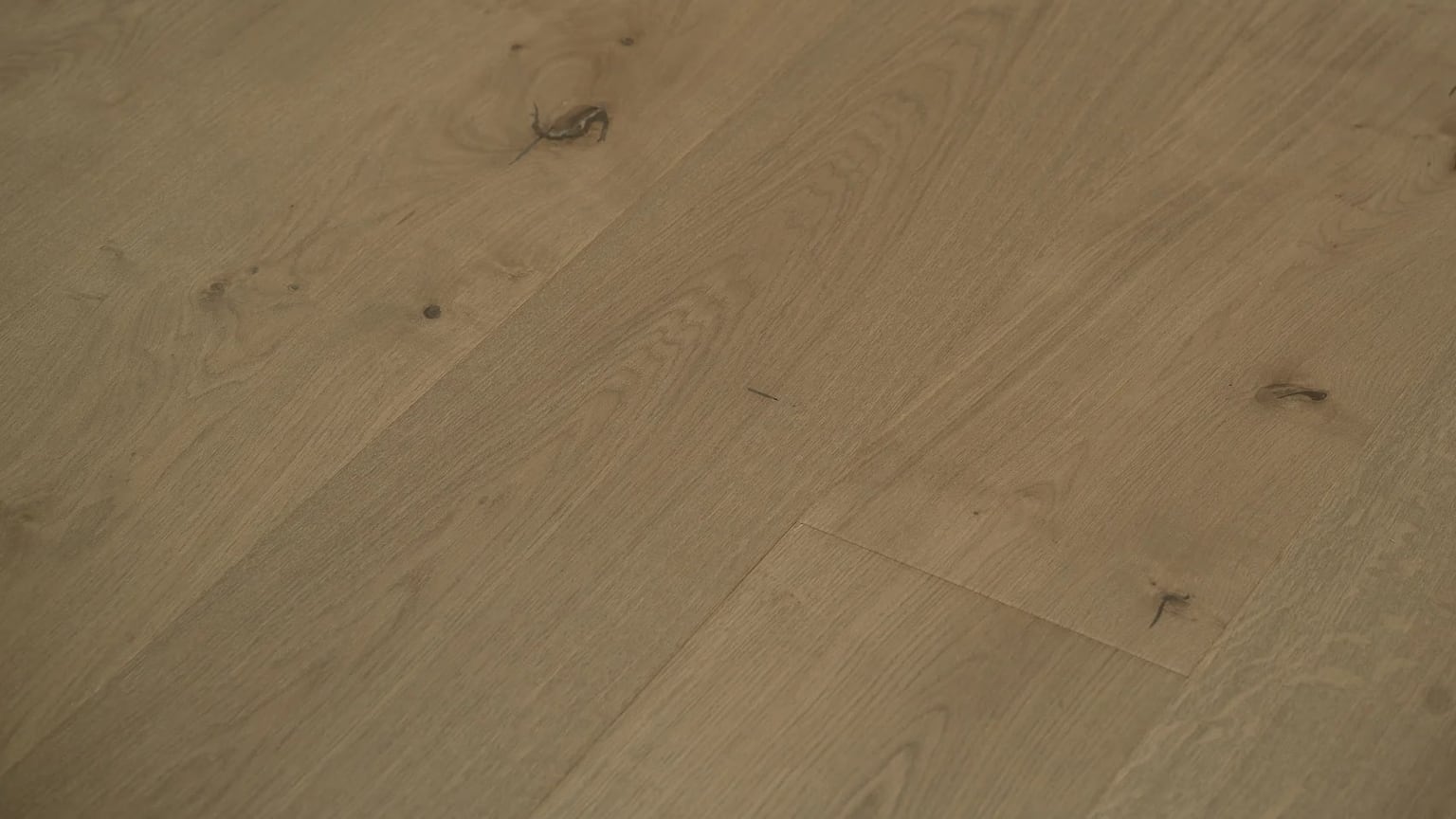
Choose white oak if you want a lighter, quieter floor that lets the furniture lead, and choose walnut if you want a deeper, browner floor that becomes part of the room's character. Neither is wrong for a living room. The real decision is about colour, grain and the light your room gets, and you can check all three before you buy. Below is how white oak or walnut flooring behaves in a living space. You will also see what the named boards in our range offer by their listed specifications. Then come the trade-offs we would want you to hear.
What actually separates the two species
White oak is an open-grained timber, and European white oak in particular is the species behind many of the pale, soft-toned floors you see in modern homes. The grain is visible, with cathedral patterns on the face of the board and knots where the maker leaves them in. The colour sits in the cream, sand and light brown range before any stain or finish changes it.
Walnut is a darker, browner timber with a smoother and more flowing grain. It reads as a richer tone straight from the box. In a living room that difference shows up first in the mood of the space. A white oak floor recedes, while a walnut floor holds the eye and makes the room feel more enclosed.
Neither species changes the basic rules of the room. Both are wood, both respond to the humidity in the house, and both want a subfloor that is flat and dry. Our article on European white oak flooring and what the label means explains what a species name on a spec sheet does and does not tell you.
How the light in your room changes the choice
A living room is usually the room with the most glass and the most daylight, so it is the room where a floor colour is tested hardest. Dark floors show dust and pale crumbs more clearly in strong light. They also reflect less light back into the room, which can make a small or north-facing space feel heavier.
A pale oak floor does the opposite. It bounces daylight around, hides most dust, and makes a modest room feel larger. The trade-off is that a pale floor shows its own character in the knots and grain, which some people love and others find busy.
Do the test in your own room. Hold a sample board on the floor at the time of day you use the room most, and look at it in morning light and in the evening with the lamps on. A sample you can see in your own light tells you more than any photograph does. Our samples page shows how to order one, and samples are paid and final sale.
What the named boards offer
A comparison is only useful when it names real products and states only what is listed.
Bergamo Oak Lasa Bene is European white oak in a Light Character grade. It is an engineered board, built as a 4mm hardwood top layer on multi-ply cross-bonded Baltic birch plywood. The board is 5/8" (15mm) thick and 9.5" (242mm) wide, with a 4mm wear layer, long sides that are micro-beveled and square short ends. The finish is a matte-brushed UV-cured water-based polyurethane, and it is made in Italy.
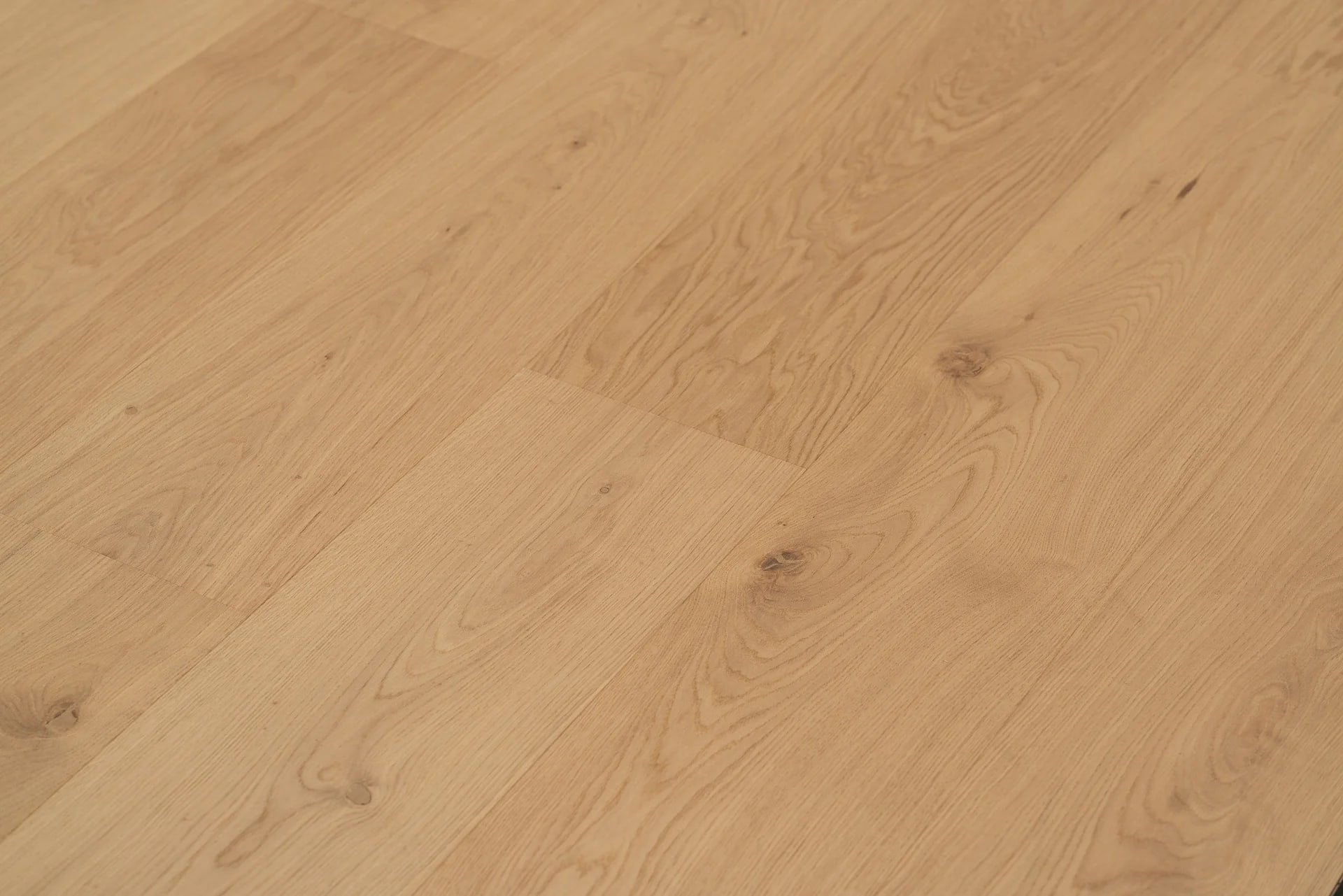
Bergamo Oak Pisa Premio uses the same species and the same construction, with a Prime grade in place of the character grade. That is the practical difference between the two. A Prime grade is cleaner and more uniform, while a character grade lets more knots and colour variation through.
Garrison Legends Natural Walnut 7-1/2" is the walnut in the range. It is engineered, with a Select Character grade, a multi-ply birch substrate, a 5/8" thickness and a 4mm wear layer. It is 7-1/2" wide with a micro-beveled edge and a matte lacquer finish, and it is listed at 1010 on the Janka scale. The listed installation methods are nail, staple, glue or float.
Engineered construction in a living room
All three boards above are engineered rather than solid. An engineered board is built in layers, with a real wood face on top and a plywood core underneath. The layers run in different directions, which keeps the board more stable across its width than a single piece of timber.
For a living room that matters for two reasons. Living rooms often sit next to a kitchen, a patio door or a stairwell, and humidity moves around in those spaces. An engineered board is also more flexible about how it goes down, as the walnut's listed install methods show.
The 4mm wear layer is the real wood on the surface, and it is what takes the daily scuffs. A thicker wear layer gives a floor more life before it needs attention, and a thin one gives less. Our guide to flooring plank width explains how the width of the board changes what you see across a room.
Finish matters as much as species
The finish decides how the floor looks in light and how it handles a spill. Both oak boards use a matte-brushed water-based polyurethane. The walnut uses a matte lacquer. All three are matte, which means they reflect less glare and show fewer fine scratches than a glossy surface does.
If you are choosing a sheen, our article on floor finish sheen for a living room goes through matte against gloss in more detail. We would add one practical point here. A matte finish on a dark floor still shows pale dust, so a walnut floor asks for slightly more sweeping in a sunny room, whatever the finish says.
Common questions about white oak and walnut floors
Is walnut too dark for a living room?
Not necessarily. It suits a room with plenty of daylight and lighter walls. In a small room with little light, a darker floor can make the space feel smaller, so test a sample board in the room first.
Does white oak show scratches more than walnut?
Both are wood and both mark. A matte finish hides fine scratches on either one. Colour matters more than species here, because a lighter floor hides pale dust and scuffs better than a dark one.
Can I put either floor over a concrete slab?
That depends on moisture in the slab and on the maker's installation instructions, not on the species. Ask for a proper moisture test and read the instructions for the board you choose.
Should I pick a character grade or a Prime grade?
Pick the grade that matches how much variation you can live with. A character grade shows more knots and colour change, and a Prime grade looks cleaner and more even.
What does the wear layer tell me?
It tells you how much real wood sits on top of the core. A thicker top layer gives a floor more life before it needs attention, which is why we read it from the spec sheet.
What we would ask before recommending one
We would ask how much daylight the room gets, how dark the walls are, and whether you want the floor to lead or to stay quiet. We would ask about the subfloor, and whether the room opens onto a kitchen or a patio. Then we would suggest two or three boards, put them in front of you as samples, and let you see them in your own light.
Our free in-home laser measurement gives you accurate room dimensions before you decide. You can pay after measurement, or pay now by card. Delivery and professional installation available across our service area covers the Bay Area and out into the Central Valley, and local installation partners do the installation.
When you are ready to compare boards side by side, browse the flooring range, or send a quote request with your room details.