
Flooring over radiant heat in a bathroom
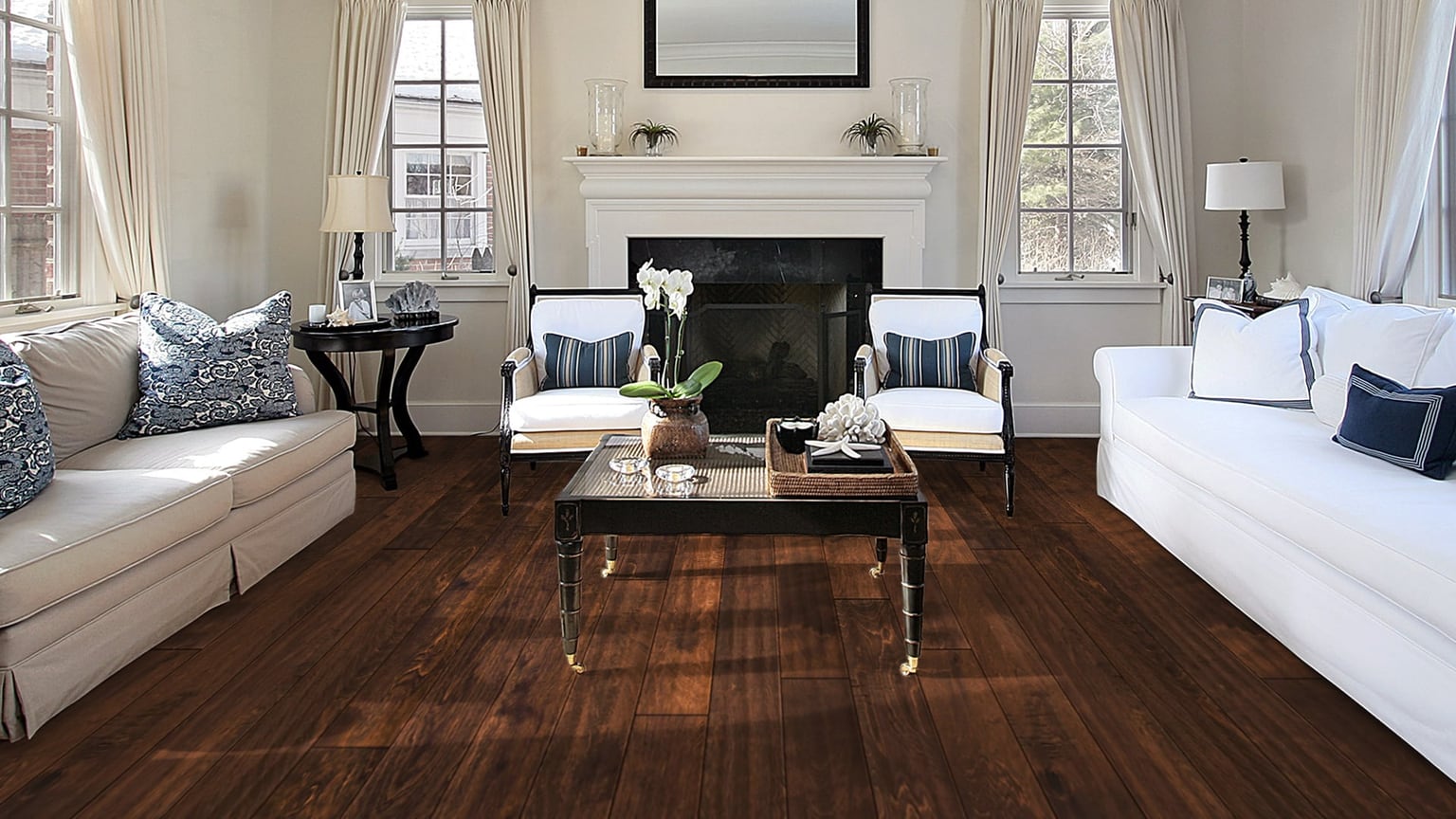
Flooring over radiant heat in a bathroom has to pass two tests at once: it must tolerate water on top and steady warmth from below. Tile and stone pass both, which is why they are the default over a heated bathroom floor. Engineered wood can pass the heat test only where its maker approves it, and it fails the water test in any room with a shower or tub.
So the short answer is this. In a full bathroom, choose tile or stone over the heating. In a powder room with only a sink, an engineered floor that its manufacturer approves for radiant heat can work, installed exactly as its instructions say.
Why a heated bathroom is two problems, not one
Radiant heat changes the subfloor. Warmth from tubing or an electric mat dries the layer directly under the floor, then the system cycles off and the room's humidity comes back. Wood answers each swing by shrinking and swelling, which shows up as gaps between boards, cupping, or seams that open and close with the seasons.
A bathroom adds water on top. Splashes from a tub, drips from a shower door and a wet bath mat all sit at the seams, where no finish can protect the edge of a board. Heat from below then pulls that moisture through the wood faster than it would travel in an unheated room.
Either problem alone is manageable with the right product. Together, they are the reason so many manufacturers draw a hard line at full bathrooms, whatever their radiant heat rating says about the rest of the house.
What may go down over radiant heat in a bathroom
Porcelain and ceramic tile are the conventional floors over a heated bathroom. They do not move with heat, they do not take on water at the surface, and a thin electric mat sits easily in the setting bed beneath them. Natural stone behaves much the same, with more sealing to keep up over its life.
Rigid vinyl is the case people ask about most. Some rigid core floors are rated for radiant heat and some are not, and the ones that are usually set a ceiling on surface warmth in their installation instructions. Read what an SPC spec sheet actually tells you before you assume a waterproof label also covers the heat underneath it.
Engineered wood belongs on this list only for a half bath or powder room, and only when the maker approves it over radiant heat. The Duchateau RIVERSTONE Thames is one example from our catalogue. Duchateau lists it as approved over radiant heat, on the condition that you follow its installation instructions.
What should not go down
Solid hardwood is the wrong floor for a heated bathroom. A solid board moves more with each change in moisture than an engineered board does, and radiant heat makes those changes sharper. Many solid flooring makers either exclude radiant heat or attach conditions a bathroom cannot meet.
Any engineered floor without a stated radiant heat approval should also stay out. Several Garrison lines we carry, including the Garrison Competition Buster Birch Truffle, list nail, staple and glue installation but carry no radiant heat rating in our catalogue. That does not mean the answer is no, but nobody should promise yes until the manufacturer confirms it in writing.
Nail-down installation is its own risk over hydronic tubing. A fastener driven through the subfloor in the wrong place can puncture a water line inside the floor, and the leak may not show until the ceiling below stains. Over any radiant system, a glue-down or floating method is usually the safer route where the product allows it.
Reading the spec sheet for a heated floor
Start with the radiant heat line. On the Duchateau RIVERSTONE Thames it reads as approved, with a pointer to the installation instructions, and those instructions are the real contract. They typically set how the system is run before, during and after installation, and how gradually the heat may be brought back up.
Next, look at the construction. The Thames is engineered European Oak with a 4 mm wear layer and a hard-wax oil finish, and it lists glue-down, nail/staple and floating methods. A floating install keeps fasteners out of the heated layer entirely, which matters most over tubing.
Then check the install method against your system. The Garrison Beverly Hills Rexford lists glue down, floating, and nail/staple with glue assist, so a floating or glue-down install exists if its maker clears it for radiant heat. Without that clearance, a list of methods tells you nothing about the heat.
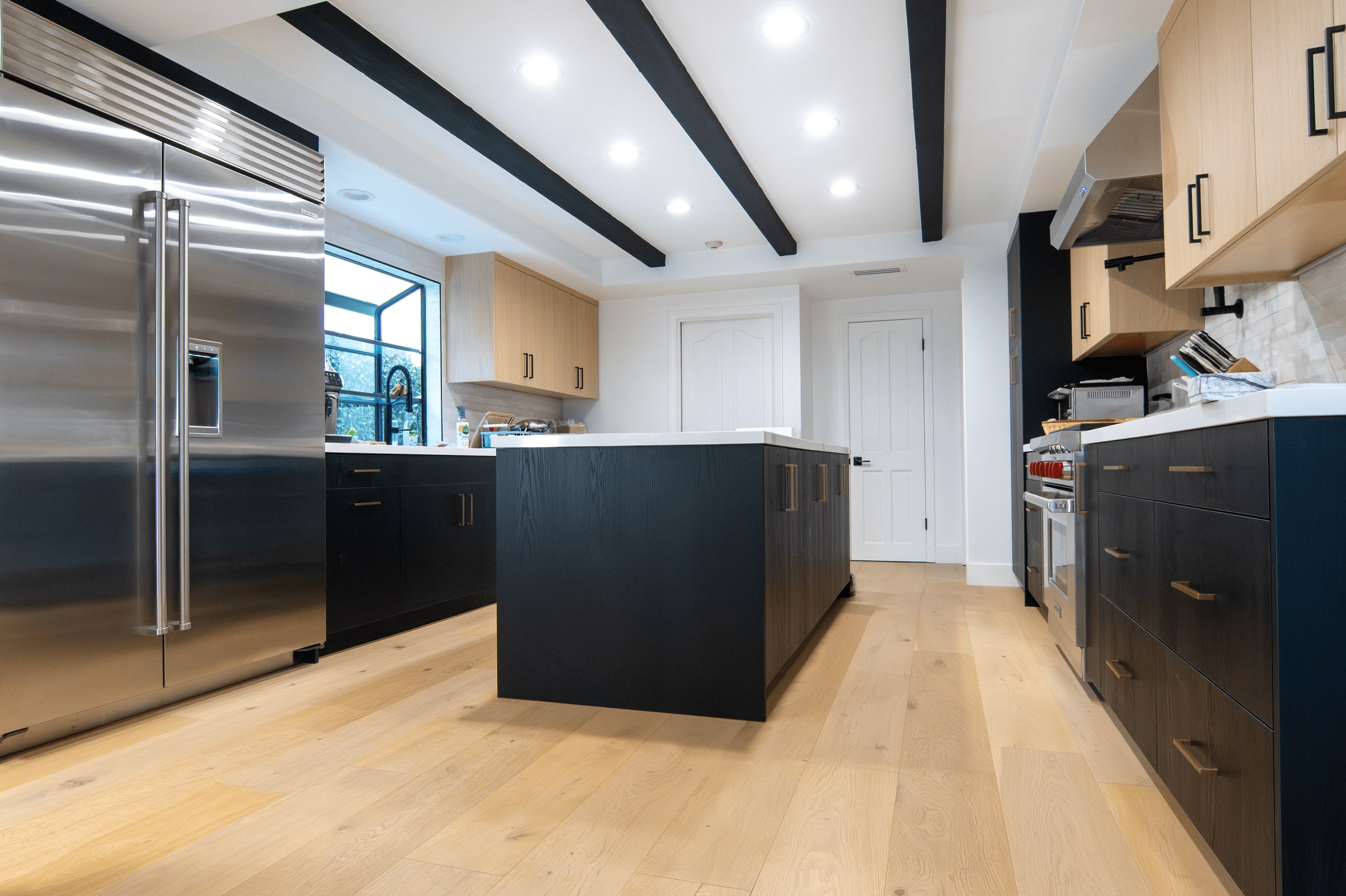
The Rexford is a wide, pale plank, and in a narrow galley kitchen it runs the length of the room without breaking the space into pieces. A narrow powder room asks for the same effect, which is exactly why the radiant heat question deserves an answer before you fall for the look.
The finish does not seal the seams
A finish protects the face of a board, not its edges. Urethane with aluminum oxide, which Garrison uses across the Competition Buster and Beverly Hills lines, resists surface wear well, but water that reaches a joint simply goes around it. A hard-wax oil like the one on the Thames can be refreshed in place, yet it does not make the joint watertight either.
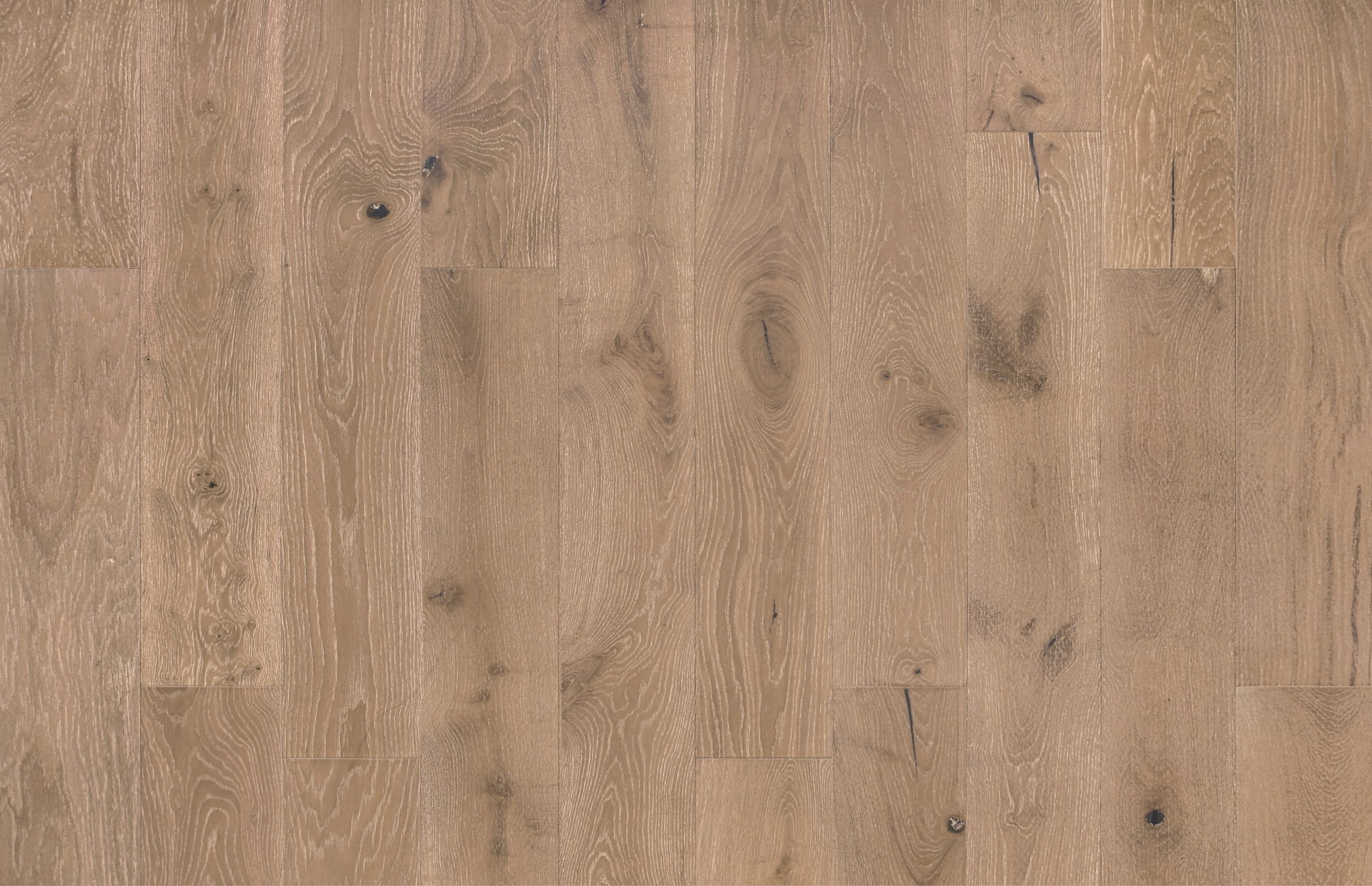
A UV oil finish, like the one on the Garrison Du Bois Gabrielle, leaves the limed grain and small knots visible from above, which suits a calm room. It still leaves every joint open to water, the same as any other oiled or lacquered board.
This is why the finish question and the room question are separate. A tougher finish buys you time on a wet mat, not permission to put wood beside a tub. Our explainer on what water-resistant means for laminate or vinyl on a slab walks through the same seam problem from the moisture side.
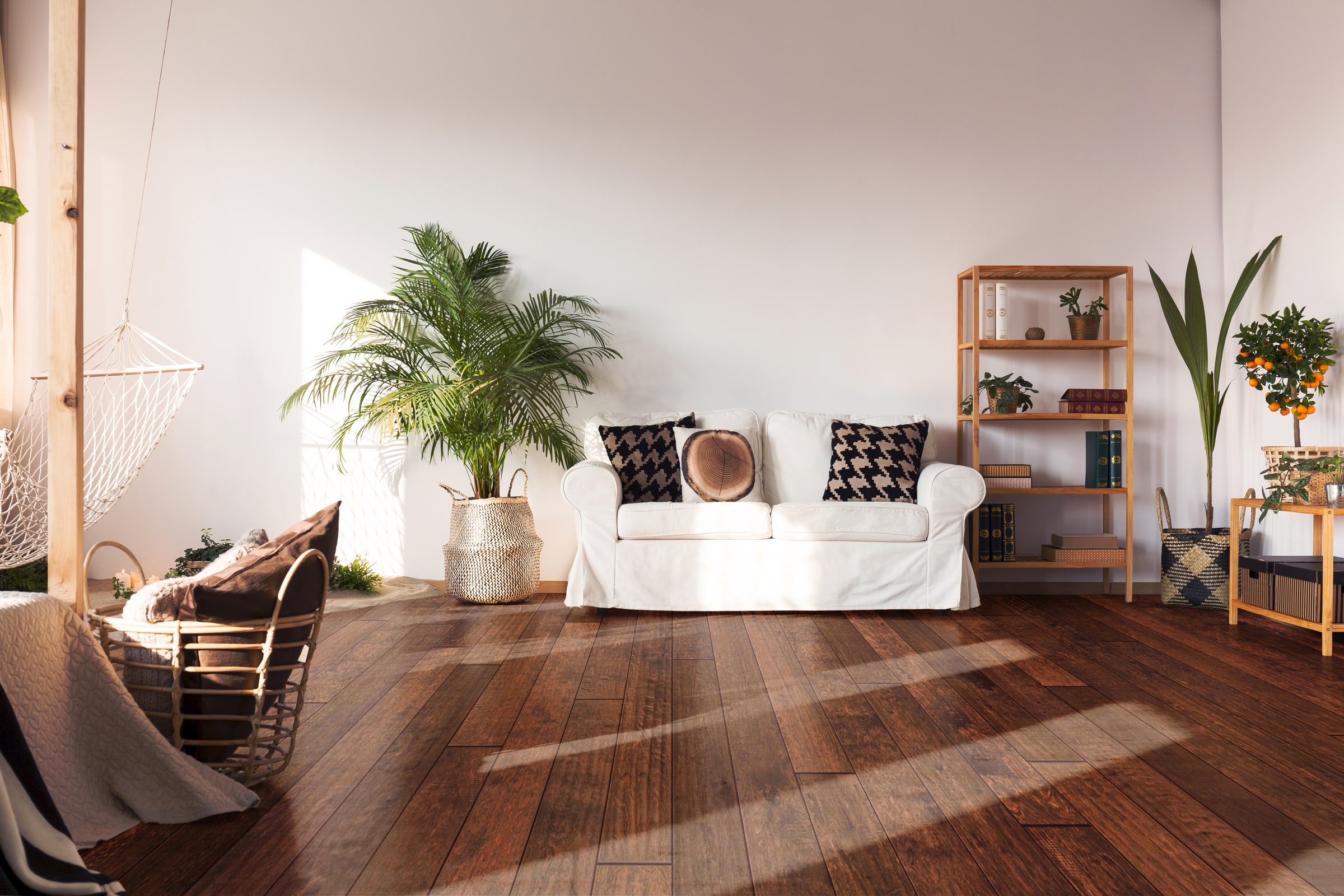
Thinner engineered boards also carry less wood above the core to absorb a mistake. The Competition Buster planks have a 1.5 mm wear layer on a multi-ply birch substrate, with a hand-scraped, distressed surface that hides everyday wear well in a dry room.
In a bright living room, a dark brown birch plank with chatter marks looks settled and warm, and sunlight falling across it shows the texture rather than the dust. That is the room this floor was built for, not a heated bathroom with a shower.
What to check in your own bathroom before deciding
First, find out what kind of radiant system you have or plan to install. Hydronic tubing in a poured layer and an electric mat under tile behave differently, and a floor's instructions usually name which systems they accept.
Second, be honest about water. A powder room with a sink is a different room from a hall bath that children shower in, and a primary bath with a walk-in shower is different again. If water will regularly reach the floor, choose tile or stone and stop there.
Third, check the subfloor and how the room meets the rest of the house. If you want wood to continue from a hallway into a powder room, the transition height, the heating layer and the acclimation all have to line up. Our notes on how to acclimate flooring before it goes down cover the step people skip most often.
Where engineered wood can work, and how
In a powder room with an approved product, the details decide the result. Run the radiant system as the manufacturer's installation instructions require before and after the floor goes down. Bring the heat back up gradually rather than all at once.
Seal the perimeter around the toilet and the vanity, and choose a mat that dries out rather than one that holds water against the boards. Treat the floor as a wood floor that happens to be warm, not as a bathroom floor that happens to be wood.
Look at the material in the room before you commit. Order samples of a plank like the Thames and lay them beside your tile, vanity and fixtures under the room's own light before anything is cut.
Common questions about flooring over radiant heat
Can engineered hardwood go over radiant heat in a bathroom?
Only where its manufacturer approves radiant heat, and only in a bathroom that stays mostly dry. In a room with a shower or tub, choose tile or stone instead.
Is solid hardwood ever safe over a heated bathroom floor?
We would not recommend it. Solid boards move more than engineered ones, and a warm, humid room makes that movement worse.
Does a waterproof label mean a floor is fine over radiant heat?
No. Waterproof describes how the plank reacts to water, while the radiant heat rating is a separate line on the spec sheet with its own conditions.
Can I nail a wood floor over hydronic tubing?
It is risky, because a fastener can puncture the tubing. Where the product allows it, a floating or glue-down method keeps fasteners out of the heated layer.
Do the Garrison floors in your catalogue carry a radiant heat rating?
Our catalogue does not list one for the Garrison products named here. Ask us to confirm with the manufacturer before planning radiant heat under any of them.
The next step
If you are planning a heated powder room, settle the radiant heat approval first and the colour second. When you have a product in mind, request a quote and we will check its approval against your system, then book a free in-home laser measurement.