
How to choose underlayment for a new floor
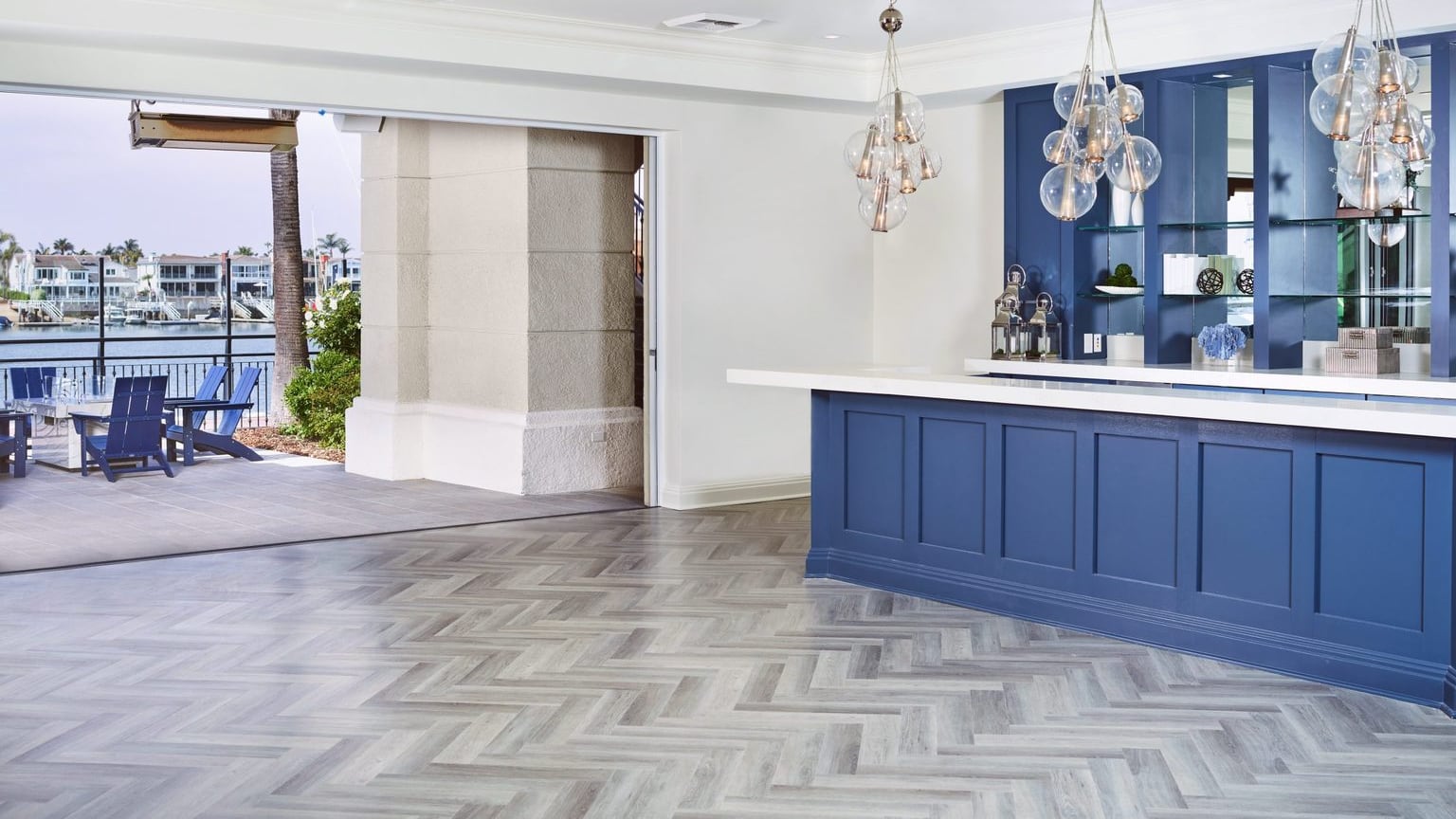
If you are working out how to choose underlayment, start with the flooring, not the pad. Many rigid core vinyl planks now arrive with a pad bonded to the back, and adding a second one can do more harm than good. Where you do need one, pick it for the job your room actually has: blocking moisture, quieting footsteps, or softening the feel underfoot.
Those three jobs are unrelated, and one product rarely does all of them well. A thin film that stops vapour does nothing for sound, and a dense acoustic pad can feel firmer than you expect. Below is each job, what the spec sheets say, and where people go wrong.
Check what is already attached to the plank
The first question is whether your flooring already carries an underlayment. On rigid core vinyl it often does, bonded to the underside at the factory. That attached layer is designed together with the plank's locking system.
Garrison NatureStep SPC Driftwood is a typical example. It is a 6.5mm SPC (Stone Polymer Composite) plank, 8.66" wide, with an EVA attached rubber underlayment and a 20 mil / 0.5 mm wear layer. It goes down as a floating click floor.
GemCore takes the same approach with foam. GemCore Opal PERRIS carries a 1mm Anti-microbial EVA Foam Backing, and GemCore Crystal CROFTON carries a 1mm Anti-microbial IXPE Foam Backing.
When the pad is attached, a second soft pad underneath is usually the wrong move. Click joints rely on firm support, and extra cushion lets each joint flex every time someone steps on it. That flexing can open seams or break the locking edge, so follow the manufacturer's installation instructions on what, if anything, goes below.
Moisture: a film, not a cushion
Moisture protection comes from a vapour barrier, usually a plastic film or a pad with a film face. Its job is to stop vapour from the subfloor reaching the underside of the floor. It does not need to be thick to work; it needs to be continuous, with seams overlapped and sealed as the manufacturer specifies.
Concrete is where this matters. Over a slab, many floating floors call for a barrier even when a pad is attached, because foam is not a vapour barrier unless its maker says so. Over a wood subfloor upstairs, a film can trap moisture against the wood, which is why some manufacturers say not to use one there.
The finished floor's own water rating is a separate question. Garrison describes its NatureStep SPC planks as water-resistant, while the GemCore and Lago planks named here are listed as waterproof. Neither rating turns the plank into a vapour barrier for the subfloor below it.
Sound: the two ratings on an acoustic spec sheet
Sound is where underlayment earns its place in an upstairs room, a condo, or a house with bedrooms below. Hard surfaces such as rigid core vinyl pass more impact noise downward than carpet does. That is why the pad matters more on an upper floor than on a slab.
Two ratings appear on acoustic spec sheets. IIC describes how well a floor assembly reduces impact noise, such as footsteps and dropped objects, heard in the room below. STC describes airborne sound, such as voices and television, passing through the same assembly.
Higher numbers are better on both, and impact noise is usually the one neighbours complain about. Both ratings describe a whole assembly tested in a lab. The subfloor and the ceiling below change the result in your own room.
Lago Scratch Shield 8.5mm Baikal shows what an acoustic build looks like. Its construction is a 7 mm rigid core plus a 1.5 mm IXPE Super Acoustic Underlayment, for 8.5 mm overall, and Lago lists an IIC rating of 75 and an STC rating of 73. Those are the manufacturer's figures, and they are the kind of numbers a building manager will ask to see.
If you live in a condo or a building with a homeowners' association, read the flooring rules before you choose anything. Many associations set a minimum sound rating and ask for the product's acoustic documentation before work starts. Choosing the floor first and the pad second can leave you with a floor you are not allowed to install.
Comfort and feel underfoot
Comfort is the job people notice first and the one that does little for the floor's lifespan. A softer pad makes a floor feel warmer and quieter in the room itself. On a click floor, though, softness beyond what the manufacturer allows trades comfort for joint stress.
Plank thickness and core change the feel as much as the pad does. Garrison NatureStep SPC Sandstone, for example, is an 8.66" wide, 6.5mm plank with a 0.5 mm (20 mil) wear layer. A rigid core bridges small hollows better than a flexible one, but it still feels firm under bare feet.
If comfort is the priority, it is usually better to choose a plank with a suitable pad already attached than to add cushion yourself. The attached pad has been tested with that plank's joints. A pad you add has not.
Radiant heat and hardwood: different rules
If the room has radiant heat, the pad matters again, because thick foam insulates the floor from the heat below. Lago's specification sheet lists radiant heat compatibility for Lago Scratch Shield 8.5mm Baikal within its stated limit. For any other product, check the manufacturer's radiant heat guidance before choosing a pad.
Engineered or solid hardwood that is nailed or stapled down usually goes over a felt or paper sheet rather than foam. That sheet reduces squeaks and friction between wood and subfloor rather than adding cushion. Glue-down floors generally take no separate underlayment at all, because the adhesive bonds the floor straight to the subfloor.
Floating engineered hardwood sits between the two. It needs a pad, but the type and thickness are set by the flooring manufacturer, not by the pad's packaging.
What underlayment cannot fix
Underlayment is not a leveller. A dip or hump in the subfloor shows through a thin pad and is only disguised by a thick one, which lets the floor flex over it. Flatness is corrected with patching compound or grinding before any pad goes down.
It also cannot make a wet subfloor dry, quiet a floor whose joists squeak, or rescue a plank installed against the manufacturer's instructions. Those are preparation problems. Our guide to preparing for flooring installation day covers what has to happen in the room before the floor arrives.
A short order for the decision
Put the decision in order and it becomes simple. First, check whether the plank has an attached pad and what the manufacturer allows beneath it. Second, decide whether the subfloor needs a vapour barrier, which on concrete it usually does.
Third, check any sound rule your building sets and compare it with the acoustic ratings on the spec sheet. Only then think about comfort, and only within what the manufacturer permits. Working in that order avoids the expensive mistake of buying a pad the floor cannot use.
Common questions about underlayment
Do I need underlayment if my vinyl plank has a pad attached?
Usually not a second cushion. You may still need a vapour barrier film over concrete if the manufacturer calls for one. Read the installation instructions for that exact product.
Is thicker underlayment better?
Not on a click floor. Thickness beyond the manufacturer's limit lets the joints flex and can shorten the floor's life. Choose the pad the manufacturer approves, not simply a thicker one.
What is the difference between IIC and STC?
IIC measures impact noise, such as footsteps, reaching the room below. STC measures airborne noise such as voices. Buildings with sound rules often specify both.
Can underlayment level an uneven subfloor?
No. It can hide small irregularities, and a soft pad over a dip lets the floor flex. Level the subfloor first, then lay the pad.
Does hardwood need the same underlayment as vinyl?
No. Nailed hardwood typically goes over a felt or paper sheet, glued hardwood usually takes none, and floating engineered floors use a pad the manufacturer approves.
The next step
Once you know which of the three jobs your room needs, the plank choice narrows quickly. You can browse the flooring range and compare attached pads, thickness and acoustic ratings on each product page. A free in-home laser measurement then gives you the square feet before anything is ordered.