
What is SPC flooring? Reading the spec sheet
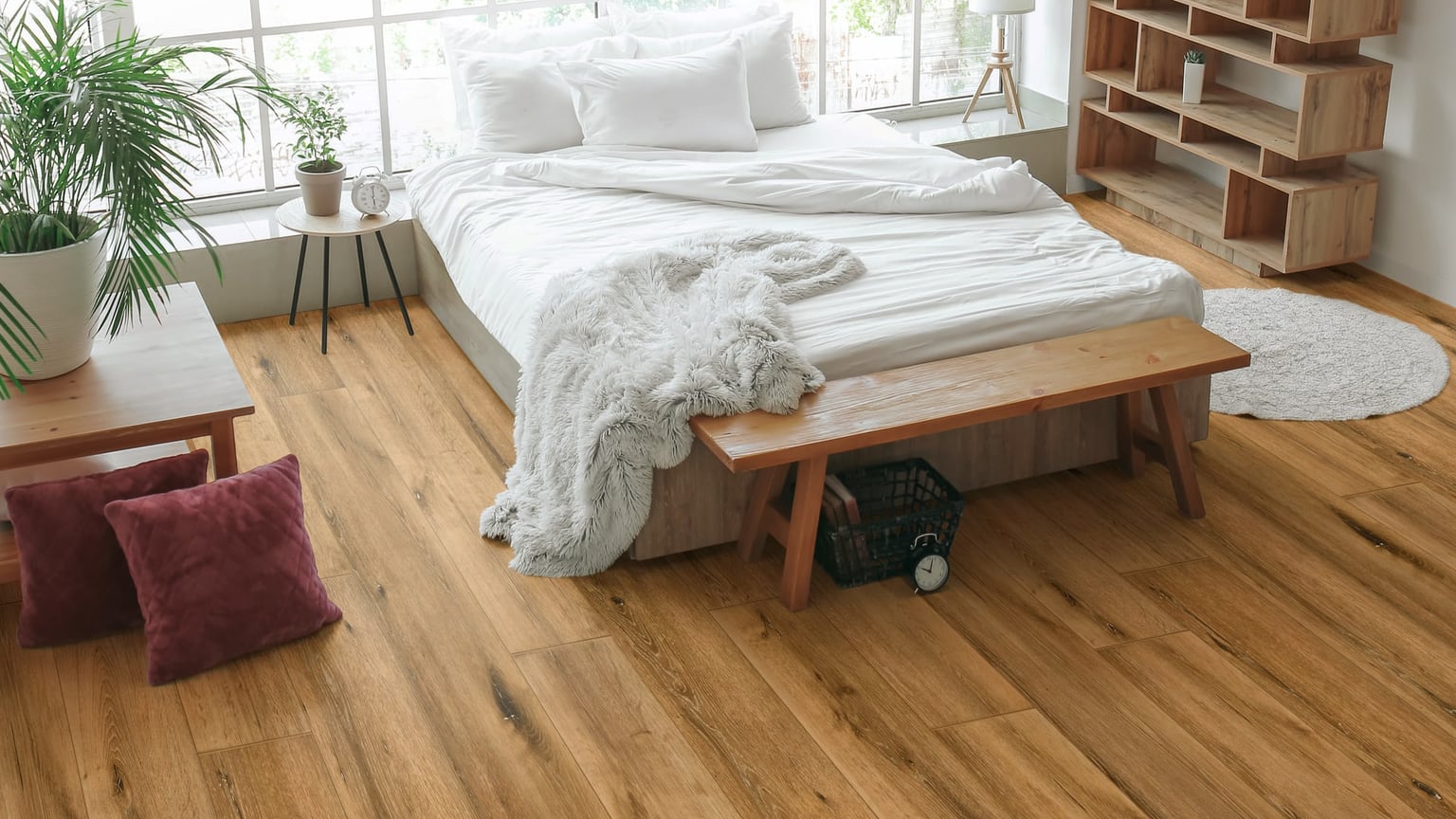
SPC stands for stone polymer composite, also written as stone plastic composite. On a flooring spec sheet, it names the core of a rigid vinyl plank. So what is SPC flooring? It is a click-together plank whose core is a dense board of ground stone and PVC, with a printed image and a clear wear layer on top. It is stiff, it handles spills well, and it feels firmer and cooler underfoot than wood.
That one line on the sheet decides more than buyers tend to expect. It tells you where the floor may go, how it is installed, and what it will feel like. It does not tell you how the floor wears, how it sounds, or whether the maker calls it waterproof. Those answers sit in other lines, and this article shows you how to read them together.
What the three letters actually describe
A rigid vinyl plank is built in layers. From the top down, there is a clear wear layer, a printed design film, the core, and often an attached backing. SPC describes only the core. Every other layer can change from one product to the next while the core line reads the same.
The stone content is what makes the core rigid. A flexible vinyl plank bends in your hand; an SPC plank does not. That stiffness is the reason SPC can be clicked together and floated over a subfloor rather than glued down. It also means the plank shows fewer small dips in the floor below, though it still needs a flat, clean base.
Rigidity has a cost. A dense core is harder underfoot and louder when you walk on it in hard shoes. It passes the cold of a concrete slab through more readily than wood does. If a bedroom floor will be walked barefoot on winter mornings, that matters more than any number on the sheet.
When the name and the construction line disagree
Product names are marketing. The construction line is the specification. The two do not always match, and the gap is worth noticing.
Garrison's AquaBlue II WPC collection is a clear example. WPC usually means wood plastic composite, a lighter and softer core than SPC. Yet the construction line for Garrison AquaBlue II WPC Bronze reads SPC, and so does the line for Garrison AquaBlue II WPC Copper. Read the construction field, not the collection name, and you know which core you are buying.
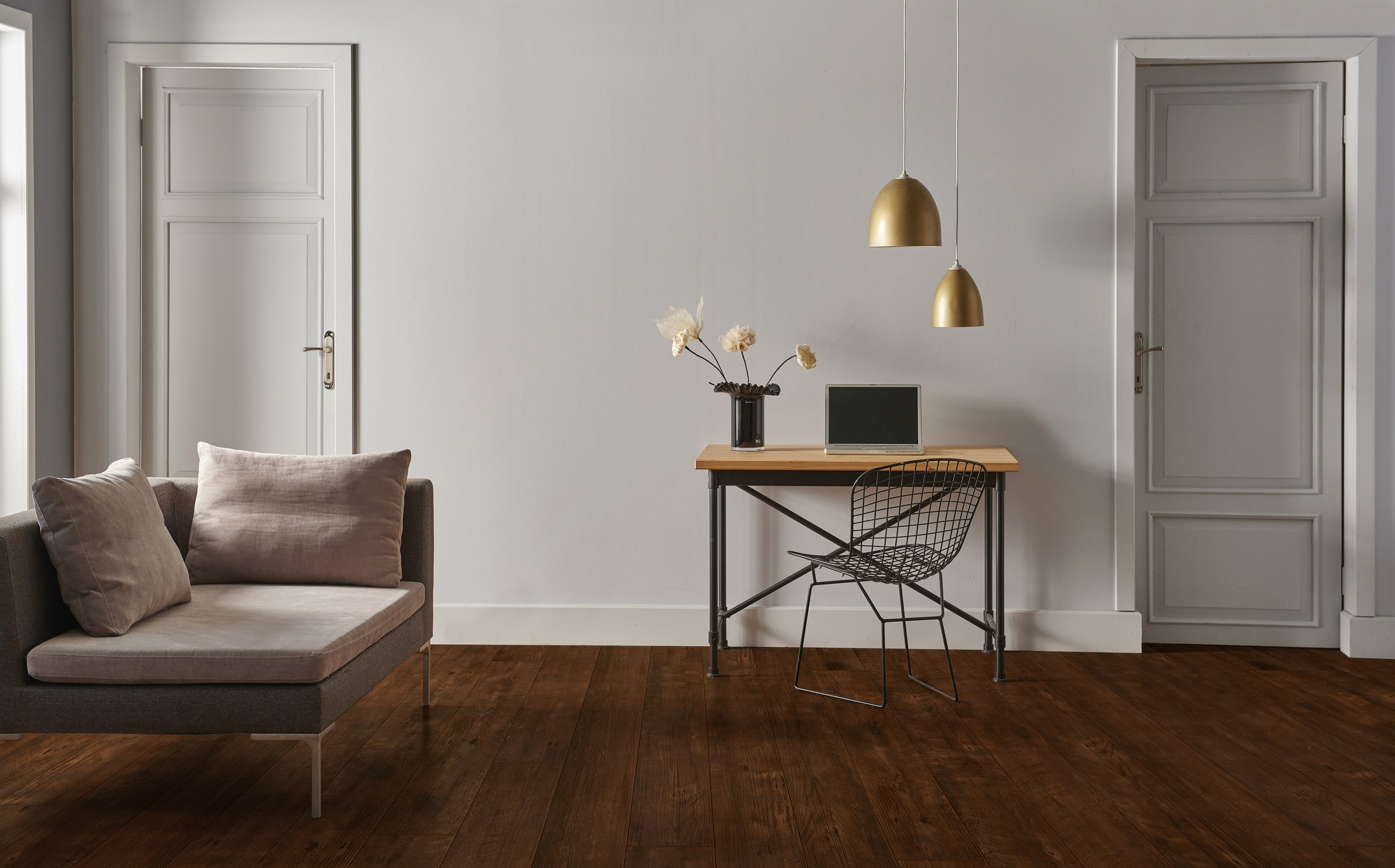
The same care applies to other labels. GemCore does not use the SPC label on its sheets. Its product type reads GemCore Stone Composite, and its grade line reads Stone Composite Flooring (SCF), describing a core that is mostly stone. In construction terms it belongs to the same rigid, stone-based family. When you compare products across brands, line up the core descriptions, not the brand vocabulary.
The lines that sit next to SPC on the sheet
Once you know the core, four other lines tell you how the floor will live in your home.
Thickness is the total plank, and it often includes the attached backing. Garrison NatureStep SPC Driftwood and GemCore Diamond BARODA list 6.5mm. GemCore Jasper BRUNEAU and GemCore Sapphire QUINN list 5mm, and GemCore Garnet SHANNON lists 4.5mm. A thicker plank can feel more solid, but thickness alone does not measure durability.
The wear layer is the clear top skin that takes the traffic. It is measured in mil, and it matters more for wear than total thickness. Many of the SPC planks here list 20 mil. GemCore Diamond BARODA and GemCore Diamond CULLINAN list 28mil, a heavier skin for a busy hallway or a household with dogs. Our guide on whether a 20 mil SPC wear layer is enough for a rental works through that choice.
Backing is the pad bonded to the underside. GemCore Sapphire QUINN lists a 1mm Anti-microbial IXPE Foam Backing, while GemCore Garnet SHANNON lists a 1mm Anti-microbial EVA Foam Backing. An attached pad changes what, if anything, goes underneath, so check it before buying a separate roll. Our note on how to choose underlayment for a new floor covers when a second layer helps and when it causes problems.
Finish and texture set the sheen and the feel. Garrison lists UV Coating and Tempering on its SPC planks. GemCore lists Commercial Ceramic Bead UV Coating on the Jasper and Diamond planks, Quartz Enhanced UV Coating on Sapphire, and Mineral Enhanced UV Coating on GemCore Crystal ARGYLE. A texture line such as Embossed In Register (EIR) means the surface grooves follow the printed grain, which reads closer to real wood in raking light.
Waterproof or water-resistant: read the maker's own words
SPC is often sold as waterproof by default. That is not how every maker describes it, and the difference deserves respect.
Garrison describes its SPC planks as water-resistant on its own product pages. GemCore describes its stone composite as waterproof, and draws the line at household spills and mopping rather than standing water or flooding. Both statements are about the plank itself. Neither means water can sit under the floor without consequence.
Water that runs in at the edges, seeps around a toilet, or rises through a damp slab is a separate problem. That is why a kitchen or a bathroom still needs care at the perimeter. Follow the manufacturer's installation instructions for expansion gaps and for sealing at wet areas.
Rigid cores also move with the seasons, even if they move less than flexible vinyl. Leave the expansion gap the maker specifies at every wall and doorway. If your floor sits on a concrete slab that holds moisture, read our comparison of SPC or wood over a damp concrete slab before you choose.
Where SPC is the wrong floor
SPC is a practical core, but it is not right for every room. Being straight about that is part of reading the sheet honestly.
It is the wrong choice if you want a floor that can be sanded and refinished. The design is a printed film under a clear layer. Once the wear layer is through, the plank is replaced, not restored. If you want the floor to age with the house, engineered hardwood is a better fit.
It is also a poor match for a room where comfort underfoot outranks everything else. A dense core is firm, and an attached pad only softens it slightly. In a playroom or a bedroom on a slab, a rug or a softer floor may serve you better.
Finally, a floating SPC floor does not like heavy fixed loads pinning it down. Kitchen islands and built-in cabinets usually go in first, and the floor stops around them. Plan that with your installer rather than discovering it on installation day.
What to check in your own home before choosing
The spec sheet tells you about the plank. Your home tells you whether it suits the room. A few checks settle that.
Start with the subfloor. Is it concrete or wood framing, and is it flat? A rigid plank bridges small dips but will rock or click over larger ones. A floor that needs leveling adds work, and that work often moves a quote more than the plank itself.
Check the height where the new floor meets tile or carpet at a doorway. A thicker plank, such as the 6.5mm Garrison NatureStep SPC Driftwood, needs a different transition from a thinner one. Ask about transitions before the planks are ordered, not after.
Then think about sound. If the floor is upstairs in a condo or over a bedroom, an attached pad helps, but the building may set its own sound rules. Our guide to IIC and STC on a flooring spec sheet explains those ratings.
Look at the light and the surface together. A Matte gloss level, as listed on GemCore Jasper BOYD, keeps glare low in a sunny room. A Deep Embossed surface, listed on Garrison AquaBlue II WPC Bronze, gives the plank a grain you can feel underfoot.
Finally, compare rigid cores against the alternatives side by side. If you are weighing SPC against laminate, our piece on rigid vinyl or laminate: core, thickness and feel sets out the trade-offs. When you want to see full spec tables, the Garrison NatureStep SPC Driftwood and GemCore Diamond BARODA pages show every line discussed here.
Common questions about SPC flooring
Is SPC the same as vinyl plank?
SPC is one kind of vinyl plank. The term refers to the rigid, stone-based core. Flexible glue-down vinyl and WPC planks are other kinds, with different cores.
Is SPC flooring waterproof?
It depends on the maker's own wording. Garrison calls its SPC water-resistant, while GemCore calls its stone composite waterproof for household spills. Either way, water that gets under the floor is a separate problem.
Can SPC go over a concrete slab?
Yes, it is commonly floated over concrete, as long as the slab is flat and its moisture is checked first. Follow the manufacturer's installation instructions for the vapor barrier and any added underlayment.
Does a thicker SPC plank last longer?
Not by itself. Wear depends on the wear layer, measured in mil, and on the top coating. Total thickness mainly affects feel and how the plank handles small subfloor dips.
Can I install SPC myself?
Click-lock planks are designed to float, and some homeowners lay them. The harder part is preparation: a flat subfloor, the right gaps, and clean transitions. We offer a free in-home laser measurement, with delivery and professional installation available across our service area.
Why does SPC feel hard underfoot?
The dense stone core does not flex. An attached pad softens footfall a little, but it will not feel like wood or carpet.
The SPC line on a spec sheet tells you the core, and the lines beside it tell you the rest. Read the construction line, the wear layer and the backing together, then judge them against your own subfloor. To compare the rigid planks discussed here side by side, browse the range in our flooring collection.