
Kid-friendly kitchen flooring: seams, spills, dents
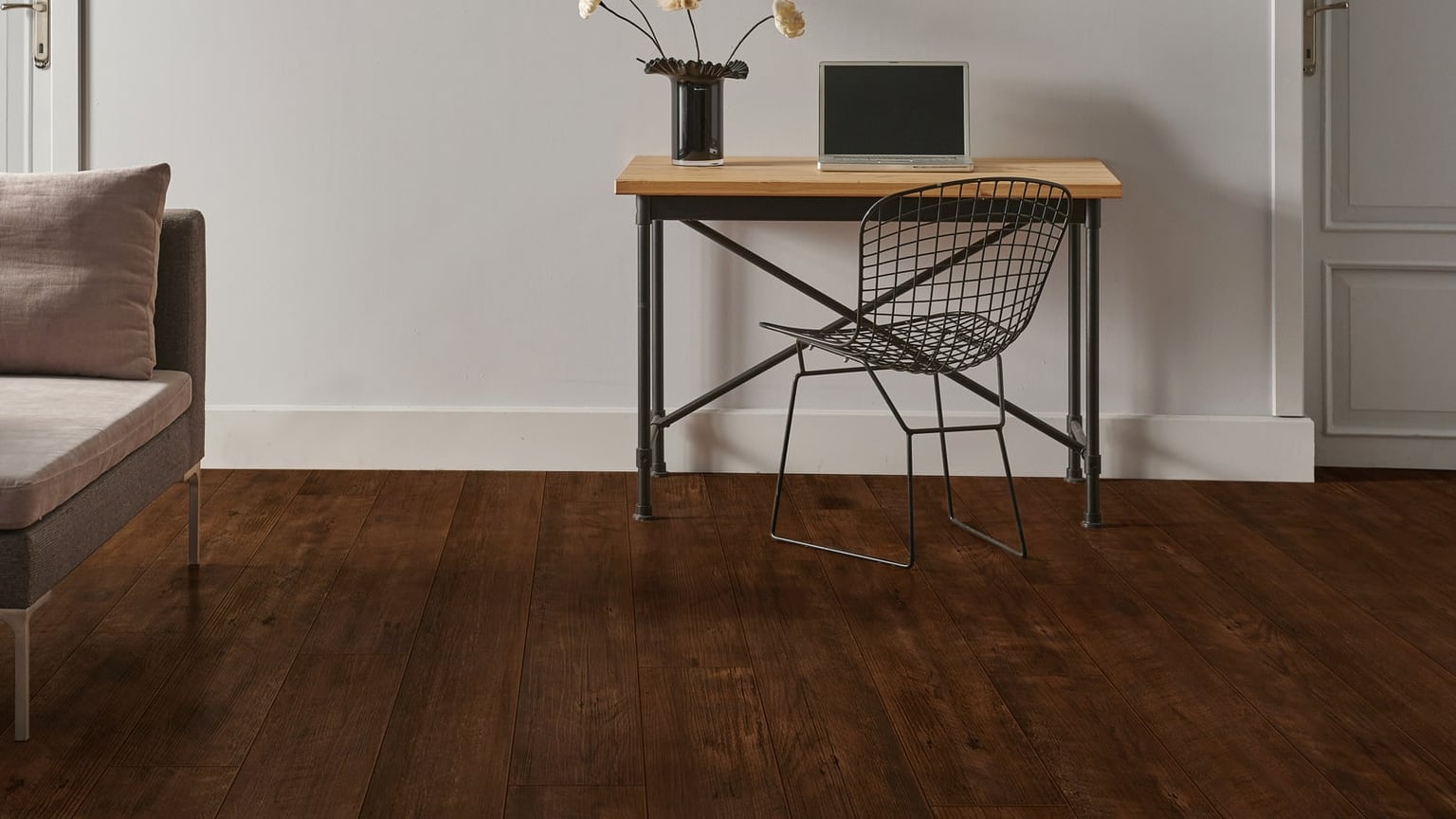
Kid-friendly kitchen flooring is a rigid core plank with a tight joint, a wear layer of at least 20 mil, a matte textured surface and a shallow edge. That combination handles the daily small spills, dropped cups and dragged chairs that small children bring. Solid hardwood and glossy finishes are the wrong choice for this room while the children are small. The rest of this piece explains why, and what to check in your own kitchen before you choose.
What small children actually do to a kitchen floor
A kitchen with small children is not tested by one flood. It is tested by a hundred small events. Milk tips off a high chair tray. A cup of water lands on its side. Someone washes their hands and drips all the way back to the table.
Each of those spills is small, and each one finds the seams. Water that sits in a joint for an evening does more harm than water that is wiped off the surface at once. Over months, repeated small spills at the same seams are what lift edges and swell cores.
The second test is weight. Children drop things: a can, a toy truck, a ceramic bowl. They drag chairs to reach the counter, and they push wheeled toys across the room. The surface has to take scratches, and the core has to take point impact without denting.
The third test is cleaning. A floor in a family kitchen gets wiped and mopped more often than any other floor in the house. Grooves that collect crumbs and finishes that streak become daily irritations.
Start at the joint, not the surface
Most floors sold for kitchens today have a surface that shrugs off water. The difference between them sits at the joint, where one plank meets the next. That is where repeated spills go, and that is what you should ask about first.
A click joint that locks tightly keeps most water on top long enough for you to wipe it. Read the manufacturer's own wording: some say waterproof, some say water-resistant, and the difference matters in a kitchen. Water-resistant means you are expected to wipe spills promptly, which is a habit worth having with children anyway.
Glue-down plank is the other answer. Duchateau LUXETECH 20 Antique White is a glue-down vinyl plank, 1/8” (3mm) thick, with a 0.55mm (22mil) wear layer. Bonded to the subfloor, it has no click joints to open. The trade-off is that a glue-down floor needs a flat, clean subfloor, and it is slower to replace one damaged plank.
Edge profile matters too. A micro-bevel is a slight softening of the plank edge. A V-groove is a deeper channel between planks. Both look good, but a V-groove catches cereal, sand and dried juice, and you will clean it with a brush more often than you would like.
The floor in the photograph at the top of this page is Garrison AquaBlue II WPC Bronze. It is an SPC plank, 6.5mm thick and 7" wide, with a V-Groove edge and a Deep Embossed surface. It reads well in a room, but in a kitchen with toddlers, that groove is the first thing we would point out.
Wear layer and coating: what takes the scratches
The wear layer is the clear top skin of a vinyl or composite plank. It is what takes grit, chair legs and toy wheels. For a family kitchen, 20 mil is the level to start from, not the level to stretch for. Our guide to how much wear layer a floor needs explains the scale.
The coating on top of that wear layer is the second line. Manufacturers name their coatings differently, and the name tells you what they reinforced.
Duchateau LUXETECH 20 Hyde carries a ceramic reinforced prime urethane coating, embossed in register, over a 0.5mm (20mil) wear layer. It is a rigid core plank, 5/16” (8mm) thick and 9" (228mm) wide, with HushWalk underlayment and a 5G Click floating installation. Embossed in register means the texture follows the printed grain, so a scratch has less flat, shiny surface to show against.
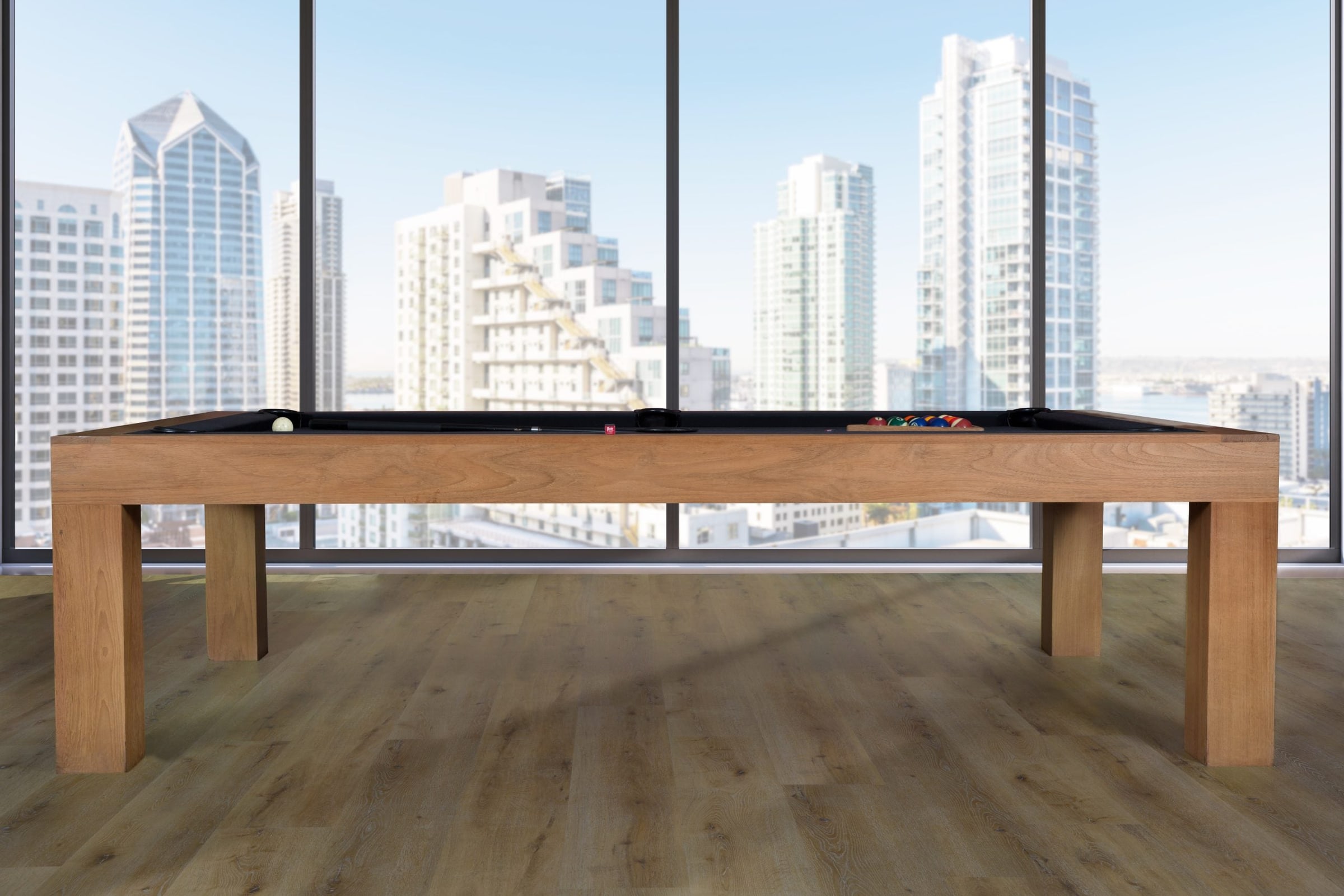
Lago Scratch Shield 8.5mm Baikal takes a different route. Its finish is the Lago Scratch & Stain Shield coating, and its construction is a 7 mm rigid core with 1.5 mm IXPE Super Acoustic Underlayment. The stain side of that coating is the part that matters for juice, tomato sauce and crayon.
GemCore takes a third route. GemCore Opal SHASTA is a stone composite plank, 5mm thick and 7" wide, with a 20mil wear layer and a Quartz Enhanced UV Coating. Its gloss level is Matte, which matters more in a kitchen than most people expect.
Dents from dropped things and the high chair
Scratches are about the surface. Dents are about the core. A dropped can lands on a small point with real force, and a thin, soft floor shows it.
Rigid core planks are built to resist this. Thickness is part of it, but construction matters more than the number on the box. A thin stone composite plank can resist point impact better than a thicker, softer one. Ask what the core is made of before you compare thicknesses.
If you want real wood on top, Garrison Zodiac W-SPC Pisces is the honest middle ground. It has a 1.2 mm Euro Oak top layer over a WSPC core, 8mm thick and 7.5" wide, with an Aluminum Oxide finish. Its listed Janka rating is 1360, and the surface is Lightly Wire-Brushed with a Micro-Beveled edge.
The trade-off is plain. That top layer is real oak, so a hard drop can still mark it, as it would mark any oak floor. The wire-brushed texture hides small marks well, and the rigid core underneath does not move the way solid wood does when water reaches it.
High chairs and kitchen chairs deserve their own line. Put felt pads on every leg, and replace them when grit gets embedded. A chair dragged across a floor with a grit-loaded pad scratches any surface, whatever the coating.
Texture, sheen and colour for a busy floor
Gloss shows everything: footprints, dried water rings, and every fine scratch. A matte finish with some texture forgives far more of a family kitchen.
Colour works the same way. Very dark floors show dust, crumbs and dried drips. Very light floors show juice and muddy shoes. A mid-tone with visible grain and some knots hides the most between cleanings.
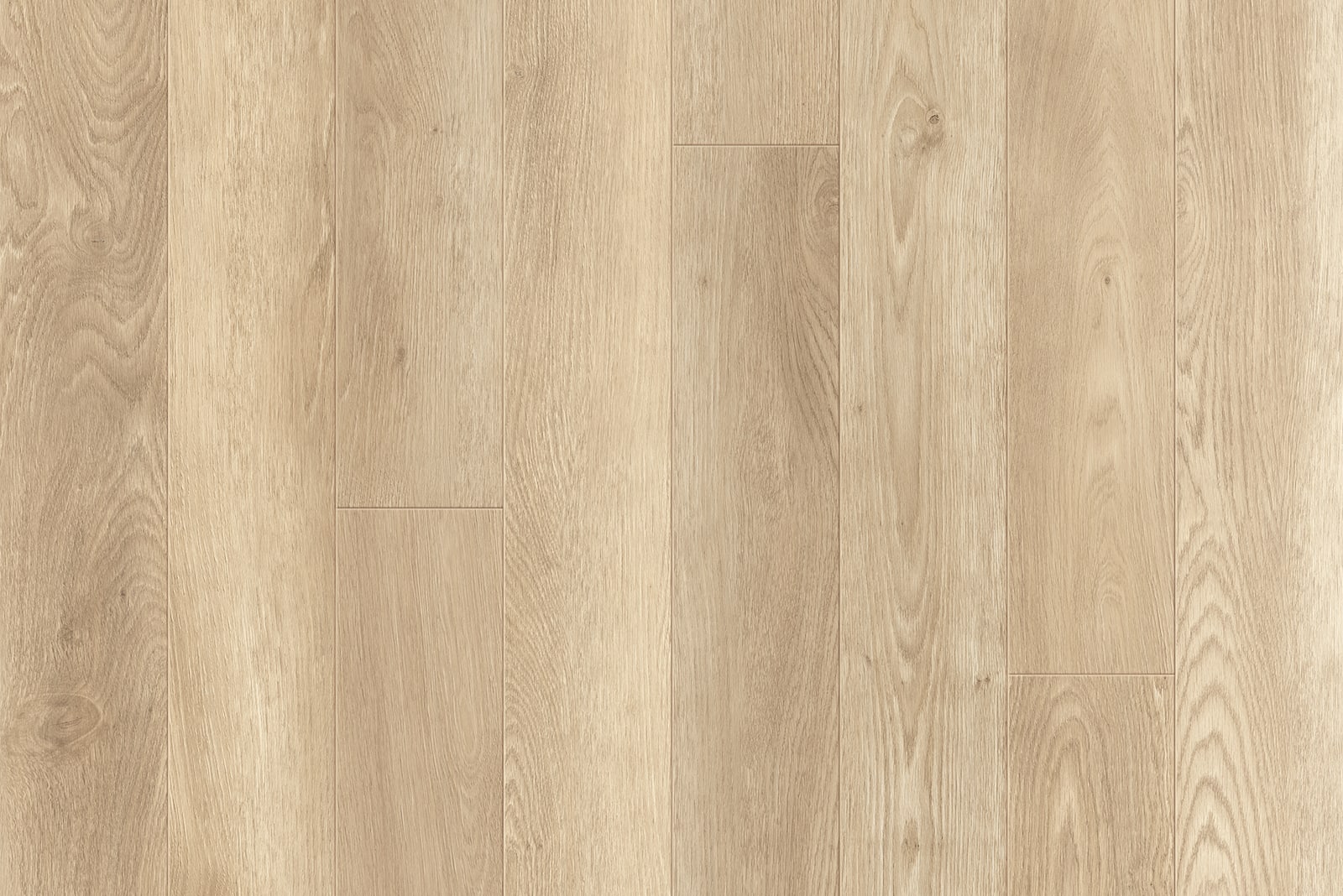
Garrison NatureStep SPC Sandstone shows what that means in practice. The light sandy tone and the small knots break up the surface, so a few crumbs disappear into the pattern. It is 6.5mm thick and 8.66" wide, with a 0.5 mm (20 mil) wear layer.
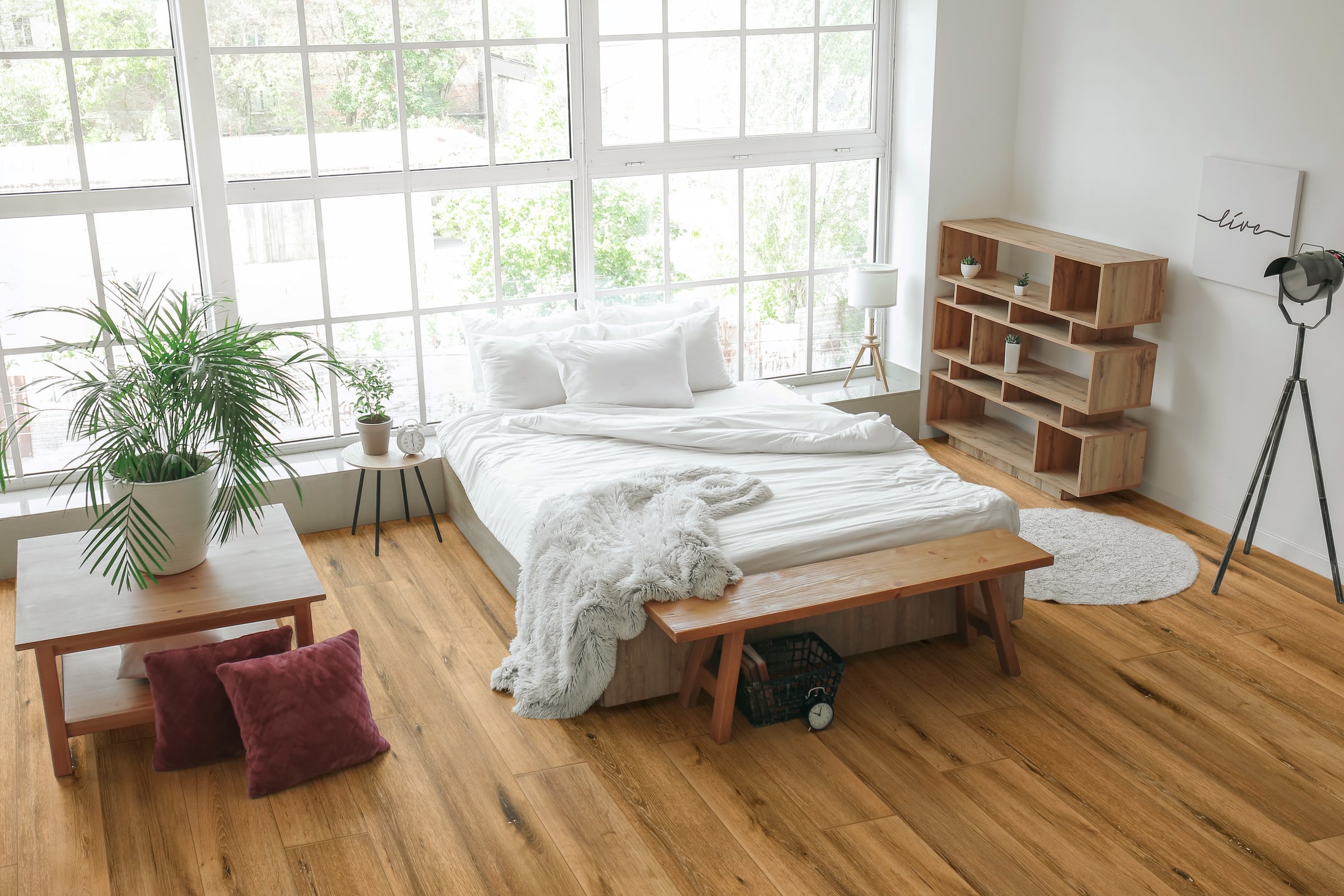
Warmer mid-tones do the same job. Garrison AquaBlue II WPC Copper is a golden oak look with an Embossed In-Register surface, 6.5mm thick and 9" wide, with a 0.5 mm (20 mil) wear layer. Like the Bronze, it has a V-Groove edge, so weigh the look against the extra brushing.
Sound and comfort where children sit and play
Small children spend a lot of time on the kitchen floor. They sit, crawl, drop blocks and bang pots. In an open plan house, that noise travels.
Many rigid core floors now come with an attached underlayment. GemCore Crystal CROFTON has a 1mm Anti-microbial IXPE Foam Backing under a 5mm plank with a Mineral Enhanced UV Coating. GemCore Opal SHASTA has a 1mm Anti-microbial EVA Foam Backing.
Lago publishes sound ratings for Baikal: an IIC rating of 75 and an STC rating of 73. Those numbers describe how much impact and airborne sound pass through the floor assembly. They matter most when the kitchen sits above a bedroom or another living space.
An attached underlayment does not make a floor soft. It takes the hollow click out of footsteps and makes the floor a little kinder to knees. Whether you add anything more under it depends on the product, so follow the manufacturer's installation instructions.
What we would check in your kitchen before recommending
Before we recommend a floor for a family kitchen, we want to see the room. Four things change the answer.
The subfloor comes first. A floating rigid core floor tolerates small imperfections. A glue-down floor needs the subfloor flat and clean, and that preparation can move your quote more than the floor itself.
Next come the wet zones: the sink, the dishwasher and the refrigerator water line. We look at how the floor will meet them, and where a plank would sit directly in the splash zone.
Then the transitions. A kitchen that runs into a family room or a hallway often wants one continuous floor. That changes how many square feet you need and where the expansion gaps go.
Finally, who uses the room. A kitchen where children eat at an island is different from one where they play on the floor all afternoon.
We offer a free in-home laser measurement, so the square feet and the layout come from your room, not from a guess. Delivery and professional installation available across our service area. You can order samples first and test them at home: spill juice on a seam, run a toy truck across it, and wipe it the way you would on a busy evening.
Questions parents ask about kitchen floors
Is solid hardwood a bad idea in a kitchen with toddlers?
For most families, yes, while the children are small. Solid wood reacts to standing water at the seams, and it scratches and dents under daily kitchen use. A rigid core plank with a real oak top layer gives you the look with less risk.
Does a thicker plank mean a tougher floor?
Not by itself. Core construction decides dent resistance more than total thickness, and the wear layer decides scratch resistance. Compare the core material and the wear layer before you compare thickness.
What does water-resistant mean on a vinyl plank?
It means the manufacturer expects you to wipe spills promptly rather than leave them standing. In a kitchen with children, that habit protects the seams on any floor. Read the exact wording on the product page before you decide.
Is a V-groove edge a problem in a kitchen?
It is not a defect, but it collects crumbs and dried spills. With small children, a micro-beveled edge is easier to keep clean. If you love a V-groove look, plan on brushing the joints as part of cleaning.
How should I clean a rigid core kitchen floor?
Sweep or vacuum grit first, because grit is what scratches. Then use a damp mop, not a soaking one. Follow the manufacturer's care instructions for cleaners, since some coatings dislike harsh products.
Can I see a floor in my own kitchen before I buy it?
Yes. The Flooring Designer lays the actual product into a photograph of your own room, with your furniture kept in front of it. It is a quick way to check colour and plank width against your cabinets.
The next step
A family kitchen floor is decided by the joint, the wear layer and the texture, in that order. When you have narrowed it down, request a quote and we will measure the room and tell you what the subfloor needs.