
Rigid vinyl or laminate: core, thickness, feel
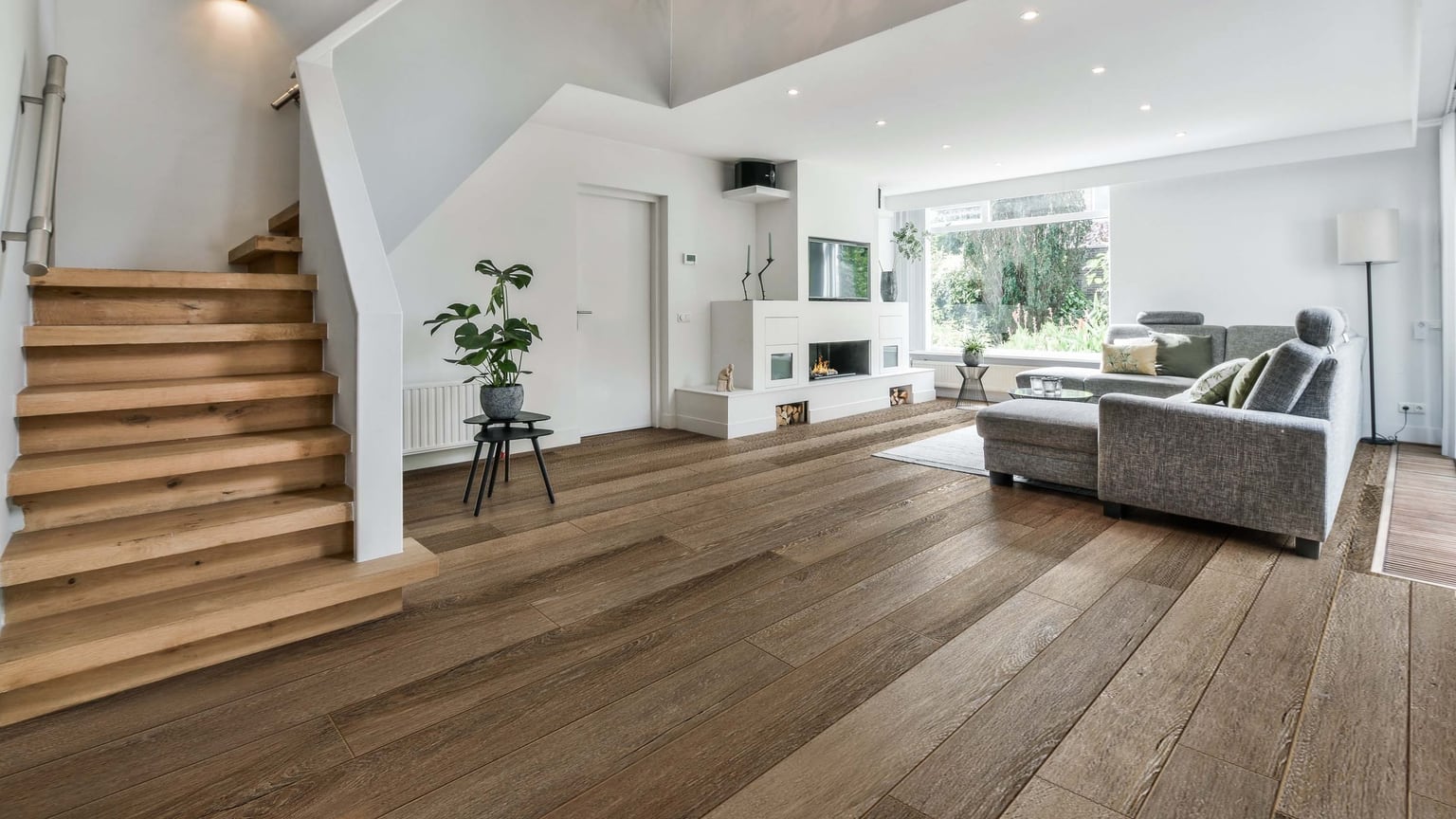
Choosing rigid vinyl or laminate comes down to the core, not the water label. SPC is a rigid vinyl plank built on a stone polymer composite core. Laminate is a printed wood image under a hard aluminum oxide surface, bonded to a thicker core. In the ranges we carry from Garrison, the manufacturer calls both of them water-resistant, so that word will not decide the choice for you. Thickness, wear surface and feel underfoot will.
This piece goes through each of those in turn, using the specifications on the actual products, and ends with what we would ask about your room before recommending one.
Why the water label does not settle it
Many buyers start with water, and it is a fair place to start. But read the labels closely. Garrison describes its SPC collections as water-resistant, and its Azul Waters laminate carries the same word in its name.
We changed our own catalogue to follow the manufacturer on this. Our SPC listings had been marked waterproof by default. They now read water-resistant, because that is the claim the maker actually makes.
Water-resistant means the floor is built to tolerate everyday spills that are wiped up. It is not a promise about standing water, a leaking appliance left overnight, or a flooded room. The care and installation instructions set the real limits, and they are worth reading before you choose either floor for a kitchen, laundry or bathroom.
So if both floors carry the same water claim, the decision moves to the things that do differ.
The core: what each plank is made of
An SPC plank is vinyl all the way through. The core is a dense stone polymer composite, with a printed design layer and a clear wear layer on top. There is no wood fibre in it.
A laminate plank has a printed image of wood under a tough clear surface, bonded to a core. On the Garrison Azul Waters Water-Resistant Laminate Sea Shell, that surface is listed as Aluminum Oxide (Matte), with a deep embossed texture that follows the look of the grain.
The core matters because of what it does when things go wrong. A vinyl core does not swell if water finds its way into a joint. A laminate core depends on its locking edges and surface to keep water out. That is why laminate makers are careful with the words they use, and why the instructions matter.
Watch the product names, too. The Garrison AquaBlue II WPC Copper carries WPC in its collection name, yet its listed construction is SPC. Read the construction line rather than the name.
Thickness, and what it changes in the room
This is the clearest difference on the sheets. The Garrison SPC planks we carry are 6.5mm thick. The Azul Waters laminate is 12mm.
Thickness changes the edges of a job more than the middle. A thinner floor makes it easier to meet an existing tile or hardwood floor without a tall transition strip. It is less likely to catch the bottom of a door or crowd the gap under a dishwasher. A thicker floor sits higher, which can help where you are levelling up to a neighbouring room.
Thickness also changes how a floor feels and sounds. A thicker laminate plank tends to feel more solid underfoot. A thin rigid plank relies more on what sits under it. The Garrison Summit Sky SPC Himalayas, for example, lists a 1.5 mm EVA Underlayment attached to the back of the plank.
The wear surface: two ways of measuring toughness
The SPC planks state their wear layer as 0.5 mm (20 mil). That is the clear vinyl skin over the printed design. It is the layer that takes scuffs, grit and chair legs, and a thicker one lasts longer in a busy room. Our guide to how much wear layer a floor needs explains how to judge that figure.
Laminate does not describe its surface in mil. The Azul Waters sheet lists an Aluminum Oxide (Matte) finish instead. Aluminum oxide is a hard mineral coating, and it is what gives laminate its resistance to scratches.
Because the two are measured differently, you cannot line them up number against number. The better test is practical. Drag a key across a sample of each, scuff it with a shoe, and look at it in the light of the room where it will go.
Width, pattern and the look of the room
Both constructions come in a spread of widths. The Azul Waters laminate is 6.5" wide. The Garrison NatureStep SPC planks are 8.66". In the Metropolitan and AquaBlue II WPC collections, you will find both 7" and 9" boards.
The Garrison Metropolitan West Village is a 7" board with the same 6.5mm thickness and 0.5 mm (20 mil) wear layer as the rest of the SPC range. The Garrison NatureStep SPC Sage goes wider at 8.66". Wider boards show fewer seams across a room and suit long, open spaces.
Surface texture is worth checking in person. Several of the SPC boards list a deep embossed surface, and the Garrison AquaBlue II WPC Copper lists Embossed In-Register. Deep embossing reads more like real wood under raking light, and it hides fine scratches better than a flat surface.
Installation is closer than people think
On the sheets we hold, both constructions float. The Azul Waters laminate and the Summit Sky SPC planks both list Float - Easy Click Installation. Neither is glued or nailed to the subfloor in the standard method.
That means the subfloor preparation looks similar for both. The floor underneath needs to be flat, clean and dry, and the manufacturer's installation instructions set the tolerances. An uneven subfloor shows through a thin rigid plank as hollow spots and through a laminate as joints that move.
Where they differ is the underlayment. Some SPC boards arrive with a pad already attached. For any floor without one, follow the manufacturer's instructions on what goes underneath, because the wrong pad can strain the locking joints.
Which rooms suit which floor
Here is how we would think about it, room by room.
- Kitchens, laundries and entries see the most water from above. A vinyl core removes one failure path, which tilts these rooms toward SPC, provided spills are still wiped up.
- Bedrooms, living rooms and upstairs hallways see little water. Here the choice comes down to feel, sound and look, and a thicker laminate is a reasonable choice.
- Rooms that join tile or existing hardwood often favour the thinner SPC plank, because the transition stays lower.
- Homes with dogs should look closely at the wear surface and texture of each sample. Our piece on floors that survive claws and water bowls goes into that in more detail.
None of these are rules. They are the starting points we use before looking at your actual rooms.
Questions homeowners ask about rigid vinyl or laminate
Is SPC waterproof?
The Garrison SPC collections we carry are described by the manufacturer as water-resistant, not waterproof. We list them that way so our pages match the maker's claim.
Is water-resistant laminate safe in a kitchen?
It can work where spills are wiped up promptly. Read the manufacturer's care instructions for the limits, and consider a vinyl core where water may sit on the floor for long.
Which is thicker, SPC or laminate?
In the ranges we carry, the laminate is thicker. The Azul Waters laminate is 12mm, while the Garrison SPC planks are 6.5mm.
Do SPC and laminate install the same way?
Both float with a click joint on the sheets we hold. Both need a flat, dry subfloor, and the manufacturer's installation instructions set the details.
Why does a product named WPC list SPC construction?
Collection names are marketing, and they do not always describe the build. The construction line on the spec sheet is the one to trust.
The next step
Put a sample of each on the floor of the room it is meant for, and walk on both. Look at the edges where the new floor meets the old, and read the care instructions for the room's water exposure. When you are ready, order samples or compare the full flooring range, and our free in-home laser measurement will tell you exactly what the room needs.