
Flooring wear layer: how much do you need
The flooring wear layer is the top skin that takes every step, and choosing it comes down to what happens in the room above it. On engineered wood it is the slice of real hardwood bonded to the core, measured in millimetres. A thicker one buys the option to sand and refinish later, and a longer runway before the surface starts to look tired.
Thinner is not a defect. A guest bedroom that sees a suitcase and little else does not need what a hallway needs. The honest version of this decision is about traffic, grit and how long you intend to keep the floor, not about buying the largest number on the sheet.
What the wear layer is, and what it is not
On an engineered plank the wear layer is the top slice of real timber bonded to a plywood core. Monarch Plank publishes it as the top layer, and it is the only part of the board you will ever see. Everything under it is structure.
That distinction is worth holding onto, because two numbers get merged constantly. Thickness describes the whole board and decides how it meets your subfloor, your thresholds and the bottom of a door. Wear layer describes only the surface, and it decides whether a tired floor can be refinished rather than replaced.
Floors almost always fail at the surface first. Scratches, dents and a dulled finish are wear layer events, and they are the ones you look at every day. A board that has cupped or lifted is a moisture problem, and no amount of top layer will save it.
Millimetres and mil are not the same number
Engineered wood carries its wear layer in millimetres of actual wood. Vinyl carries one in mil, a unit of plastic film thickness. The scales are unrelated, so putting them in the same column compares a species to a coating.
The difference is not academic, because the two materials fail differently. A wood wear layer can be sanded back and refinished, which makes most damage recoverable. A vinyl wear layer cannot be refinished, and when it wears through, the printed image under it goes with it.
Everything named in this article is engineered hardwood, so every figure below is millimetres of timber. If a vinyl plank is also on your list, ask for its wear layer as a separate question and judge it on its own terms.
How much your rooms actually need
Start with the rooms that carry the house rather than the room you are most excited about. An entry, a hallway, a kitchen and the path between them take most of the abrasion. A bedroom, or a dining room where the floor mostly holds furniture, lives an easier life.
Grit removes a wear layer, not feet. Sand and driveway dust travel in on shoes and work like paper under every step, which is why boards nearest an exterior door age first. Dogs add a second mechanism, because claws cut rather than abrade and they concentrate where the dog turns.
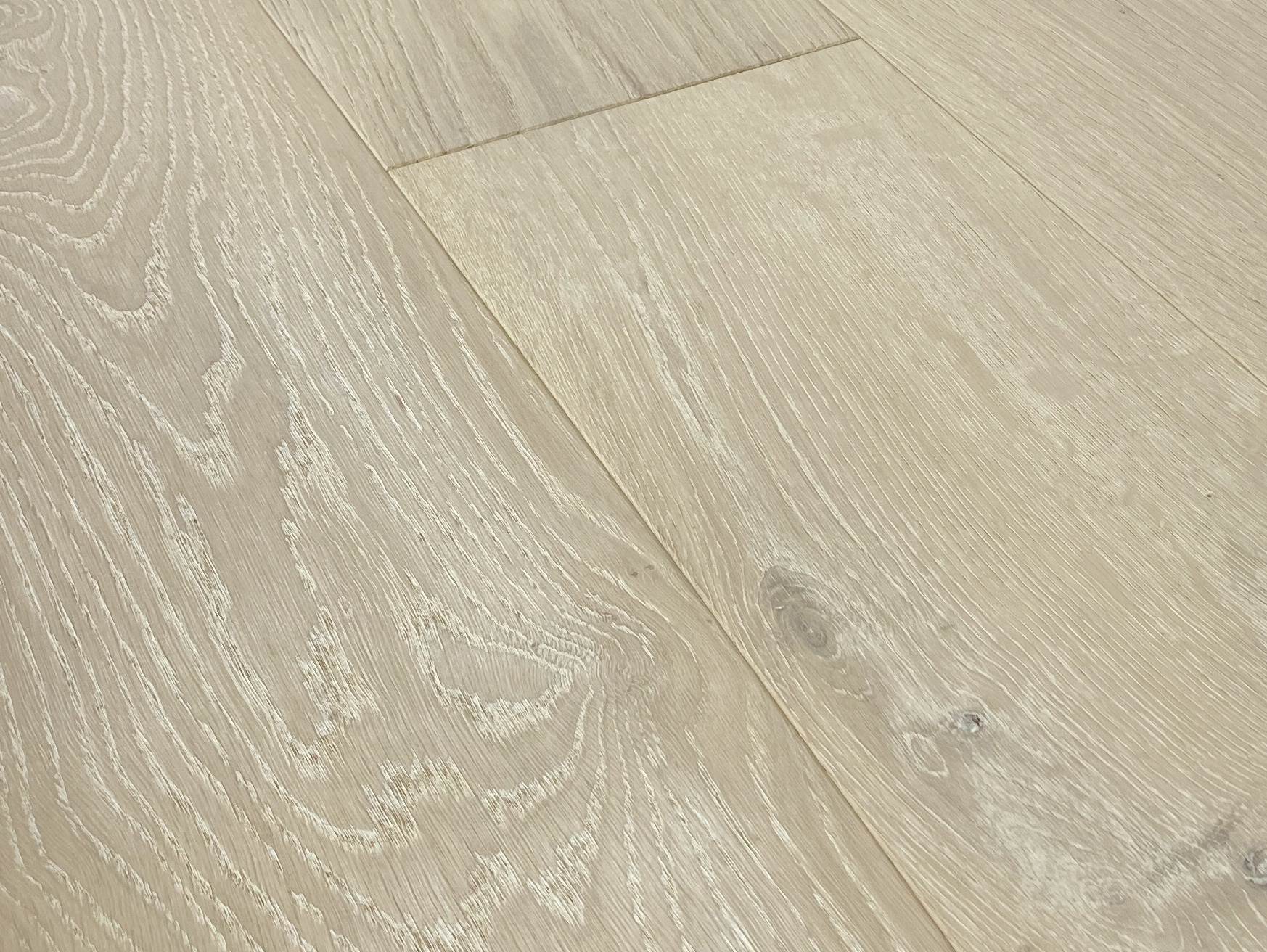
The Lago collection sits at a 3 mm wear layer. Monarch Plank Lago Como is European Oak in a Rustic grade, wire-brushed, 7" wide on a 9/16" board. That suits a main level where the household is adults, shoes come off at the door, and a mat catches the worst of the grit.
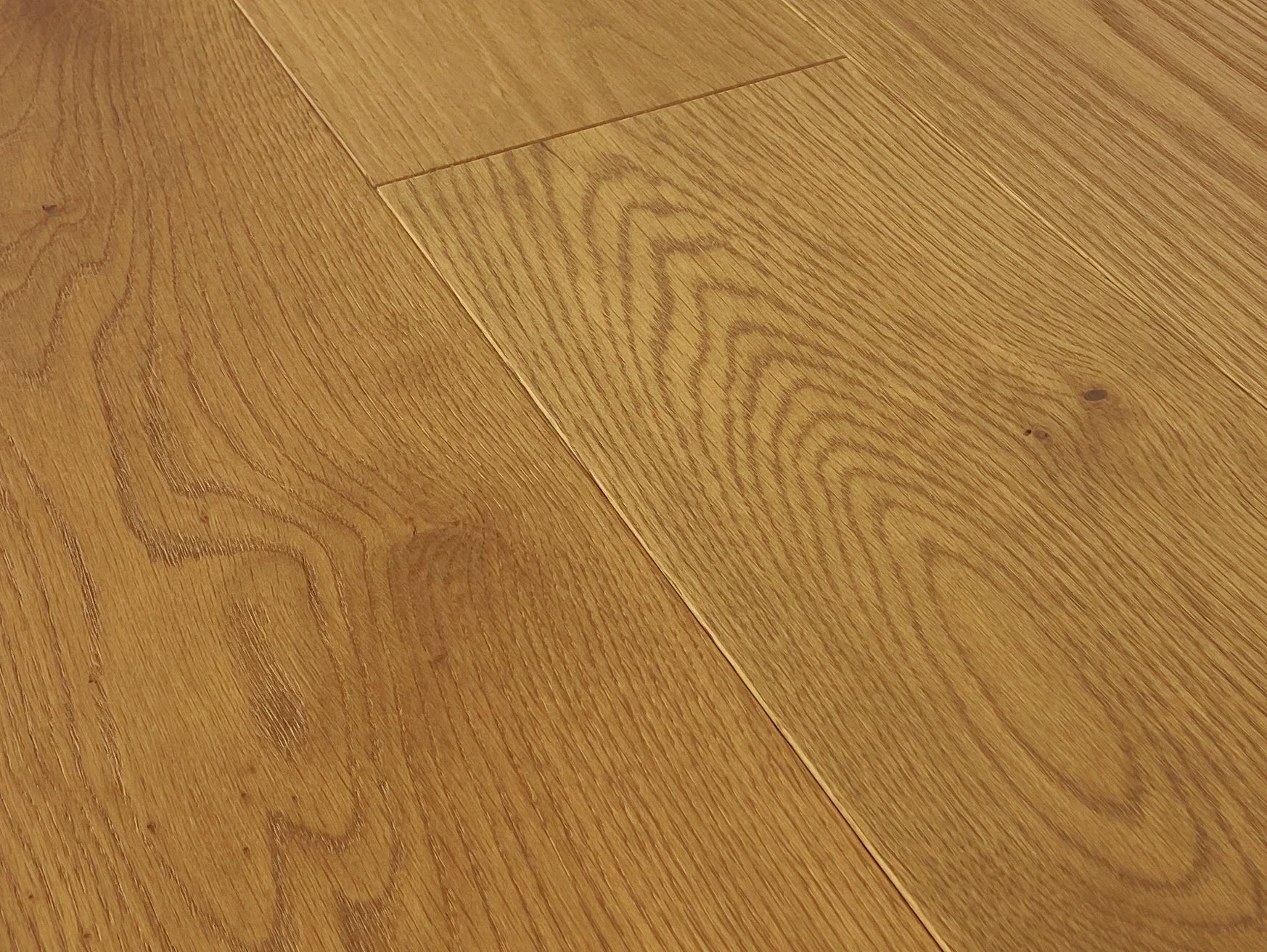
The Vinland boards step up to a 4 mm wear layer on a 5/8" board. Monarch Plank Vinland Natural - Light Rustic is offered in Hickory, Maple, Red Oak, Walnut and White Oak, smooth, 7" wide. When a floor has to survive a dog, a side door and children, that extra millimetre is the specification worth arguing about.
Wear layer is not the only number that decides how a floor ages
A thinner wear layer under a forgiving surface often looks better for longer than a thicker one under an unforgiving surface. Texture and grade do much of the work that homeowners credit to depth alone. Showrooms rarely volunteer this, because depth is the easier number to sell.
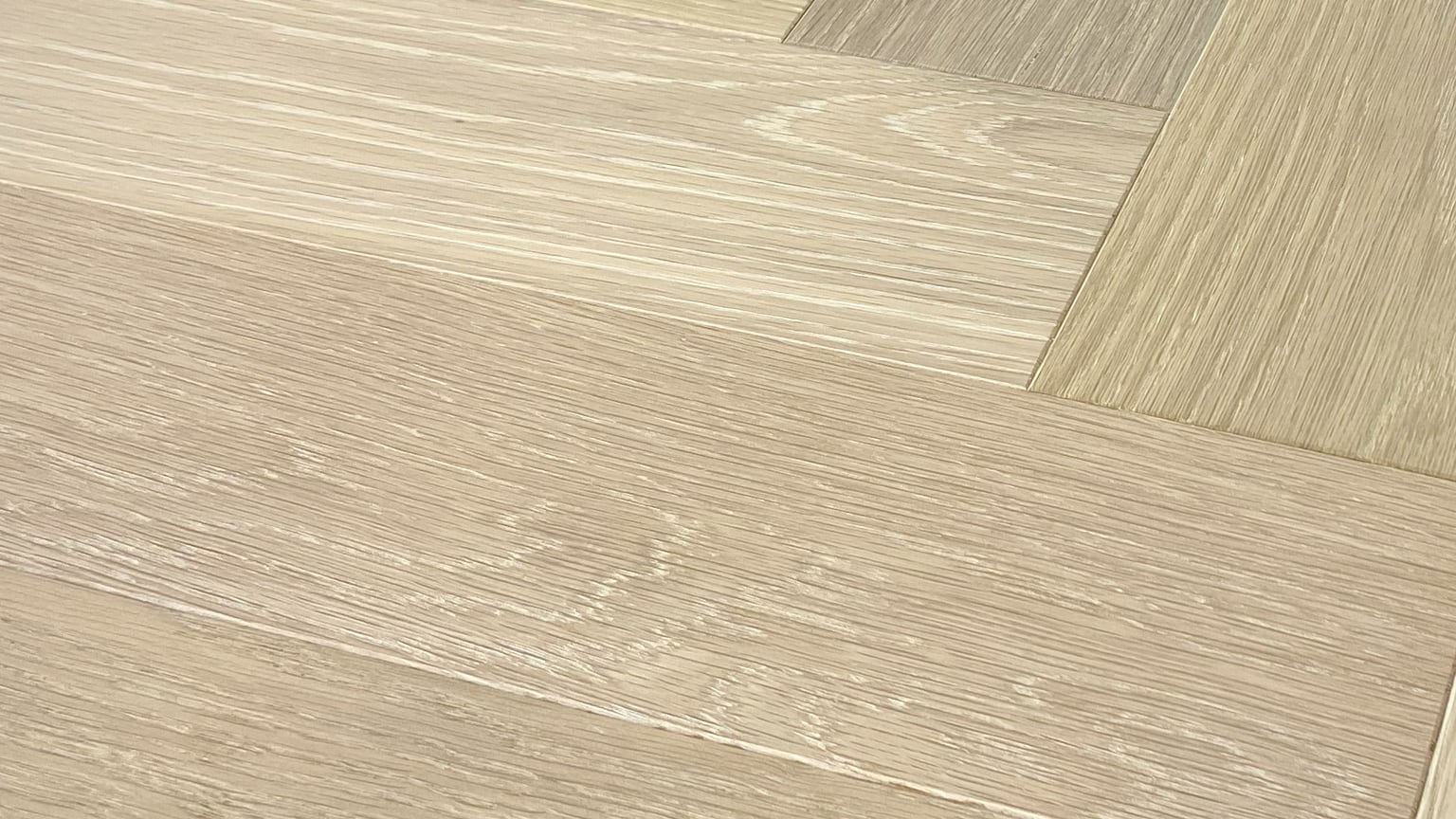
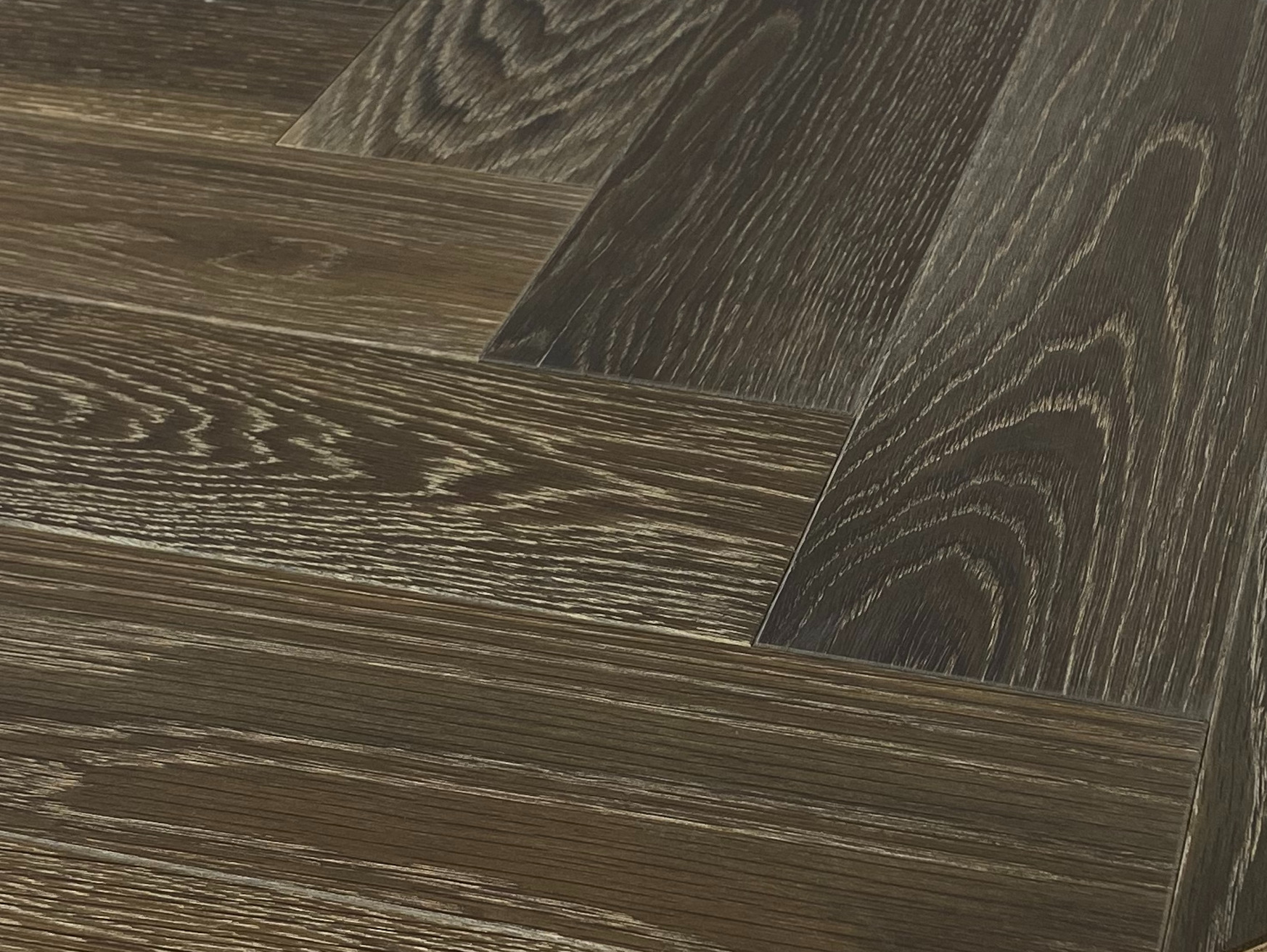
Wire-brushed boards carry a raked, open grain that breaks up reflections, so a scratch has somewhere to hide. Smooth boards show light evenly, which is exactly why they show every mark evenly too. Monarch Plank Lago - Herringbone Devero is wire-brushed European Oak at 4-3/8" wide, and its texture does more for daily appearance than one millimetre of depth.
Grade behaves the same way. A Rustic grade carries knots and colour movement that absorb the visual noise of a busy household. A Select or Prime grade presents a calmer field, where a single mark reads as damage rather than character.
Monarch Plank Premio Bella is a Prime grade Red Oak at 7-1/2" wide, smooth, and it is a quieter floor that asks to be looked after. Finish adds the last variable, since an ultra-matte surface hides fine abrasion that a brighter film would catch the light on. This is also why a sample of the actual board settles the question faster than a photograph.
What we would ask before recommending a thickness
The first question is who uses the floor. Dogs, a side door that opens onto a yard, and children with scooters all argue for more material on top. A quiet household with a shoes-off habit is a different brief entirely.
The second is how long you intend to keep it. A floor you expect to refinish rather than replace needs the depth to make that possible. A floor going into a house you plan to sell is a shorter conversation, and the honest answer there is often that grade and texture matter more than depth.
The third is height. A 9/16" board and a 5/8" board do not land at the same level, and in an older ranch house in Sunnyvale that difference decides whether a bedroom door still clears the threshold. That is a measurement question, and it is the one homeowners most often discover too late.
What changes the answer in an older home
Light is the variable that catches people out. A floor under a wall of glass will change colour long before it wears out. That is a different problem with a different answer: see what sunlight does to a wood floor near a wall of glass.
The subfloor is the other one, and it usually moves a quote more than the boards do. Flatness, moisture and whatever is already down there drive the labour, as the breakdown of what changes the cost of an engineered hardwood floor sets out.
Older houses also tend to have more transitions: a raised hearth, a step into a converted porch, a doorway into a garage. Each one is a place where board height has to be resolved on site. None of that changes which wear layer you want, but it changes what the floor costs to fit.
Common questions about wear layer
Can a 3 mm wear layer be refinished?
Yes. A 3 mm top layer is real hardwood, and a professional can sand and refinish it. How much life that leaves depends on how deep the damage goes and how much material the sanding takes off, so follow the manufacturer's guidance for the product you choose.
Is the wear layer the same as the thickness?
No. Thickness is the whole board including its plywood core, while the wear layer is only the hardwood on top. A thicker board is not automatically a thicker top layer, so read both lines on the specification rather than one.
Does a thicker wear layer make a floor harder?
No. Hardness comes from the species and the finish, not from the depth of the surface layer. A thicker wear layer gives you more material to recover later, which is a different promise from resisting the dent in the first place.
Does texture change how much wear layer I need?
It changes how much wear you see. A wire-brushed Rustic floor disguises fine scratching, so the same abrasion reads as character. A smooth Prime floor in the same hallway will look worn sooner at the same depth of timber.
How do I compare a wood wear layer with a vinyl one?
Treat them as two separate questions. Ask for millimetres on engineered wood and mil on vinyl, then decide the material first and the number second. A floor you can refinish and a floor you cannot are not competing on the same axis.
What should I look at in my own house before choosing?
Walk the path from your main door to the kitchen and look hard at the floor you have now. Whatever has worn there is what the new floor will face. That is the most honest evidence available to you, and it costs nothing to collect.
What to do next
Put the decision in the room rather than on a screen. Lay your shortlist down near the door where the traffic starts, and live with the boards through a few evenings of your own light before you commit to a depth.
When one of them is clearly right, request a quote for supply and installation. We include free in-home laser measurement, which is what turns a wear layer preference into a floor that meets your thresholds and clears your doors.