
Aluminum oxide floor finish: what the label means
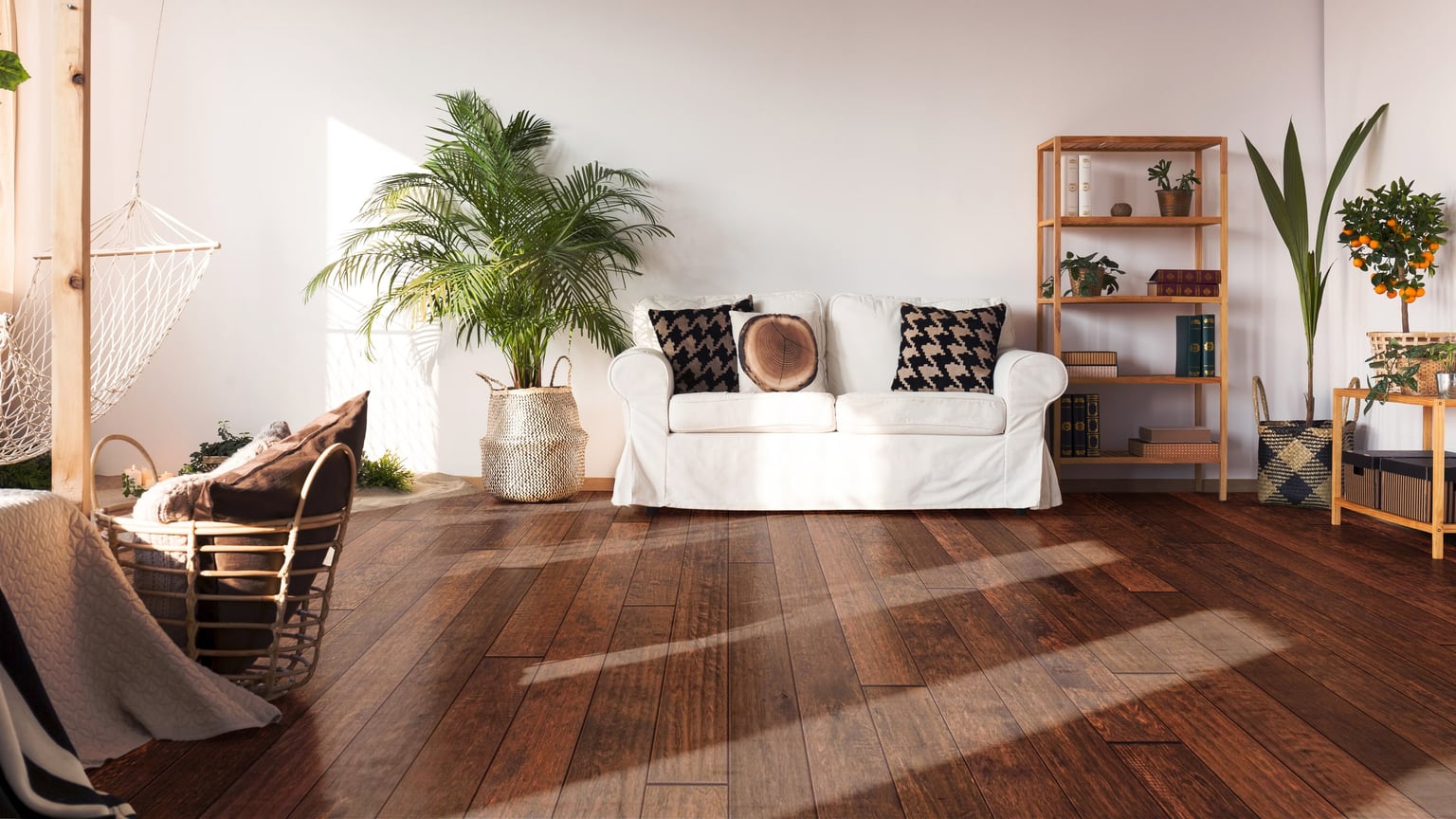
An aluminum oxide floor finish is a factory-applied urethane coat with fine aluminum oxide particles mixed into it. When a spec sheet says "Urethane with Aluminum Oxide", the clear top film was cured before the boards left the factory, and it carries a hard mineral grit that slows everyday scratching. It does not make the wood harder, it does not make the floor waterproof, and it changes how the floor can be repaired later.
So the label answers one narrow question: how the surface film wears from day to day. The decisions that matter more sit next to it on the same sheet. Those are the wear layer, the species, the surface texture and the plank width.
What the label is actually describing
Urethane is the clear film you see on top of the wood. Aluminum oxide is a very hard mineral, from the same family of material used to make sandpaper. Manufacturers blend fine particles of it into the urethane, so the film itself becomes harder to cut.
Factory finishes like this are usually built up in several thin coats and cured on the line. The result is a film that sits on top of the wood rather than soaking into it. You see the oak or hickory through it, but your shoes, chair legs and grit touch the finish first.
Every floor named in this article lists the same finish, word for word. That is useful to you. It lets you hold the finish steady and compare the things that genuinely differ from one floor to the next.
What it resists, and what it does not
An aluminum oxide film is good at the small, constant damage a floor sees. Fine grit carried in on shoes, light scuffs from a chair, and the slow dulling of a walking path all land on a harder surface. That is the job it was designed for.
It is not good at dents. The film is thin, and a dropped pan or a narrow heel presses straight through it into the wood. Dent resistance comes from the species underneath, which the spec sheet records as a Janka rating.
The catalogue shows the spread clearly. Garrison Carolina Classic Salem is hickory with a Janka rating of 1820. Garrison Beverly Hills Rexford is Euro Oak at 1360, and Garrison Competition Buster Birch Truffle is birch at 1260.
All three wear the same finish. In a kitchen where things get dropped, the hickory resists dents better than the birch, and the finish does nothing to close that gap. If dents are your worry, read the Janka line before you read the finish line.
The film also does not stop water. It protects the face of each board, but standing water finds the seams between boards and reaches the edges and the core. A spill wiped up promptly is fine; a leak under a dishwasher that sits overnight is not.
Deep scratches are the last limit. A sofa dragged across the room, a stone stuck in a shoe, or a dog skidding around a corner can still cut through. The grit raises the bar for damage. It does not remove the bar.
Why it changes what a future repair looks like
This is the part most people do not hear until years later. The same hardness that slows scratching makes the film hard for a new coat to grip. A site-applied finish brushed over it may not bond well unless the surface is prepared the way the manufacturer specifies.
Before anyone recoats the floor, ask what the manufacturer recommends for that product. Some recoat systems use a bonding product, and some call for mechanical abrasion first. A recoat done the wrong way can peel, and then the only fix left is a full sanding.
A full sanding means cutting through the factory finish and into the wood itself. That is where the wear layer, the solid wood on top of an engineered board, decides your options. The thicker it is, the more room there is for a future sanding.
The figures vary widely across these floors. Garrison Beverly Hills Walden lists a 4 mm wear layer, and Garrison Bellagio Rovenza lists 3 mm. Garrison Carolina Classic Salem lists 2.4 mm, Garrison Newport Carmel lists 2 mm, and Garrison Competition Buster Birch Spice lists 1.5 mm.
A thin wear layer is not a defect. It means the floor is meant to live under its factory finish, with care and maintenance rather than sanding. A thick one keeps the refinishing door open if the house will see heavy wear or a future owner wants a different colour.
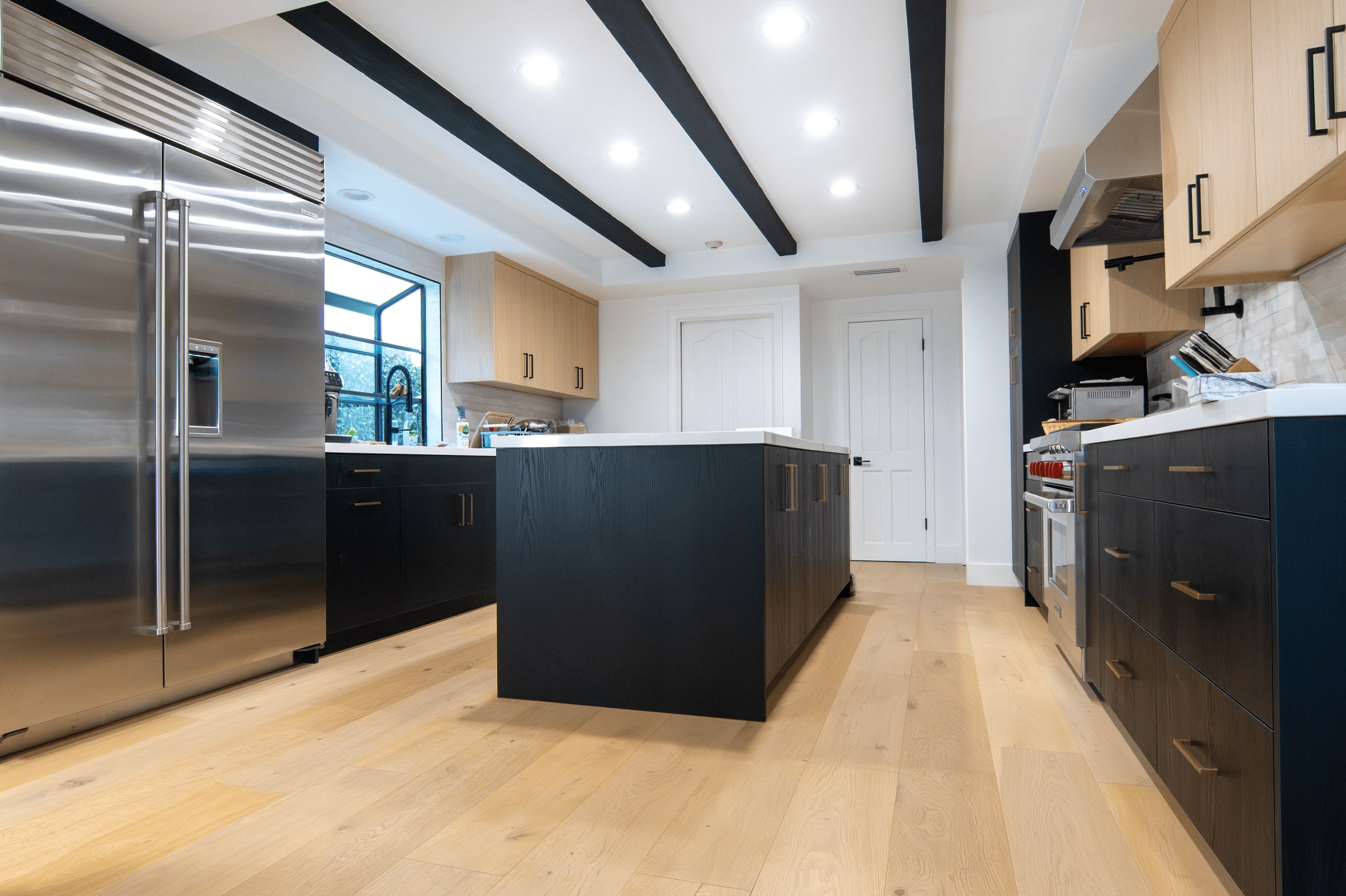
In a kitchen like that one, the finish takes the daily grit and the wear layer is the long-term reserve. If you expect to sand a kitchen floor one day, the wear layer matters more than anything printed about the finish. You can compare the figures on the Garrison Beverly Hills Rexford product page.
How the surface texture changes what you see
The finish is the same across these floors, but the texture under it is not. Texture is listed as the surface treatment, and it decides how visible a scratch is once it happens.
Smooth boards show everything. On a smooth, pale maple, a scratch reads as a clean line across a quiet board. That is the trade-off for a calm, uniform look.
Brushed boards hide more. The Beverly Hills floors list a light wire brushed surface, while Garrison Bellagio Rovenza and Garrison Newport Del Mar list a wire brushed one. Brushing opens the grain, so small marks fall into texture that was already there.
Hand-worked boards hide the most. Garrison Carolina Classic Salem and Garrison Cantina Paloma are hand-distressed with chatter, and the Competition Buster floors are distressed with chatter with hand-scraped beveled edges. On those, a new mark often reads as part of the character.
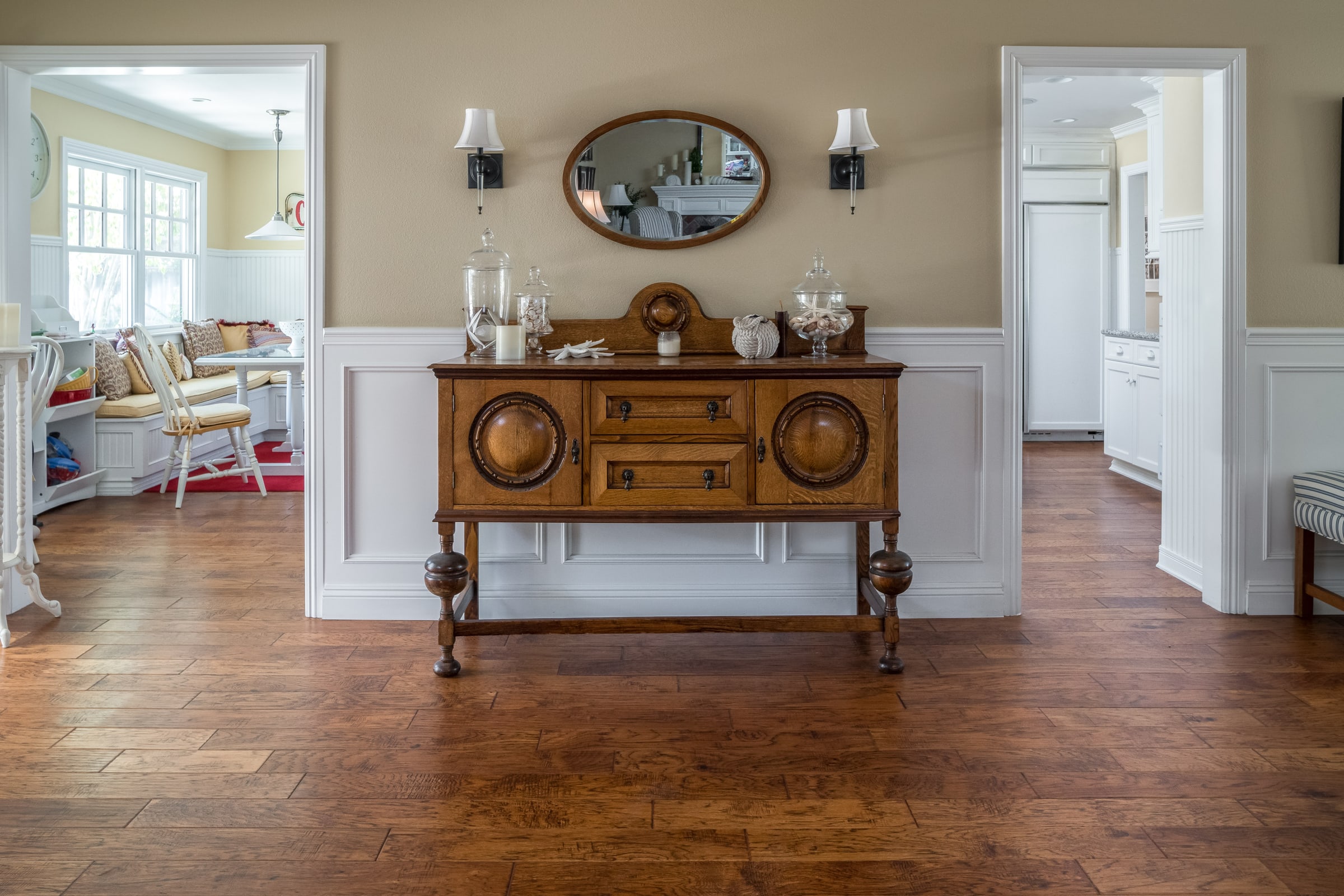
A hallway is where texture earns its keep, because traffic runs in one line. There is more on that in our article on entryway flooring, grit and wet shoes. The Garrison Carolina Classic Salem product page lists its full specification.
One thing the spec sheets here do not list is sheen. Aluminum oxide describes what is inside the coat, not how glossy it looks. Judge the sheen from a sample laid in your own light, at the time of day you use the room.
Matching the finish to the room
In a kitchen, combine the finish with a dense species and some texture. Hickory at a Janka rating of 1820 with a hand-distressed surface forgives dropped utensils and gritty shoes. A smooth, pale maple in the same kitchen will show its history sooner.
In a living room with strong sun, the finish will not stop the wood beneath it from changing colour. Our earlier article on UV urethane and ultra-matte finishes covers what the coating does and does not do about light. A darker, textured floor such as Garrison Competition Buster Birch Spice keeps marks quieter, but it shows dust.
In a bathroom where water stands on the floor, no finish makes engineered hardwood the right choice. The label can sound like protection against everything. It is protection against wear on the face of the board, and nothing more.
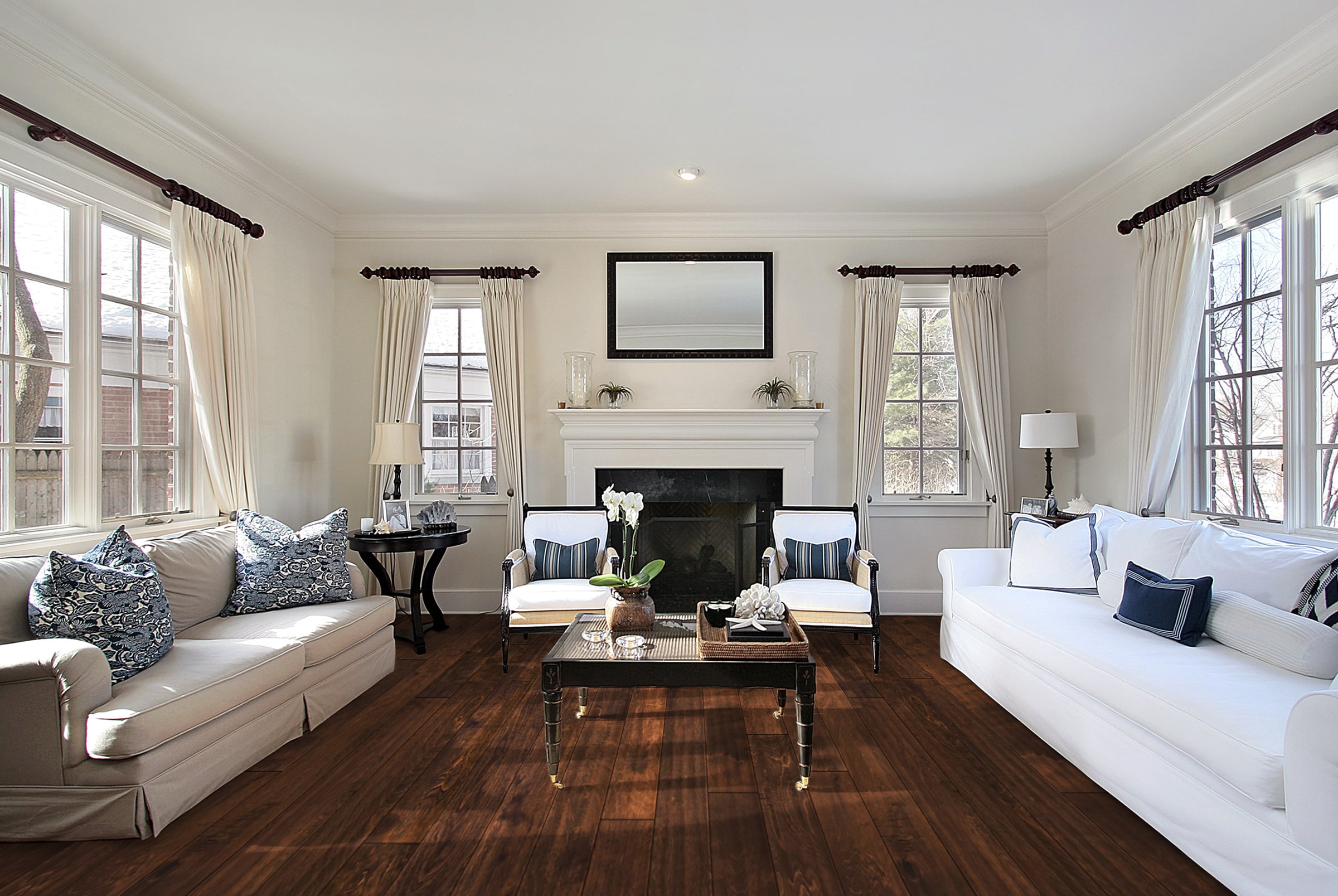
A formal room sees less grit and fewer dropped objects, so a lower Janka rating matters less there. That is a fair place for a birch floor with a thinner wear layer. Keep felt pads under the furniture and the finish does most of the work.
What we would ask before recommending one
Before we suggest a floor, we ask what actually lands on it. Grit from a garden door, a dog, rolling office chairs and children each wear the surface in a different way. The answer tells you whether to weigh the Janka rating, the texture or the wear layer first.
We also ask whether you expect to refinish. If you plan to stay in the house a long time, a thicker wear layer is worth more than any finish label. If you want a floor that looks settled from the first day, texture matters more.
Then we look at the room itself. The subfloor, the light, and the doors that open onto it all change the choice. A free in-home laser measurement gives us the room before we recommend anything, and you can request a quote when you are ready.
Questions about aluminum oxide finishes
Is an aluminum oxide finish scratch-proof?
No. It is harder to scratch than a plain urethane film, so fine grit does less damage. A deep scratch from a dragged chair or a stone in a shoe can still cut through it.
Can you refinish a floor with an aluminum oxide finish?
Yes, by sanding through the factory finish into the wood. How much sanding the floor allows depends on its wear layer, so read that figure on the spec sheet. A recoat without sanding needs the preparation the manufacturer specifies.
Does aluminum oxide make a hardwood floor waterproof?
No. The film protects the face of each board, but water can still reach the seams and the core. Wipe spills promptly and keep standing water off the floor.
Is aluminum oxide the same as a matte finish?
No. Aluminum oxide describes what is mixed into the coat. Matte, satin and gloss describe how much light it reflects, and the label alone does not tell you which one you are buying.
How should I clean an aluminum oxide floor?
Follow the manufacturer's care instructions for that product. Sweep or vacuum grit often, since grit is what wears the film. Avoid waxes and oil soaps unless the manufacturer approves them, because they can leave a residue that blocks a later recoat.
The short version
"Urethane with Aluminum Oxide" tells you the surface film is hard and factory cured. It tells you nothing about dents, water or how many times the floor can be sanded. For those, read the Janka rating, the surface treatment and the wear layer, then order samples and look at them in your own room.
When you are ready to compare, every floor named here sits in our flooring range, with its full specification listed on each product page.