
Brushed DuraMatt finish or matte-brushed urethane?
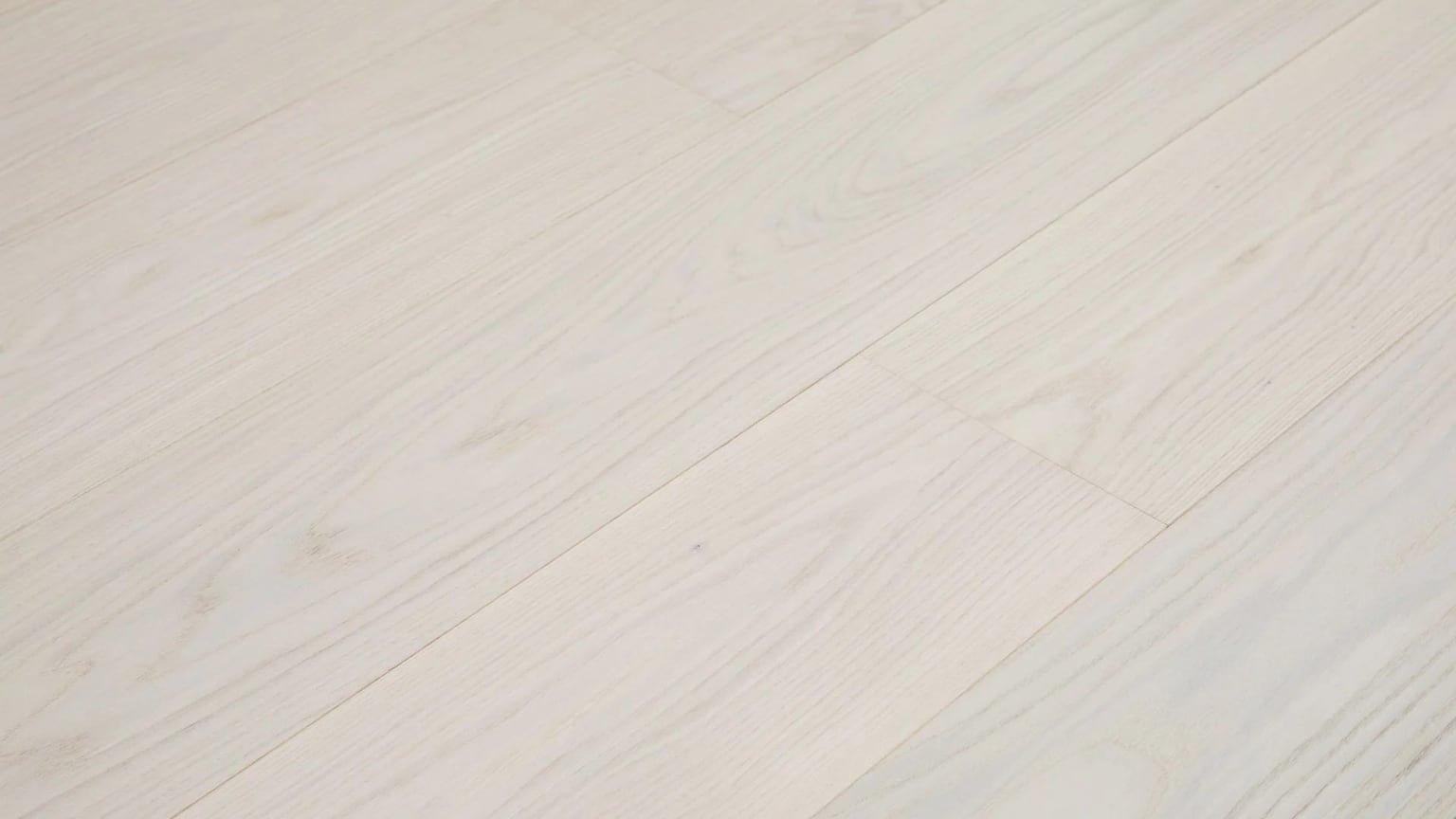
In a living room, the choice between a brushed DuraMatt finish and a matte-brushed UV-cured water-based polyurethane comes down to what each label can prove, not how each one looks on a sample board. Both read as a low sheen over a textured surface. Pick the one whose spec sheet tells you the chemistry, the cure and the recoat path, because those decide how the floor ages.
The floors we can quote line by line all carry the matte-brushed finish, with a full spec sheet behind each one. A DuraMatt floor may be just as good. You simply need the same facts for it before the two can be compared fairly.
What each label actually tells you
Matte-brushed UV-cured water-based polyurethane is a description you can read word by word. Matte is the sheen. Brushed means the boards were wire-brushed before finishing, which lifts out some of the softer grain and leaves a gentle texture you can feel underfoot.
UV-cured means the coating was hardened at the factory under ultraviolet lamps, rather than left to dry inside your house. Water-based means the polyurethane carries less of the amber cast that oil-based coats bring to pale oak. Each of those words is a claim you can check against the spec sheet.
Brushed DuraMatt is a trade name. It tells you the surface is brushed and the sheen is low, and everything else lives on the manufacturer's documents. Before you compare it, ask four things: what the coating is made of, how it was cured, whether it contains aluminum oxide, and what it can be recoated with.
That third question matters more than it sounds. Our guide to what an aluminum oxide finish label means explains why a harder coat can also be a harder one to repair.
Why a living room is a hard test for a matte finish
A living room is usually one large open floor, and it often gets a lot of low-angle daylight. Raking light across a floor is what exposes sheen. Two matte finishes that match on a countertop can look different at the far end of the room late in the afternoon.
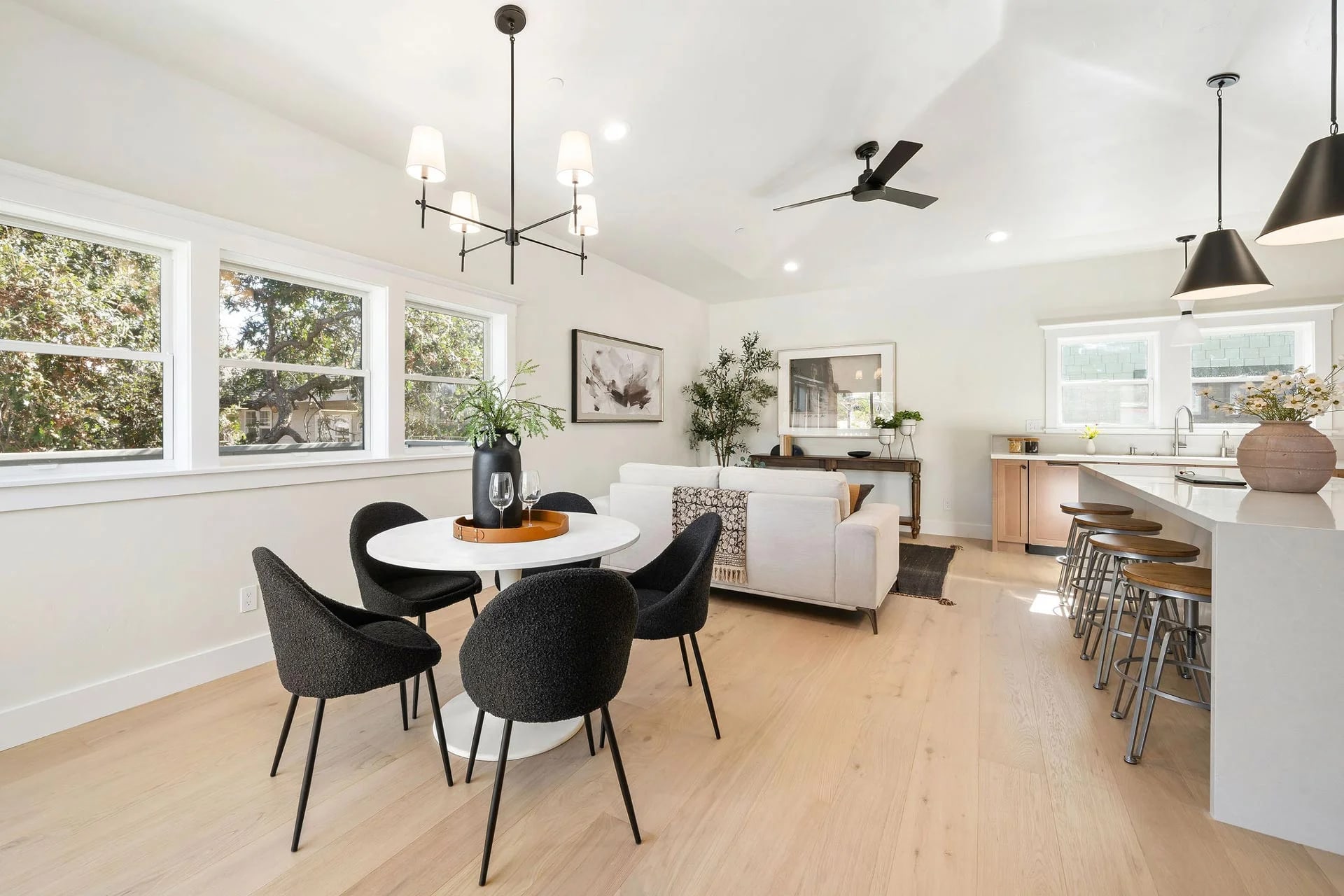
The traffic is unusual too. Instead of one path, a living room has several: the route from the front door, the walk around the sofa, the strip in front of the television. Chairs and side tables get pulled back and forth over the same few planks.
Matte finishes help with all of this because they scatter light instead of reflecting it. Fine scratches, footprints and dust read less on a low sheen than on a glossy one. A brushed surface adds texture, which hides small marks further still.
If you are still deciding on the floor itself, our notes on living room flooring, plank width and light cover the room in more depth.
Where the matte-brushed finish earns its place
Every floor named in this article carries the same finish, so the differences between them come down to width, grade and tone. Bergamo Oak Tramonto Bene is a Light Character grade European White Oak at 242mm wide, with micro-bevelled long sides and square short ends. That grade shows knots and grain movement, which works with a brushed surface rather than against it.
Prime grade is the quieter choice. Bergamo Oak Pisa Premio and Bergamo Oak Turin Premio both use Prime grade boards at 242mm wide, so the brushing reads as texture rather than as character. In a calm room with plenty of light, that restraint shows.
If the room is smaller, or broken up by furniture, a narrower board can sit better. Bergamo Oak Usini Ultra is Prime grade at 192mm wide, with the same matte-brushed finish.
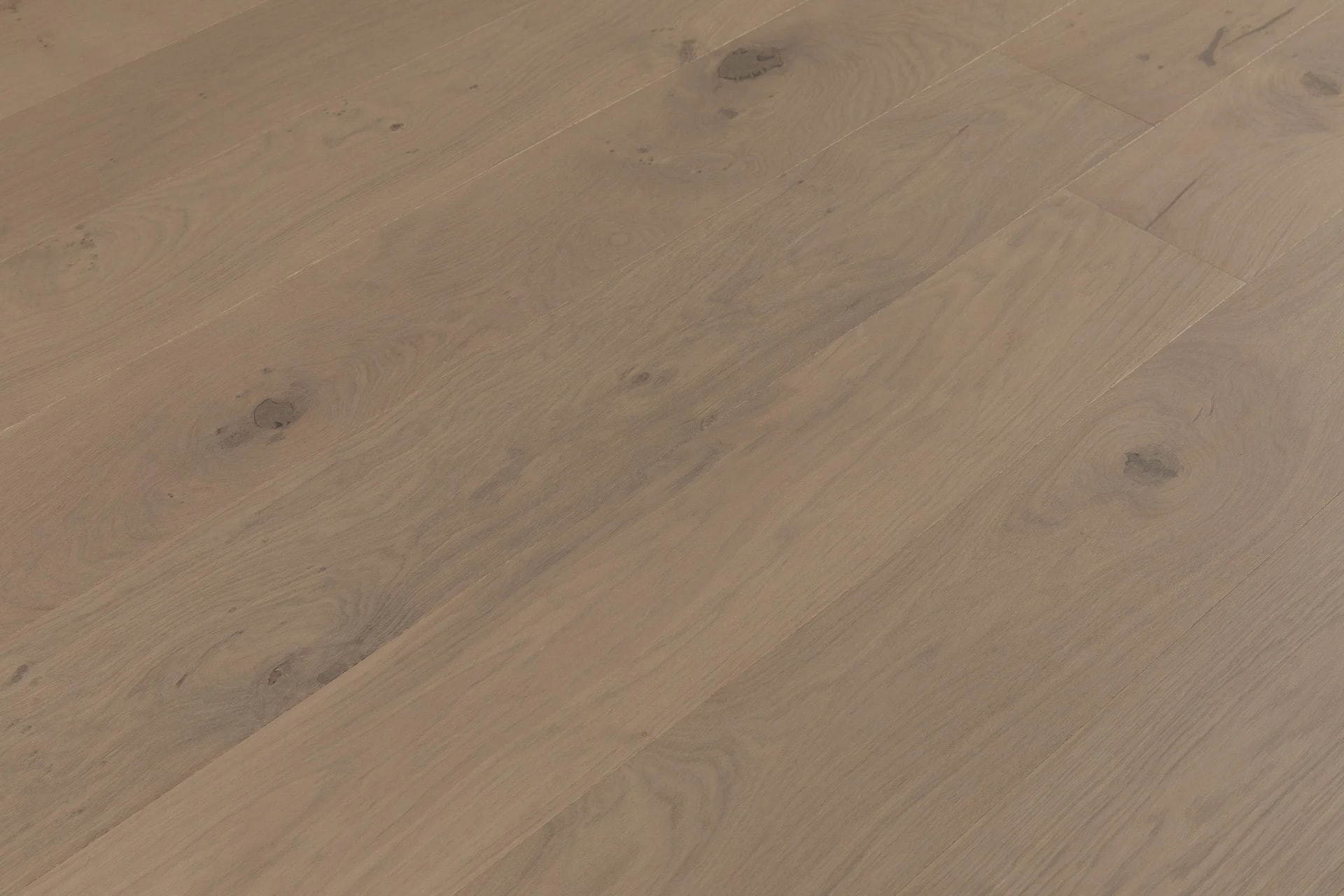
Brushing shows clearly on a neutral or darker board. On a taupe oak with filled knots, the texture catches low light and softens the look of everyday wear.
What all of these floors share underneath
The finish is the thinnest part of this decision. Every floor named here is engineered: a 4mm hardwood top layer on multi-ply cross-bonded Baltic birch plywood, 5/8" (15mm) thick overall. All of them are made in Italy from European White Oak.
That 4mm wear layer changes how you should think about the finish. When a factory coat eventually wears in the traffic paths, a wood layer of that depth usually leaves room for a professional refinish. Confirm with the manufacturer what the floor accepts before anyone sands it.
The floors also carry Indoor Air Comfort Gold certification. If a DuraMatt floor you are considering lists its own indoor air certification, compare the two documents side by side rather than the marketing names.
When a DuraMatt floor may be the right call
The finish is rarely the first thing a living room asks for. Width, species, grade and tone shape the room far more than the coating on top. If a DuraMatt floor comes in the exact board and colour you want, and nothing here matches it, the finish should not be the reason you walk away.
What would make us hesitate is a missing spec sheet. A finish name with no stated chemistry, cure or recoat path is a promise you cannot check. Ask the seller to put those answers in writing before you order.
The same test applies to us. Every claim in this article comes from the spec sheet of the floor it names, and you should expect that of any seller.
How to judge the two finishes in your own room
Ask for a sample of each and put them on the floor, not on a table. Look across them standing up, then from the sofa, at the time of day the room gets its lowest light. If one shows a sheen band the other does not, you have your answer.
Run a fingertip lightly across both. A brushed finish should feel textured but not rough, and the grain edges should not snag a sock. A texture you notice by hand is one you will notice barefoot.
Then look at colour. Water-based polyurethane keeps pale oak closer to its raw tone. If the DuraMatt sample warms the board noticeably, ask whether its coating is oil-modified.
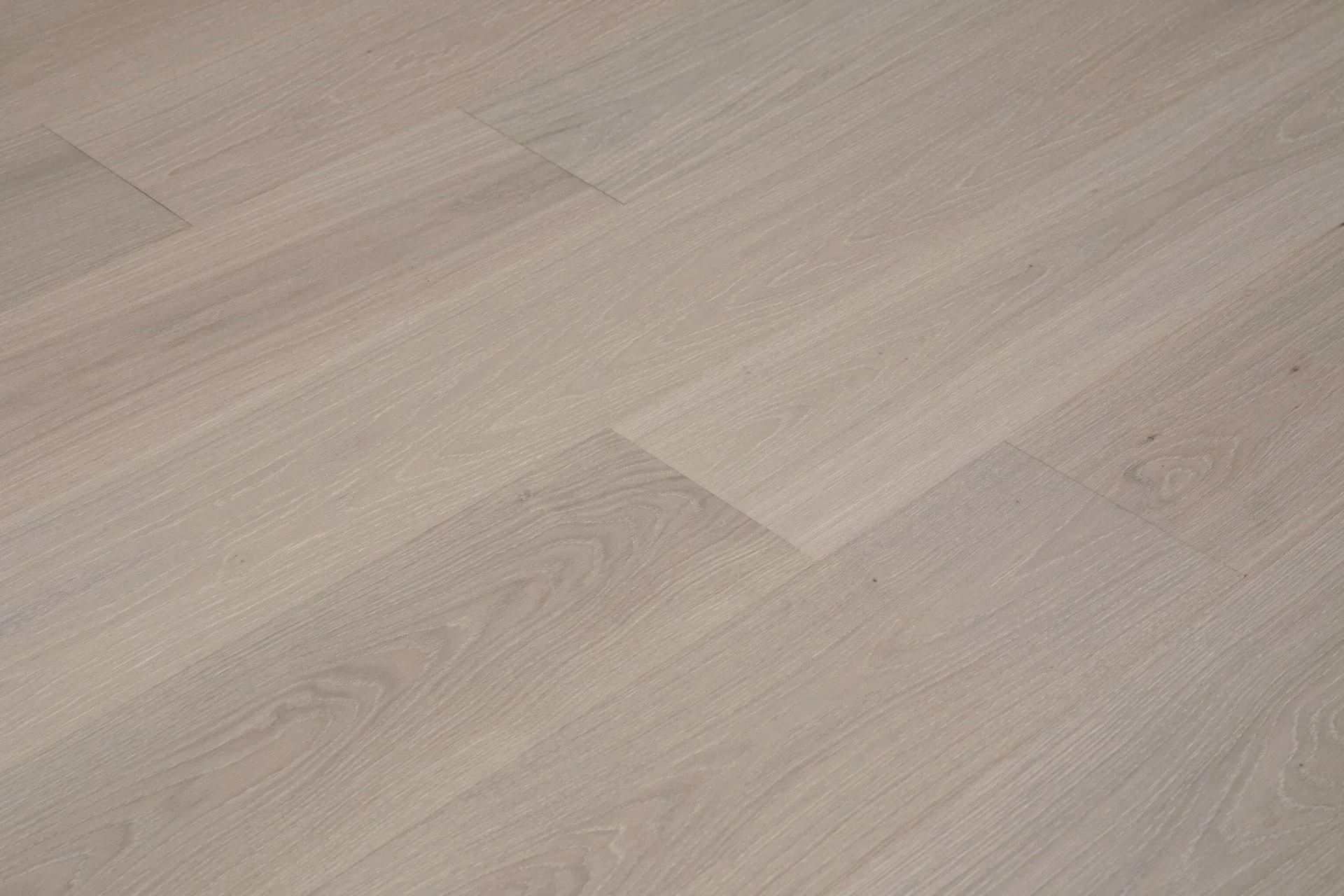
Pale boards make tone shifts easy to spot, which is why the side-by-side test is worth the effort. You can order samples of the floors named here and lay them next to whatever else you are considering.
The trade-offs nobody puts on the box
A brushed surface holds more fine dust in its grain than a smooth one. A vacuum with a soft floor head clears it, and a damp microfibre mop finishes the job. If you dislike any visible texture, a brushed finish of either kind is the wrong choice for you.
Matte is not the same as soft, and it is not the same as indestructible. A UV-cured coat is hard from the day it is installed, but grit under a chair leg will still mark it. Felt pads under every piece of living room furniture do more for the finish than the label does.
Spot repair is where the two labels can differ. Some factory finishes accept a maintenance coat from the manufacturer, and some accept only their own system. Get the answer in writing for the DuraMatt floor, and ask us the same question about ours.
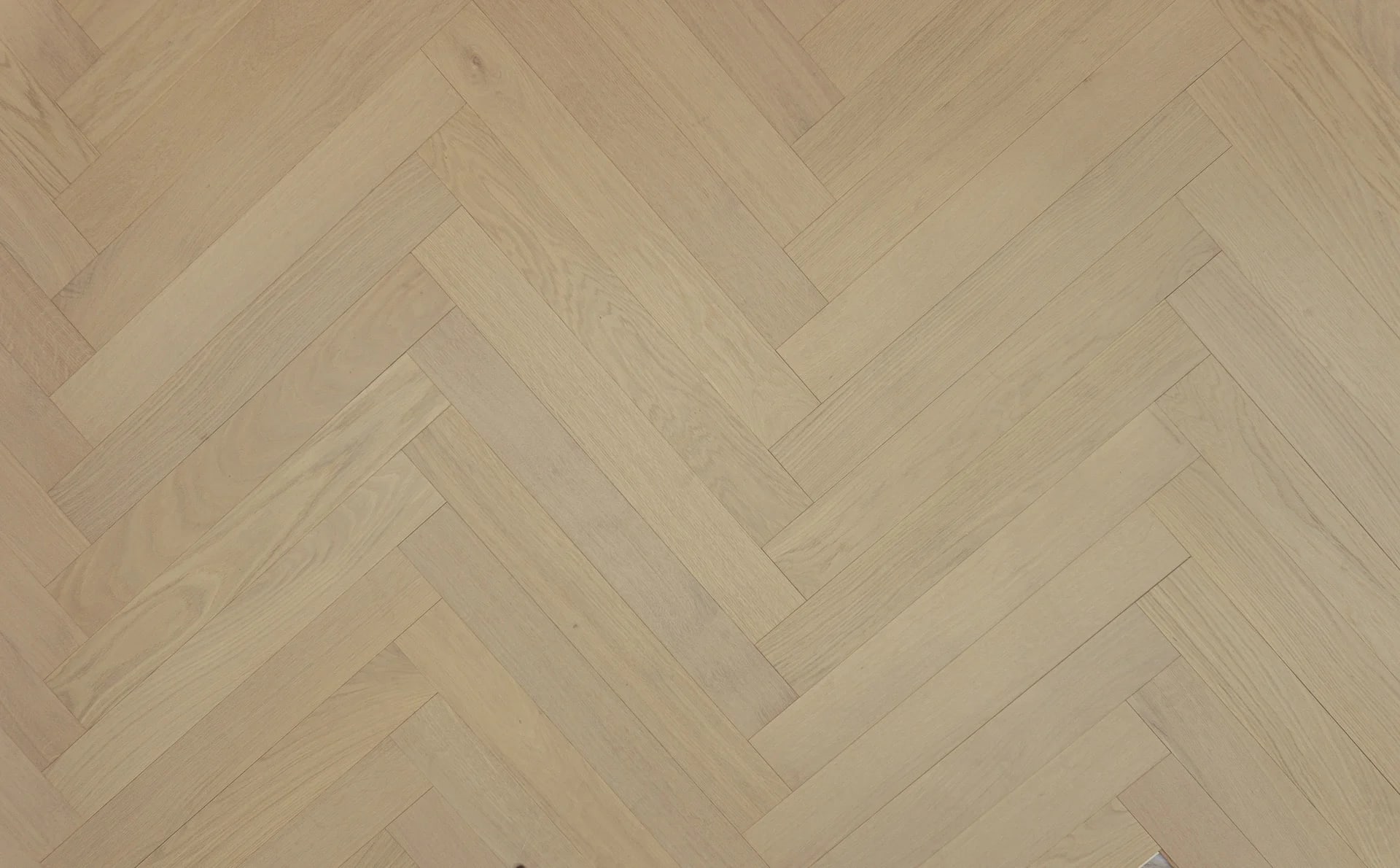
If the living room calls for a pattern, the same finish comes in Bergamo Oak Turin Herringbone, a Prime grade board at 100mm wide. In a herringbone, light meets each board at a different angle, so a matte finish reads flatter and calmer.
What we would ask before recommending either
We would ask which way the room faces and how low the light gets, because that decides how much sheen you will see. We would ask about pets, children and chairs, because that decides how hard the finish will be worked. We would ask whether you might refinish in place one day, because that decides how much the wear layer matters.
Then we would measure. Our free in-home laser measurement gives an exact figure for the room and the transitions into it. From there you can request a quote, with delivery and professional installation available across our service area.
Questions about matte finishes in a living room
Is a brushed DuraMatt finish the same as matte-brushed polyurethane?
Not necessarily. Both describe a brushed, low-sheen surface, but DuraMatt is a trade name. Check its spec sheet for the coating type and the cure before treating the two as equal.
Does a matte finish hide scratches better than a satin one?
In most light, yes. A low sheen scatters light, so fine scratches and dust read less. Deep gouges show on any finish.
Will water-based polyurethane turn pale oak yellow?
It keeps pale oak closer to its natural tone than oil-based coatings do. Sunlight still changes the wood itself, so expect some shift in a bright room.
Can a brushed engineered floor be refinished?
The floors named here have a 4mm wear layer, which usually leaves room for a professional refinish. Sanding removes the brushed texture unless the refinisher brushes the boards again, so ask about that first.
How should I clean a brushed matte floor?
Vacuum with a soft head, then use a well-wrung microfibre mop and the cleaner the manufacturer names. Avoid steam and wax, which can leave a shine the finish was never meant to have.
If you are leaning toward the matte-brushed finish, start with the full flooring range and compare widths and grades side by side. Put two samples on your own floor before you decide, and let the light in your room make the call.