
Sun fading on wood floors near a wall of glass
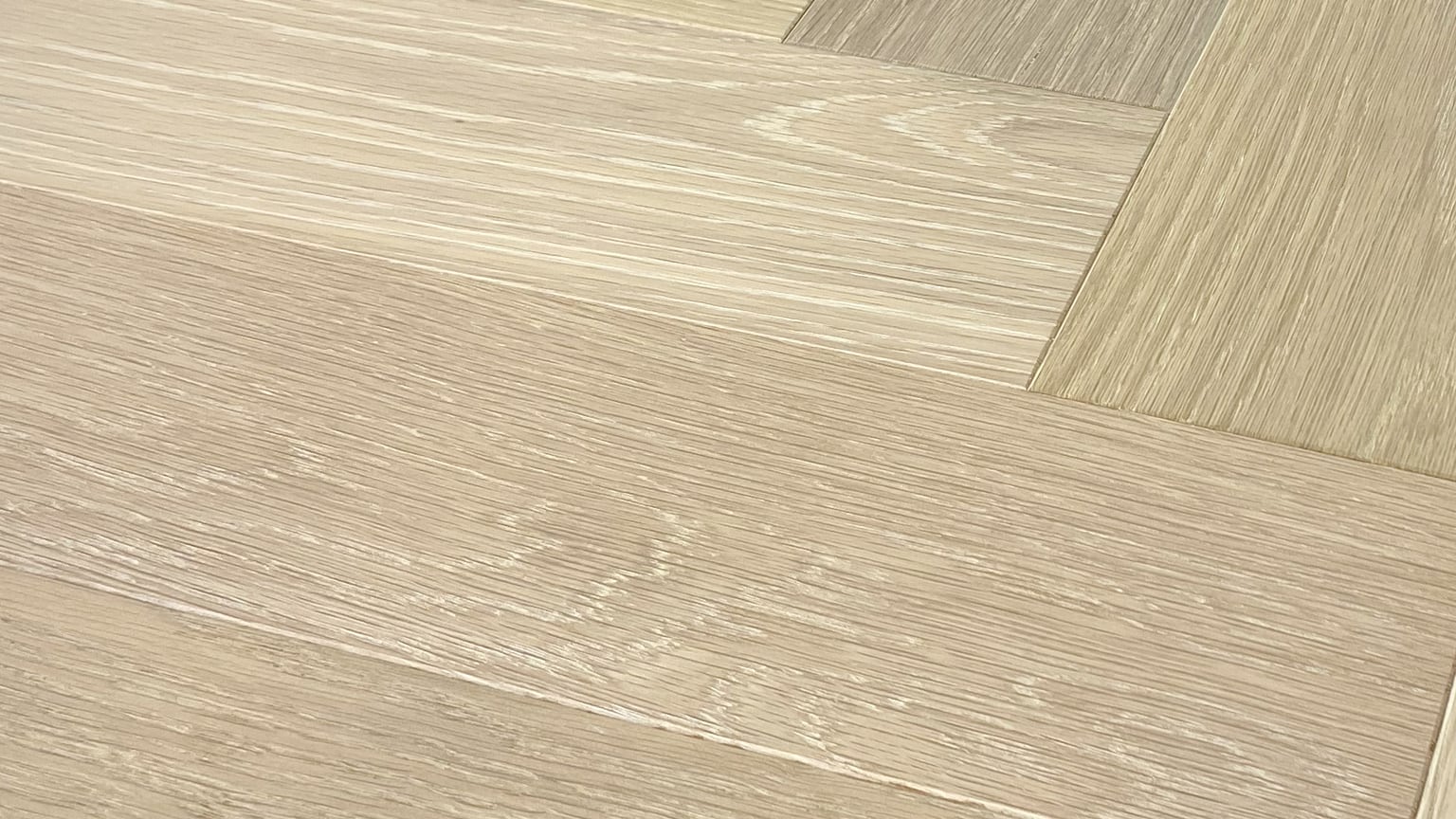
Sun fading on wood floors is real, and a wall of glass speeds it up. Direct sun changes the colour of oak over time: natural oak tends to warm toward honey, and stained colours can lighten or shift. You cannot stop that with a floor choice alone.
What you can control is how much the change shows and how much light reaches the boards. No floor in our catalogue lists a fade rating, so no wood floor should be sold to you as sun-proof. Below is what we would check in your own room before recommending one.
Why a wall of glass changes a floor
Sunlight reaches a floor as ultraviolet light, visible light and heat, and each does something different. Ultraviolet light breaks down lignin, a compound in the wood near the surface, and that drives much of the colour change. Visible light adds to it more slowly, which is why ordinary window glass slows fading without ending it.
Heat is the third part. The boards in a patch of sun get warmer and drier than the boards a few steps away in shade, and wood moves as its moisture changes.
A wall of glass puts that light onto more of the floor for more of the day. A sliding door or a run of tall windows lets light land low and straight onto the boards, instead of hitting a wall first. The direction the glass faces matters as much as how much glass there is.
In the northern hemisphere, glass facing south or west brings more direct sun onto a floor than glass facing north or east. West light comes late in the day, low and warm, and it reaches deep into a room. North-facing glass gives steady indirect light, and floors beside it change far more slowly.
What changes, and what you notice
The colour shift is gradual, and across open floor it is even. Few people see it happening. They see it the day they move a rug, a sofa or a bookcase and find a rectangle of the original colour underneath.
That contrast is the real problem. A floor that has changed evenly still reads as one floor. A floor carrying the outline of old furniture looks patchy, and the fix is either time in the same light or a refinish.
The change also tends to be quicker early in a floor's life, then it slows down. That is why rug and furniture placement matters in particular during the period right after installation.
A continuous floor that runs from a sunny room into a shaded hallway will drift apart in colour over time. At a doorway, that is easy to live with. Across one open room with a bright end and a dim end, it is worth planning for.
The specs that decide how much it shows
Colour and variation decide how visible the change is. A floor with natural tone differences from plank to plank hides a gradual shift, because the eye already expects difference between boards. The close-up of Monarch Plank Tableau Renoir below shows that kind of variation, with a lighter plank set against a darker one.
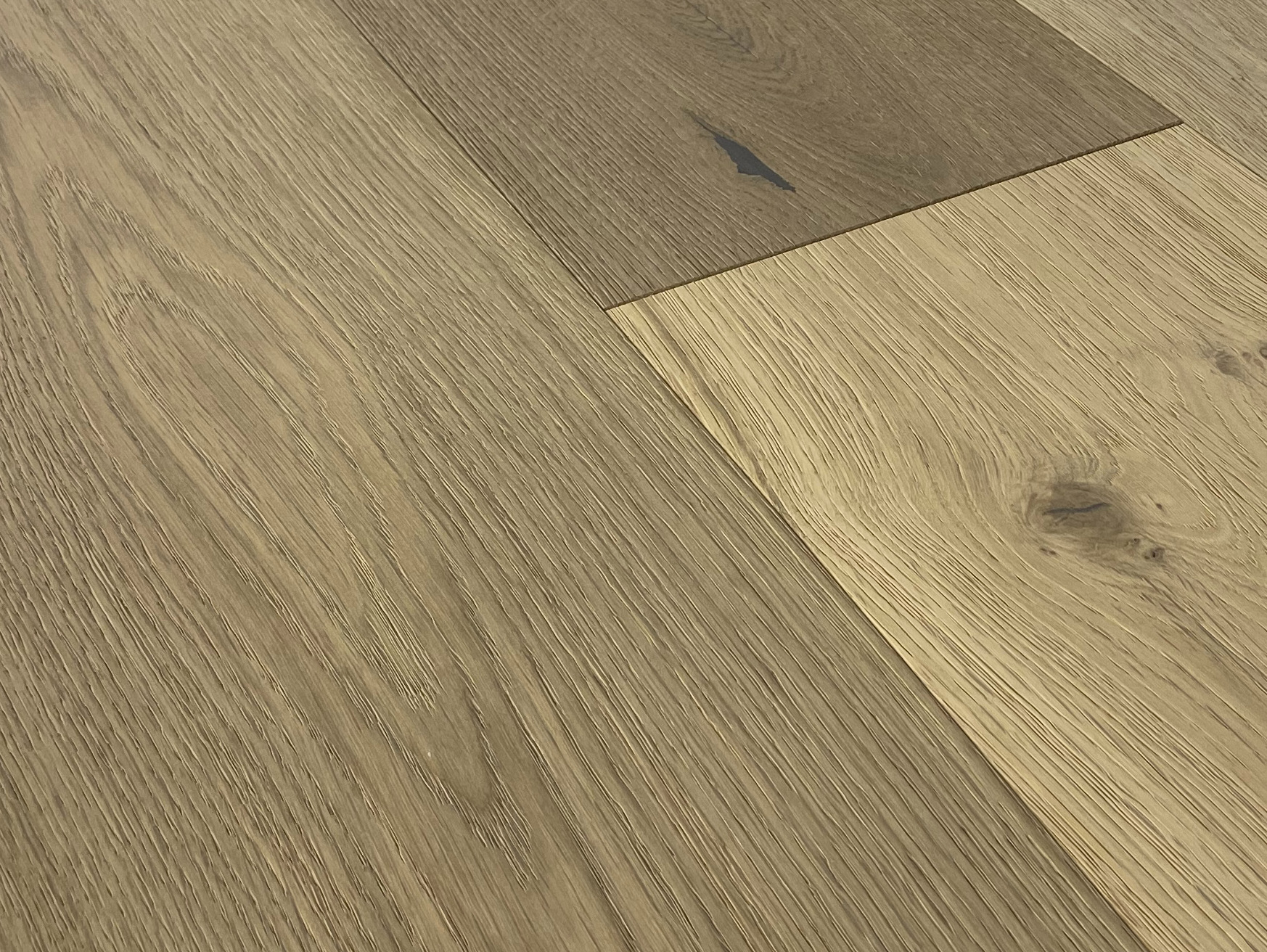
A flat, uniform colour gives the eye nothing else to look at, so a lighter strip by the door stands out. Grade matters here too. Reward URBANO Euro Oak Palermo is a Light Rustic grade with a Smooth finish, and a rustic grade carries knots and colour movement that make a gradual shift harder to spot.
Stains behave in their own way. A grey or whitewashed colour sits over oak that is still changing underneath, so it can drift warmer as the wood ambers. Riva LA/Riva Azure lists Baltic Birch/European White Oak with a UV Lacquer + Reactive Stain finish, and a reactive colour like that deserves a sample test in your own window light.
Every Monarch Plank product named here lists a UV Urethane, Ultra-Matte finish. On a spec sheet, UV urethane usually describes how the finish was cured, under ultraviolet lamps in the factory. It is not, on its own, a promise that the finish blocks sunlight, and we would not present it as one.
The ultra-matte part does help a sunny room. Low sheen scatters glare, so low afternoon light shows fewer scratches and less dust than it would across a glossy surface.
Wide planks, herringbone and heat beside glass
Heat is the part people forget. A strip of floor that sits in sun all afternoon dries faster than the rest of the room, and drying wood shrinks, which can open fine gaps between boards.
Engineered construction limits that movement. The Monarch Plank floors named here use a sawn oak top layer bonded to hardwood plywood or hardwood lumber backing, which resists the swelling and shrinking a solid board would do.
Width still counts. Monarch Plank La Grande Thyon is 11-3/8" wide, and a wide board has more wood across its face to move than a narrow one. That is not a reason to avoid it by a window, but it is a reason to follow the manufacturer's installation instructions on acclimation and expansion space to the letter.
Herringbone spreads movement across many short pieces and many joints. Monarch Plank Domaine II - Herringbone Montrichard is 4-3/4" wide with a 6 mm sawn top layer, and its pieces run in two directions. Each direction catches low sun differently, so the pattern shifts in tone through the day.
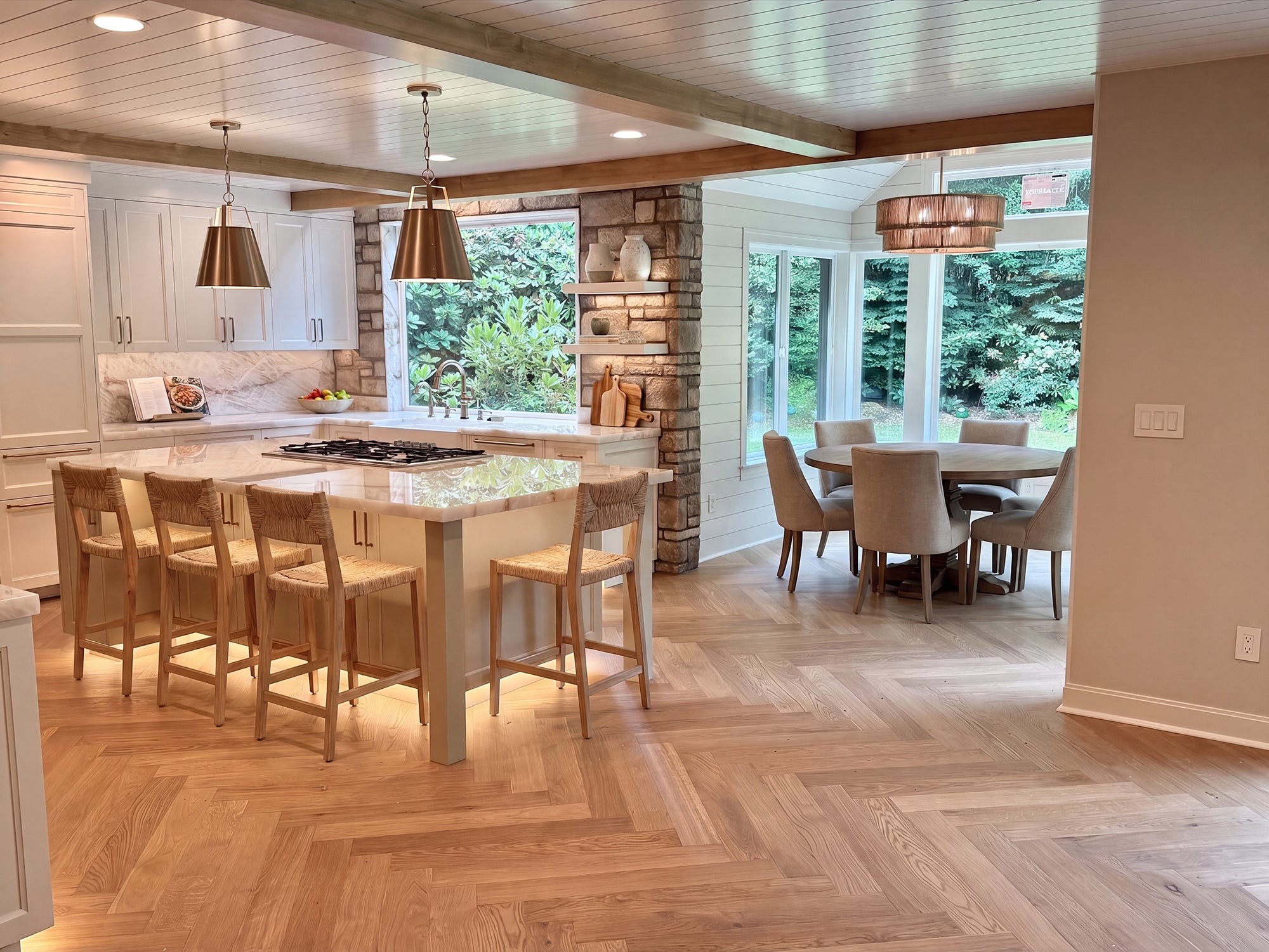
Tell whoever installs the floor where the glass is and which way it faces, so expansion space and board direction are planned around it. We work with licensed, insured, background-checked local installation partners, and the glass is one of the first things they should know about.
Control the light, then choose the floor
The glass does more to decide fading than the floor does, so start there. Shades, sheers and blinds closed during the hours sun lands on the boards are the plain first line of protection, and they work on any floor.
Window film and low-emissivity coated glass cut a large share of the ultraviolet light. They do not stop visible light or all of the heat, so they slow fading rather than end it. If you are replacing windows anyway, ask what the glass is designed to block.
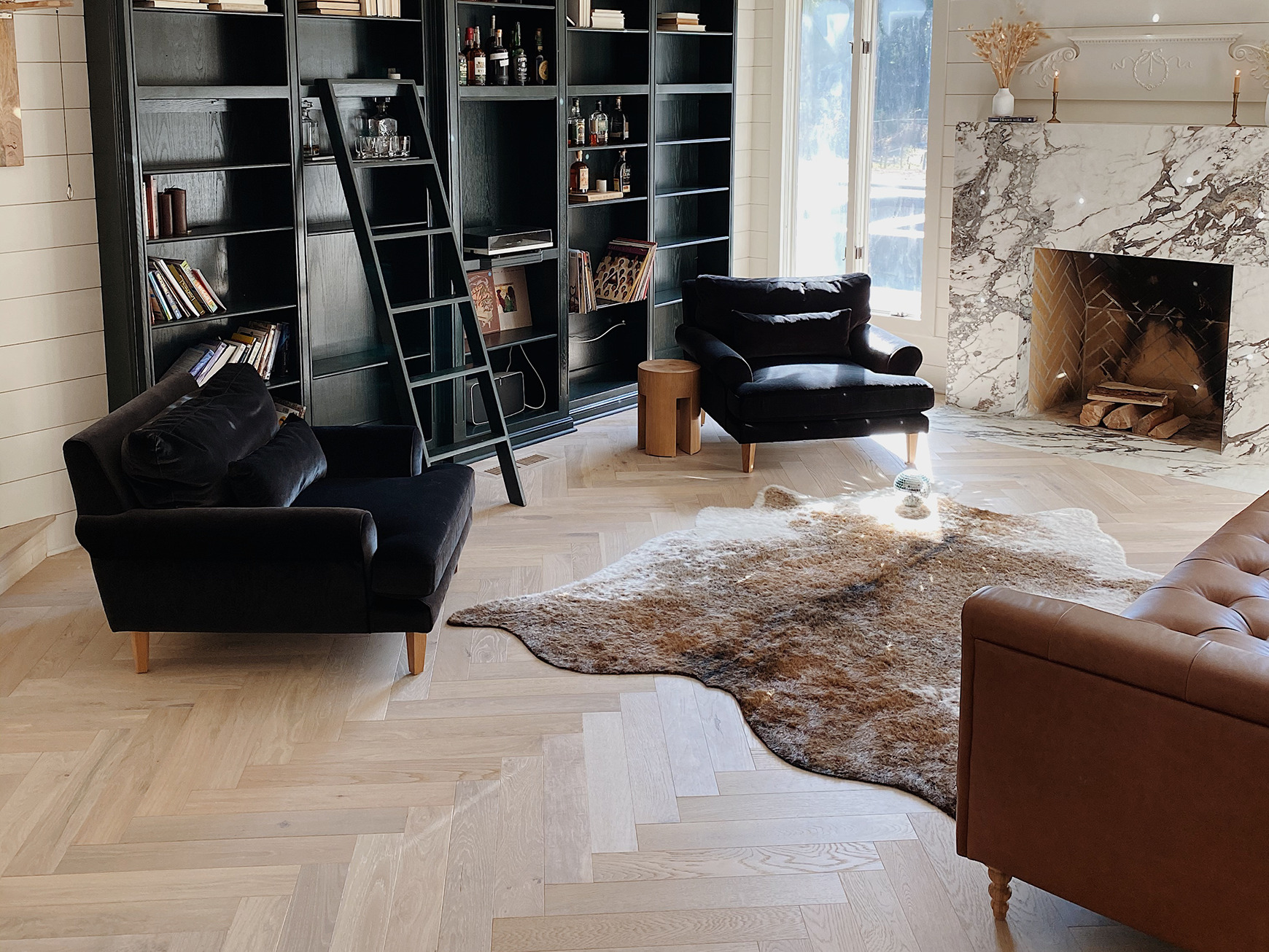
Rugs and furniture are where patchiness comes from. Some installers suggest leaving a new floor uncovered for a while, so it changes evenly before rugs go down. After that, shift rugs and heavy pieces now and then, so no single outline has long to form.
When a sunny room is the wrong room for the floor
A dark, evenly stained floor is the wrong floor for a room with a large west-facing wall of glass, if you want it to stay as it looked on install day. Lightened strips and rug outlines show clearly against a deep, uniform colour, and a spot repair will not match the aged floor around it.
If any change at all would bother you, wood of any kind is a hard match for that room. It is better to know that before you buy, because the trade-off is easier to make on paper than on the floor.
Plan for later, too. The thickness of the sawn top layer decides what can be done in the future. Monarch Plank Domaine II Retz has a 6 mm top layer. Monarch Plank Lago Bolsena has a 3 mm top layer.
A thicker top layer leaves more wood to sand back if the surface ever needs refinishing. Sanding can take back much of the surface change, though not always all of it. Whether a particular floor can be refinished is a call for a professional who has seen it.
What we would ask before recommending a floor
Before we suggest a product for a sunny room, we want to know a handful of things about the room itself.
- Which way does the glass face, and how much of the day is the floor in direct sun?
- Is there window film, coated glass, or shades that actually get used?
- Will the floor run continuously into shaded rooms or hallways?
- Where will rugs and large furniture sit, and will they move?
- How much colour change can you accept before it bothers you?
Then test in the room. Put one sample where the sun lands and another in shade, and compare them over a few weeks rather than a single afternoon. You can order samples of the floors you are considering and see them in your own light before you decide.
Sun is only one input to the decision. For how width, construction and pattern move the total, see what changes the cost of engineered hardwood.
Common questions about sun and wood floors
Does a UV urethane finish stop a floor from fading?
No, not by itself. The term usually refers to how the finish was cured during manufacturing. Shades, window film and moving rugs do more to control fading than the name of the finish.
Will a new rug leave a mark on my floor?
It can, in a room with direct sun. The floor around the rug changes colour while the covered part does not. Waiting a while before laying rugs, then moving them now and then, keeps the difference small.
Is engineered oak a sensible choice beside a big window?
Yes, for movement. A bonded backing resists the swelling and shrinking that heat and dry air cause, so gaps are less likely near the glass. It does not change how the surface colour responds to light.
Can a sun-faded floor be fixed?
Often, at least in part. Refinishing removes surface wood and much of the colour change with it, provided the top layer has enough wood left. Time in even light also softens outlines left by furniture.
Do pale floors show sun change less than dark ones?
Usually, as long as the colour is close to natural oak. Dark stains and greys can show lightened or warmed patches more clearly. A sample left in your own sun is the honest test.
Choosing oak for a sunny room
A sunny room does not rule out oak, but it does change which oak, which finish and which window treatment make sense. The pale herringbone in the photograph at the top of this page is Monarch Plank Lago - Herringbone Devero, European Oak with a 3 mm wear layer and an ultra-matte finish. Browse the full flooring range, and when you are ready, request a quote with a free in-home laser measurement.