
Wall coverings on a spec sheet: what it means
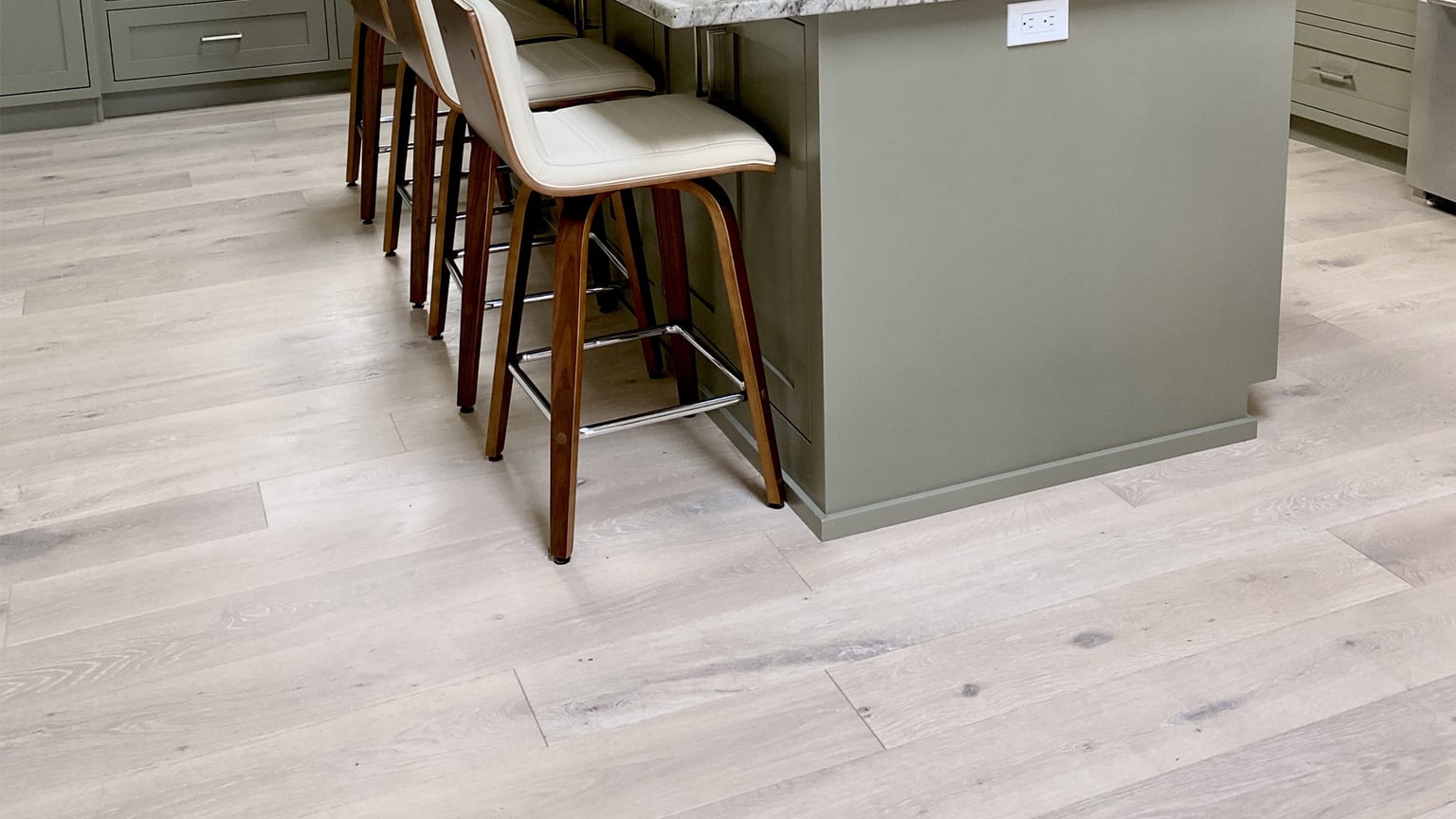
If you find wall coverings on a spec sheet for a floor, read it as a filing label, not a description of the plank. It tells you where a seller or maker has placed the product, or that walls are one listed use. It does not tell you how the board is built, whether it can go in your kitchen, or whether it is approved for a wall. The field that decides where a floor may go is construction, and that is the line to read first.
This matters because a spec sheet is a set of separate answers to separate questions. Category says where the product is filed. Application says where the maker expects it to be used. Construction says what the board is made of, and the room has to agree with that.
Why a flooring sheet carries a wall label at all
Product sheets are assembled from supplier data, and suppliers sell into more than one trade. A wood plank that suits a floor can also be sold as cladding for a feature wall. Tile, panels and some engineered boards are listed under both headings because the same box can serve either job.
When those rows reach a retail catalogue, the category column often travels with them. So a floor you are comparing can appear under wall coverings, or a wall product can surface in a flooring search. Neither tells you the product changed. It tells you somebody filed it under a heading that suited their own range.
The useful habit is to separate the three ideas before you decide anything:
- Category is a shelf. It helps you browse and it carries no installation meaning.
- Application is the maker's stated use. It is worth reading, but only the installation instructions confirm it.
- Construction is the build. It decides moisture tolerance, subfloor needs and how the board is fixed down.
If those three disagree, construction wins every time. A label is easy to change. The plywood core under a wood top layer is not.
The construction field is the one that decides the room
On the planks we carry from Monarch Plank, the construction line reads Hardwood Plywood. That is engineered flooring: a real wood top layer bonded to a cross-layered plywood core. The core is what keeps a wide board steadier than a solid one as the house moves through the seasons.
Take the Monarch Plank Lago Como as an example. Its sheet lists European Oak, a wire-brushed texture, a 3 mm top layer and a total thickness of 9/16". The finish is UV Urethane, Ultra-Matte, and the grade is Rustic, which means knots and colour variation are part of the look rather than a defect.
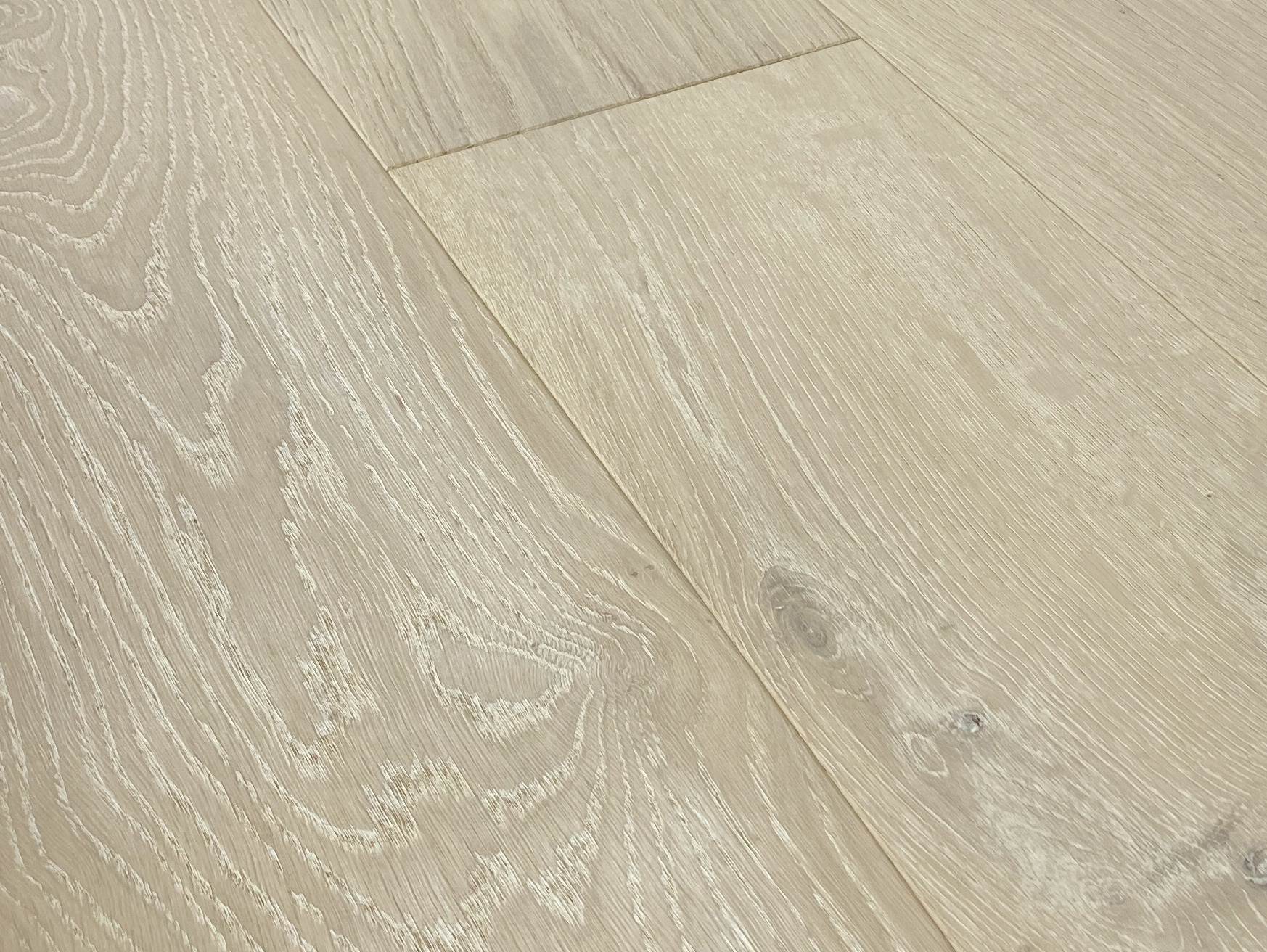
None of these planks is listed as waterproof construction, and that is the line that rules a room in or out. A wall label would not change it. A bathroom floor, a laundry room or a slab that holds moisture asks a different question, and the answer starts with the build, not the category.
The thickness and top layer figures are worth reading together. The Vinland boards list 5/8" in total with a 4 mm top layer, against 9/16" and 3 mm on Lago. A thicker wood layer leaves more material above the core, which is part of how you judge the floor over the life of the house. Our piece on how much wear layer a floor needs goes further into that trade-off.
What changes when a plank goes on a wall
Some homeowners see the wall label and want to run the same oak up a wall behind a bed or a fireplace. That can look good, and it is a reasonable idea to explore. It is also a different installation, with different risks, from laying the same board on a floor.
On a wall, nothing walks on the surface, so the top layer thickness matters far less. What matters more is how the board is held in place, how the edges and end joints read at eye level, and how the wall surface behind it was prepared. Light also behaves differently. A wire-brushed texture that reads as quiet grain underfoot can look much stronger when daylight rakes across it at head height.
The product sheets we hold for these planks do not list an install method, so we will not tell you one here. Before any floor plank goes on a wall, follow the manufacturer's installation instructions for that exact product. If the instructions only cover floors, treat a wall as unapproved for that board, whatever the category column says.
Reading the rest of the sheet line by line
Once construction has told you where the board may go, the other lines tell you how it will look and live. Read them in this order and each one narrows the choice.
Species comes first because it sets the colour range and the grain. The list we carry includes European Oak, Red Oak, White Oak, Hickory, Maple and Walnut. Grade then tells you how much character the boards carry. Rustic and Light Rustic accept knots and variation. Prime and Select are cleaner and more even.
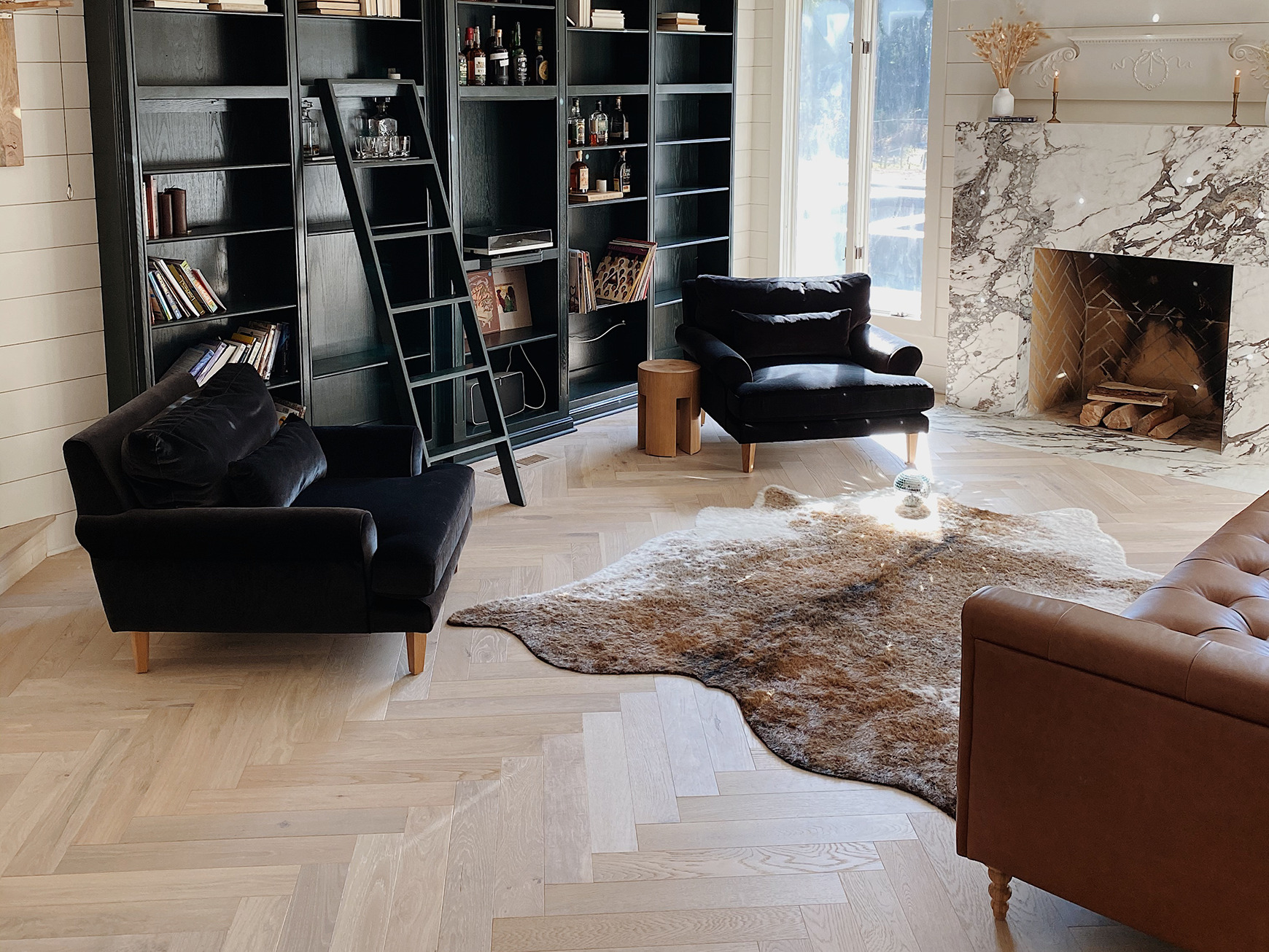
Width changes the scale of the room. The Monarch Plank Lago - Herringbone Devero uses a 4-3/8" board laid in a herringbone pattern, while the straight Lago planks are 7" wide. The Monarch Plank Premio Aria is 6-1/2", and the Monarch Plank Premio Bella is 7-1/2". Both Premio boards are Red Oak in a Prime grade with a smooth texture.
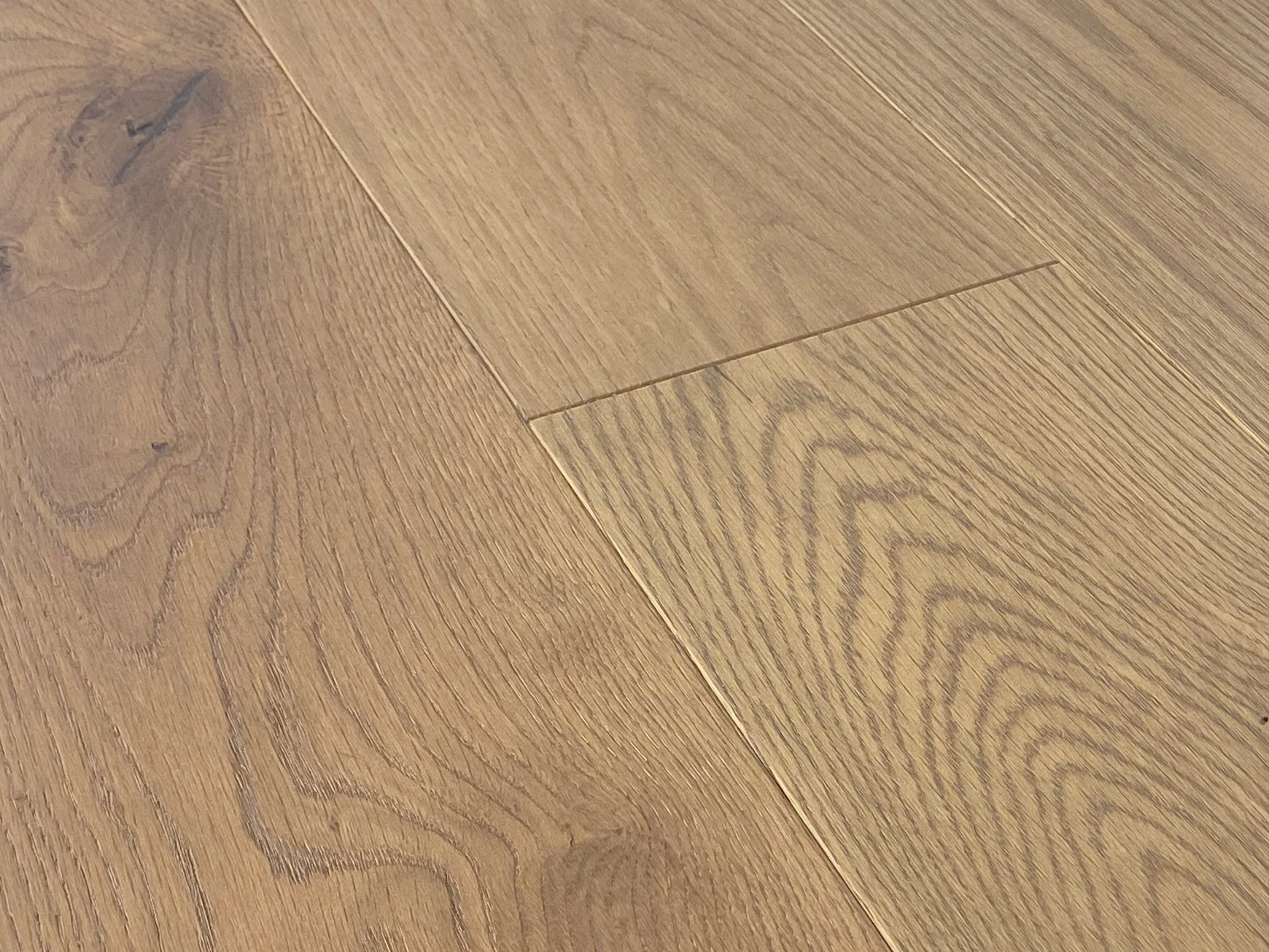
Finish and texture come last, and they matter more than people expect. Ultra-matte finishes hide fine scratches and glare, while a smooth texture shows the grain more evenly. We explain what that finish line means in our article on ultra-matte UV urethane.
Where a category label can mislead you
The most common mistake is treating the category as a promise. A product filed under wall coverings is not thereby approved for a shower surround, a backsplash or an exterior wall. A product filed under flooring is not thereby approved for every floor in the house.
The second mistake is reading a missing label as a missing feature. A plank may suit a wall in the maker's view and still be filed only under flooring by the seller. The category tells you about the catalogue, not about the board.
The third mistake is comparing two products across categories as though the labels were equal. Wood cladding sold only for walls may be thinner, lighter or fixed in a different way from a floor plank. If you are choosing one product to run from floor to wall, it has to meet the floor requirements first, because those are the stricter ones.
When the label and the build seem to disagree, ask before you order. A good merchant will tell you which line on the sheet they are relying on, and why.
What we would ask before recommending a floor
Before we suggest any of these planks, we ask about the room rather than the label. Is the subfloor wood framing or a concrete slab? Has the slab ever shown damp patches, or does the room sit below the level of the garden? Does the space take wet shoes, pets or a dishwasher that has leaked before?
We also ask whether the same material is meant to continue onto a wall. If it is, we check the manufacturer's instructions for that exact product before anything else. If those instructions do not cover walls, we will say so and suggest a different route for the wall.
Then we measure. Our free in-home laser measurement gives you the true square feet of each room, which keeps the order and the quote honest. Seeing the boards in person helps too, and you can order samples of the species and grades you are weighing.
Questions homeowners ask about wall coverings on a spec sheet
Does a wall coverings label mean the floor is waterproof?
No. The label is a category, and waterproof construction is a separate line on the sheet. None of the Monarch Plank boards discussed here is listed as waterproof.
Can I install an engineered wood floor plank on a wall?
Sometimes, but only when the manufacturer's installation instructions cover walls for that exact product. The sheets we hold for these planks do not list an install method, so check the instructions first.
Which line on a spec sheet matters most?
Construction. It tells you how the board is built, and that decides which rooms and subfloors it suits. Category and application come after it.
Why does the same product appear under two categories?
Catalogues are built from supplier data, and suppliers sell into more than one trade. A product can be filed under both floors and walls without anything about it changing.
What does Hardwood Plywood mean on the construction line?
It means engineered flooring: a real wood top layer bonded to a plywood core. On these planks the top layer is listed as 3 mm or 4 mm, depending on the collection.
The next step
A label on a spec sheet is where the conversation starts, not where it ends. Read construction first, then species, grade, width and finish, and ask about any line that seems to contradict the others. When you are ready to compare boards side by side, browse the full flooring range, or request a quote and we will measure the room before anyone recommends a floor.