
Ultra-matte floor finish: what UV urethane means
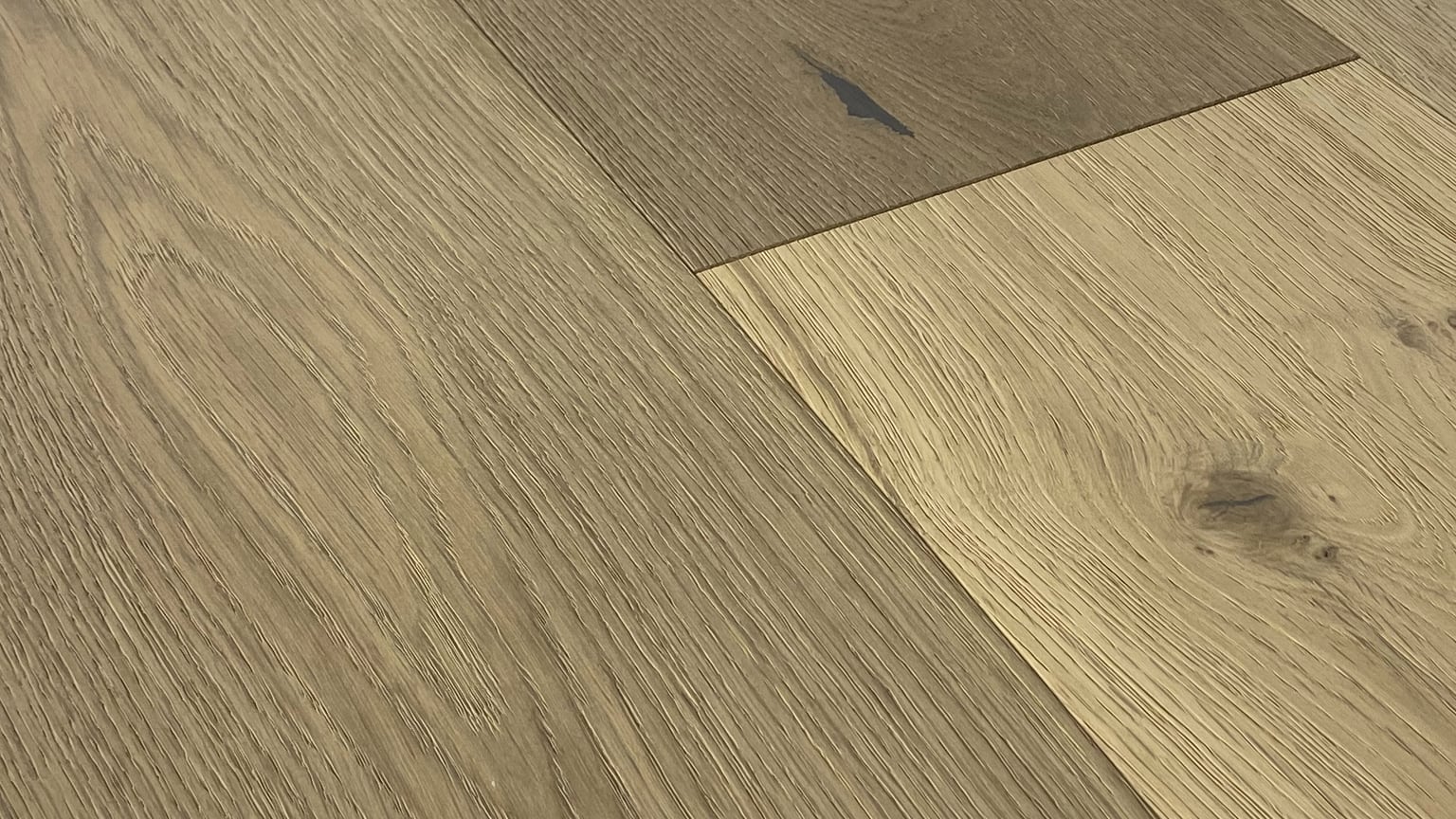
On a flooring spec sheet, "UV Urethane, Ultra-Matte" describes the clear coat on top of the wood, not the wood itself. UV urethane is a urethane finish applied at the factory and hardened under ultraviolet light before the boxes ship. Ultra-Matte is the sheen, meaning how much light that coat throws back, and the answer here is very little.
In practice, an ultra-matte floor finish makes oak look close to raw or oiled wood, while still giving you a sealed surface you can damp-mop. It hides fine scuffs well. It does not stop dents, and it does not make a wood floor waterproof.
The photograph at the top of this page is the Monarch Plank Tableau Renoir, a Rustic grade European Oak with a Wire brushed texture and this finish. Every floor linked in this article carries the same finish line, so the finish is not what separates them. The texture, the species and the wear layer underneath do that, and the finish behaves differently on each.
What the two halves of the spec line mean
The first half, UV urethane, tells you how the finish was made. The manufacturer rolls thin layers of liquid urethane onto the boards on a production line. Each layer passes under ultraviolet lamps that cure it almost instantly, so the coat is fully hard before the floor leaves the factory.
That matters in your house for a plain reason. Nobody brushes finish onto your floor on site, so there is no finishing smell, no sanding dust and no wait for a coat to dry before you walk on it. The installers lay boards that are already finished, and the room is usable once the installation is complete.
The second half, Ultra-Matte, is the sheen level. Finishes are graded by how much light bounces back off the surface at a fixed angle. Gloss sits at the top of that scale, then semi-gloss, satin and matte, with ultra-matte at the flat end.
A flat sheen does not mean a thin or weak coat. It means the surface of the coat is built to scatter light instead of reflecting it as a mirror would. Sheen describes how the floor looks. It says nothing on its own about how hard the coat is.
What an ultra-matte finish hides, and what it does not
The reason people choose a low sheen is scratches. Every finished floor collects fine scuffs from grit, chair legs and shoes. On a glossy floor, each scuff breaks up a smooth reflection, so it catches the light and draws the eye.
On an ultra-matte surface there is no bright reflection to interrupt. Fine scuffs blend into the flat surface around them, and you mostly stop seeing them. This is the main practical argument for the finish, and it is strongest in rooms with low morning or evening sun raking across the boards.
The same logic helps with smudges and mop streaks, which show as dull patches on a shiny floor. It helps less with dust. Dust shows because of colour contrast, pale grit on a dark board or dark grit on a pale one, and sheen barely changes that.
Here is what the finish cannot hide. A dropped pan or a chair leg can compress the wood itself, and no coat on top prevents a dent. A deep gouge that cuts through the coat into the wood will show on any sheen.
Water is the other limit. The coat seals the surface against a quick spill, but water left standing can find the seams between boards. None of the floors in this article is a waterproof construction, and the finish does not change that.
How texture changes what the finish does
Texture is the surface shape of the board, and it works together with sheen. The Monarch Plank range in this finish comes in several textures, and each one changes how forgiving the floor is.
Wire-brushed boards have had the softer grain brushed out, leaving the harder grain standing as fine ridges. Add an ultra-matte coat and a scratch has two places to hide: the flat sheen and the uneven surface. The Monarch Plank Tableau Cezanne is a Wire brushed European Oak with a 4 mm wear layer, and it shows how much texture a close look reveals.
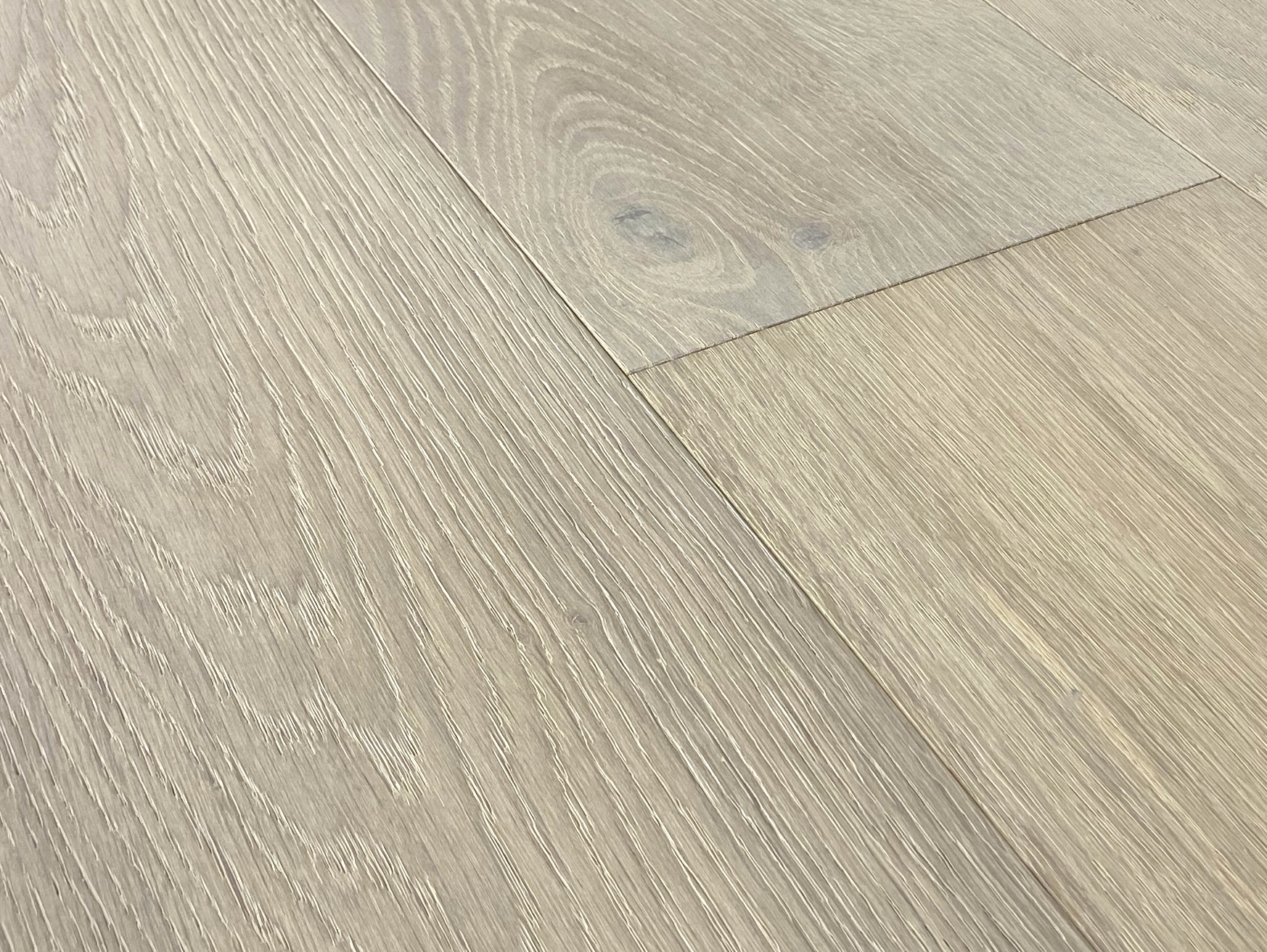
Darker brushed boards push the effect further. The Monarch Plank Lago Moro is a Rustic grade European Oak with a Wire-brushed texture. Its knots and open grain already break up the surface, so ordinary wear reads as character rather than damage.
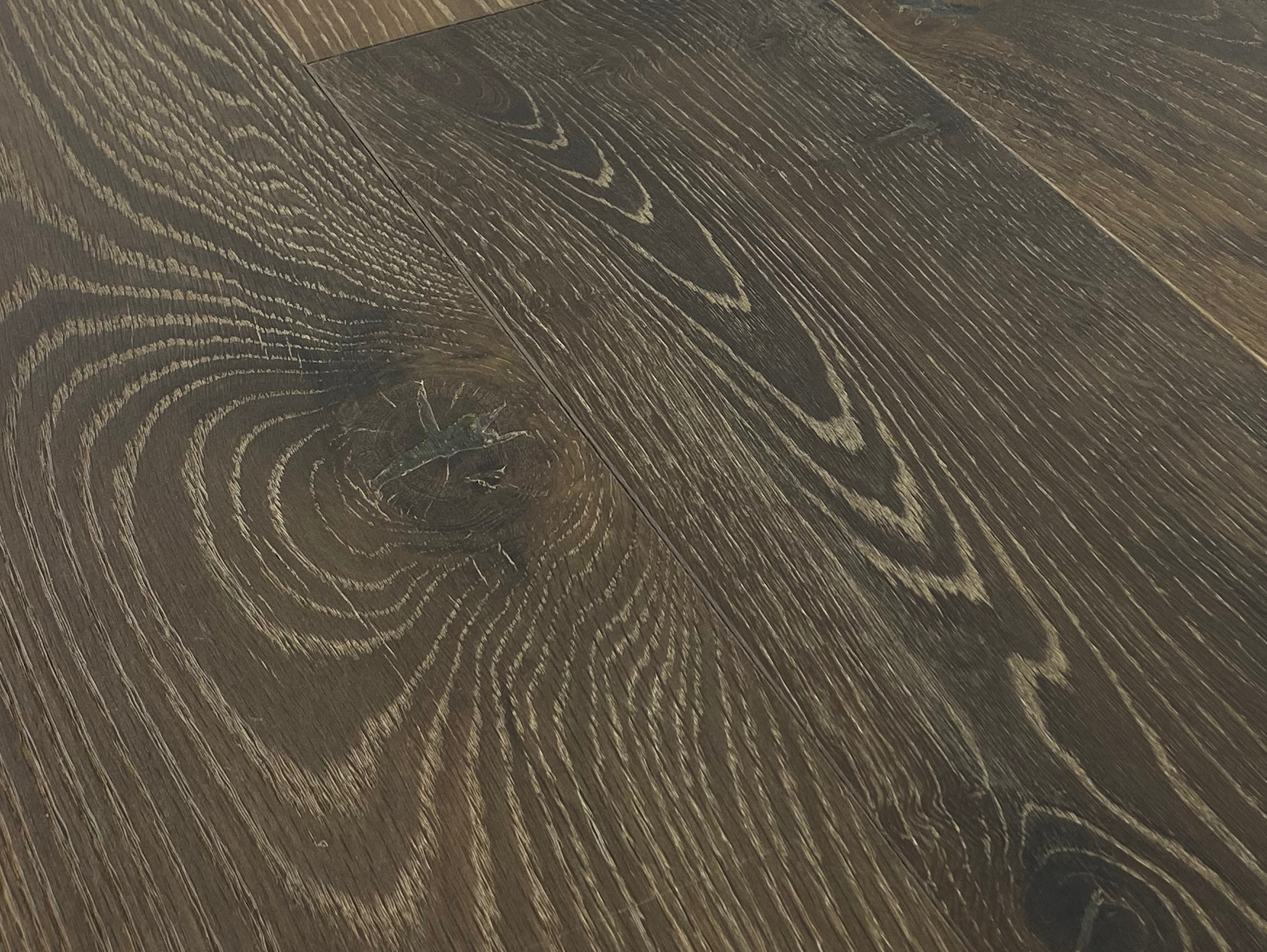
Hand-scraped boards, such as the Monarch Plank Domaine II Allier, have a gently wavy surface shaped to look worked by hand. They hide wear in a similar way, with a softer, older look than brushing gives.
Smooth boards are the honest trade-off. On a flat, smooth surface, the ultra-matte sheen is the only thing hiding a scratch. The Monarch Plank Premio Veranda is a Prime grade Red Oak with a Smooth texture, and it is a calm, even floor that will show a long scratch more readily than a brushed one.
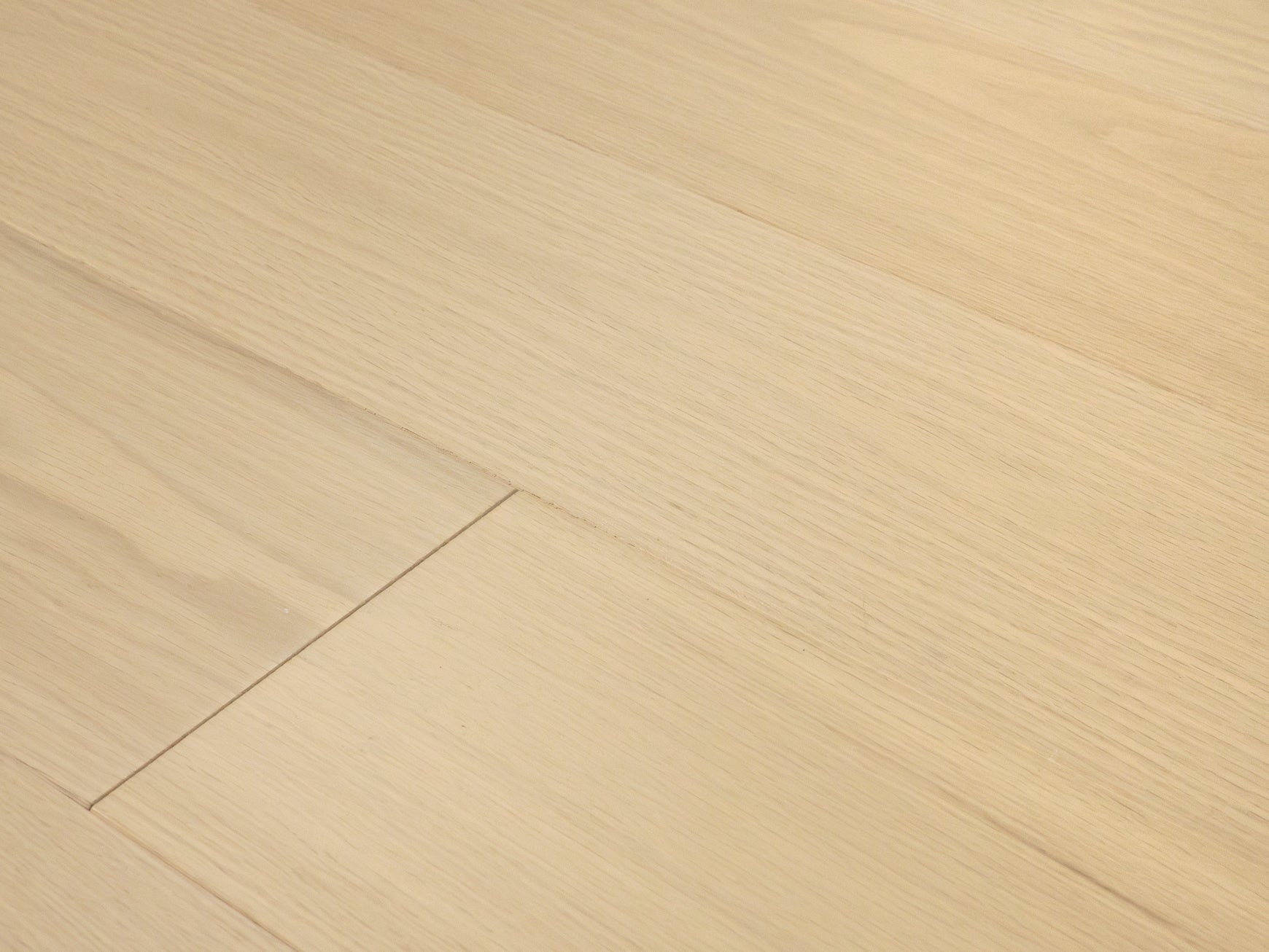
That is not a reason to avoid smooth boards. It is a reason to choose them for a bedroom or a formal room, and to think harder about them for an entry that sees wet shoes and a dog. If you want wide plank with a Smooth texture, the Monarch Plank La Grande Parsenn comes in an 11-3/8" width with a 6 mm wear layer.
The wear layer decides what happens when the coat wears through
The finish is the first thing traffic meets, but it is not the end of the floor. Under it sits the wear layer, the solid oak on top of the board that can be sanded. On these floors it runs from 3 mm on the Lago collection to 4 mm on Premio and Tableau, and 6 mm on La Grande and Domaine II.
When the factory coat is dull and worn in a hallway but the wood below is sound, a flooring contractor can often screen the surface and apply a fresh coat without sanding. Whether a new coat will bond to a factory UV finish depends on the product. Follow the manufacturer's guidance before anyone touches it.
When the wood itself is damaged, the floor is sanded back and refinished, and the wear layer decides how many times that is possible. A thicker wear layer gives you more room. Our article on how much wear layer you need works through that decision in detail.
There is a catch that showrooms rarely mention. Sanding a wire-brushed or hand-scraped board flattens its texture, and a site-applied finish will not match the factory ultra-matte exactly. After a full refinish, a textured floor becomes a smooth floor with a different coat on it.
Care that keeps an ultra-matte finish looking matte
The quickest way to ruin a flat sheen is to make it shiny. Polishes, waxes and "restorer" products leave a film on the surface, and that film reads as uneven gloss on an ultra-matte floor. It can also stop a future recoat from bonding.
Use only a cleaner the flooring manufacturer approves, applied with a damp mop rather than a wet one. Sweep or vacuum grit first, since grit ground underfoot is what makes most of the scuffs you are trying to hide.
Felt pads under chair and table legs do more for a finish than any cleaner. A mat inside each outside door catches the grit before it reaches the wood. Wipe spills when they happen, and never leave a wet towel or a plant saucer sitting on the boards.
Where an ultra-matte finish is the wrong choice
An ultra-matte floor finish suits most rooms, but not every taste or every room. If you like a floor that reflects the windows and reads as polished and formal, a flat sheen will feel dull to you. Some people see a very low sheen as unfinished wood, and that impression does not wear off.
It is also the wrong answer to a water problem. A full bathroom, a laundry with a history of leaks, or a mudroom where boots drip onto the floor all need a waterproof construction. No finish turns a wood floor into one.
Very dark colours deserve a second look. Ultra-matte hides scuffs on a dark board, but dust, pet hair and pale grit will still show against it. If the room gets heavy daily traffic, a mid-tone oak is more forgiving than a near-black one.
How to judge the finish before you commit
Sheen is hard to judge from a photograph, because the camera and the screen both change it. Judge it on a real board, in your own room, in the light you actually live with.
Order samples of two or three textures and lay them on the floor near your largest window. Look at them in low morning light, at midday and under your lamps in the evening. Then look along the boards from a low angle, the way the sun will hit them.
Drag a fingernail across each sample and see which scuff you can still find afterwards. That small test tells you more about a finish than the spec sheet does. When you are ready, a quote request starts with a free in-home laser measurement, so the numbers come from your room.
Common questions about ultra-matte floor finishes
Is ultra-matte urethane the same as an oiled finish?
No. An oil finish soaks into the wood and needs periodic re-oiling to stay protected. UV urethane sits on top as a cured film, and the ultra-matte version imitates the look of oil while keeping a sealed surface.
Does an ultra-matte floor scratch more easily than a glossy one?
Sheen and hardness are separate properties. A low sheen does not make the coat softer. It makes the scuffs you do get harder to see, which is why people choose it.
Can I change the sheen later?
Only by refinishing. Once the floor is sanded, the new finish can be any sheen you like. You give up the factory coat, and on a brushed or scraped board, you give up much of the texture too.
Why does the floor look different in my house than in the product photographs?
Sheen depends on light. A floor photographed in soft, even light looks flatter than the same floor with low sun across it. That is why a sample in your own room matters more than any photograph.
Does the UV urethane finish make the floor waterproof?
No. It seals the surface against everyday spills that are wiped up promptly. Standing water can still reach the seams between boards, so wood floors stay out of full bathrooms and wet mudrooms.
The short version
"UV Urethane, Ultra-Matte" tells you the floor arrives with a hard, factory-cured coat that throws back very little light. It will hide fine scuffs well and look close to natural wood. The texture and the wear layer tell you the rest: how forgiving the floor is day to day, and how many times it can be brought back.
Start with the full flooring range, narrow it by texture, and put two samples side by side in your own room before you decide.