
What RO Means in Flooring: Red Oak Explained
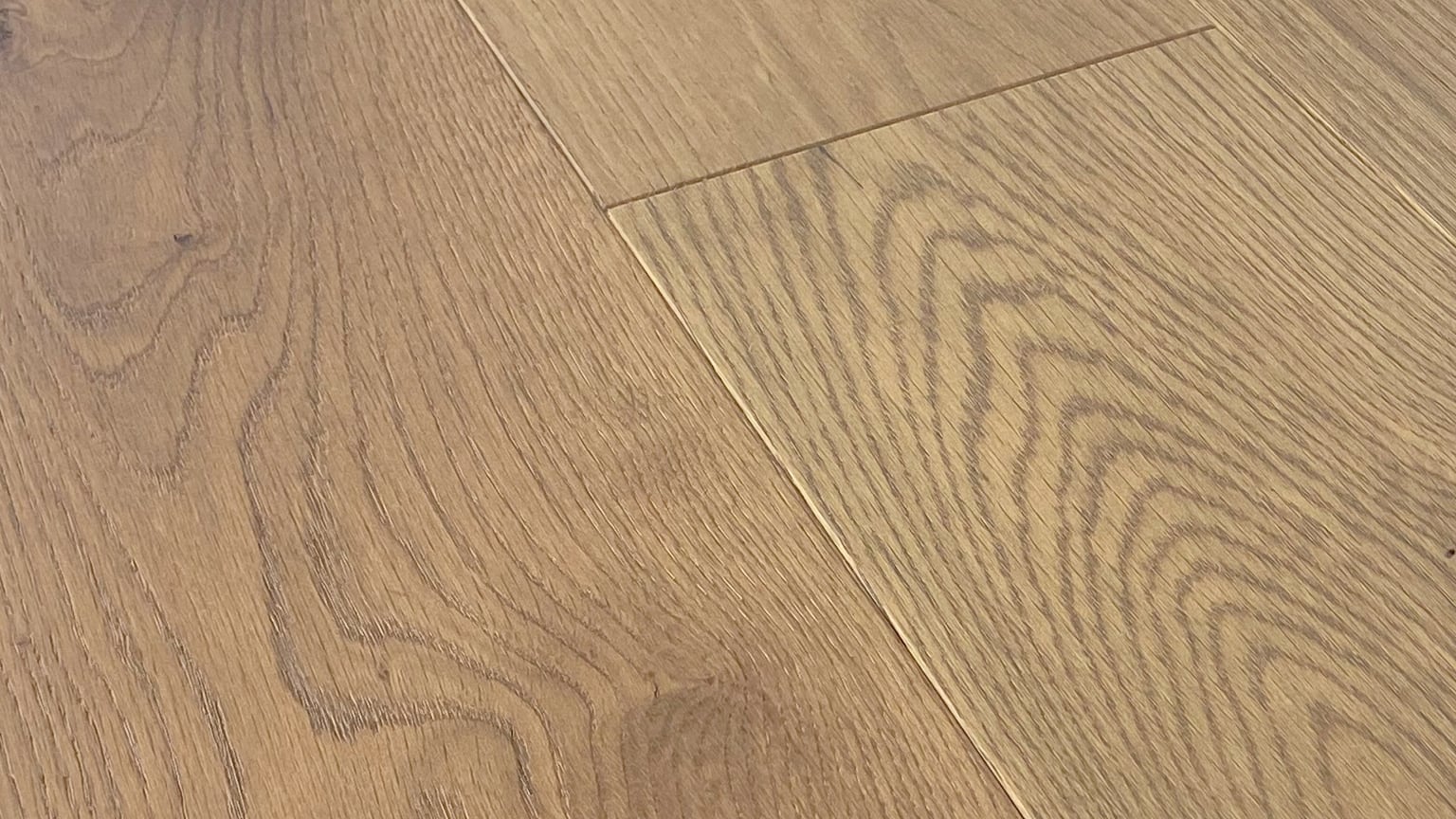
If you are wondering what RO means in flooring, it is shorthand for red oak, the species of the wood. You will see it at the end of a product code, in a species column on a spec sheet, or on a carton label. It tells you nothing about colour, grade or finish, but it does tell you how the floor will take stain, how its grain reads and how it will match an older floor.
That is worth knowing because two planks can look alike in a photograph and still be different trees. This piece explains what the code is telling you, how red oak differs from the oaks it is usually compared with, and what to check before you choose it.
Where RO shows up, and what it is not
Species codes save space on labels and in product codes. In our own catalogue, the Monarch Plank Vinland Natural - Light Rustic comes in several species, and the red oak version carries RO at the end of its code. The white oak version of the same plank ends in WO instead.
So the letters are a species marker, nothing more. The same collection, width and finish can be ordered in red oak or in another species, and the code is how the two are kept apart on an order.
One caution if you are also buying doors or windows. On door and window paperwork, RO usually means rough opening, the framed hole the unit fits into. It has nothing to do with wood species, so read the letters in the context of the document they sit in.
What red oak actually looks like
Red oak is a North American species with a warm undertone that leans slightly pink or red, especially under a clear finish. Its grain is open and pronounced, with strong arching figure on flat-sawn boards. That grain is the first thing most people notice.
The pores in red oak are large and open. Stain soaks into them readily, which makes the grain stand out more after staining. That is a look some people want and others try to avoid.
The warm undertone is also why pale grey or white-washed stains can be tricky on red oak. The pink tends to come through a cool stain, so the result can look warmer than the sample on the colour card.
Red oak compared with white oak and European oak
White oak, marked WO, is a different North American species. It tends to read more neutral or slightly olive rather than pink, and its grain is tighter. Its pores are largely plugged, which is why white oak is often chosen where a cooler or paler finish is wanted.
European oak is a third species again, grown in Europe rather than North America. The Monarch Plank Lago Como is listed as European Oak, and its grain is open and textured without the pink undertone you would expect from red oak.
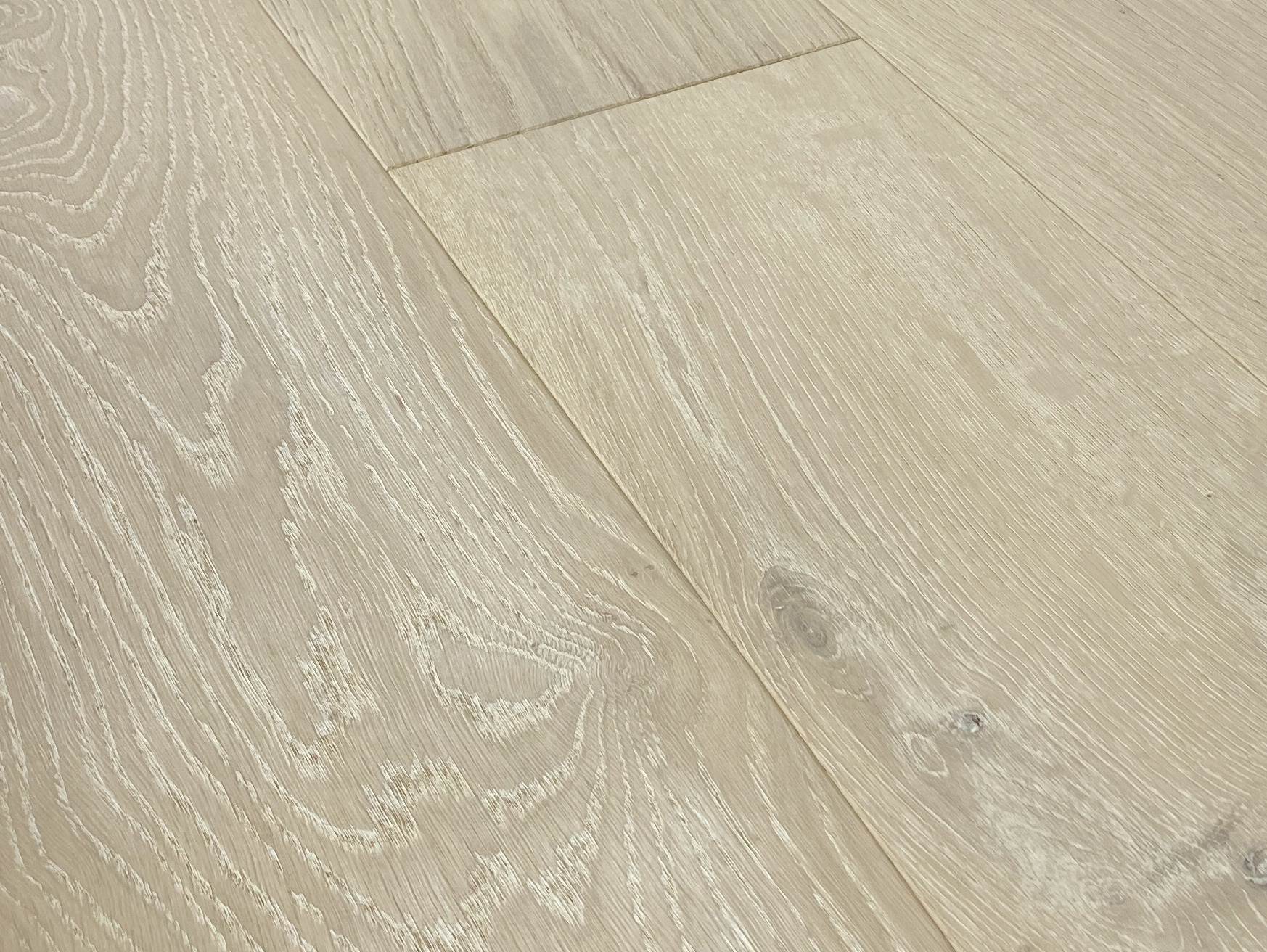
In practice the choice is about tone and grain more than toughness. Red oak and white oak are both hard enough for a busy house when properly finished. The difference you will notice every day is colour under the light in your own room.
The red oak planks in the range
The Monarch Plank Premio Aria is a Red Oak plank in a Prime grade, 6-1/2" wide and 5/8" thick, with a 4 mm wear layer and a smooth texture. A Prime grade keeps knots and colour variation to a minimum, so the grain itself carries the look.
The Monarch Plank Premio Bella is also Red Oak in a Prime grade, at 7-1/2" wide with the same 4 mm wear layer. The wider board shows more of the arching figure red oak is known for.
The red oak version of the Monarch Plank Vinland Natural - Light Rustic is 7" wide in a Light Rustic grade with a smooth texture. That grade allows more character marks than Prime, which suits a relaxed room better than a formal one.
When red oak is the right call
Red oak makes the most sense when you are matching or extending an existing floor. Many older houses, including a lot of post-war ranch homes, were built with red oak floors. A new room that meets one of those floors will look more natural in the same species.
It also suits a warm palette. If your cabinets, trim or furniture lean toward honey, cherry or walnut tones, red oak sits comfortably beside them. A mid-brown or natural finish shows the grain without fighting the room.
Red oak is the wrong choice when the whole plan depends on a pale, cool, Scandinavian look. The undertone will pull warm, and no amount of stain fully cancels it. In that case, a white oak or a pale European oak is the more honest recommendation.
Grade, texture and finish still matter more than the code
The species code is only one line of the spec sheet. Grade decides how many knots and colour swings you will see. Texture decides how well the surface hides scratches, and the wear layer decides how many times the floor can be sanded and refinished.
A wire-brushed texture, like the one on the Monarch Plank Lago Moro, opens the grain and makes small marks harder to see. A smooth texture, like the one on the red oak Premio planks, looks cleaner but shows scratches more readily.
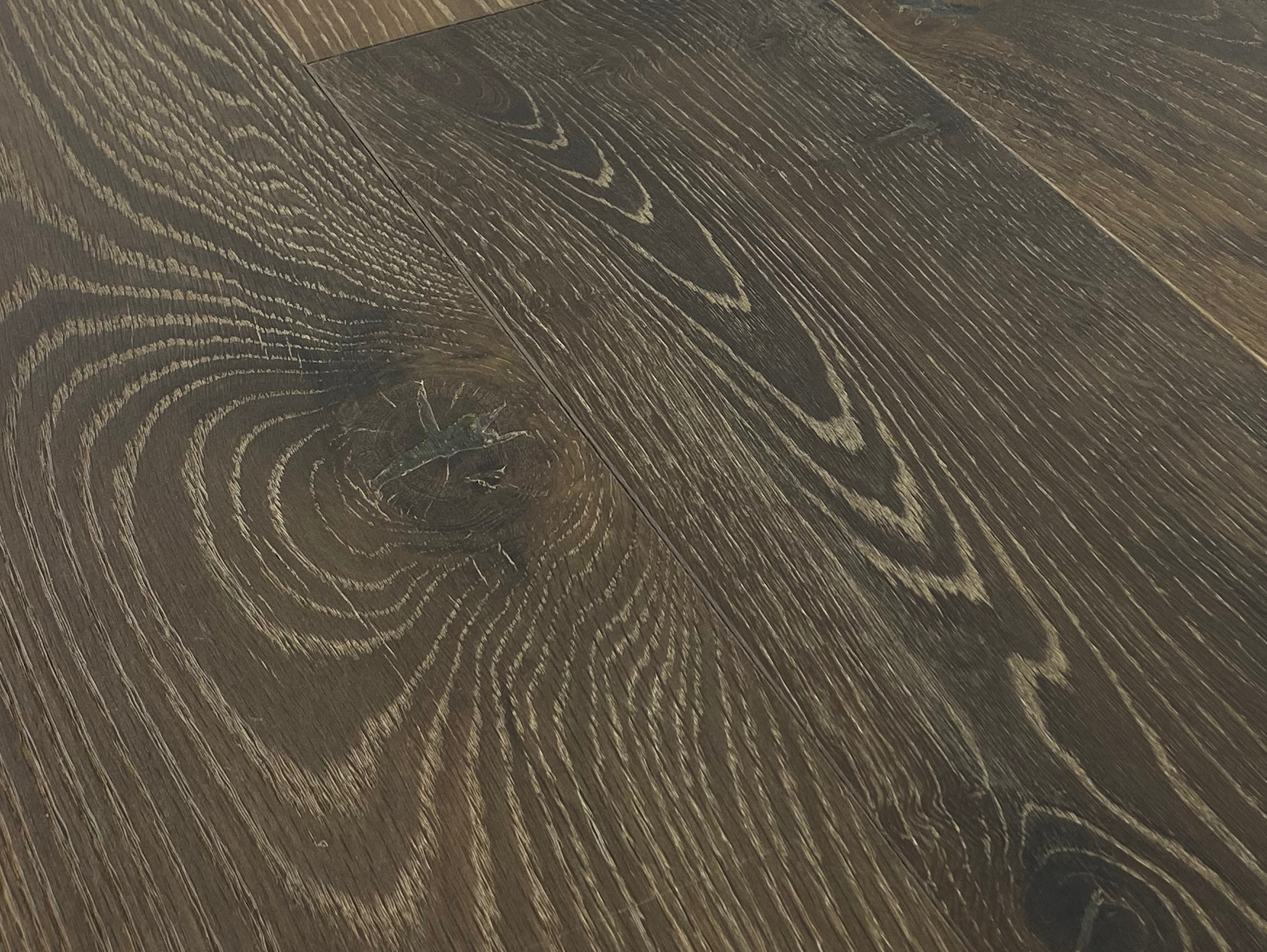
That photograph is European oak, not red oak, but it shows how far texture and finish can move a floor away from the raw look of its species. Compare the Monarch Plank Lago Moro with a smooth red oak plank and the same word, oak, covers two very different floors.
How to check red oak in your own room
Order samples of red oak and of whatever you are comparing it with, then set them on the floor where the room gets its strongest light. Look in the morning and again in the evening. The pink undertone of red oak shows most under warm light.
If a wall of windows faces the floor, fading and colour shift matter as much as species. Our article on sun fading on wood floors near a wall of glass goes through what to expect.
If you are extending an old floor, lift a heat register cover or look inside a closet to see the edge of a board. The grain and the end of the board will tell you far more than the colour on top, which has usually been refinished at some point.
Common questions about red oak flooring
Is RO always red oak on a flooring spec sheet?
On flooring, it almost always is. On door and window specs the same letters usually mean rough opening, so check which kind of document you are reading.
Is red oak softer than white oak?
The two are close in hardness, and both work in a busy house. The wear layer, the finish and the texture will affect how the floor looks after a few years far more than the species will.
Can red oak be stained grey?
It can, but the warm undertone tends to show through. Test the stain on a real board of the same species before committing, rather than trusting a printed colour card.
Why would a spec sheet list species separately from colour?
Because colour is the finish and species is the wood underneath. Two planks with the same colour name can be different species, and they will age and refinish differently.
Does red oak work with pets?
It works as well as any oak with a sensible finish. A textured surface hides claw marks better than a smooth one, whatever the species.
Where to start
Order samples of the red oak and European oak planks you are weighing, and look at them in your own room before deciding. When you want to compare species, grades and widths together, see the range of flooring, where each plank lists its species alongside its wear layer and texture.