
White oak vs red oak flooring: what differs
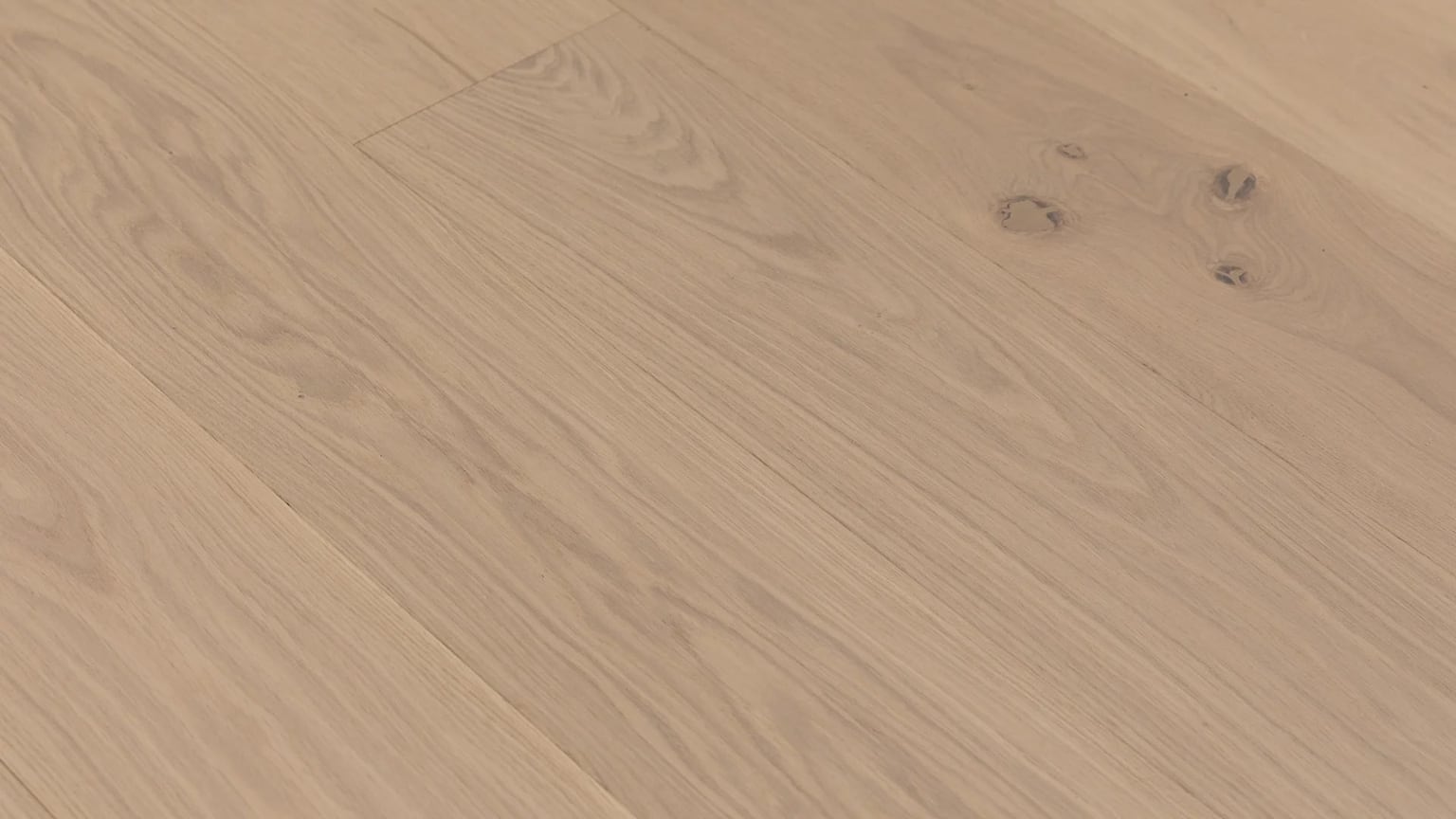
White oak vs red oak flooring is mostly a question of colour, grain and how the wood takes a finish, not of strength. The two species are close in hardness, so the decision usually turns on undertone. Red oak carries a pink to salmon warmth, while white oak reads tan, honey or grey-brown.
If you want a pale, matte, natural floor or a greige stain, white oak is the easier base. If you like a classic warm floor with lively grain and an even stain, red oak still earns its place. The rest of this piece covers what to check in your own room, what the specs on a product page tell you, and where each species is the wrong call.
Colour under a clear finish
Lay a plank of each species side by side under a clear finish and the difference is plain. Red oak shows a pink or salmon cast, strongest in the heartwood. White oak sits cooler and browner, with olive and tan in the mix.
That undertone does not disappear under stain. A mid-brown stain on red oak tends to come out warmer and slightly rosy. The same stain on white oak comes out flatter and browner.
Light in the room moves this further. A north-facing room with cool daylight makes red oak look calmer and white oak look greyer. A west-facing room with low warm sun pushes red oak toward orange, which some homeowners like and many do not.
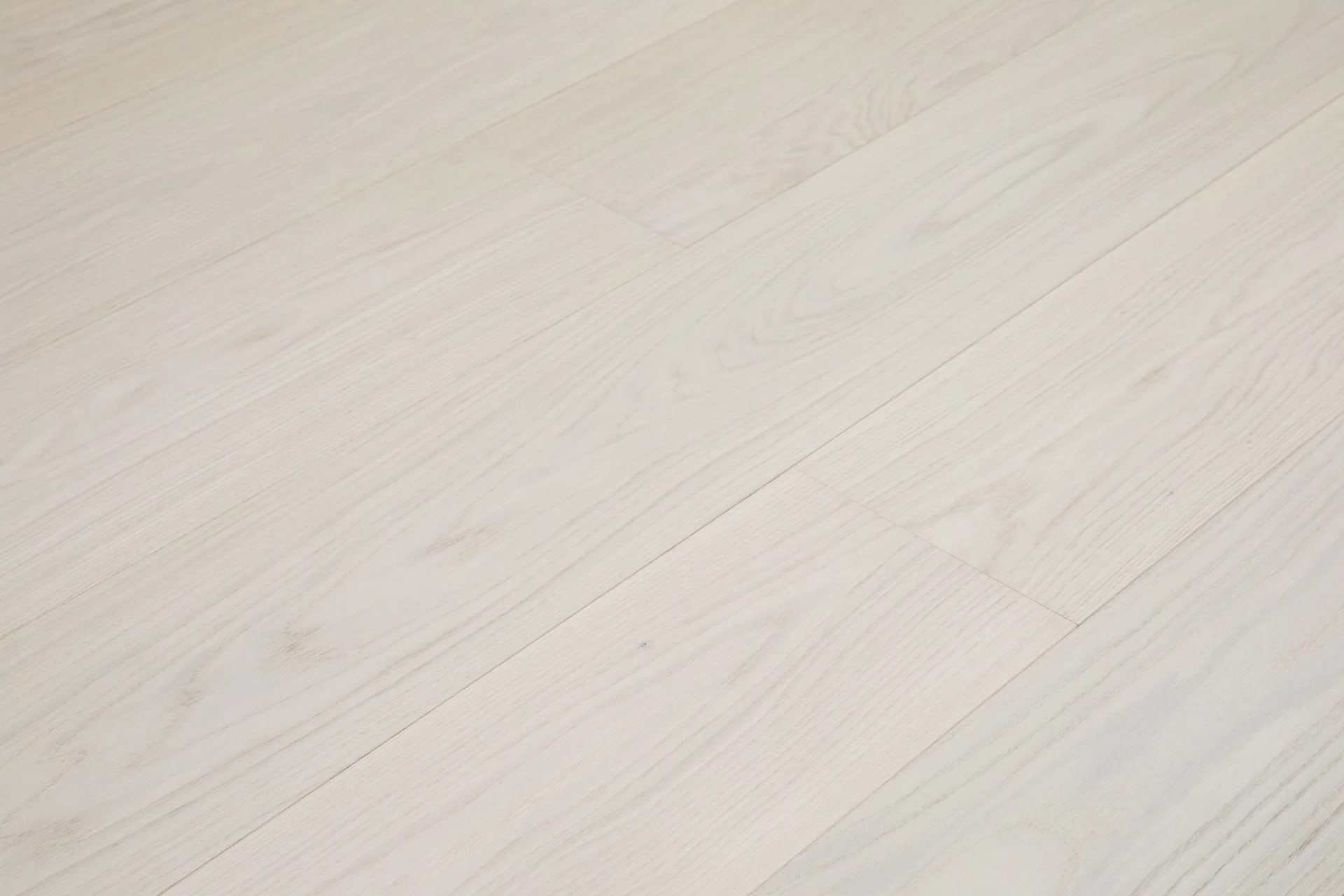
Very pale oak floors usually start from white oak for that reason. With no pink cast to fight, a clear matte finish can stay close to cream in soft daylight.
Grain, rays and the look of the boards
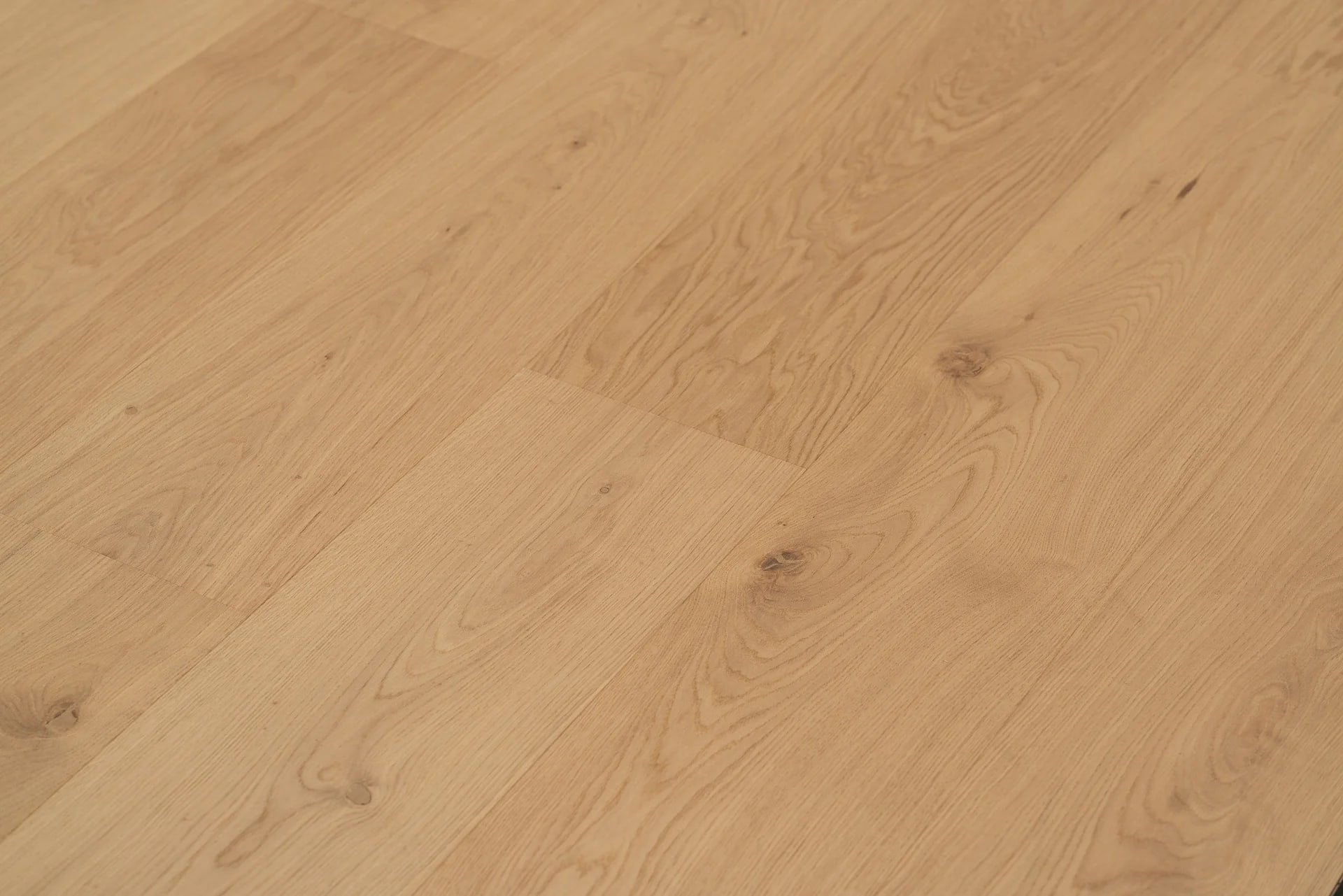
Red oak has a bold, open grain with strong cathedral arches on flat-sawn boards. It reads busy and lively, especially in narrow strips. White oak's grain is a little tighter and straighter, and it carries longer rays, the silvery flecks that show when a board is cut across them.
Knots and colour variation are a grade question, not a species question. A Light Character grade lets knots and open cathedral grain show through, while a Prime grade keeps the boards cleaner. Choose the grade with the same care as the species, because it changes the room just as much.
Hardness: closer than the reputation
Hardness is where many comparisons overstate the gap. On the Janka scale, which measures how hard it is to press a steel ball into the wood, the two species sit close together. Our own catalogue shows it: Garrison Garrison II Distressed Autumn, a white oak, lists a Janka rating of 1360, and Garrison Contractor's Choice Red Oak lists 1290.
That gap is small enough that you will not feel it underfoot. A dog's claws, a dropped pan or a chair without felt pads will mark either one. What protects the floor day to day is the finish and the wear layer, not the species.
Both of those Garrison products are engineered boards with a 4 mm wear layer. The white oak comes prefinished in 5-inch planks with a hand-distressed surface, which hides small marks well. The red oak comes unfinished in 2-1/4-inch strips, to be sanded and finished on site.
How each species takes stain and finish
Red oak's open pores soak up stain readily and evenly. That makes it forgiving for a traditional mid-brown or dark floor, and it is why so many older homes were finished that way. The open grain also stays visible through darker colours.
White oak takes stain well, but differently. Its pores are partly plugged by natural growths called tyloses, so stain gathers more in the grain lines and less in the surrounding wood. White oak also reacts to fuming and reactive stains, which is how many smoked and grey-brown floors are made.
Prefinished floors take this decision off the job site. Bergamo Oak Pisa Premio arrives with a matte-brushed UV-cured water-based polyurethane already applied. The Garrison white oak above carries a factory urethane with aluminum oxide finish instead.
Moisture, kitchens and entries
Those same tyloses make white oak less porous at the cut ends, which is why it has long been used for barrels. That is a real difference, but it is not a licence to treat white oak as a wet-area floor. Standing water at a dishwasher or a leaking fridge line will damage either species.
In a kitchen or an entry, the finish, how quickly spills get wiped, and the construction of the board matter more. An engineered plank holds its shape better than solid wood when indoor humidity swings. Our guide to acclimating flooring before it goes down covers the step many floors fail on.
Solid or engineered, and what the specs say
Species is only one line on a spec sheet. Construction, thickness and wear layer tell you how the floor will behave and how much sanding it can take over its life.
Solid red oak strip is the traditional floor in many older houses. Garrison Contractor's Choice Red Oak gives a similar look in engineered form: 5/8-inch thick, 2-1/4-inch strips, square edges and a 4 mm wear layer. Because it arrives unfinished, it can be sanded and stained on site to sit beside an existing red oak floor.
On the white oak side, Bergamo Oak Usini Ultra is an engineered European White Oak in 7.5-inch planks, 5/8-inch thick, with a 4mm wear layer and Prime grade boards. Bergamo Oak Mondovi Bene runs wider still, at 9.5-inch planks in Light Character grade. Wider planks show more grain per board, and they suit white oak's calmer colour.
Matching an existing floor
If your house already has oak, the existing species usually decides for you. Many older homes have red oak strip flooring in the living areas. A new room that meets it at a doorway will look wrong in white oak.
Check before you buy. Lift a floor register or look at a cut edge inside a closet: red oak end grain shows wide-open pores, while white oak's look filled. A sample of each species laid beside the existing floor, in that room's light, settles it faster than any photograph.
If you plan to refinish every room to one colour, the rule relaxes. A full sand and a dark stain can bring red and white oak close together, though the undertones never match exactly. Ask the installer to stain a test board of each before the whole floor is done.
Choosing for the room you have
Start with the light and the rest of the room. Cool rooms with white walls and black fixtures tend to suit white oak, especially in a pale matte finish. Warm rooms with traditional trim and wood furniture can carry red oak's warmth without it looking dated.
An open plan raises the stakes, because one floor runs through the kitchen, dining and living areas under different light. A sunlit open room with black chairs and a cream sofa over a wide pale floor is where white oak's even colour holds steady across the whole space.

Red oak is the stronger choice when you want a warm traditional floor, when you are matching existing strips, or when you want a stain that goes on evenly. White oak is the stronger choice for pale, natural, greige or fumed looks and for wide planks. Neither species belongs in a bathroom or a laundry room where water can stand.
What we would ask before recommending one
Before we suggest a species, we ask a few plain questions. What floor is already in the house, and will the new one meet it? Which way do the main windows face? Do you want the wood's own colour, or a stain? Is there a pet, a kitchen run or an entry door in the room?
Those answers usually point one way. A free in-home laser measurement then tells us the square feet and the condition of the subfloor, which often matters more to the job than the species. You can also order samples of both species and look at them in your own room before deciding.
Common questions about white and red oak
Is white oak harder than red oak?
Slightly, but not enough to feel. In our catalogue the Garrison white oak lists a Janka rating of 1360 against 1290 for the Garrison red oak. The finish protects the floor far more than that gap does.
Which oak suits a pale or natural floor?
White oak. It has no pink undertone, so a clear matte finish stays tan or cream instead of turning rosy.
Can red oak be stained to look like white oak?
Partly. A grey or brown stain can mute the pink, but the undertone tends to show in some light. Test a board of each in the room before you commit.
Does white oak handle spills better than red oak?
A little, because its pores are partly closed. It is still a wood floor, so wipe spills quickly and choose a different material for rooms where water can pool.
Can I mix white and red oak in one house?
Yes, if a threshold or a change of room separates them. Where the two species meet in one continuous floor, the colour difference shows.
Does plank width matter more than species?
Often it does. A narrow red oak strip and a 9.5-inch white oak plank make very different rooms. Choose the width with the size and light of the room in mind.
The short version
Choose white oak for pale, matte and wide-plank looks, and red oak for warm, traditional floors or to match strips you already have. Hardness barely separates them, so let colour, grain and the existing house decide. When you are ready to compare real products, browse the range in our flooring collection, where every page lists species, width, wear layer and finish.