
Bathroom floor finish: what it can and cannot stop
A bathroom floor finish protects the face of each board, and that is all it protects. On a wood floor, the finish slows a splash long enough for you to wipe it up. Water that reaches a seam, an edge or the gap at the wall goes underneath it.
So the real decision is which bathroom you have. A powder room with a sink and a toilet can take a factory-finished engineered wood floor. A room with a shower or a tub needs waterproof construction, and none of the wood floors in this article is listed as waterproof.
What a bathroom floor finish actually does
Every floor named here arrives with its finish applied at the factory. Most of the Monarch Plank floors carry UV Urethane, Ultra-Matte: a urethane coat cured under ultraviolet light before the boards are boxed. The Garrison floors carry Urethane with Aluminum Oxide, where hard mineral particles are mixed into the coat to resist abrasion.
Both are film finishes. They sit on top of the wood as a thin, continuous skin, and inside that skin the wood is sealed. A drip from a wet towel or a toothbrush cup beads on the surface and waits for a cloth.
What a film finish cannot do is seal the joints between boards. Each plank is finished on its face before installation, so the edges where two planks meet are, in practice, wood pressed against wood. That seam is where a bathroom tests a floor.
Where water gets past the finish
Water that stands on a floor finds the most open path. On a plank floor that path is the long seam, then the end joint, then the gap left at the wall so the floor can move. Wood takes up water through its end grain much faster than through its face.
Once water is under the finish, the board swells at the edges and the seam lifts. On a bevelled edge you may see the edges rise first, and on a square edge you will feel it underfoot. The finish on top can look perfect while the board beneath it has already moved.
Humidity works more slowly. A bathroom without a working exhaust fan puts moist air on the floor every day, and the wood takes it up and gives it back. Over enough cycles the seams open and close, which is how a floor that never saw a flood can still gap and cup.
This is why the question of finish comes second. The finish decides how the floor handles a splash. Construction and the room decide whether the floor survives the bathroom at all.
Matte, gloss and texture in a wet room
The sheen still matters, for reasons that are easy to overlook. A glossy floor shows every water spot, footprint and streak of soap. A wet glossy surface also tends to feel slicker underfoot, and a bathroom is where feet arrive wet.
An ultra-matte finish hides drying marks and reads calmer in a small room lit from above. Every Monarch Plank floor in this article carries UV Urethane, Ultra-Matte, so the sheen question is already settled if you choose from that range.
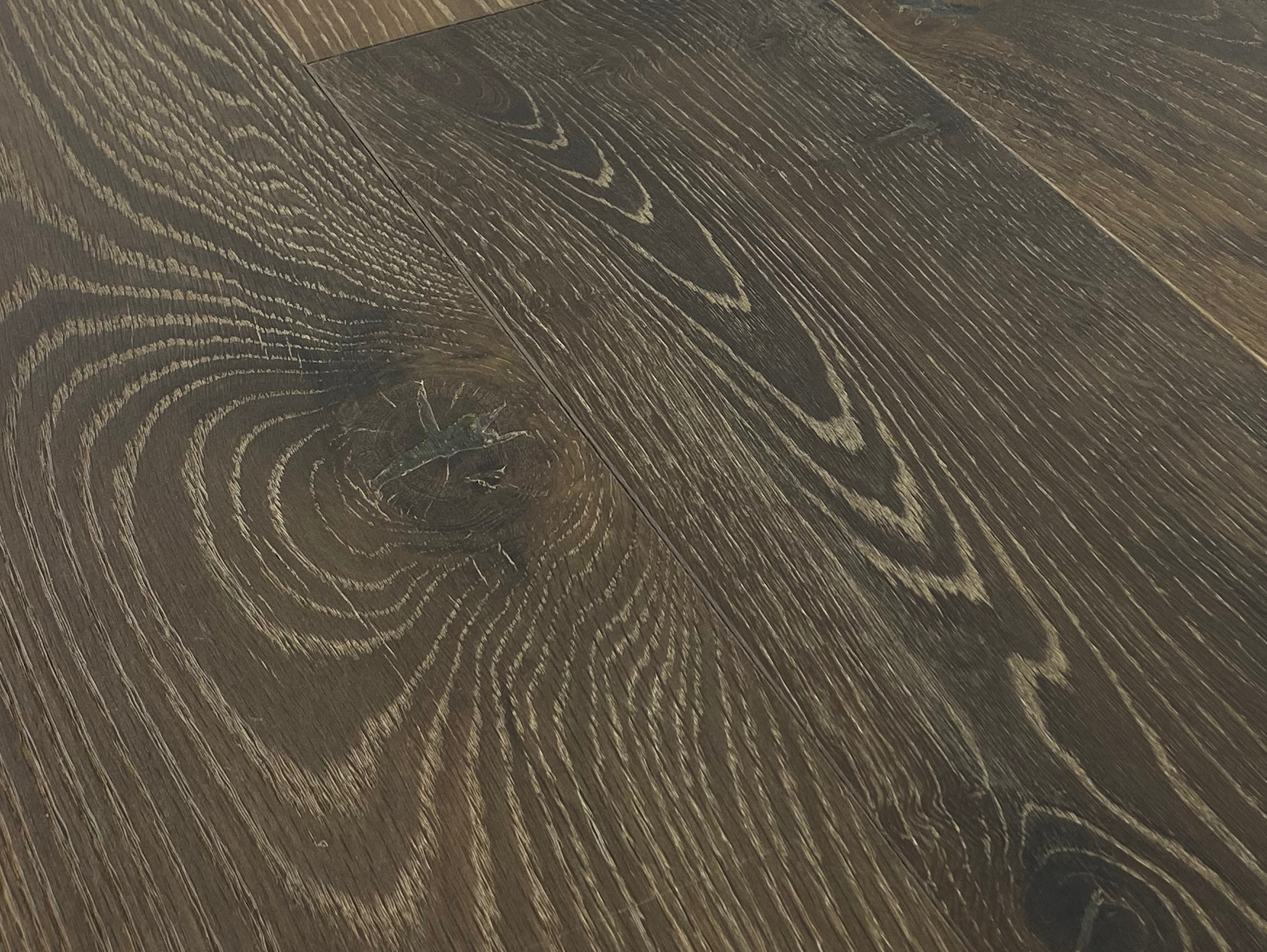
Texture changes grip and how wear shows. A wire-brushed surface has the soft grain scrubbed out, leaving the harder grain standing slightly proud. The Monarch Plank Lago Belviso is wire-brushed European Oak with a 3 mm wear layer.
The darker Monarch Plank Lago Moro carries the same wire-brushed texture. It is a Rustic grade, so knots and strong grain are part of the look. That variation hides the small scratches grit leaves near a doorway.
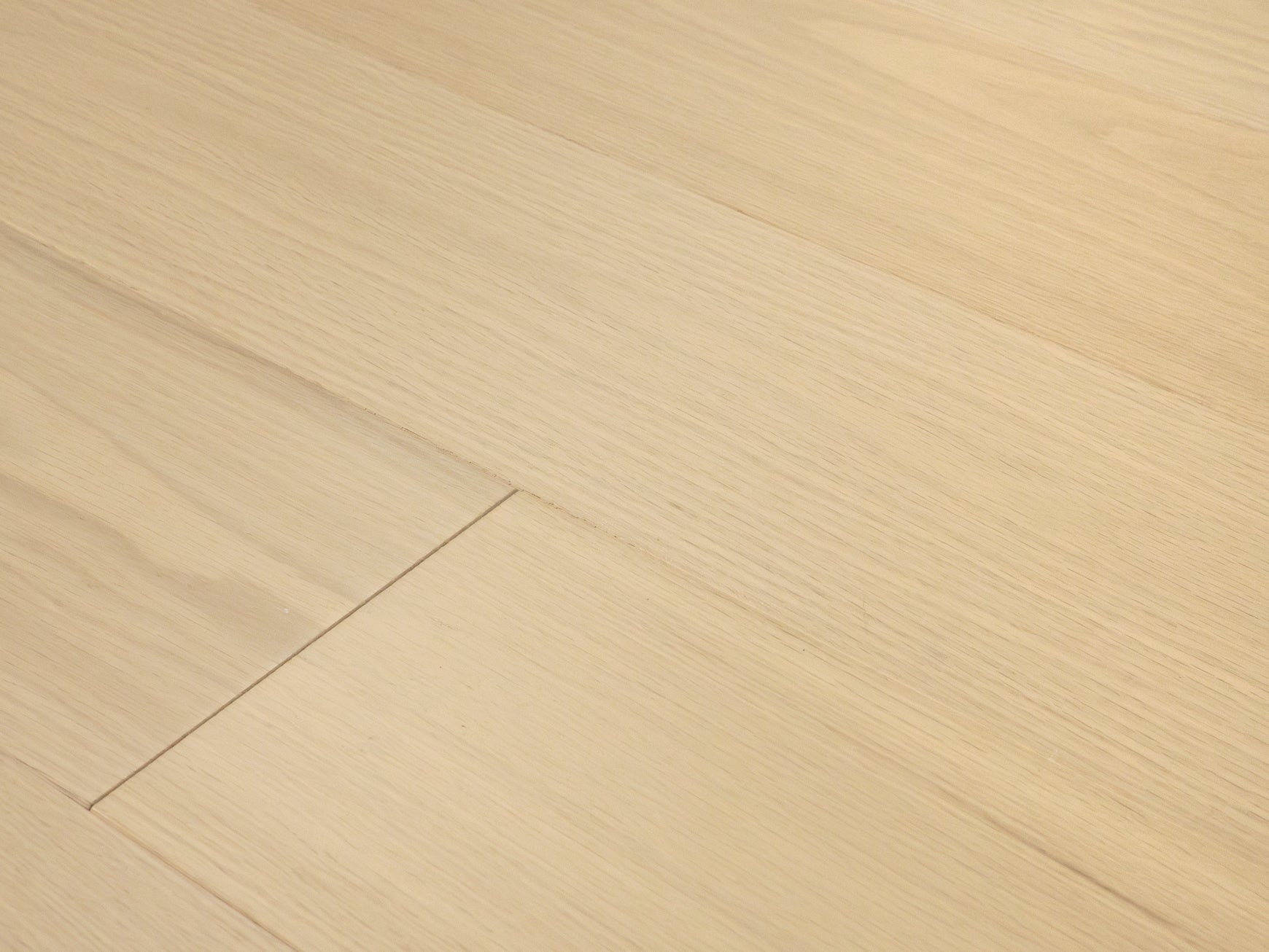
A smooth surface is the opposite choice. It cleans in one pass and shows the grain as a flat picture, but it also shows fine scratches in raking light. The Monarch Plank Premio Veranda is smooth Red Oak in a pale tone, which keeps light water marks from standing out.
Cleaning is part of the finish choice too. A urethane finish wants a damp, well-wrung mop and a cleaner made for finished wood floors. A steam mop or a soaking wet one forces moisture into exactly the seams a bathroom already stresses.
Aluminum oxide urethane or UV urethane
The two coats in this catalogue are closer than their names suggest. Both are urethane, both are applied and cured at the factory, and both are meant to be cleaned rather than waxed or oiled.
Aluminum oxide is about abrasion. Grit carried in from a hallway is what dulls a bathroom floor, and hard particles in the coat slow that dulling. The Garrison Garrison II Smooth Chateau is smooth Hickory with Urethane with Aluminum Oxide and a Micro-Beveled edge.
The edge detail is worth noticing in a bathroom. A micro-bevel leaves a very small groove at each seam, which holds less water and dirt than a deep bevel. A pillowed edge looks softer, but it leaves a rounded channel along every seam.
Neither finish changes the answer about showers. A harder coat resists scratches. It does not stop water entering a seam.
Construction matters more than the coat on top
Look past the finish line on a spec sheet to the construction line. It tells you what the board does when it meets moisture.
Engineered floors, listed as Hardwood Plywood or Engineered, put a real wood wear layer over a cross-laminated core. The layers run in different directions, so the board resists swelling and shrinking better than solid wood. The Lago and Premio floors named here are built this way.
The Regent floors, such as the Monarch Plank Regent Juliana, list Hardwood Lumber (Hevea): a European Oak face over a lumber core. The Monarch Plank La Grande Grenoble also lists Hardwood Lumber, with a 6 mm wear layer on a board 11-3/8" wide. A board that wide shows movement at its seams readily, which counts against it in a damp room.
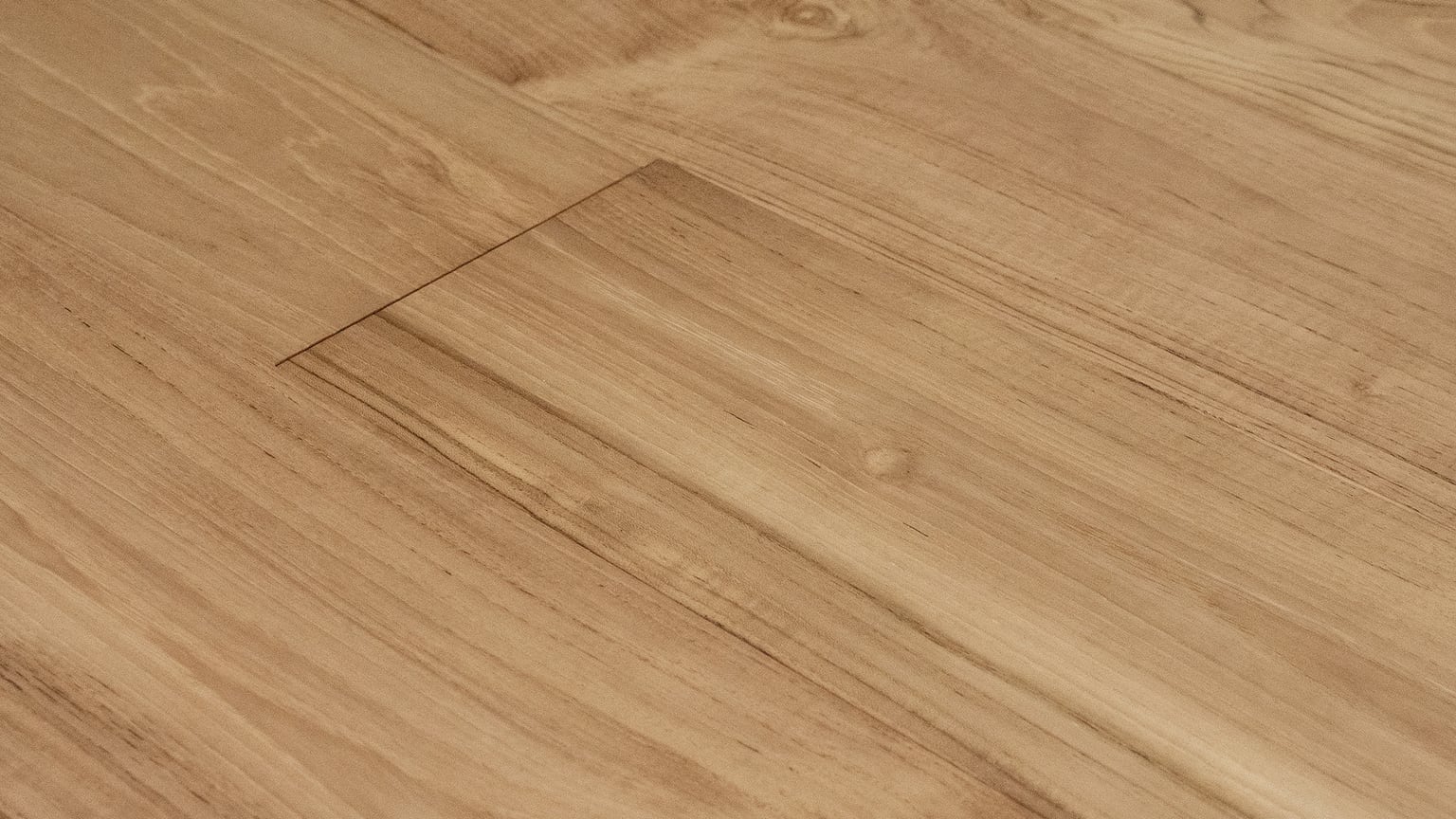
Teak is the species people ask about for wet rooms. The photograph at the top of this page is the Monarch Plank True Teak Bleached - Light Rustic, a smooth Teak plank shown with an end joint in view.
That floor and the Monarch Plank True Teak Natural - Light Rustic both list a Solid Lumber Core with teak in all layers, under UV Urethane, Ultra-Matte. They are still wood floors, and neither listing calls them waterproof.
The wear layer matters here as well. It is the wood you can sand back if water marks the surface. Our guide to how much wear layer you need explains what that thickness buys you over the life of a floor.
When wood is the wrong floor for the bathroom
Wood is the wrong floor for a bathroom with a shower or a tub. Water leaves the enclosure on every use, it pools where a bath mat sits, and a slow leak at a toilet can soak the subfloor unseen. A film finish on the face does nothing about any of that.
It is also the wrong floor for a bathroom shared by children who splash. In those rooms, choose a floor sold as waterproof construction and keep the wood for the rooms next door.
Wood can be right for a powder room, a toilet room separate from the shower, or a dressing area off a primary bath. In those rooms water arrives as drips, not puddles. A factory-finished engineered floor, installed tight and wiped when it gets wet, can match the hallway and read as part of the house.
What we would ask before recommending a floor
Before we suggest any floor for a bathroom, we ask where the water comes from. Is there a shower, a tub, or only a sink? Is there an exhaust fan, and does anyone run it?
We ask what is underneath. The subfloor decides more than the floor does, and a damp or soft subfloor has to be dealt with before any material goes down. A visit for a free in-home laser measurement is a chance to see it, rather than guess from a photograph.
We also ask whether the floor continues from the next room. Running one floor through a hall and into a powder room reads as one house. That often settles the species and the sheen before the bathroom question comes up.
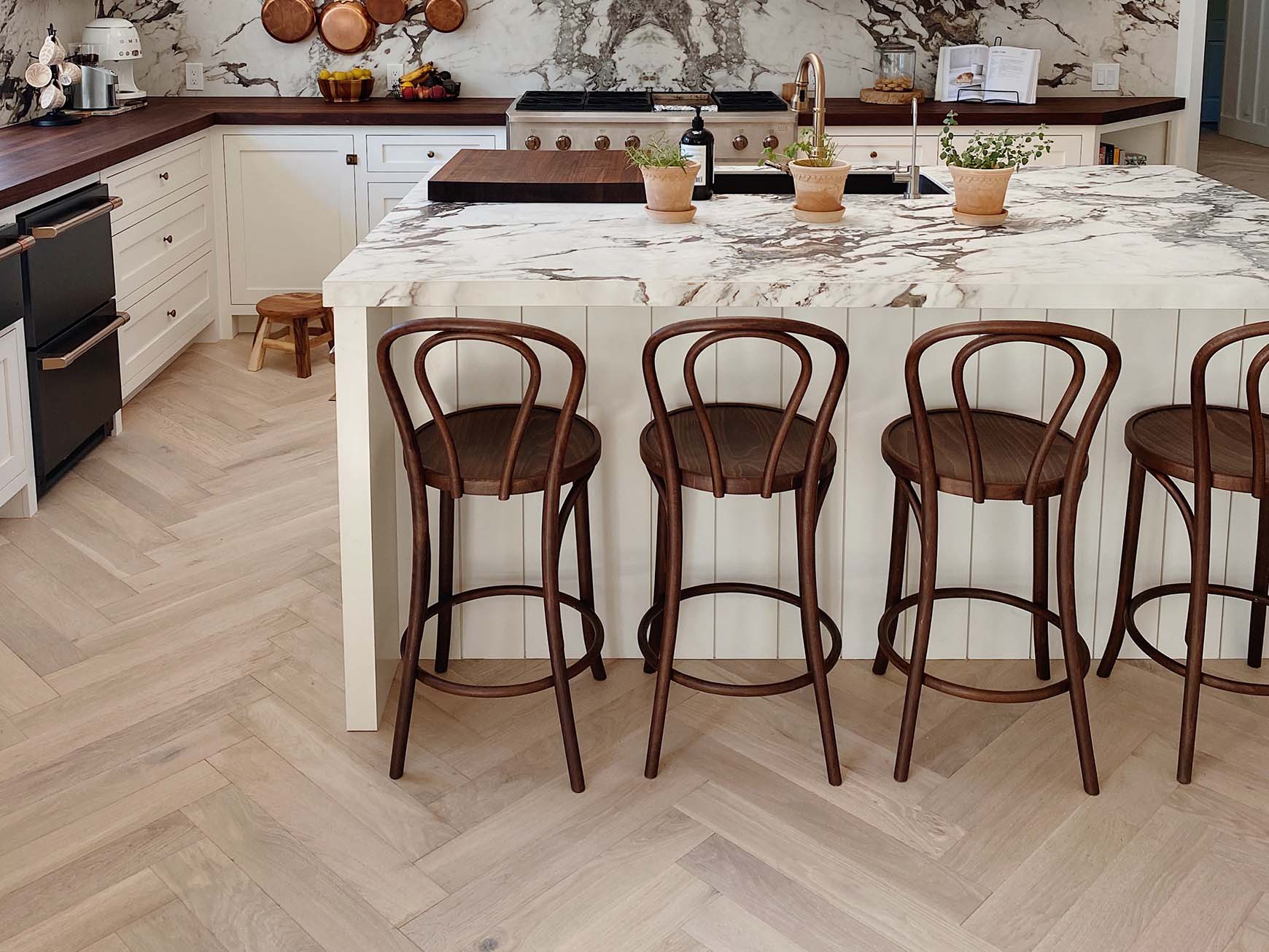
Kitchens raise the same drip-and-wipe question as a powder room. A pale herringbone such as the Monarch Plank Lago - Herringbone Como, laid through a kitchen, shows how a wire-brushed, ultra-matte surface reads where water is used daily but rarely left standing.
If you have a dog, the water bowl is a small bathroom of its own. Our piece on claws and water bowls covers the same seam problem at floor level.
Put a sample on the bathroom floor itself and look at it under the vanity light, wet and dry. You can order samples of the floors in this article. They are paid and final sale, so choose the two or three you are serious about.
Bathroom floor finish questions
Does a urethane finish make a wood floor waterproof?
No. It seals the face of each board. Water that reaches a seam, an end joint or the gap at the wall gets under the finish, and that is where bathroom damage starts.
Is ultra-matte or gloss better for a bathroom?
Ultra-matte shows fewer water spots and streaks, and it feels less slick when damp. Every Monarch Plank floor listed here is finished in UV Urethane, Ultra-Matte.
Can I put engineered wood in a powder room?
Yes, with care. A powder room sees drips rather than standing water, so a factory-finished engineered floor, installed tight and wiped promptly, is a reasonable choice. Follow the manufacturer's installation instructions.
Is teak flooring safe next to a shower?
The True Teak floors here list teak in all layers, but they are not listed as waterproof. Beside a shower, choose waterproof construction instead.
Does aluminum oxide help in a bathroom?
It helps with grit and scuffs, which dull a floor near a doorway. It does not change how water behaves at the seams.
Can a water-marked floor be repaired?
A mark in the finish can often be cleaned or recoated. A board that has swollen at the seam usually has to be replaced, which is why stopping water early matters more than the finish.
If your bathroom is a powder room and you want its floor to match the hallway, start with a quote request for the floors you are considering. We can arrange a free in-home laser measurement and talk through the subfloor and the fan in the room itself.