
Concrete slab moisture: what to check before flooring
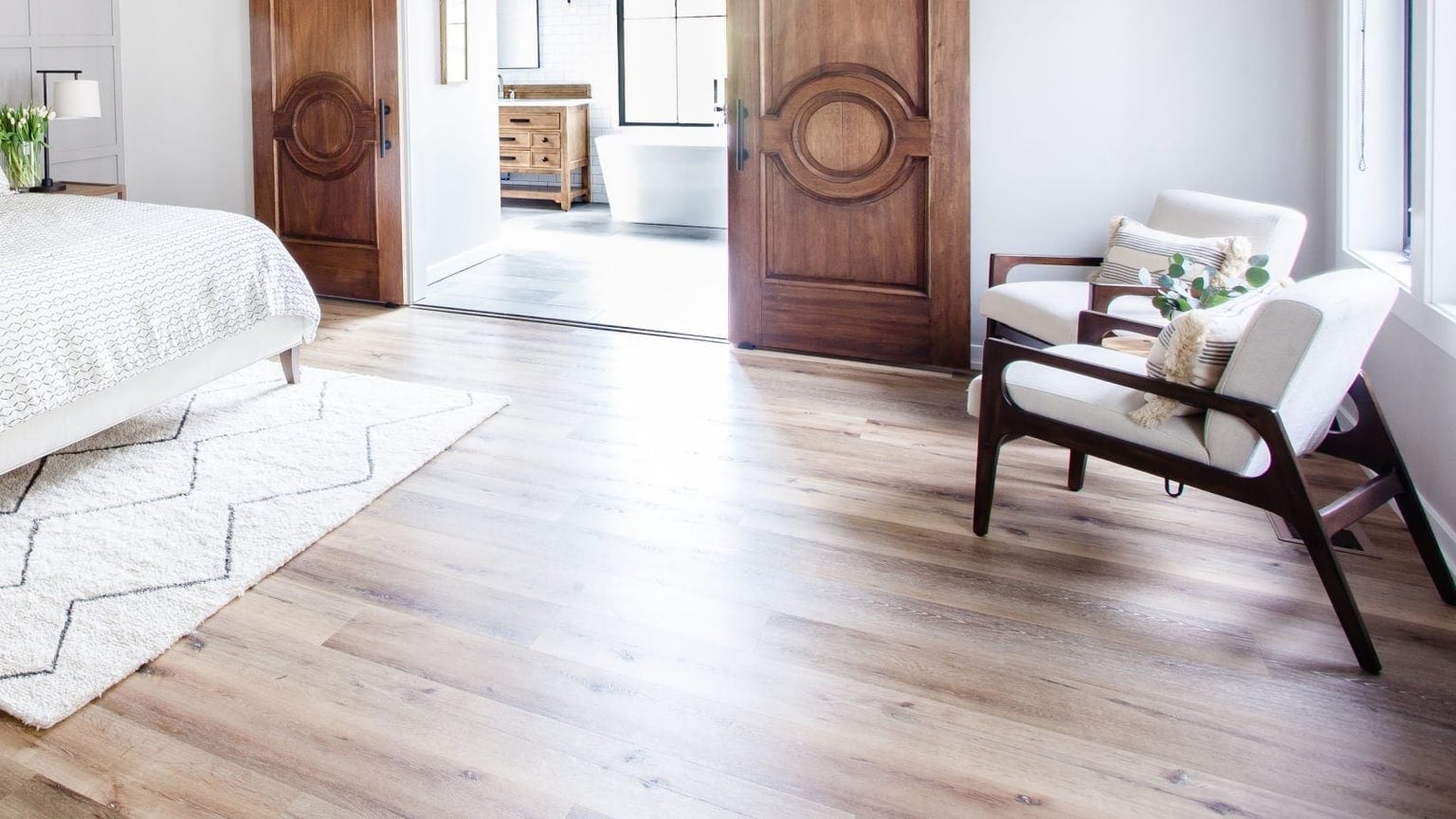
If your concrete slab holds moisture, the floor you can put on it is decided by that moisture before colour, width or finish come into it. Concrete slab moisture rules out some constructions, makes others workable only with the right barrier underneath, and leaves a few that tolerate it well. The order is simple. Find out whether the slab is damp and why, deal with the cause where you can, then choose a construction the maker approves for that slab.
This guide walks through each of those steps for a homeowner who has pulled up old carpet or vinyl and found bare concrete. It explains the signs to look for, the tests installers use, what each kind of floor does over a damp slab, and the questions worth asking before anything is ordered.
Why concrete holds moisture at all
Concrete is not a sealed surface. It is a porous material, and it keeps passing moisture upward from the ground beneath it for as long as the ground is damp. A slab poured directly on soil, which is common in single-storey houses, sits on top of that ground moisture every day of its life.
Many older slabs were poured without a vapour barrier underneath, or with one that has since torn or degraded. Without that layer, the slab acts like a wick. Water from wet soil, a high water table or poor drainage moves up through the concrete and out of its top surface.
The floor covering then becomes the lid on that process. Carpet lets the moisture pass through and evaporate, which is why many slabs only show a problem once the carpet comes up. A tight floor, or an adhesive that traps the moisture, can turn a slab that seemed dry into one that pushes the floor up, softens the glue or grows mould underneath.
Signs your slab is damp
Before any test, the slab itself usually gives clues. Look at it with the old covering removed and the room closed up for a while.
White, chalky powder on the surface is a common sign. It is mineral salt left behind as water evaporates out of the concrete, and it tends to collect along cracks and near outside walls.
Dark patches that come and go, a musty smell that does not leave, rusted carpet tack strip and old glue that has turned soft or gummy all point the same way. So does an existing wood floor that has cupped, with board edges raised higher than the centres.
Look outside too. Soil sloping toward the house, downspouts that empty against the foundation, sprinklers that wet the wall and planters built up against the siding all feed moisture into the ground under the slab. These are often inexpensive to fix, and fixing them can make a real difference.
A simple home check is to tape a square of clear plastic sheet tightly to the bare slab and leave it in place. If condensation forms underneath or the concrete darkens, moisture is coming through. This shows that moisture is present, but it does not measure how much, so it is a reason to test properly rather than a test in itself.
How installers test a slab
Flooring makers specify how a slab must be tested and what result their product accepts. You will hear about two methods. A calcium chloride test measures how much moisture leaves the surface over a set period. An in-situ relative humidity test places probes into holes drilled in the concrete and reads the humidity inside the slab.
The relative humidity method is generally considered the more reliable picture of what the floor will live with, because it reads conditions inside the slab rather than at the surface. Either way, the result only means something when compared with the limit in the installation instructions for the exact product you are considering.
Testing has to be done in the conditions the room will actually have. The heating or cooling should be running as it will be in daily life, and the slab should not have just been washed or exposed to rain through an open door. A reading taken in the wrong conditions can pass a slab that later fails.
This is also why the measurement visit matters. A free in-home laser measurement settles the room size and layout, and it is the natural moment to look at the slab, note the signs above and agree what testing the chosen product needs. If you are comparing several floors, ask for the moisture requirement of each, because they differ.
What each kind of floor does over a damp slab
The construction of the floor decides how it responds to moisture from below. Here is how the main categories behave, in plain terms.
Solid hardwood is the wrong floor for a damp slab. It is made of solid wood that swells and cups as it takes on moisture, and it is normally nailed to a wood subfloor, which a bare slab does not provide. Our comparison of hardwood on a damp slab versus vinyl tile explains that trade-off in more detail.
Engineered hardwood is more stable than solid wood, because its layers are cross-laid and resist movement. It can go over concrete, either glued down or floated, but only within the moisture limit the maker sets and usually with a specified barrier or adhesive system. It is still real wood on top, so a slab that stays damp will eventually show in the boards.
Laminate with a fibreboard core is more sensitive to moisture from below than the other common floors. It floats over an underlayment, and many makers require a vapour barrier layer under it on concrete. If the slab is persistently damp, laminate is a weak choice even when the surface is described as resisting spills.
Rigid core luxury vinyl plank has a dense core and no wood fibre to swell, so it tolerates moisture from below better than the others. It normally floats over the slab with a click joint. It still has limits, and trapped moisture can grow mould under any floor, so the maker's slab requirements still apply. For a room-by-room view, see which floors handle water in each room.
Reading the specs on a rigid core plank
When you look at a rigid core product page, a few specifications matter for a slab. The construction line tells you the core type and how it installs. The wear layer tells you how much protective surface sits on top. The thickness tells you how much the floor will raise the room, which matters at doorways and where the new floor meets a neighbouring room.
Take the Duchateau LUXETECH 20 Gothic. Its listed construction is rigid core luxury vinyl plank with a 5G Click floating installation and an attached HushWalk underlayment. It is 7" (178mm) wide, 5/16” (8mm) thick and carries a 0.5mm (20mil) wear layer under a ceramic reinforced prime urethane coating, embossed in register. You can see the full listing on the LUXETECH 20 Gothic product page.

The Duchateau LUXETECH 20 Delacio shares that construction, finish, thickness and wear layer, and comes in a wider 9" (228mm) plank. A wider board means fewer seams across a room, which some people prefer in a large open space. Compare the two on the LUXETECH 20 Delacio product page.
The bedroom floor at the top of this page is the Duchateau LUXETECH 20 Youngscombe, from the same collection in a 9" (228mm) plank. Its listing marks radiant heat as approved, with the conditions set out in the installation instructions. That can matter on a slab, where radiant heat is sometimes laid in or under the concrete.
Notice what the listings do not say. Neither listing in our catalogue makes a claim about water resistance, so we make none either. What decides whether they suit your slab is the maker's installation instructions and the moisture limit stated there, which is exactly what the test result has to be compared against.
Fix the cause before the floor
A floor that tolerates moisture is not a cure for it. If water is reaching the slab from a downspout or a sprinkler line, a new floor sits on top of a problem that keeps growing.
Start with the outside of the house. Redirect downspouts away from the foundation, adjust sprinklers so they do not soak the wall, and pull soil and mulch down so the ground slopes away. These steps often lower slab moisture noticeably.
Inside, a slab that still reads high after the drainage is sorted may need a moisture mitigation system. This is a coating or membrane applied to the concrete before the floor goes down. Some makers name approved systems or require a particular underlayment with a built-in vapour barrier, so follow the manufacturer's installation instructions rather than choosing a product on your own.
If you are weighing wood against a synthetic plank for a slab, our article on WPC vinyl versus engineered hardwood sets out how each one ages and what it asks of the room.
Questions about concrete slab moisture
Can I put hardwood on a concrete slab that holds moisture?
Not solid hardwood. Engineered hardwood can go over concrete when the slab tests within the maker's limit and the specified barrier or adhesive is used. If the slab stays damp after the cause is fixed, a rigid core plank is usually the safer construction.
Is a plastic sheet test enough?
No. It tells you that moisture is present, which is useful, but it does not give a reading you can compare with a maker's limit. Treat it as a reason to arrange proper testing.
Does a floating floor solve slab moisture?
A floating floor is not glued, so there is no adhesive to fail. Moisture can still collect beneath it and lead to mould or odour, which is why many makers require a vapour barrier layer under a floating floor on concrete.
Will my old carpet have hidden a moisture problem?
It may have. Carpet lets moisture evaporate through it, so a damp slab can go unnoticed for years. Rusted tack strip, white powder and soft old glue under the carpet are the usual signs.
Who should test the slab?
The installer, using the method the maker of your chosen product specifies. The result has to match that product's installation instructions, so testing is best done once the shortlist is settled.
The next step
A damp slab narrows the choice, but it does not leave you without one. Find the cause, fix what you can outside, test the slab against the maker's limit, and choose a construction that is approved for the result. Order samples of the shortlist so you can judge colour in the room while the slab question is settled.
When you are ready, request a quote and we will arrange a free in-home laser measurement, look at the slab and confirm what the products you like require before anything is ordered.