
Hardwood on a damp slab versus vinyl tile
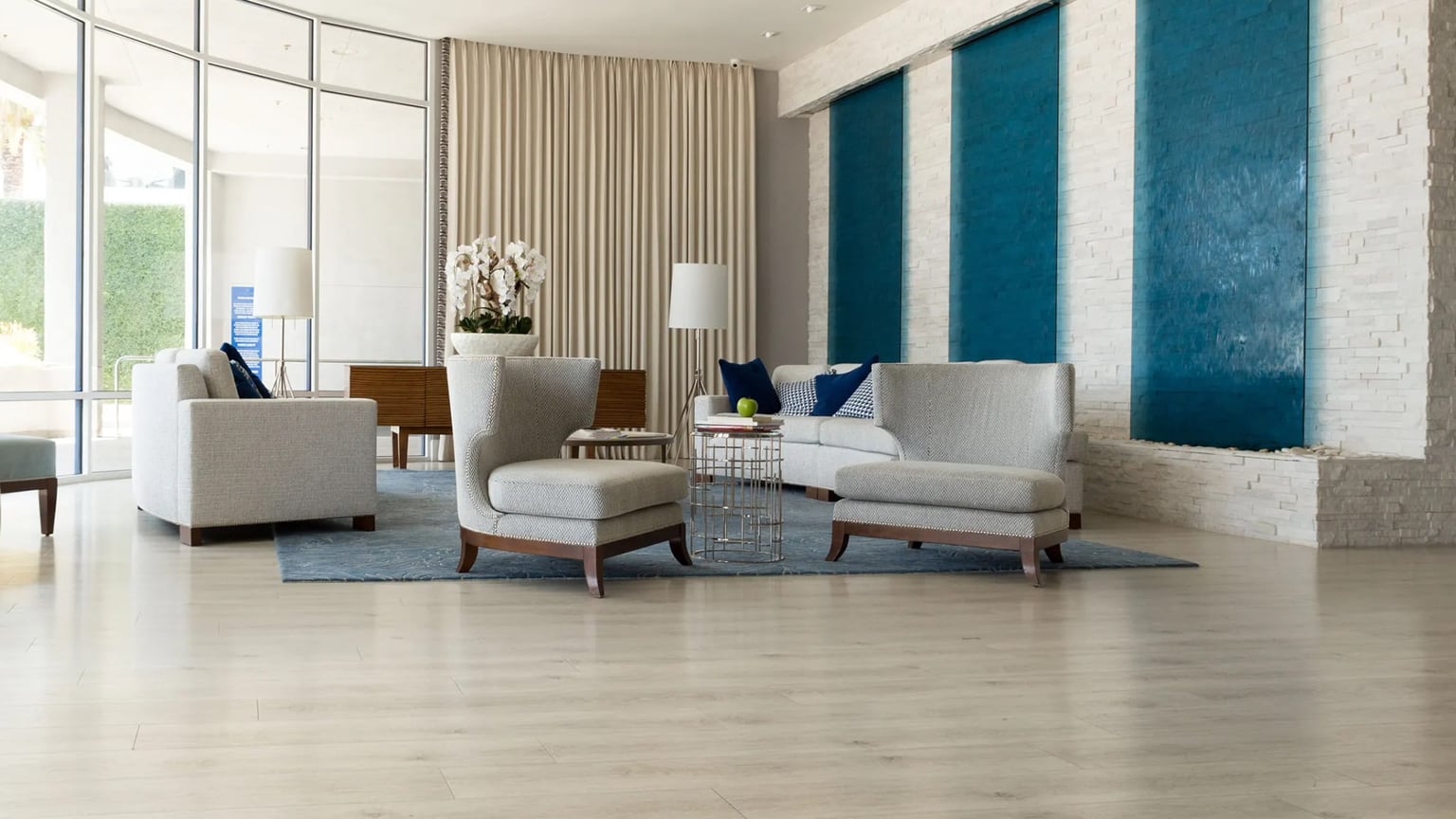
If your concrete slab holds moisture, solid hardwood is the wrong starting point and luxury vinyl tile is the safer one. Wood takes up water and moves with it, while vinyl plank does not swell the same way. That is the short answer, and the rest of this page explains the reasoning so you can check it against your own house. Hardwood on a damp slab can cup, gap or lift, and the cost of that failure sits on the homeowner. Vinyl is not a cure for a wet slab either, so the first job is to learn what your slab is actually doing before any material is chosen.
Why a slab changes the question
A house built on a concrete slab has no crawl space and no air moving under the floor. Moisture can rise from the ground through the concrete, and the slab releases it slowly for years after it was poured. In a dry season you may never notice. After a wet winter, or near a downspout that discharges too close to the foundation, the same slab can behave very differently.
Solid hardwood is a single piece of timber, cut from one species, and it responds to humidity on every face. Moisture arriving from below swells the underside faster than the top. The board bends upward at its edges, which is what the trade calls cupping. Planks that were tight in summer can open into gaps, and in a bad case they push against each other and lift.
Luxury vinyl tile, usually shortened to LVT, is built differently. The board is made from vinyl layers rather than timber, so it does not take up water and expand across its width the way a wood board does. That does not make it immune to the slab. Trapped moisture can still stain an adhesive, loosen a glued floor, or grow mold in the space between the slab and the planks.
What to find out about your slab first
Before you compare materials, ask what the slab is doing. A visual check is a start and nothing more. Look for dark patches that return after cleaning, white mineral crusts on the concrete, a musty smell in a closet, or paint that bubbles on the lower wall. Look outside as well: do the gutters empty well away from the house, and does the soil slope away from the foundation?
Then have the slab tested properly. Flooring professionals use moisture tests made for concrete, and the maker of any floor you choose publishes the moisture limits its installation instructions accept. We will not quote a figure here, because the number depends on the product and the test method, and the manufacturer's installation instructions are the document that counts. If a reading is above what the instructions allow, no brand of hardwood or vinyl changes the answer.
Our team will start with a free in-home laser measurement, which gives you the room dimensions. The measurement is not a moisture test. Bring up the slab at that visit anyway, so that the questions about your floor are on the table before you commit to a material.
How solid hardwood behaves on concrete
Most makers of solid hardwood say clearly that their product is made for wood subfloors. Solid boards are generally nailed or stapled into a wood structure. A concrete slab offers nothing to fasten into, so a solid floor would need a plywood layer built over the concrete first. That adds height, adds a moisture-sensitive layer, and adds a step where a mistake can hide.
There is a second concern, and it is about the long run. Even if the slab tests well on the day of installation, a slab can change as the seasons and the weather around the house change. A wood floor holds a moisture history. If your slab has ever produced a damp patch, solid hardwood is asking that history to stay quiet for the life of the floor.
None of this means wood is wrong everywhere. On a slab that has been tested, that is protected from below, and that the floor maker's instructions accept, some wood floors are installed. In that case an engineered board, which is built in layers and is more stable across its width than a single piece of timber, is the usual conversation. If you want that conversation, our page on which floors handle water in each room is a sensible place to start.
How luxury vinyl tile behaves on concrete
Vinyl plank is made for this kind of subfloor. A floating click floor sits on the slab with an underlayment between, and it is not bonded to the concrete. A glued floor is bonded across the whole surface, so it asks more of the slab. Both kinds ask for a flat subfloor, and both ask for a moisture reading inside the limits the maker publishes.
Take the Duchateau LUXETECH 20 range as an example. Duchateau LUXETECH 20 Delacio is listed as a rigid core luxury vinyl plank with a 5G Click floating install and a HushWalk underlayment. It is nine inches wide and 5/16" (8mm) thick, with a 0.5mm (20mil) wear layer. The wear layer is the clear top skin that takes the scuffs, so it matters for traffic, not for moisture.
Duchateau LUXETECH 20 Filmon shares that thickness and wear layer at a narrower seven inch width of 7" (178mm). The listed specifications for these planks do not carry a moisture rating, and the maker's own pages do not state one that we can repeat. So we do not describe either plank as waterproof. What we can say is what the specifications list: a click floating system, a thickness, and a wear layer.

A floating click floor has a practical advantage on a slab. Because it is not bonded to the concrete, it can be lifted and relaid if a problem is found later. A glued floor is a commitment. Duchateau LUXETECH 20 White Oil is a different build from the click planks. It is listed as a glue-down luxury vinyl plank, seven inches wide, 1/8" (3mm) thick, with a 0.55mm (22mil) wear layer. Check each product's own page for its install method before you decide, because a glue-down plank asks more of the slab surface than a floating one.
What a sensible order of work looks like
Homeowners often pick the floor first and then discover the slab. It is cheaper to reverse that order. Start with the concrete, because everything above it depends on it. If the slab has a history of damp patches, deal with the cause outside the house before you spend anything inside it. Grading, gutters and downspouts are the usual suspects, and none of them is a flooring job.
Next, choose the construction. A floating vinyl plank, a glued vinyl plank and an engineered wood board each ask the slab for something different. Write down what the maker of your shortlisted floor requires, in the maker's own words, and keep that page. If a problem appears later, that document is what you and your installer will both be looking at.
Last, choose the colour and the width. This is the part most people enjoy, and it comes safely after the part that protects the floor. A sample board in your own room, under your own light, tells you more than a catalogue picture does. Nothing about the look of a floor will rescue it from moisture that was never dealt with.
What changes the decision
Four things decide between the two materials in a slab room. Each one has a plain test.
First, the slab reading. If a proper test comes back inside the limits for the floor you want, you have options. If it comes back outside them, you fix the moisture or you choose a different room finish, such as sealed tile, rather than forcing a floor down.
Second, the room. A bathroom, a laundry room and a basement bedroom ask more of a floor than a living room does. The trade-off is plain: wood in a damp room is a risk you carry, and vinyl in the same room is a risk you can manage with a click floor and a sound slab.
Third, the look you want. Some people choose solid hardwood because they want real timber and a floor that can be sanded. Vinyl will not be sanded and refinished the way solid wood can. If that matters to you, say so, because the honest answer might be an engineered board on a tested slab.
Fourth, plank width and finish. A wider plank shows fewer seams, and a matte finish hides scuffs. Our guide to flooring plank width explains how width changes the look of a room, and it applies to vinyl and wood alike.
Common questions about vinyl and hardwood on a slab
Can I put solid hardwood directly on a concrete slab?
Almost never. Solid boards are made to be fastened into a wood subfloor, so on concrete they need a built-up wood layer first. Read the floor maker's instructions, because they decide what is accepted.
Is vinyl plank safe on a slab that holds moisture?
Safer than solid wood, but not safe without conditions. Vinyl does not swell like timber, yet moisture trapped underneath can still cause staining, loose joints or mold. The slab should be tested and treated before any floor goes down.
Does a floating floor handle a damp slab better than a glued floor?
A floating click floor is not bonded to the concrete, so it asks less of the slab surface and can be lifted later. That is a convenience. It does not make a wet slab acceptable.
Should I choose vinyl or engineered wood?
It depends on the slab reading and the look you want. Vinyl is the lower-risk choice when moisture is a worry. Engineered wood suits a tested, dry slab and a buyer who wants real timber on top.
What should I ask a flooring company about my slab?
Ask who tests it, which test they use, what limit the floor maker accepts, and who is responsible if the reading is outside that limit. Ask for the answers in writing.
What we would ask before recommending a floor
We would want to know which room, how the slab has behaved over a wet season, and what you want underfoot. We would ask about the downspouts and the grading outside. Then we would look at the plank widths and finishes that fit the room and compare them against the maker's installation instructions. You can see a range of options in our flooring listings, and a rigid vinyl comparison in our article on SPC versus vinyl flooring.
Our paid samples let you see a board in your own light, and they are final sale. Delivery and professional installation available across our service area reaches the Bay Area and out into the Central Valley, and local installation partners handle the work. You can pay after measurement, or pay now by card.
If you have a slab you are unsure about, start by describing the room and the problem in a written quote request, and we will take it from there.