
WPC vinyl vs engineered hardwood: what differs
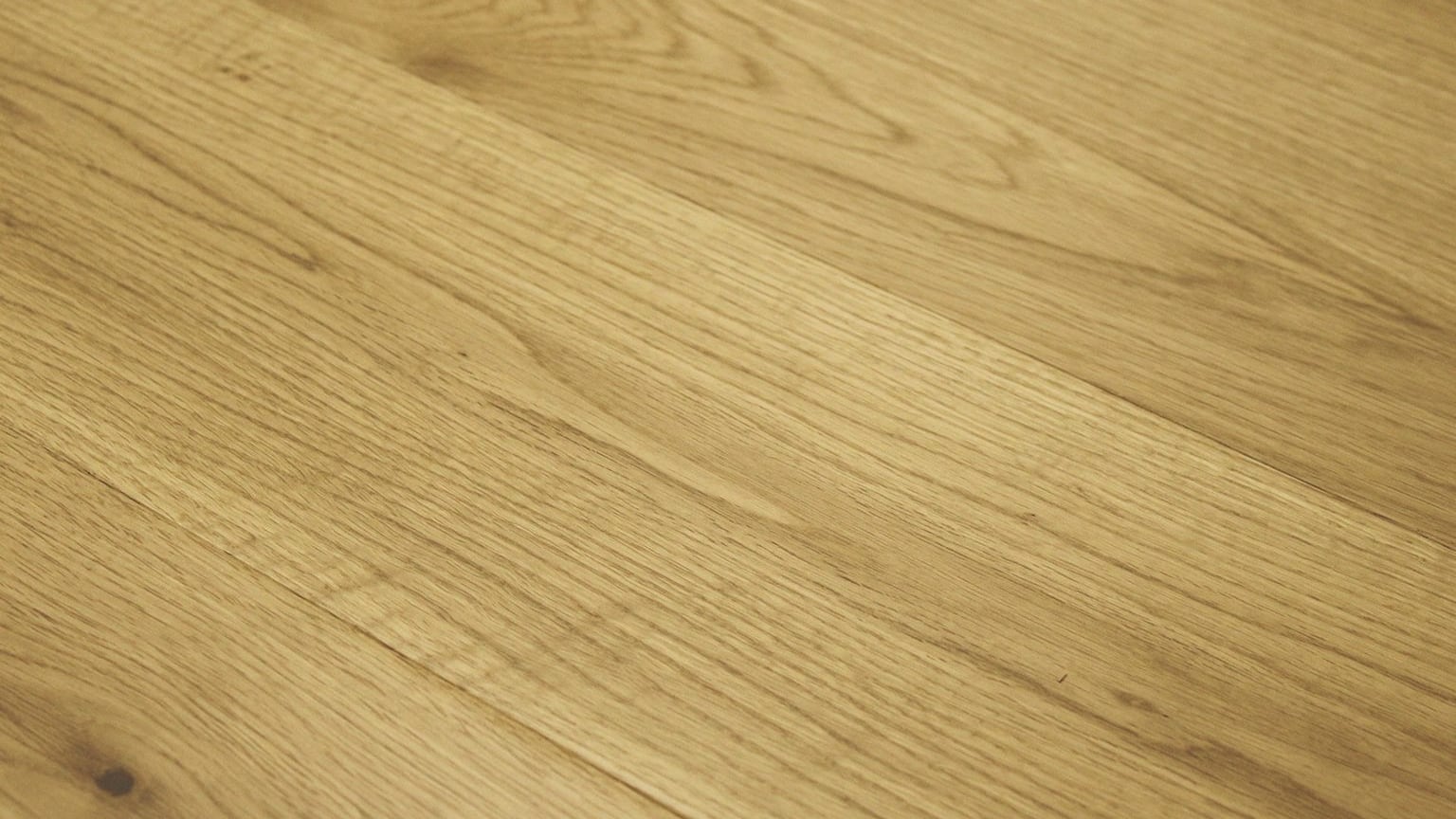
WPC vinyl vs engineered hardwood is a choice between a printed rigid plank and a real wood surface. WPC stands for wood plastic composite, a core made to hold its shape, topped with a printed image and a clear wear layer. Engineered hardwood is real wood bonded to a layered base, so the surface you see is the surface you can sand.
Pick WPC vinyl when you want a click-together floor that asks for little attention once it is down. Pick engineered hardwood when the grain itself matters and you want a surface a professional can renew. The numbers that separate the two are on the spec sheet, so this article reads them using real boards.
What each floor is made of
A WPC plank is a sandwich. A printed film carries the wood image, a clear wear layer protects it, and a composite core gives the plank its stiffness. Duchateau Portfolio Baltas lists WPC construction with a click-lock edge, a 9" width and a finish described as embossed in register.
Engineered hardwood has a different sandwich. A real wood layer sits on a base of plywood or similar material, and the base is what keeps the board stable. Monarch Plank Vinland WHITE OAK SELECT lists hardwood plywood construction in white oak, Select grade, with a 6" width.
The practical difference is where the pattern comes from. In vinyl the grain is printed and repeats. In wood the grain is the tree, so no two boards match.
Thickness and wear layer, read in the right units
Spec sheets mix units, and that causes most of the confusion. Vinyl wear layers are given in mil, which is a thousandth of an inch. Wood wear layers are given in millimetres. Total thickness may be in either, so compare wear layers first and total thickness second.
Duchateau Portfolio Baltas is 8 mm thick overall, with a 20 mil wear layer, listed as 0.5 mm. That film is the whole protective surface. When it wears through, there is no wood beneath it to sand back.
Monarch Plank Vinland WHITE OAK SELECT lists a 4 mm wear layer on a 5/8" board. That is several times thicker than the vinyl film, and it is real wood, so a professional can discuss refinishing it with you. Ask the installer about the sanding limits of the exact board before you count on it.
Core, water and what resist swelling does not mean
WPC cores are made to resist swelling, which is the main reason people choose them for kitchens, laundry areas and busy family rooms. Even so, a core that resists swelling is not the same as a floor that tolerates standing water. Water that runs under the edges or through a seam can still cause trouble, so read the maker's wording for the exact product.
Engineered hardwood tolerates normal living, damp mopping and the occasional spill that is wiped up quickly. It does not tolerate standing water, and a full bathroom is the wrong place for it. Our guide to which floors handle water in each room goes room by room.
Whatever you choose, look at the subfloor first. A concrete slab that holds moisture can cause problems under either floor, so ask for a moisture test before anything is ordered. Wood also needs time in the room before it goes down, and the manufacturer's installation instructions say how.
Fit, finish and how each floor goes down
Baltas lists a 5G Click install method. Click-lock planks float, meaning they lock to each other and sit over the subfloor without being fixed to it. That is quick, and it rewards a flat subfloor, because a rigid plank bridges a dip instead of following it.
Engineered hardwood can be nailed, stapled, glued or floated, depending on the product, and the maker's instructions decide which. Glue-down and nail-down floors feel solid underfoot, which some people notice in a large room. Floating wood is also possible where the instructions allow it.
Finish matters as much as construction. The Vinland boards list a UV urethane finish in ultra-matte, which keeps reflections low and hides fine scratches better than a glossy surface. Baltas lists an embossed-in-register finish, where the surface texture follows the printed grain. Our guide to matte or gloss for a living room floor explains how sheen changes what you see.
Look, grain and the repeat
A real board has natural variation, and a white oak plank may carry a dark knot, a streak or a tone change. That variation is the point of wood. It is also why two cartons of the same colour never look identical side by side.
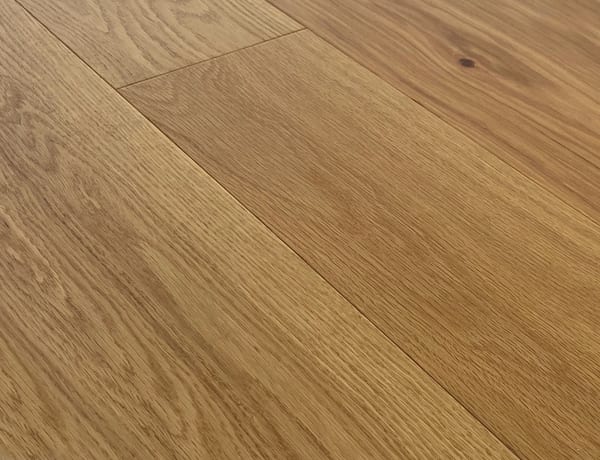
Printed vinyl has to imitate that variation, and good makers print many different board images to hide the repeat. Hold a sample in your own light and look for the same knot returning. If it does, you will see it across a large room.
Species changes the look more than construction does. Hickory shows stronger contrast from board to board than white oak, and Monarch Plank Vinland HICKORY SELECT is a good example of how lively a Select grade floor can look.
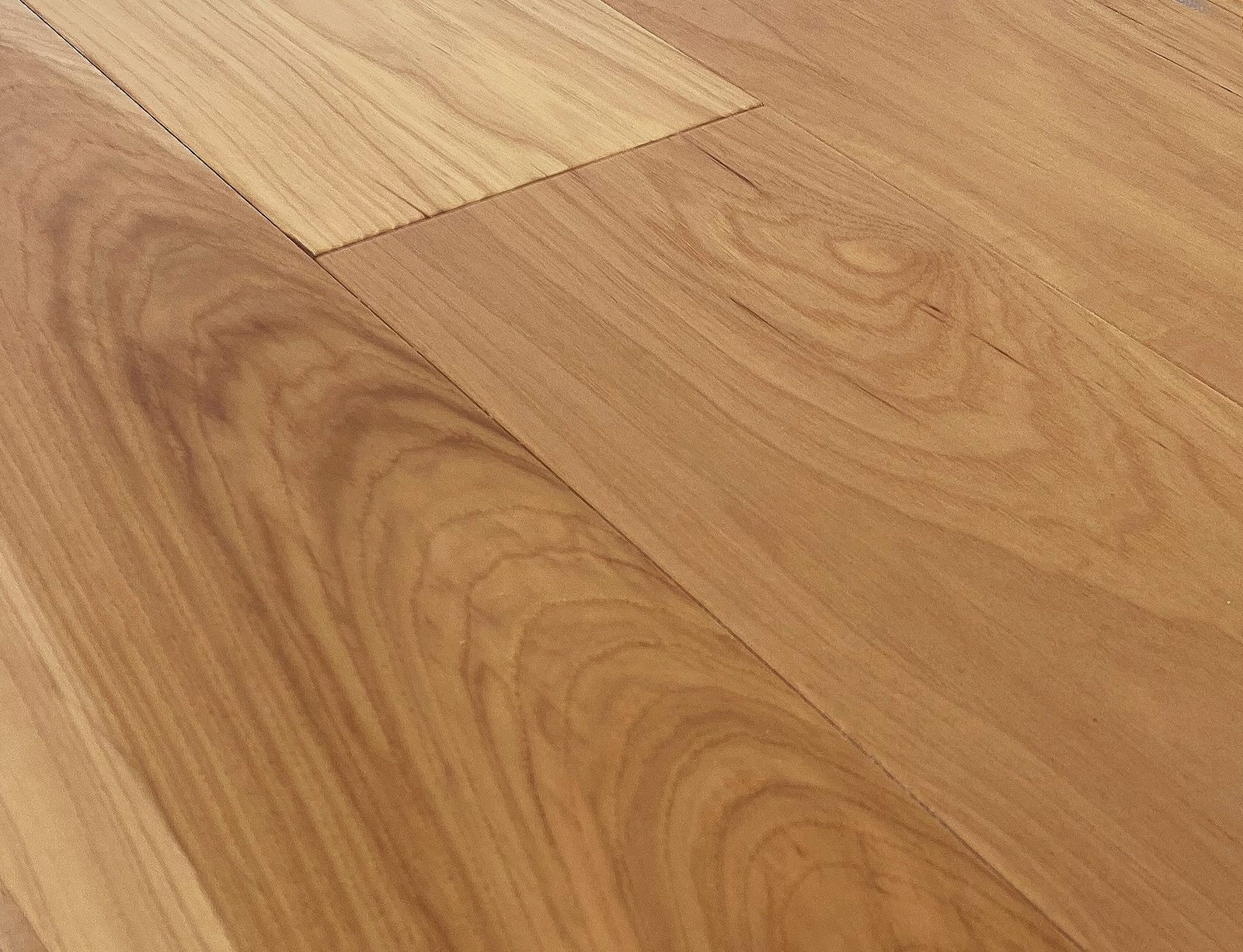
Plank width changes the look too. Baltas is 9" wide, the Vinland boards are 6" wide, and Monarch Plank Hokkaido NARA LIGHT SMOKED is 7-1/2" wide. Wider planks calm a large room and ask more of the subfloor, because any dip shows. Our guide to how to choose plank width walks through the trade-offs.
When each floor is the wrong choice
WPC vinyl is the wrong choice when you want to refinish the floor, when you want a surface that ages like wood, or when you cannot tolerate a pattern that repeats. It is also the wrong choice over a subfloor you are not willing to flatten.
Engineered hardwood is the wrong choice for a full bathroom, a laundry room where a washer can leak, and any room where water regularly stands. It is also the wrong choice if you will not wipe spills or protect the floor at the door.
If you are still undecided, think about how long you expect to keep the floor. A short plan favours the simpler, lower-maintenance surface. A long plan favours the floor you can renew.
Cost and installation
The price of the plank is only one part of the bill. Preparing the subfloor, removing the old floor, trim and transitions all change the total, and they change it differently for each floor. The price on each product page and a measured quote carry the real numbers, because an article cannot keep up with price changes.
Our coverage is simple: delivery and professional installation available across our service area, through local installation partners. That reaches the Bay Area and out into the Central Valley. The first step is a free in-home laser measurement, which records the room before an order is sized.
Questions about WPC vinyl vs engineered hardwood
Is WPC the same as SPC?
No. Both are rigid-core vinyl, but the cores differ, and SPC is usually the denser of the two. Our comparison of SPC and vinyl flooring sets out what the difference means in a home.
Can WPC vinyl be sanded?
No. The printed film and clear wear layer are thin, so a worn area means replacing planks. Keep a few spare planks from the same run if you can, because colour can vary between production lots.
Can engineered hardwood be refinished?
Often, yes, within the limits of the wear layer. A thicker wear layer leaves more wood to work with, so check the listed figure and ask a professional before relying on it.
Which suits a rental or a short plan?
WPC vinyl usually suits a short plan, because it is simple to maintain and a damaged plank can be swapped out. Engineered hardwood suits a home you intend to keep.
How do I compare the two in my own room?
Order samples of each and look at them in the light of the room at different times of day. Hold them against your walls and cabinets. The right choice usually shows itself quickly.
Seeing it in your own room
To compare real boards against your own floor and light, send a request for a quote and ask for the free in-home laser measurement.