
Flooring plank width: how to choose for your room
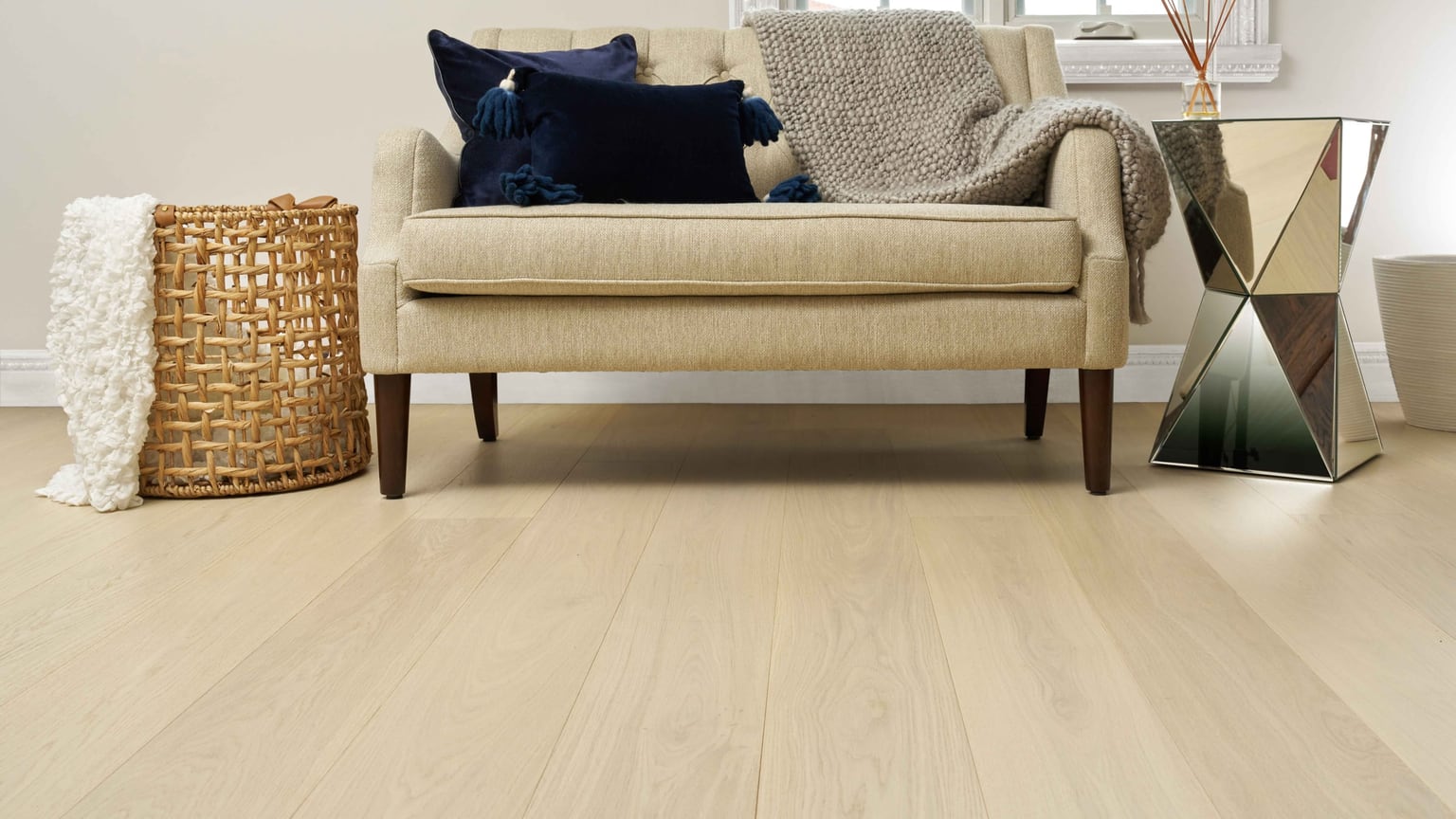
Choosing flooring plank width comes down to three things in your own room: how big it is, how far you can see across it, and how flat the subfloor underneath is. Wide boards suit open rooms with long sightlines and a flat, dry subfloor. Narrower boards forgive small rooms, broken-up layouts and floors that are not quite level. Construction matters as much as the number, because an engineered board holds its shape at widths where solid wood starts to move.
That is the short answer. The rest of this piece explains why each factor changes the decision and what the specs on a product page tell you. It ends with the questions we would ask before recommending a width.
What plank width actually changes in a room
Plank width is the face width of each board, measured across the grain. It sounds like a style choice, and partly it is. But it also changes how many seams cross the floor, how much of each board's grain you see at once, and how the floor reacts to moisture and to an uneven subfloor.
A wide board puts fewer seams in front of you. In a large room, that reads as calm and continuous, because your eye is not counting lines. A narrow board puts more seams in front of you, which adds rhythm and texture. Neither is better. The question is which one suits the size and shape of the room you are actually standing in.
Width also changes how character shows. A wide board carries more of the log's face in a single piece, so knots, colour shifts and cathedral grain appear larger and less frequent. On a narrow board the same features are cut into smaller pieces and spread out, which reads busier but more even.
Room size and sightlines
The most useful thing you can do before choosing a width is stand in the doorway and look at the longest line across the room. Then look at how many walls, cabinets and doorways interrupt it.
In an open living, dining and kitchen space, wide planks usually look right. The boards have room to run, and the floor reads as one surface rather than a pattern. A 7-1/2" plank such as the Garrison Allora 7-1/2" European Oak Luna Select, the board in the photograph at the top of this page, is made for that kind of room.
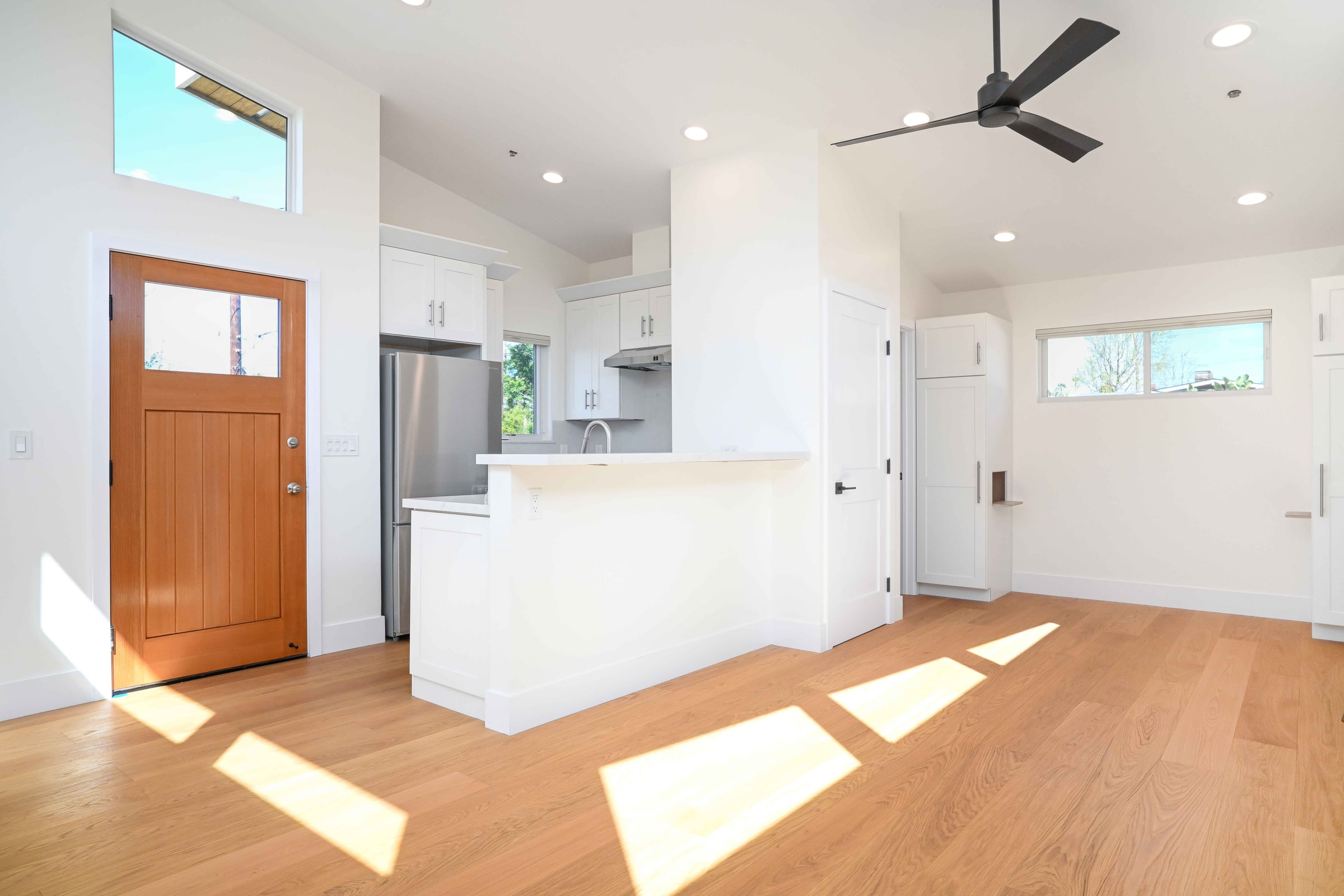
A small bedroom, a powder room or a closet is different. Wide boards still work, but you see only a few of them across the room, and every cut against a wall or cabinet becomes obvious. In a very small room a narrower board often looks more settled, simply because there are enough of them to read as a floor.
Hallways are the case people get wrong most often. A wide board run down the length of a hallway can look generous. The same board run across the hallway gives you short, chopped pieces and a seam at nearly every step. If you want wide planks through a hallway, plan the direction first and the width second.
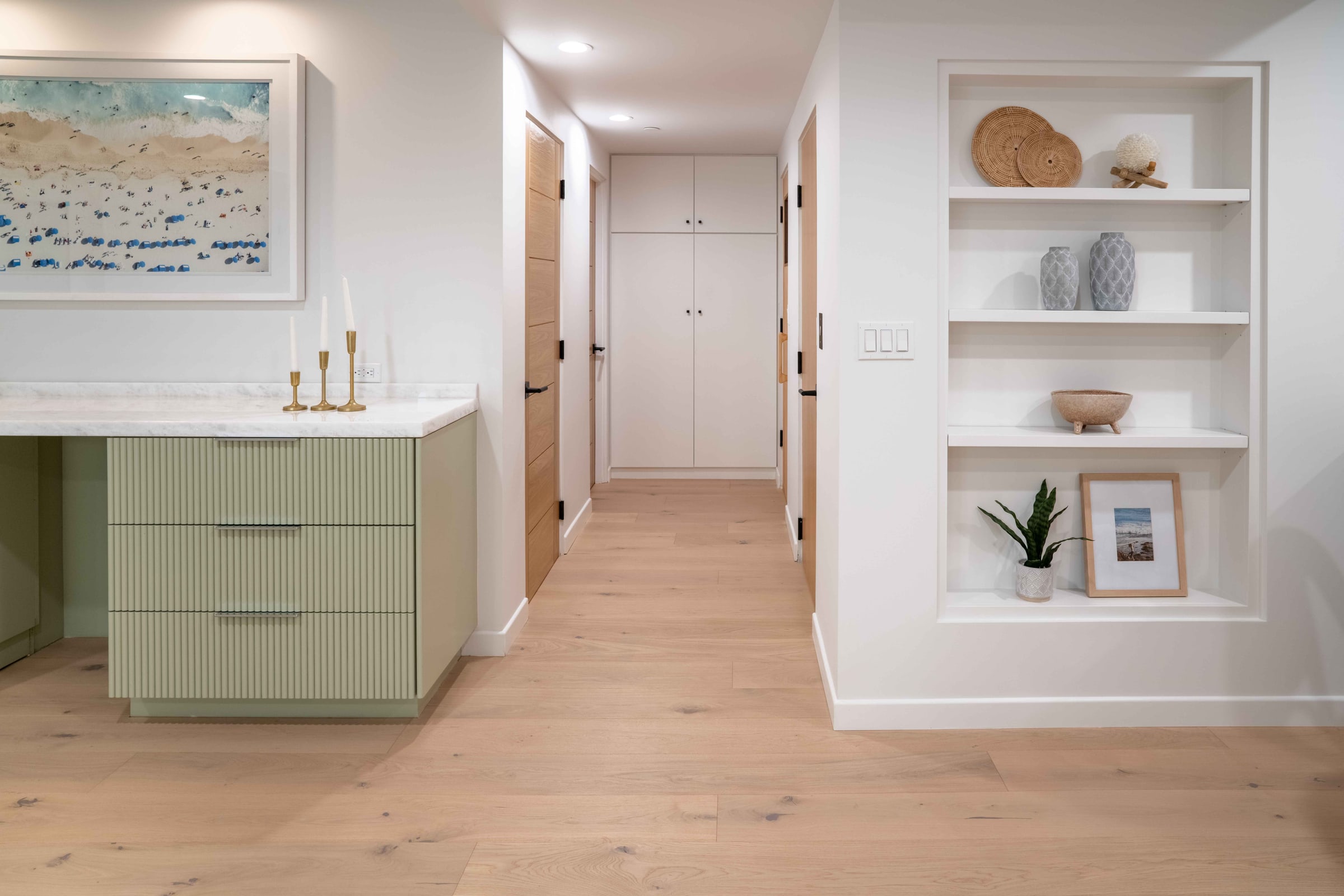
When one floor runs through several rooms, choose the width for the largest connected space, then check that it still looks right in the smallest room it enters. Changing width at a doorway is possible, but it needs a threshold and a deliberate reason.
Your subfloor decides more than you think
This is the part that a showroom sample cannot show you. The wider the board, the less forgiving it is of a subfloor that dips or humps.
A narrow board is short across its face, so it can follow a gentle hollow without lifting at the edges. A wide board spans more of that hollow. If the subfloor is not flat, a wide plank can rock, click underfoot, or show a raised edge where two boards meet. On a floating installation this is usually the first thing you hear.
Every manufacturer publishes a flatness tolerance for its boards. Follow the manufacturer's installation instructions, and expect the subfloor to be checked against that tolerance before anything goes down. If the subfloor needs grinding or levelling compound, that work is part of the job, and it is often what moves a quote more than the flooring itself.
Moisture matters just as much. Wood takes on moisture and gives it back, and it does so across its width. A wider board has more width to move, so gaps in a dry season and cupping in a damp one show more clearly. That is why a concrete slab should be tested for moisture before a wide wood floor goes over it, and why the boards need time in the room before they are installed. Our guide on how to acclimate flooring before it goes down covers that step in detail.
Solid or engineered at wide widths
Construction is where width stops being a matter of taste. Solid hardwood is one piece of wood from top to bottom, so it moves as one piece. At narrow widths that movement is small enough to manage. At wide widths it becomes the main risk, especially over a slab or in a room that swings between dry and humid.
Engineered hardwood puts a real wood wear layer on top of a cross-layered core. The layers run in different directions, so they hold each other in check and the board stays flatter as humidity changes. That is the reason most wide-plank floors sold today are engineered.
The Garrison boards in our range show what to look for on a spec sheet. The Legends boards, such as the Garrison Legends European Oak Bianca 7-1/2", list a Multi-Ply Birch substrate, a 5/8" thickness and a 4mm wear layer. The Allora boards list Engineered (Birch Plywood) construction, the same 5/8" thickness and a 4 mm wear layer. Those numbers matter for width because the core is what keeps a wide face flat, and the wear layer is what you can sand and refinish later.
Installation method follows from construction. The Legends boards list Nail, Staple, Glue, Float, so they can go over a wood subfloor with fasteners or over a slab with adhesive. The Allora boards list Glue Down, Floating, so a slab or a flat wood subfloor suits them and nailing does not. If your house sits on a slab, check that line on the product page before you fall for a width. If the question is about a kitchen, our piece on engineered hardwood in a kitchen goes further.
Grade, character and how width shows it
The grade of a board tells you how much natural character to expect. On a wide plank, that character is easier to see, so the grade matters more than it would on a narrow strip.
A Select grade board, like the Luna Select and the Strada Select, keeps knots and colour variation restrained. Across a wide face that reads as clean and even. A Select Character grade, like the Bianca, allows more knots, splits and open grain. Across a wide face that reads as rustic and lively, and each board looks noticeably different from its neighbour.
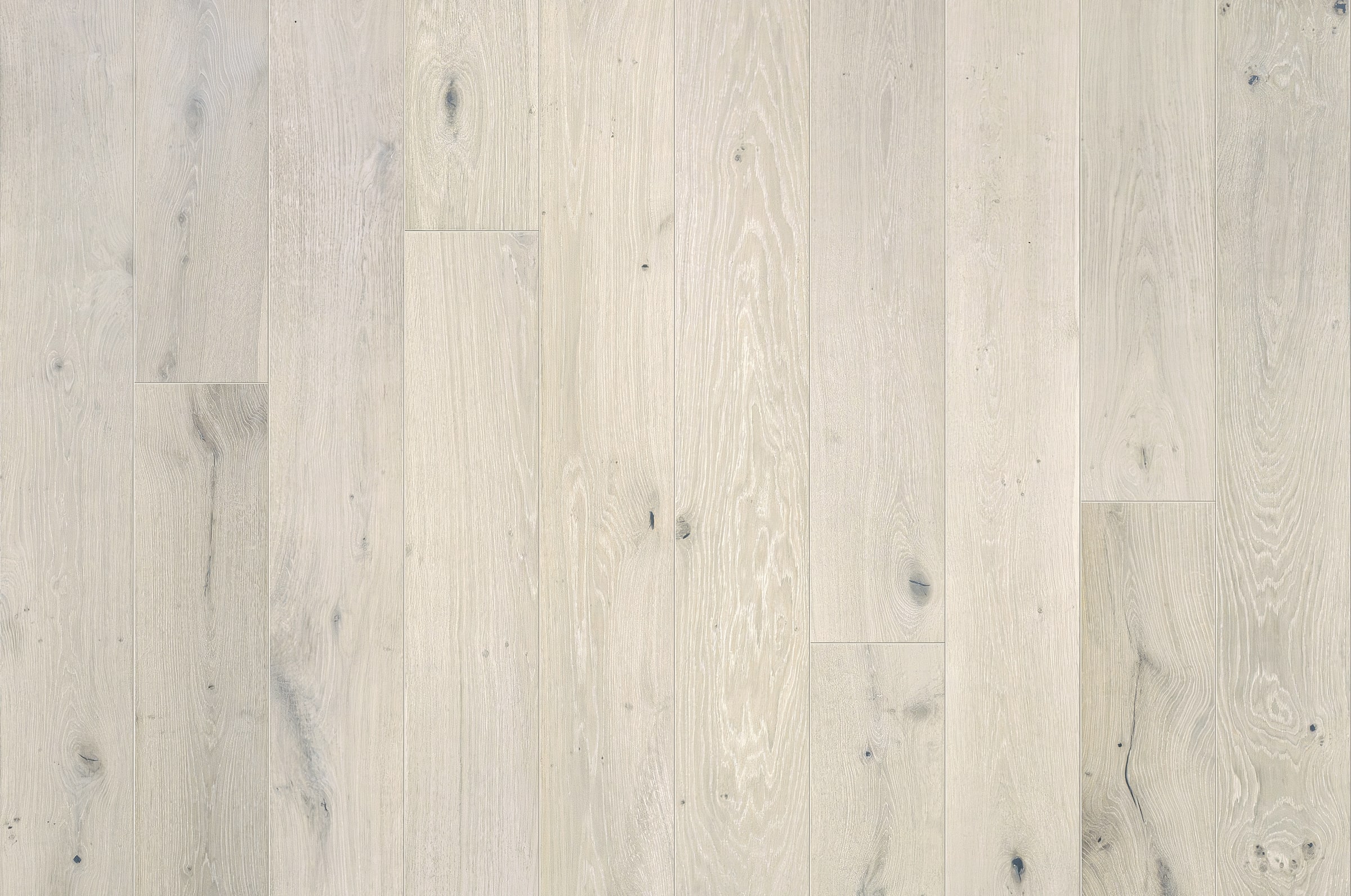
Surface texture works with width too. A Light Wire-Brush surface opens the grain slightly, which helps a wide board hide everyday scratches. A smooth surface shows the grain flat and reflects more light, which suits a calmer room. Finish matters in the same way: a matte finish on a wide board shows fewer scuffs than a glossier one.
If you are unsure whether you want calm or character, look at a whole row of boards rather than one. A single plank never tells you how the floor will read, because the effect comes from neighbours sitting side by side.
What we would ask before recommending a width
When someone asks us which width to choose, we do not start with the boards. We start with the room. These are the questions we would ask.
- What is under the floor now: a concrete slab, plywood over joists, or an older plank subfloor?
- Has the subfloor been checked for flatness, and has a slab been tested for moisture?
- Which rooms connect, and where would the boards run and change direction?
- How much natural light does the room get, and from which side?
- Do you want the floor to read calm and even, or with visible knots and character?
- Is there anything that limits height, such as a door, an appliance or a stair nosing?
The answers usually narrow the choice quickly. An open room on a flat, dry slab can take a wide engineered plank with confidence. A small room on an uneven subfloor may look and behave better with a narrower board, or need subfloor work before a wide one goes down.
The most reliable step is to see the boards at full scale. Order a few flooring samples and lay them side by side on the floor of your own room, in the light you live with. Then browse the full flooring range and compare widths, grades and construction on the product pages.
Common questions about plank width
Do wide planks make a small room look bigger?
Not on their own. In a small room you see only a few wide boards, so cuts at the walls stand out. Running the boards along the longest wall helps more than the width does.
Is a 7-1/2" plank too wide for a bedroom?
Usually not, if the bedroom is a reasonable size and the subfloor is flat. In a very small bedroom it can look crowded with cuts. Lay a few samples on the floor before you decide.
Will wide boards gap or cup?
Any wood floor moves with humidity, and wider boards show it more. Engineered construction, proper acclimation and a dry, flat subfloor keep that movement small. Follow the manufacturer's installation instructions for the conditions in the room.
Can I install wide planks over a concrete slab?
Yes, if the board's listed install method allows it and the slab passes a moisture test. The Allora and Legends boards both list glue and floating methods that suit a slab.
Does a wider plank cost more?
Often, because wider and longer boards need more of the log in one piece. The bigger cost driver is usually the subfloor preparation the width demands. Prices are published on each product page.
Choosing your width with the room in front of you
Plank width is a decision about the room, not just the board. Start with the size and sightlines, check the subfloor, choose engineered construction for wide boards, and pick a grade that shows the amount of character you want. When you are ready, request a quote and we will book a free in-home laser measurement, check the subfloor, and help you settle the width before anything is ordered.