
LVT vs engineered hardwood: how each one ages
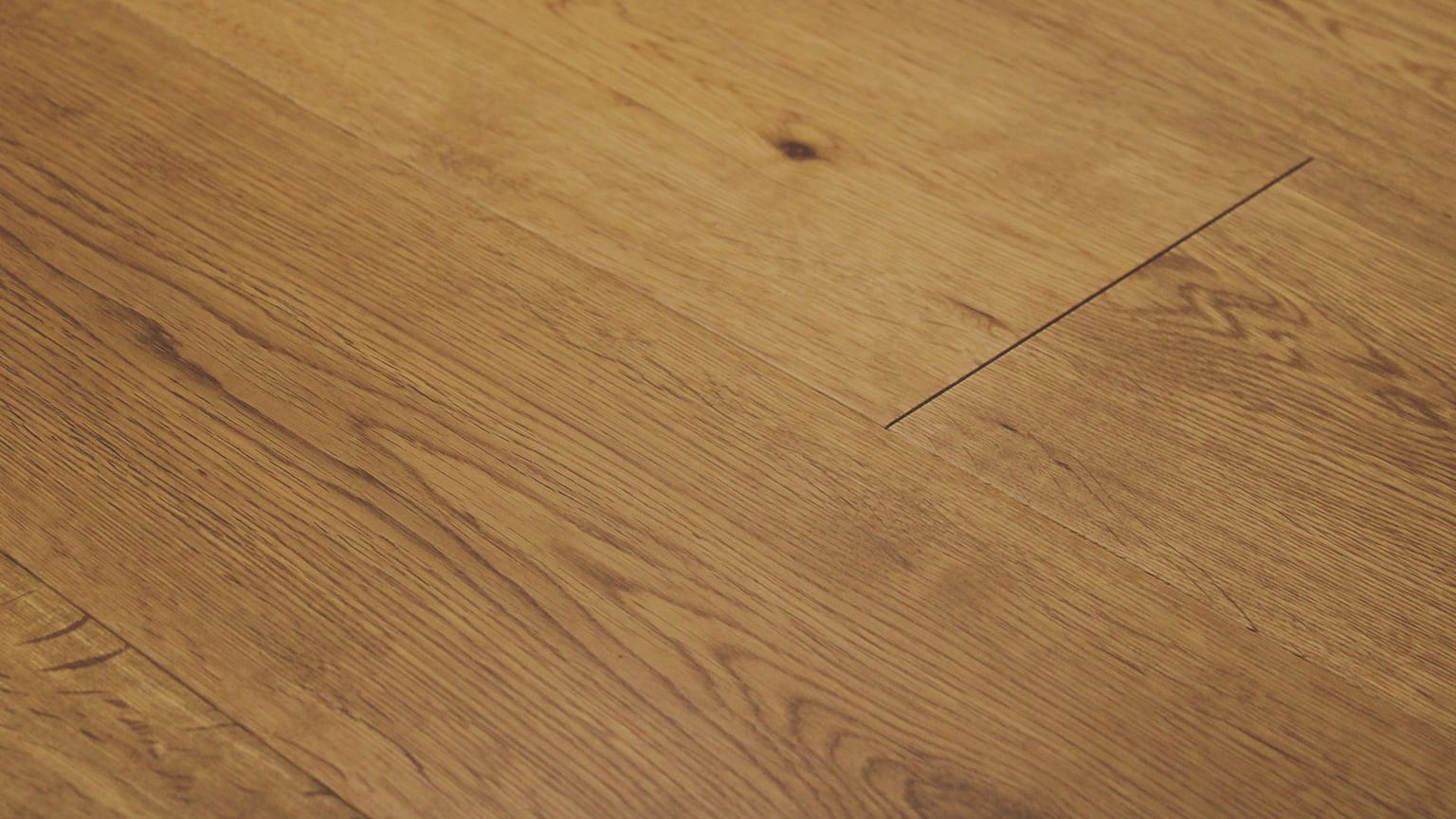
If you are weighing LVT vs engineered hardwood, the difference that decides it over time is what sits on top. LVT carries a clear vinyl wear layer over a printed image, and once that layer is worn through, the plank is finished. Engineered hardwood carries a layer of real wood, so when its finish wears, the floor can usually be sanded and refinished.
Everything else follows from that. Vinyl shrugs off water and asks nothing of you, but it cannot be renewed. Wood asks for more care, but it can be brought back. This piece looks at how each one behaves after installation day, using floors from our own range as the reference.
What is actually on top of each floor
LVT is the trade name for vinyl planks and tiles made to look like wood or stone. The look is a printed layer, protected by a clear wear layer and a factory coating. Duchateau LUXETECH 20 San Tropez is a typical glue-down example: a 7" plank, 3mm thick, with a 0.55mm (22mil) wear layer under a ceramic reinforced prime urethane coating.
Engineered hardwood is a real wood top layer bonded to a core. Monarch Plank Vinland RED OAK SELECT is a Select grade Red Oak plank, 6" wide and 5/8" thick, with a 4 mm wear layer over a hardwood plywood core. Its surface is sealed with a UV Urethane, Ultra-Matte finish.
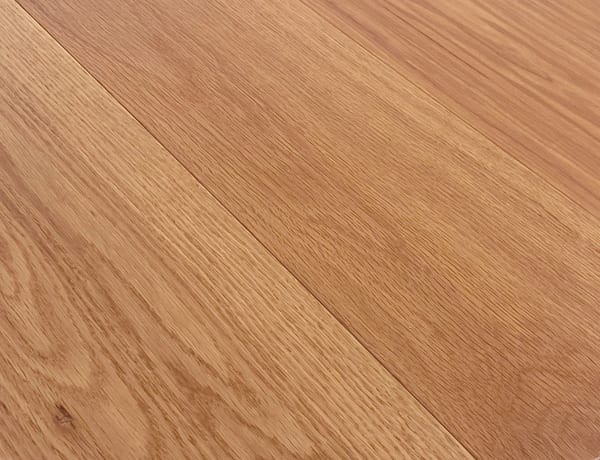
Those two wear layer numbers are not comparable, even though both are called a wear layer. The vinyl figure is clear plastic protecting a picture. The wood figure is solid timber that can be sanded down to fresh wood more than once. Our article on how much wear layer you need explains how to read each one.
Daily wear: scratches, dents and water
On a normal day, LVT is the easier floor. Water on the surface does not harm the planks themselves, and the Duchateau and GemCore vinyl floors in our range are listed as waterproof. Grit and dragged furniture can still scratch the coating, so felt pads and a mat at each door matter on both floors.
Engineered hardwood is less forgiving of standing water. A spill wiped up promptly is fine, but water left at the seams can swell the edges. Dents from a dropped pan or a chair leg show in any wood floor, and harder species resist them better than softer ones.
Scratches look different on each. A deep scratch in LVT can cut through the printed image and show a pale line that no product will hide. A scratch in wood shows wood underneath, and a matte finish disguises fine marks well. That is one reason the ultra-matte finish on the Monarch Plank boards is a practical choice, not only a look.
Repair: replacing a plank or renewing a floor
This is where the two floors part ways for good, because damaged LVT is fixed by replacing the plank. On a floating click floor that can mean unclicking a run of boards from the nearest wall. On a glue-down floor it means cutting the damaged plank out and gluing in a new one.
Either way, you need spare planks from the same production run, because colour can vary between batches. Keep a full box after installation and store it flat in the house. A replacement bought later may not match.
Engineered hardwood can also have individual boards replaced, but it has a second option. A professional can sand the whole floor back to fresh wood and apply a new finish, removing scratches, wear paths and dull areas at once. How many times that is possible depends on the thickness of the wood layer and how carefully it is sanded.
Monarch Plank Regent ELIZABETH is a good illustration of what that means in practice. It is a Prime grade European Oak plank, 7-1/2" wide and 5/8" thick, with a 4 mm wear layer on a hardwood lumber core of hevea. That real oak face is what makes a later refinish possible.
Installation: glue-down, click and what is underneath
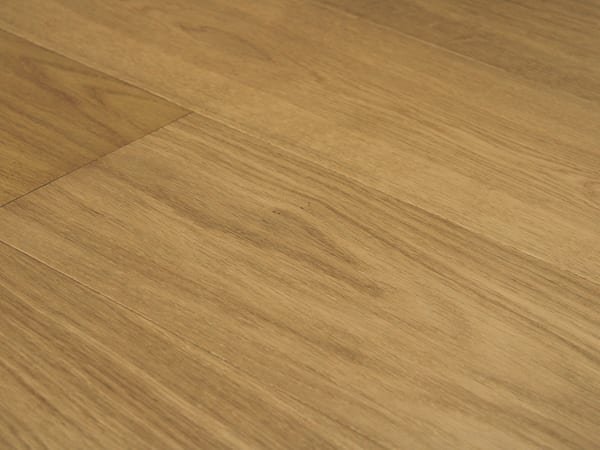
LVT comes in two main constructions, and thin flexible planks are usually glued down. GemCore Meridian II WALNUT BECKETT is one, a 2mm LVT with a 12 mil wear layer and a Ceramic Bead finish. GemCore Advantage II SUNBEAM OAK is a glue-down LVT at 3mm with a 20 mil wear layer.
Rigid core planks click together and float. Duchateau LUXETECH 20 Barris is a rigid core plank, 9" wide and 8mm thick, with a 0.5mm (20mil) wear layer and a HushWalk underlayment. Duchateau lists it for 5G Click floating installation, and as approved for radiant heat following its installation instructions.
The construction changes how the floor ages. Thin glue-down vinyl shows every bump in the subfloor beneath it, so preparation decides how it looks for its whole life. Rigid core vinyl bridges small hollows, but its click joints need a flat base to stay tight.
Engineered hardwood can be nailed, glued or floated, depending on the product and the subfloor. Each method is set by the manufacturer, and the right one depends on your room. Follow the manufacturer's installation instructions for the specific floor.
Feel, sound and how the room reads
Underfoot, the two floors feel different, and you notice it daily. Engineered hardwood feels warmer and slightly softer, and it sounds like wood. Rigid core vinyl feels firmer and can sound a little hollow unless a good underlayment is attached, which is why the HushWalk layer on the Barris plank matters.
Visually, good LVT is convincing at a glance, especially in an embossed finish where texture follows the printed grain. Up close, a printed pattern repeats across the room, while real wood never repeats exactly. Whether that matters to you is personal, but look at a whole room of each before deciding.
Light is part of this too. Wood changes colour gradually with sunlight, and some species shift more than others. Vinyl colour is more stable, though strong sun can still affect it over time.
Where each floor is the wrong choice
Engineered hardwood is the wrong floor for a bathroom with a shower, a laundry room, or anywhere water sits on the surface. It is also a poor fit for a household that will not wipe up spills or use mats. In those rooms, waterproof LVT is the sensible answer.
LVT is the wrong floor if you want a surface that can be renewed rather than replaced. It is also the wrong choice if real wood underfoot is the reason you are renovating at all. A vinyl floor that looks like oak is still a vinyl floor in the hand and under bare feet.
Many homes end up with both: vinyl in the wet rooms and engineered hardwood in the living spaces. That split works well, as long as the transitions are planned and the heights are checked. Our earlier piece comparing European oak and vinyl flooring looks at the choice room by room.
Common questions about LVT and engineered hardwood
Which lasts longer, LVT or engineered hardwood?
It depends on what you mean by lasting. A vinyl floor lasts until its wear layer is worn through, then it is replaced. An engineered floor with a thick wood layer can be refinished, which resets the surface.
Can you refinish LVT?
No. The surface is a coating over a printed layer, and sanding would destroy the image. Damaged planks are replaced instead.
Is engineered hardwood waterproof?
No. It tolerates everyday spills that are wiped up promptly, but standing water can swell the boards. Choose waterproof vinyl for wet rooms.
Does a thicker vinyl wear layer mean the floor can be renewed?
No. A thicker vinyl wear layer resists wear for longer, but it still cannot be sanded and refinished. Compare vinyl wear layers with each other, not with a wood layer.
Which is easier to install over an uneven floor?
Rigid core vinyl bridges small dips better than thin glue-down vinyl. Either way, the subfloor must meet the manufacturer's flatness requirement before installation.
The next step
Decide first which rooms are wet and which are lived in, then choose the floor that suits each one. You can browse the flooring range to compare vinyl and engineered planks side by side. For a Red Oak engineered plank with a 4 mm wear layer, look at Monarch Plank Premio Collection DUNA.