
WO on a flooring spec sheet: white oak, decoded
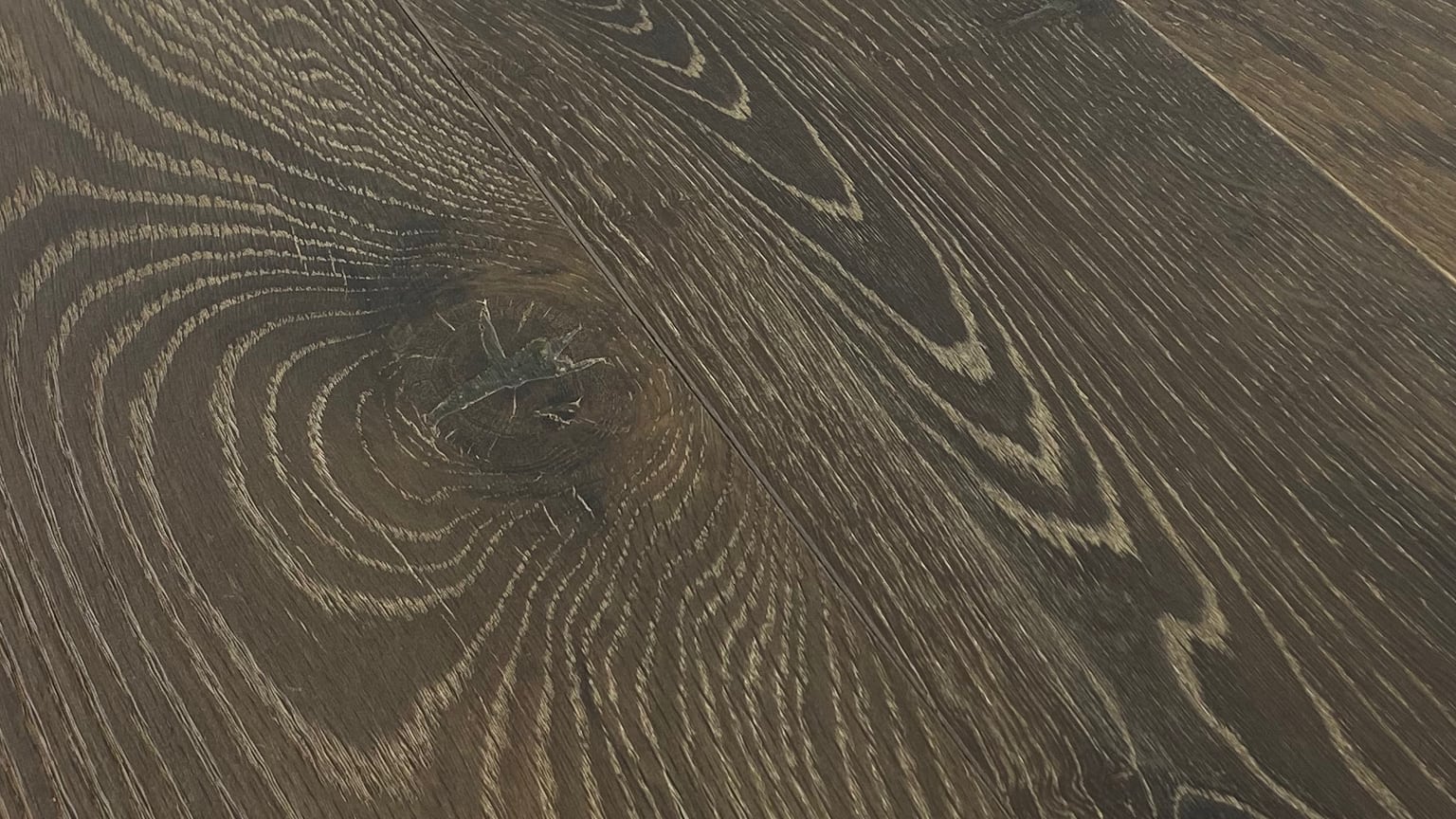
When you see WO on a flooring spec sheet, it almost always means white oak. On the Monarch Plank sheets in our catalogue, the letters WO at the end of a product code mark the white oak version of a floor, while RO marks red oak. It sounds like a small detail. It is not, because the product name often stays the same across every species, and the code is the only place the difference shows.
That matters when you order. A floor called Vinland Natural - Light Rustic exists in white oak, red oak, hickory, maple and walnut. Same name, same width, same grade. Different wood. If you pick by name alone, you can end up with a species you never meant to choose.
Where WO shows up, and what sits next to it
Most spec sheets and product codes compress a lot into a short string of letters. The brand prefix comes first, then a collection code, then letters for grade and species. WO is the species part. On the Vinland rows we carry, the white oak codes end in LRWO for the Light Rustic grade and SEWO for the Select grade.
The neighbouring codes follow the same pattern. RO is red oak. On the same collection, a code ending in H is hickory, M is maple and W is walnut. So W and WO are different woods, one letter apart. That is an easy place to misread a sheet, because walnut and white oak look nothing alike once they are down.
The species line on the sheet is the tie-breaker. Every row in our catalogue carries a species field written out in full: White Oak, Red Oak, European Oak, Hickory, Maple or Walnut. If the code and the species field ever seem to disagree, trust the written species and ask before you order.
Why the code matters more than the product name
Manufacturers name floors for the look, not the tree. A collection name tells you the colour family and the finish character. It rarely tells you the species, and it can be shared across several.
Here is how that plays out on real rows. Monarch Plank Vinland Natural - Light Rustic is listed with a 7" width, a 5/8" thickness and a 4 mm wear layer. Those numbers are identical whether the code ends in WO, RO, H, M or W. The only field that changes is species, plus one finish detail: the hickory row lists a UV Urethane, Ultra-Matte finish, while the others list Bona UV Urethane.
The same thing happens in the Select grade. Monarch Plank Vinland Natural - Prime is listed at 6" wide, 5/8" thick, with a 4 mm wear layer, in white oak, red oak, hickory, maple and walnut. Note also that the product name says Prime while the grade field on those rows says Select. Read the field, not the name, whenever a decision depends on it.
If you are comparing two of these on screen, open both product pages and look at the species line side by side. You can see the red oak version on the Vinland Light Rustic red oak page and the hickory version on the Vinland Light Rustic hickory page. The names match. The wood does not.
White oak against the woods it gets confused with
Once you know WO means white oak, the useful question is what white oak does differently from the species sitting one letter away. Each has a character, and each is wrong for something.
Start with red oak, the species most often swapped for white oak. They sit close together in hardness, so neither is meaningfully tougher underfoot in a normal home. The difference is colour and grain.
Red oak carries a warm, pinkish undertone and a bold, open grain. White oak reads browner and cooler, closer to olive or grey in some boards. That undertone matters when you stain. A grey or natural stain on red oak can still show a pink cast, while white oak takes those tones more evenly.
White oak also has a tighter cell structure than red oak, which is why it has long been the trade's choice near kitchens and entries. That is a relative advantage, not a waterproof one. None of the floors discussed here is sold as waterproof construction, and a wood floor is still the wrong choice for a bathroom that floods.
European oak is the next source of confusion. The Lago floors in our catalogue list their species as European Oak, not White Oak. Botanically, European oak belongs to the white oak family, so the two behave in similar ways. On a spec sheet they are still recorded as separate species, and the codes will not say WO.
European oak tends to show more knots and more colour movement, which suits a rustic grade. Every Lago row we carry is Rustic grade and wire-brushed, with a 3 mm wear layer and a 9/16" thickness. The planks are 7" wide and the herringbone versions are 4-3/8" wide.
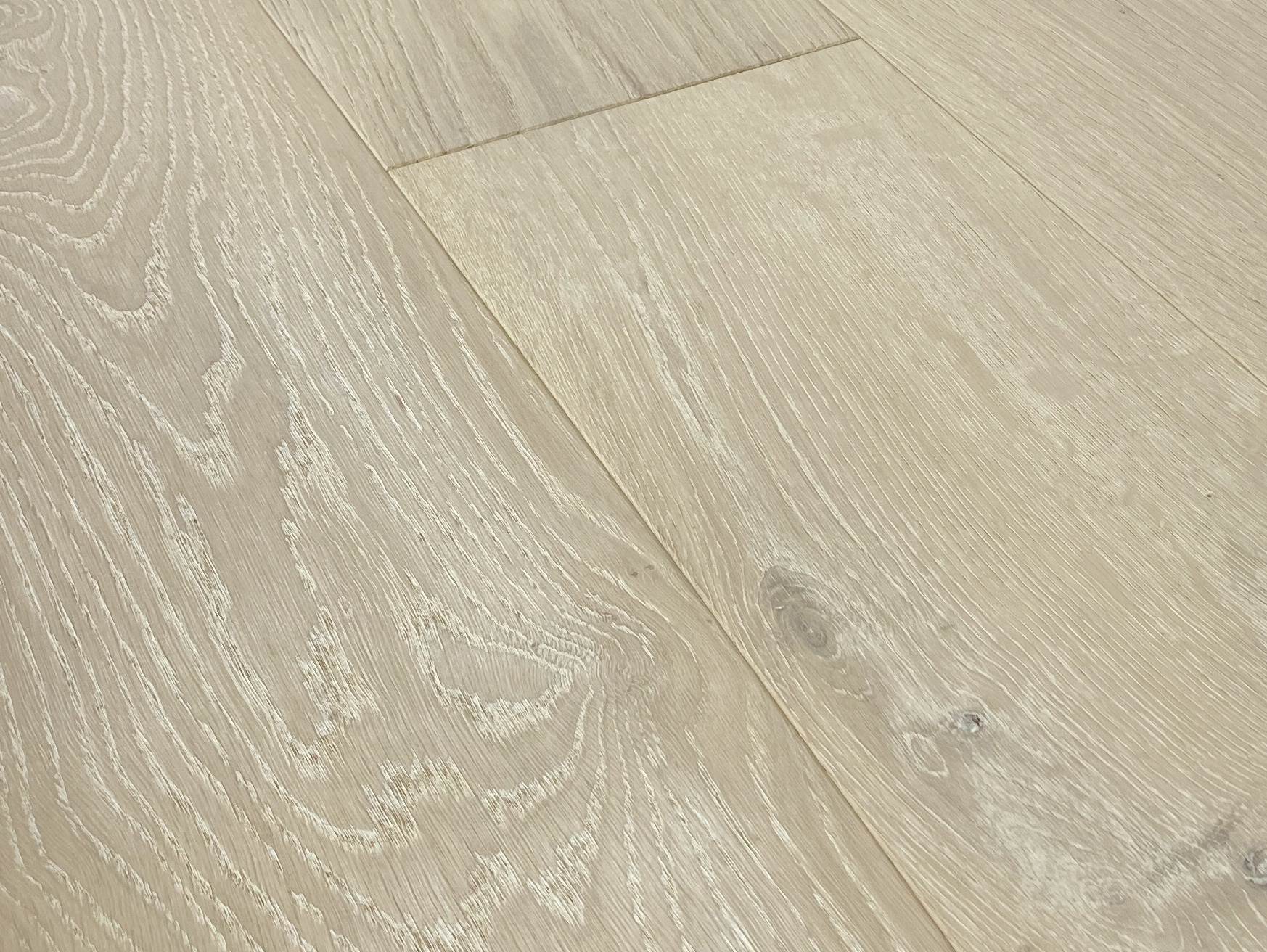
Wire-brushing opens the grain so the texture shows through the finish. That texture helps hide fine scratches and dust, which is part of why rustic, wire-brushed oak suits busy rooms. It also means the floor never looks glassy, so if you want a smooth, formal surface, a smooth-textured row is the better fit.
Then there are the woods that are not oak at all. Hickory is harder than oak and carries strong contrast between light and dark boards. If you want a calm, even floor, hickory will feel busy. If you have dogs and want the grain to hide wear, that contrast works in your favour. Our piece on what claws and water bowls do to floors goes further on that trade-off.
Maple is dense with a fine, quiet grain. It reads clean and modern, but it can take stain unevenly, so it is usually chosen for its natural colour. Walnut is softer than oak and dents more easily, and it gives you a deep brown with no stain at all. It is the wrong floor for a house with large dogs or heavy foot traffic from the garden.
White oak sits in the middle of this group. It is hard enough for family life, neutral enough to take most stains, and its grain is visible without being loud. That balance is why so many sheets carry a WO row.
What WO does not tell you
Species is only one line on a sheet. Several others decide how the floor lasts and how it installs, and WO says nothing about any of them.
The wear layer is the solid wood on top of the core. On an engineered floor, it decides how many times the surface can be sanded back and refinished over its life. The Vinland and Premio rows list a 4 mm wear layer, and the Lago rows list 3 mm. Thicker gives you more room for future sanding.
Construction is the core underneath. Every row discussed here lists a hardwood plywood construction, which is the layered core that keeps an engineered plank stable as the house moves through dry and damp seasons. That stability is the reason engineered floors are chosen over solid boards in many homes.
Width changes how a room reads. The Premio floors come in two widths: Monarch Plank Premio Aria at 6-1/2" and Monarch Plank Premio Bella at 7-1/2", both red oak with a smooth texture and an ultra-matte finish. Wider boards show more of each plank's grain and make a room feel calmer, but they also show seasonal gaps more clearly.
Grade tells you how much natural character is allowed. Select and Prime rows show fewer knots and less colour swing. Rustic and Light Rustic rows allow more. Neither is better. It depends on whether you want the floor to disappear or to be noticed.
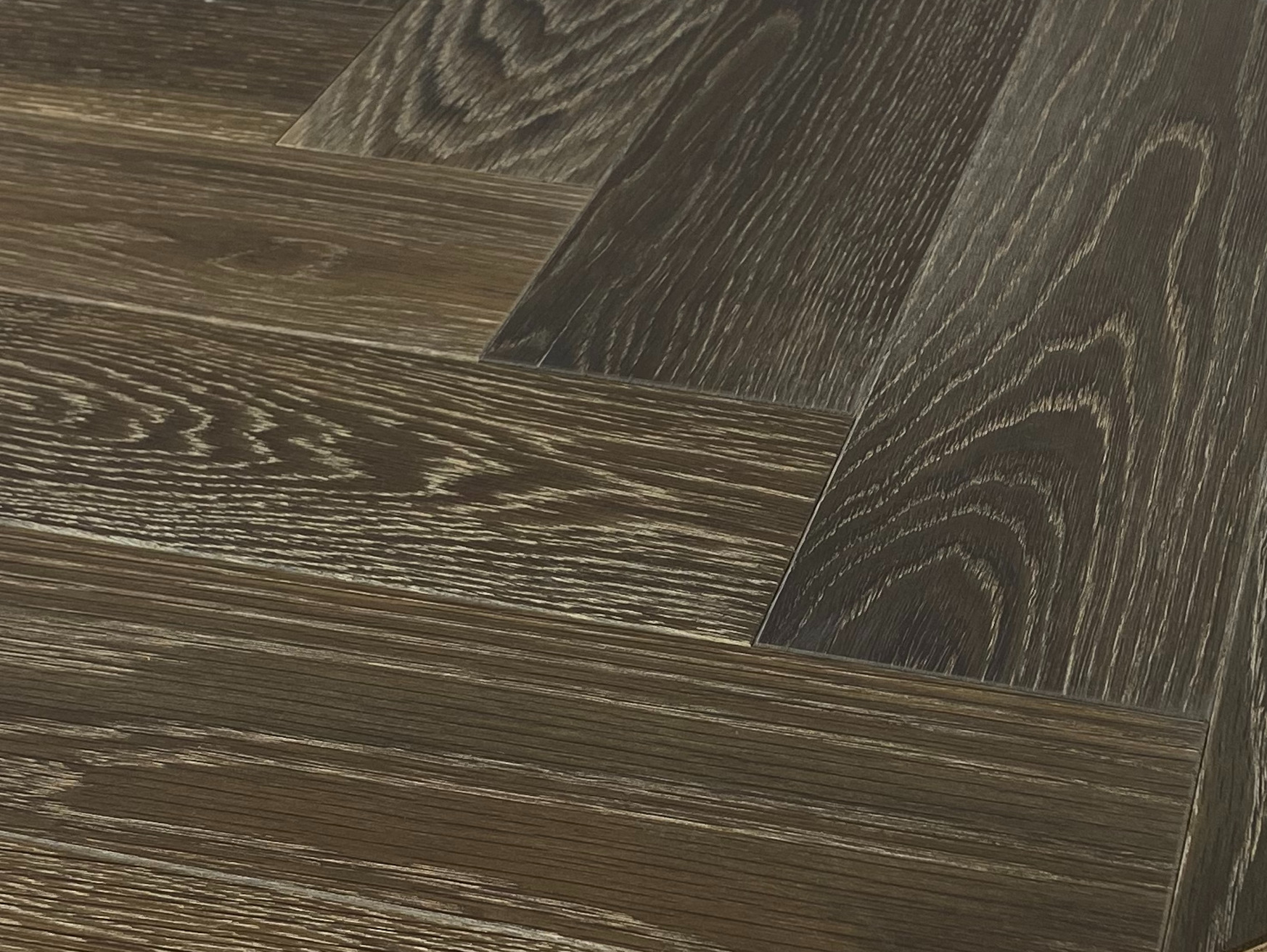
Finish is the last layer, and it changes how light sits on the floor. An ultra-matte urethane shows fewer footprints and less glare. If your room has a large window facing the sun, colour and finish both matter more than species, and our article on sun fading near a wall of glass explains why.
How to check a sheet before you order
A few habits prevent most species mix-ups. They take a couple of minutes and save a reorder.
First, read the species field written out in full, not only the code. The code is a shorthand; the species line is the record.
Second, check that the code on your quote matches the code on the product page you chose. If you picked the white oak row, the code should carry WO. If it ends in W alone, that is walnut, and the difference will be obvious the day the boxes are opened.
Third, compare the other fields as a set. Width, thickness, wear layer, grade, texture and finish should all match what you expect. Two floors with the same name can differ on finish alone, as the Vinland hickory row shows.
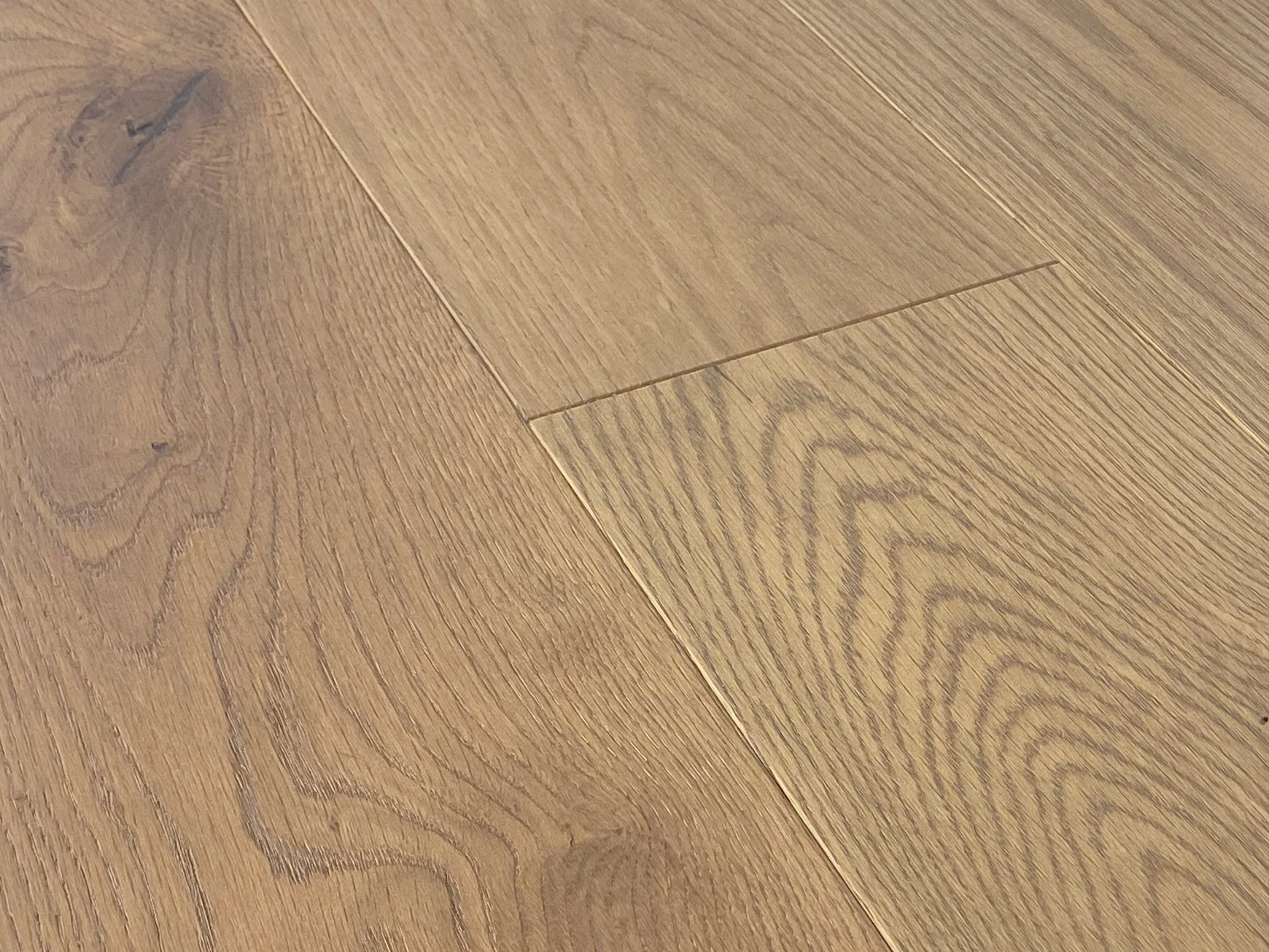
Fourth, look at the wood itself before you commit. A screen can make red oak and white oak look closer than they are. Holding a board in your own light shows the undertone straight away. You can order samples of the floors you are considering and lay them side by side in the room.
Fifth, follow the manufacturer's installation instructions for acclimation and subfloor preparation. Species does not change that step, and skipping it causes more problems than any species choice.
Questions homeowners ask about WO on a spec sheet
Does WO ever mean something other than white oak?
On flooring sheets it nearly always means white oak, and on the Monarch Plank rows we carry it always does. Other trades use the same letters for other things, such as work orders. If you are unsure, the written species line settles it.
Is white oak harder than red oak?
The two are close in hardness, so you will not notice a difference in daily wear. Choose between them on colour and grain. White oak reads cooler and browner, while red oak carries a warmer, pinkish tone.
Is European oak the same as white oak?
European oak belongs to the white oak family and behaves in a similar way. Spec sheets still record it as its own species, so a European oak row will not carry the WO code.
Why does the same product name appear in several species?
Manufacturers name a collection for its look, then offer it in several woods. The Vinland rows are a clear example. The code and the species field tell the versions apart.
Does species affect the wear layer or thickness?
Not on the rows discussed here. The Vinland floors list the same width, thickness and wear layer in every species. Species changes the look and the hardness of the surface, not the build of the plank.
Can I stain white oak grey without it turning pink?
White oak generally takes grey and natural tones evenly, which is one reason it is chosen over red oak for those looks. Try the stain on a sample board first, because every batch of wood carries its own colour.
Choosing the right species for your room
WO is a small code with a real consequence: it is often the only mark that separates a white oak floor from its red oak, hickory, maple or walnut twin. Read the species line, match the code on your quote to the page you chose, and hold a board in your own light before you decide. When the species is settled, the next step is a free in-home laser measurement of the room. When you are ready, browse the full flooring range and compare the species fields side by side.