
Waterproof laminate vs SPC on a damp slab
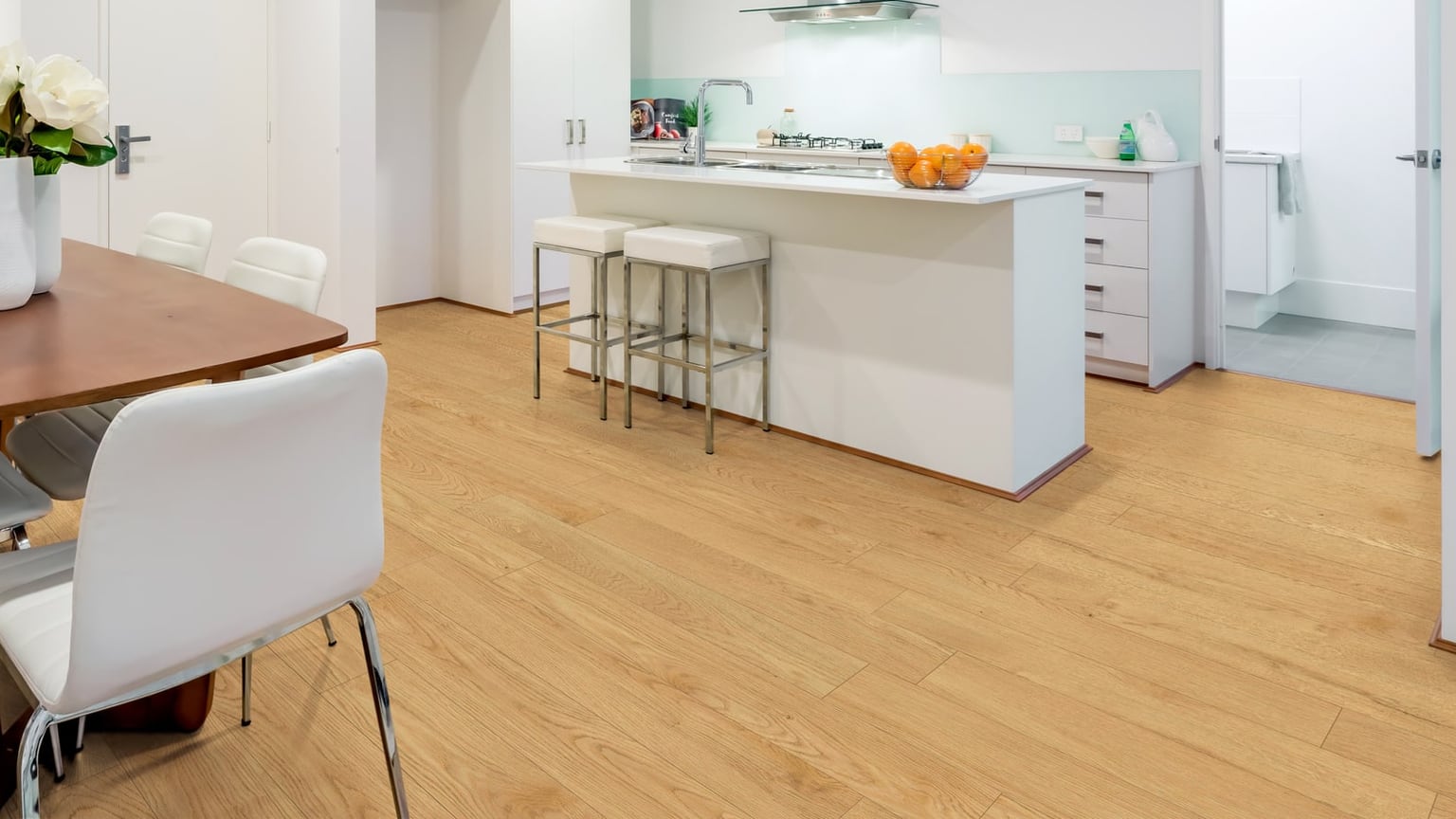
If you are weighing waterproof laminate vs SPC for a concrete slab that holds moisture, the slab matters more than the plank. Both are floating floors, both resist water from above, and neither one fixes damp rising from below. Choose the floor for the look, feel and sound you want, then treat the slab as its own job. A damp slab under the wrong preparation will cause trouble under either product.
That is the short answer. The rest of this piece explains why, what actually differs between the two constructions, and what we check in your own room before recommending one.
Why the slab decides before the floor does
Water reaches a floor from two directions. From above, it comes as spills, wet shoes, a pet bowl or a leaking dishwasher. From below, it comes as moisture vapour moving up through the concrete, often slowly and without any visible puddle.
The word waterproof on a plank is a promise about the first direction. It tells you the planks and their joints are built to tolerate water sitting on the surface. It is not a promise that the floor will cope with vapour trapped underneath it for years.
When a slab gives off moisture, that moisture has to go somewhere. Under a floating floor it can collect in the gap between the concrete and the planks. That is where odour, mould and lifting joints start, whatever the plank is made of. So the first question is not laminate or SPC. It is whether the slab has been tested and prepared the way the manufacturer's installation instructions require.
What waterproof laminate actually is
A laminate floor is a printed wood image under a hard, clear surface, bonded to a core. Older laminates swelled when water reached the core through the joints. Waterproof laminates are engineered so the core and the locking edges resist that.
The Garrison ILLUMIN8 Waterproof Laminate range is a clear example. Each plank is 12mm thick and 8" wide, with an Aluminum Oxide (Matte) finish, and the sheet lists the install method as Float - Easy Click Installation. The Garrison ILLUMIN8 Waterproof Laminate Glimmer has a light embossed surface, which gives the boards a faint texture underfoot.
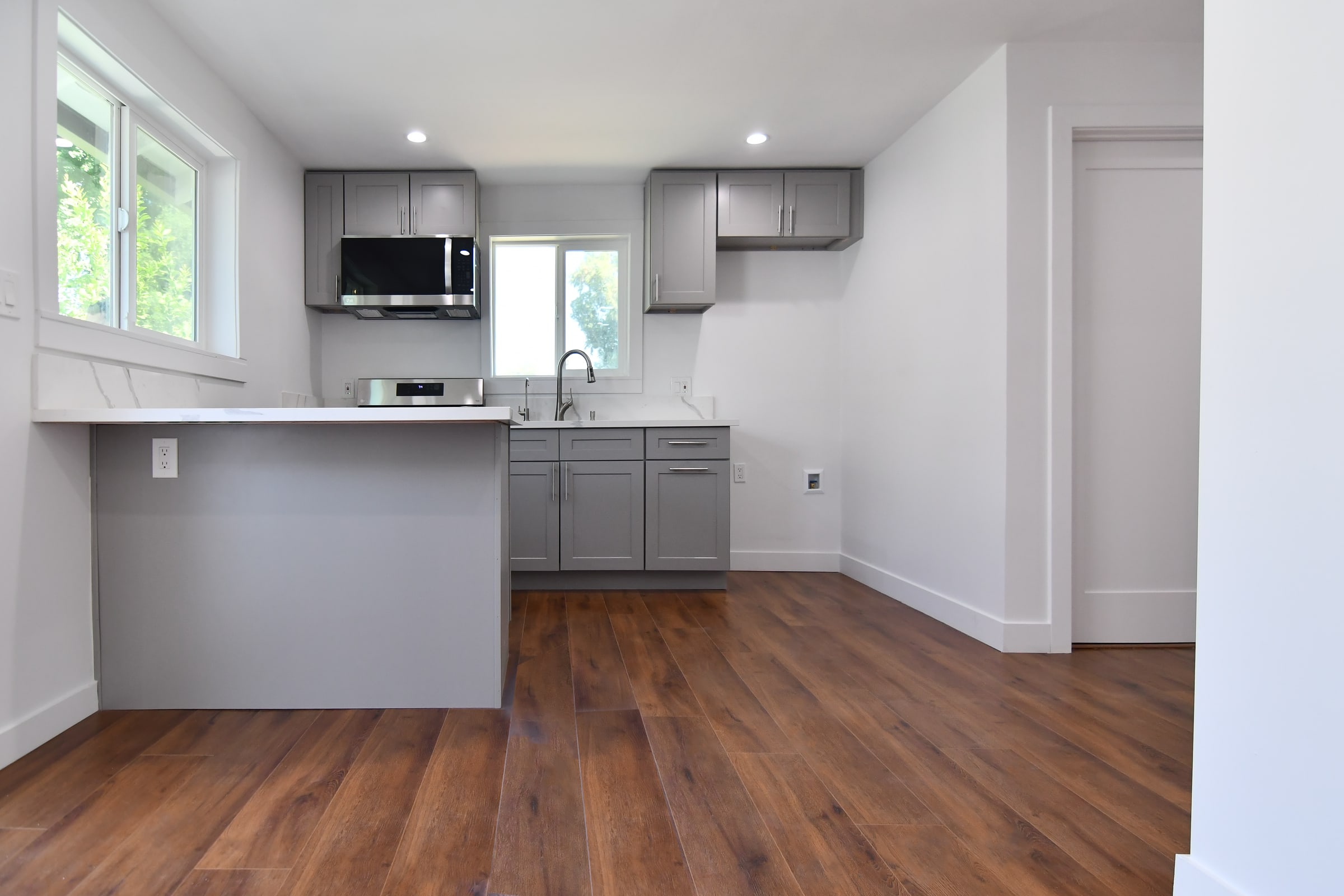
The Lago AquaPro lines are also waterproof laminate, even though they have been filed as SPC in some catalogues, including an earlier version of ours. Lago itself places AquaPro under its Laminate Plus heading and rates it AC4, which is the abrasion class used for laminate. We changed our own catalogue to match, because a wrong construction label leads to wrong advice about rooms.
The Lago AquaPro Max 15mm Le Mans shows what that line offers. Its construction is a 12 mm waterproof core with a 3 mm Super Acoustic Underlayment attached, for a total of 15 mm. The plank is 9-3/8" wide, carries an EIR texture, and locks with a Uniclic angle-angle joint.
What SPC changes, and what it does not
SPC stands for stone plastic composite. It is a rigid vinyl plank: a dense mineral and vinyl core under a printed layer and a clear wear layer. Because the core contains no wood fibre, it does not swell when water reaches it.
That is a real difference in material. In a room where water might sit on the floor for a long time, a vinyl core removes one failure path that a laminate core still has to be designed around. SPC also tends to feel firmer and sound different underfoot, which some people like and some do not.
What SPC does not change is the slab. A rigid vinyl plank floating over a damp slab still traps vapour beneath it. The plank may tolerate the moisture, but the space under it can still grow mould, and an attached pad can still hold water. The manufacturer's instructions for an SPC floor will ask about slab moisture and vapour protection, just as a laminate maker's will.
So the honest comparison on a damp slab is narrower than most guides suggest. The core material matters for water from above. The preparation matters for water from below, and it matters equally for both.
What actually decides between them
Once the slab question is answered, the choice comes down to things you can see and feel in the room.
- Surface and look. Laminate surfaces can carry deep embossing that follows the printed grain. The Lago boards list an embossed-in-register texture, and the Garrison ILLUMIN8 Waterproof Laminate Dusk lists Embossed - In Register.
- Plank size. The Lago AquaPro Max boards are mostly 9-3/8" wide, while the Lago AquaPro Max 15mm Rio Glen is 7-3/4". The Garrison ILLUMIN8 boards are 8".
- Sound. An attached acoustic pad changes how footsteps travel. The Lago AquaPro Max 15mm Le Mans and the Lago AquaPro Max 15mm Rio Glen both list an STC rating of 73 and an IIC rating of 72. Those ratings matter most in upstairs rooms and beside shared walls.
- Thickness. The Lago AquaPro 10mm Earn uses an 8mm core with a 2mm underlayment. A thinner floor can matter where a door, a stair nose or an appliance gap is tight.
- Feel underfoot. Laminate over an attached pad and rigid vinyl both float, but they do not feel the same. Walk on samples before you decide.
None of these is a moisture question. That is the point. If the slab is handled properly, you are free to choose on look, feel and sound.
What happens if the slab is ignored
We are willing to talk people out of a floor, and this is where it happens most. If a slab has a history of damp patches, a musty smell, or efflorescence on the concrete, putting any floating floor straight over it is a risk.
The problem shows up slowly. Joints may lift at the edges of the room. Baseboards may show staining. A smell may appear under rugs or furniture that sits in one place. By then the floor has to come up to deal with the cause, and the cause was never the plank.
There is also a narrower case: rooms that sit below the level of the ground outside. Those slabs can stay damp through the wetter months, and the manufacturer's instructions may set extra conditions for them. Read those conditions before choosing, because some floors may not be approved for that setting at all.
Our article on what a bathroom floor finish can and cannot stop covers the same principle from the surface side. A finish handles water you can see. It cannot handle water coming up from beneath.
What we would ask before recommending a floor
Before we suggest either construction, we ask about the room, not just the plank.
Is the floor a slab on grade, or a room below the level of the garden? Has anyone seen damp patches, white powdery deposits or a musty smell? Was there carpet before, and was the pad stained underneath? Does the room take water from above as well, such as a laundry, an entry or a kitchen sink run?
Then we measure. Our free in-home laser measurement gives you the true square feet of each room, and the visit lets us look at the slab, the transitions and the doors. If the slab needs testing or preparation before any floating floor goes down, we will tell you before you order. Our guide on how to prepare for flooring installation day explains what happens on the day itself.
Questions about waterproof laminate vs SPC on concrete
Is waterproof laminate safe on a concrete slab?
It can be, when the slab is tested and prepared as the manufacturer's installation instructions require. The waterproof rating covers water from above. Moisture rising from the slab needs its own treatment.
Is SPC better than laminate for a damp slab?
Not by itself. An SPC core does not swell, but it still floats over the slab and can still trap vapour beneath it. The slab preparation decides the outcome for both.
Is Lago AquaPro an SPC floor?
No. Lago files AquaPro under its Laminate Plus heading and rates it AC4, the laminate abrasion class. It has been listed as SPC elsewhere, and we corrected our own catalogue to match the manufacturer.
Does an attached underlayment act as a moisture barrier?
Do not assume it does. An attached pad is listed for sound, not as vapour protection. Check the manufacturer's instructions for what the slab needs underneath.
How do I know if my slab holds moisture?
Signs include damp patches, a musty smell, white deposits on the concrete, or a stained carpet pad. A proper moisture test before installation gives a firmer answer than any of those signs.
The next step
On a slab that holds moisture, choose the floor for how it looks, feels and sounds, and treat the concrete as a separate decision. Both waterproof laminate and SPC depend on that preparation. When you are ready to compare boards, browse the flooring range, or request a quote and we will look at the slab before anyone recommends a plank.