
Bedroom flooring: what the room really needs
Bedroom flooring asks for different things from the rest of the house. A bedroom sees bare feet and socks rather than outdoor shoes, little grit, a bed that rarely moves, and quiet hours at both ends of the day. So the floor should feel comfortable underfoot, stay quiet, and suit the light, while the heavy wear specification that a hallway needs is usually more than the room will ever use.
That changes where the money goes. In a bedroom, the deciding questions are what sits under the floor, how the surface feels to bare feet, and how the colour reads in morning and evening light. Hardness and a thick wear layer still matter in some bedrooms, and the sections below say which ones.
What a bedroom actually puts a floor through
Start with how the room is used, not with a product. Walk the path from the door to the bed, to the wardrobe and to the window. In most bedrooms that path is short, it is walked in bare feet or slippers, and it carries very little sand or grit.
The load on a bedroom floor comes from a few specific things. A bed frame and dressers press on small points, a desk chair may roll, and a pet may sleep on the floor. Sunlight lands in the same place every morning, and a rug often covers the middle of the room for years.
Those points tell you what to protect against. Felt pads under every leg handle the furniture, a chair mat handles the rolling chair, and moving the rug now and then evens out the light. None of them calls for a heavy-duty board.
Wear layer and thickness: where a bedroom can save
The wear layer is the real wood on top of an engineered board, the part that can be sanded later. A thicker wear layer is worth paying for in rooms that take hard wear, or in a house you expect to refinish more than once.
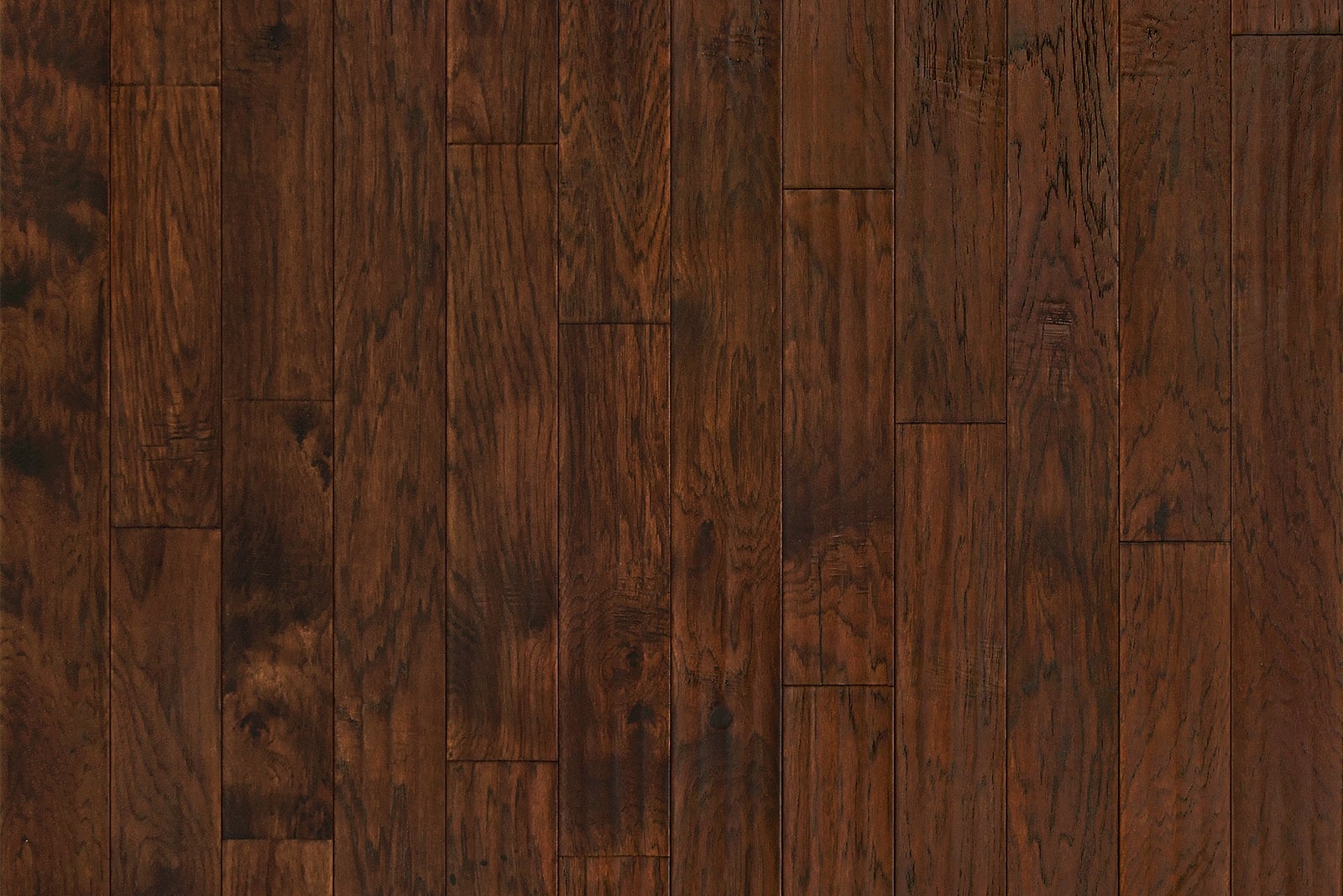
Garrison Competition Buster Birch Harvest is an engineered Birch board, 3/8" thick, with a 1.5 mm wear layer on a Multi-Ply Birch substrate. That build suits a bedroom well: the surface takes bare feet and furniture without complaint, and the thin profile helps where door clearances are tight. Garrison Competition Buster Birch Spice, the dark brown plank in the photograph above, shares the same construction.
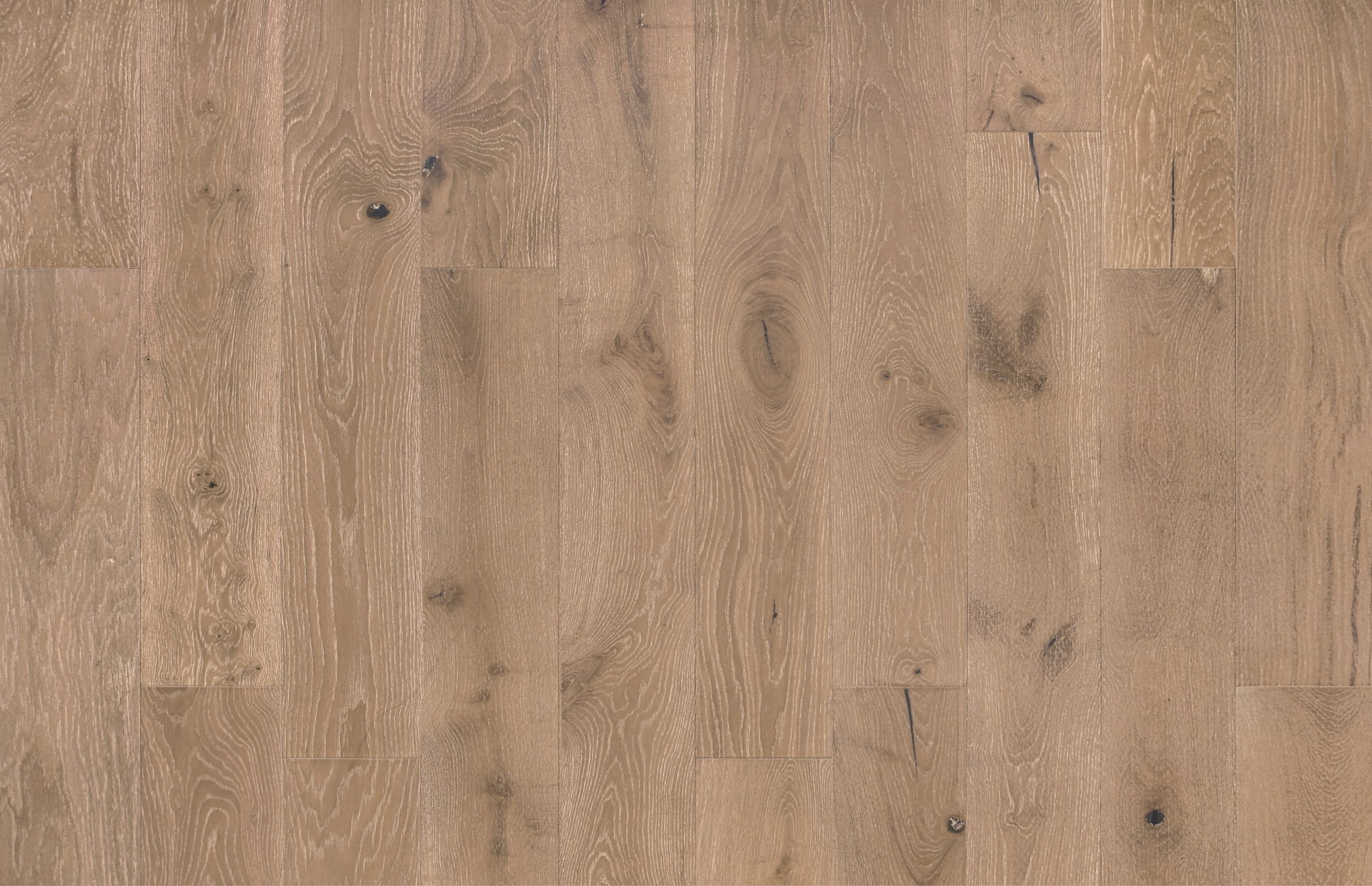
Garrison Du Bois Anastasia sits at the other end. It is an engineered Euro Oak board, 5/8" thick, with a 4 mm wear layer. That extra wood gives more room for future sanding, which matters if the bedroom floor runs into a hallway or living room you will refinish together.
The honest trade-off is this. If the bedroom has its own floor and you do not plan to sand it, the thinner board does the job. If one continuous floor runs through the upper storey, choose the build the busiest room needs, because the bedroom will get it too.
Hardness: when a bedroom needs more than average
Janka hardness measures how well a species resists dents. Birch in the Competition Buster range is listed at 1260. Garrison Competition Buster Hickory Antique is listed at 1820, a clearly harder board than the birch.
For a bedroom used by adults, the birch number is plenty. Hardness starts to matter when a dog sleeps on the floor, when children use the room for play, or when a heavy bed frame has narrow feet. In those rooms, a harder species or a textured surface keeps marks from showing.
If a dog shares the room, our comparison of hickory or white oak for a house with dogs goes through claws and water bowls in detail. Garrison Competition Buster Hickory Antique carries a Urethane with Aluminum Oxide finish and a Distressed with Chatter surface.
Surface texture: how the floor feels to bare feet
In a bedroom you feel the floor more than anywhere else, so texture deserves a minute in your own room. The Competition Buster boards carry a Distressed with Chatter surface and a Hand-Scraped Beveled edge. The Du Bois boards are Wire Brushed with a Micro-Beveled edge.
A textured surface hides small marks well, which suits a room where furniture gets moved now and then. The trade-off is that deep texture and bevelled edges hold a little more dust in their low points. A vacuum with a soft brush head deals with it, but a smooth board is quicker to clean.
A useful test is a sample on the bedroom floor, walked on in bare feet in the morning. Order a few flooring samples and leave them by the bed for a week rather than judging them on a shop counter.
Warmth and quiet start below the boards
Wood feels warmer to bare feet than tile or stone, which is one reason it suits a bedroom. What makes the bigger difference, though, is what lies underneath. A floor on a timber subfloor over a crawl space feels different from the same floor glued to a concrete slab.
Check which you have before you choose. A ground-floor bedroom on a slab needs a board that can be glued, and the slab needs a moisture check first. Our article on checking a concrete slab for moisture explains the test and what the result means. The Competition Buster boards list Nail, Staple, Glue as their installation methods, so they can go down on either subfloor.
An upstairs bedroom raises a different question: footsteps heard in the room below. The underlayment and the installation method decide most of that, more than the board itself. Ask your installer what the flooring maker allows under the floor, and follow the manufacturer's installation instructions rather than adding layers they do not list.
Colour, light and the time of day
Bedrooms are used mostly in morning and evening light, and often with lamps on. A colour that looks warm at midday can look heavy at night, and a pale floor can look flat under warm bulbs. Look at samples at the times you actually use the room.
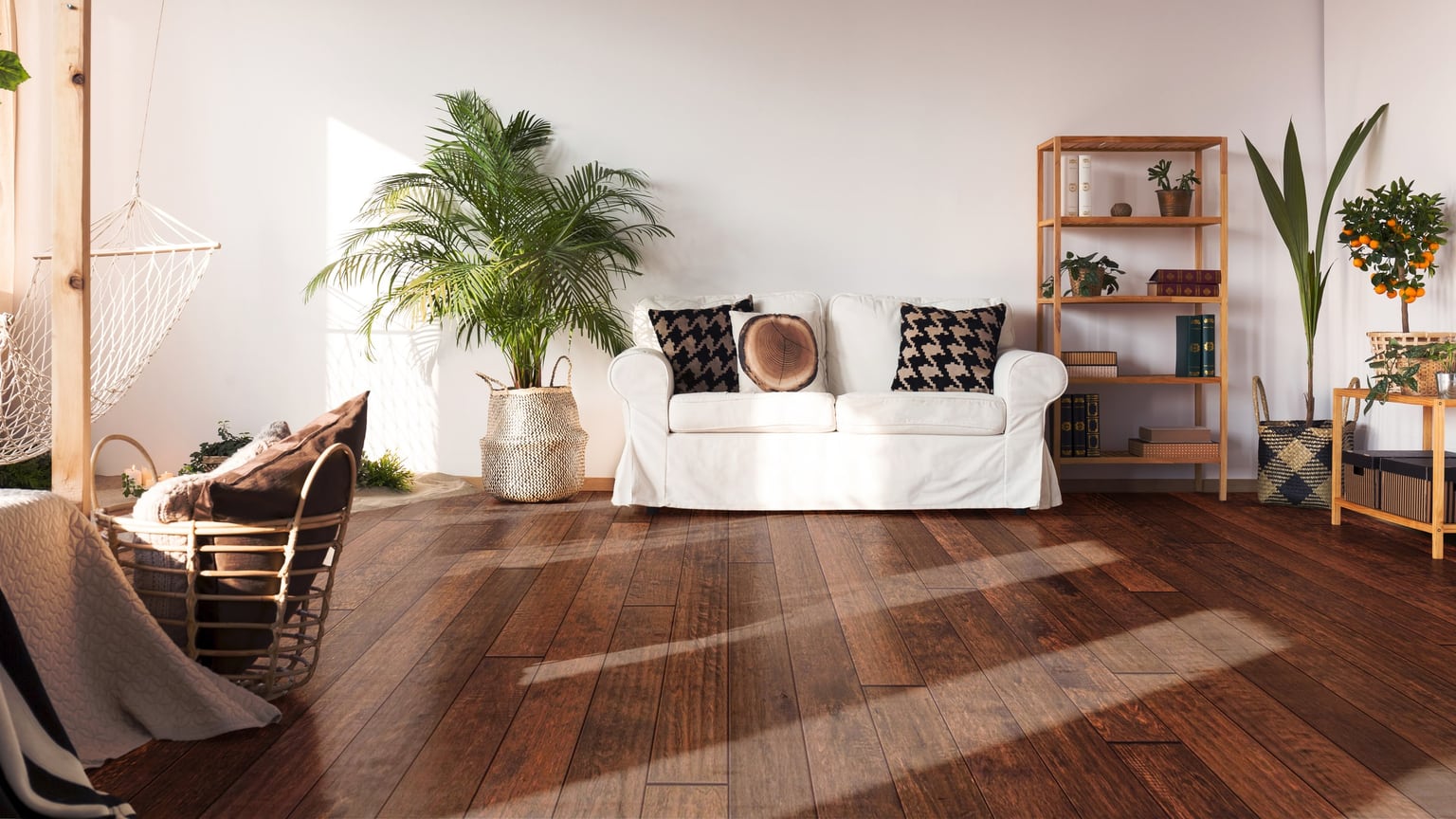
Darker floors show dust and pet hair more readily than mid-tones. The hero photograph shows a dark brown plank floor with sunlight falling across it, and you can see how strongly a dark floor reacts to direct light. If your bedroom gets morning sun across the bed, expect both a strong colour shift through the day and some fading over time.
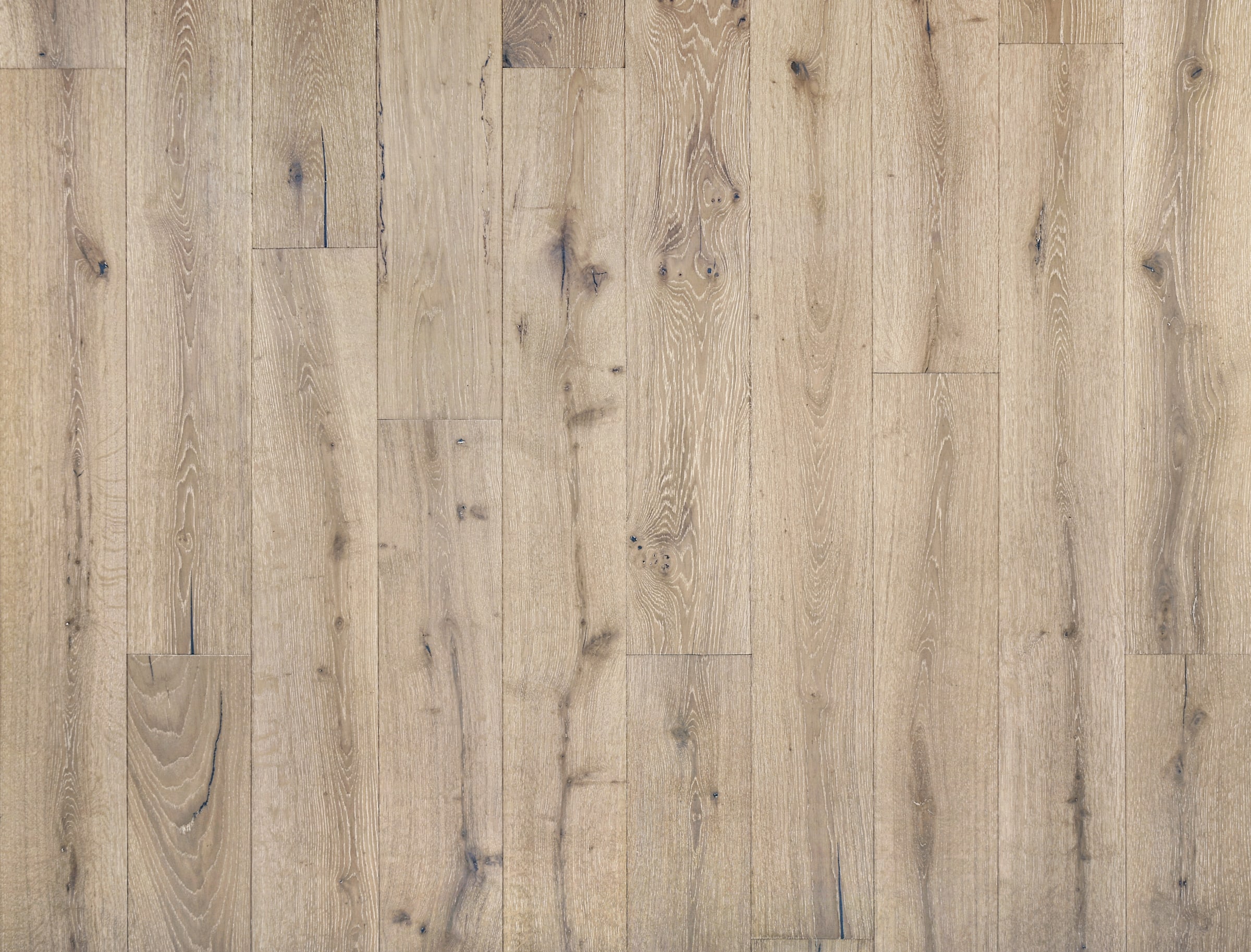
A mid-tone with visible grain is the forgiving choice for a bedroom. Limed or greyed oak, such as Garrison Du Bois Gabrielle, hides dust and lint well and reads calmly under lamps.
Layout: direction, width and the closet
Plank direction changes how a bedroom reads. Boards running towards the window draw the eye across the room, and boards running along the longest wall make a narrow room feel longer. Our guide on which way to lay flooring walks through the decision room by room.
Plank width matters more in a small bedroom than many people expect. A wide board in a small room shows fewer seams and can feel calm, while a narrow board adds pattern. The guide to choosing plank width for your room covers that balance.
Run the same floor into the closet if you can. A change of material at the closet door adds a threshold strip and a seam where you least want to trip in the dark. Measure the closet with the room, so the order covers both.
Questions homeowners ask about bedroom flooring
Does a bedroom need a thick wear layer?
Usually not. A bedroom takes light wear, so an engineered board with a 1.5 mm wear layer serves it well. Choose a thicker wear layer if the same floor runs into busier rooms or you expect to sand it later.
Is hardwood too cold for a bedroom?
Wood feels warmer underfoot than tile or stone. On a concrete slab it can still feel cool, so a rug beside the bed and a moisture check on the slab both help.
What makes an upstairs bedroom floor quieter?
The underlayment and the installation method make most of the difference to footstep noise. Ask what the flooring maker allows, and expect a glued or nailed floor to sound more solid than a loose one.
Should the bedroom match the hallway floor?
If the hallway and bedroom share one continuous floor, choose the specification the hallway needs. A matching floor avoids thresholds, but the bedroom then carries a build sized for heavier wear.
Do I need a hard species if my dog sleeps in the bedroom?
A harder species helps. Hickory at a Janka rating of 1820 resists dents better than birch at 1260, and a textured surface hides claw marks.
Can the same floor go into the closet?
Yes, and it usually should. Running one floor through avoids a seam and a threshold strip at the closet door, so include the closet when the room is measured.
Choosing a bedroom floor in your own room
The right bedroom floor is the one that feels right under your feet first thing in the morning, not the one built for a busy entry hall. Compare the constructions and surfaces across the flooring range, and test a few samples on your own bedroom floor before you decide.