
Flooring for a damp concrete slab: SPC or wood
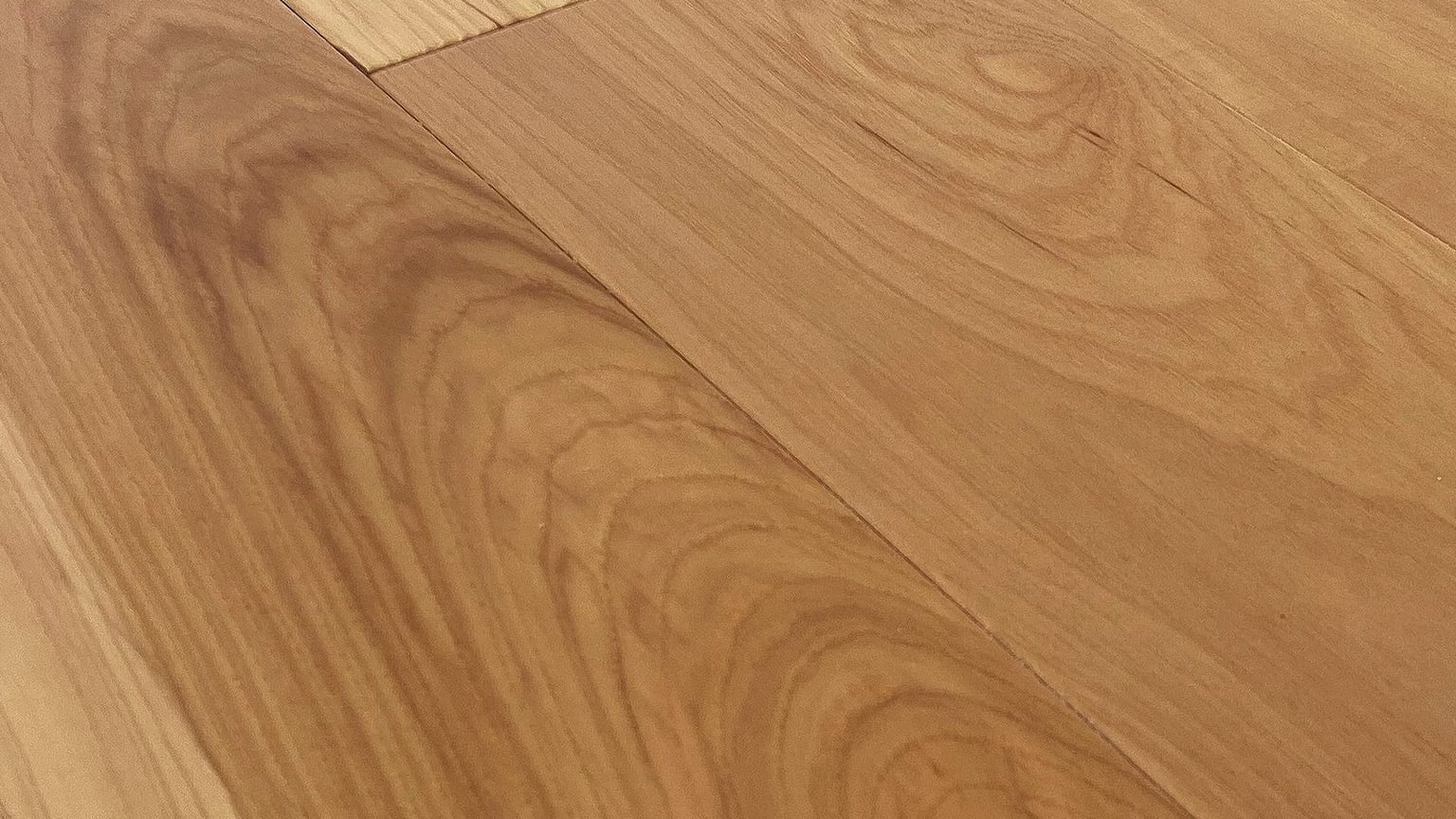
If you are choosing flooring for a damp concrete slab, rigid core vinyl with waterproof construction is the safer default. Prefinished engineered hardwood can still go down on a slab, but only after the moisture has been tested and managed. The plank you prefer matters less than what the slab is doing underneath it.
That is the short answer. The longer one depends on how wet the slab is, whether it stays that way through the seasons, and how much you care about real wood under your feet. Here is how to work through it in your own room.
What a damp slab does to a floor
Concrete looks solid, but it is porous. A slab poured onto soil keeps drawing ground moisture upward and releasing it through its top surface. If no effective vapour barrier was placed under it, that movement never really stops.
You rarely see standing water. You see the signs instead: a musty smell under a rug, a white powdery bloom on bare concrete, or carpet pad that has darkened along an outside wall. Slab-on-grade ranch houses, ground-floor rooms cut into a hillside and garage conversions are where these signs show up again and again.
Moisture from below does two kinds of damage. It can attack the flooring itself, swelling or cupping anything that absorbs water. It can also collect in the gap between slab and floor, where it feeds mildew and weakens adhesives, whatever the plank is made of.
How to tell what your slab is doing
Start with what you can check yourself. Tape a square of clear plastic sheet tightly to the bare slab on every edge and leave it in place for a few days. Condensation under the plastic, or a darker patch of concrete, tells you moisture is coming through.
That test is a warning light, not a measurement. A flooring installer or inspector can run a proper moisture test, either with probes set into the slab or by measuring vapour emission at the surface. Ask for the result in writing, because each flooring manufacturer sets its own acceptable limit and the installer needs to compare against it.
Look at the context too. Check where the downspouts discharge, whether the soil outside slopes toward the wall, and whether a sprinkler line runs along that side of the house. A slab that is damp because of a misdirected gutter is a drainage problem first and a flooring problem second.
Rigid core vinyl: what waterproof construction covers
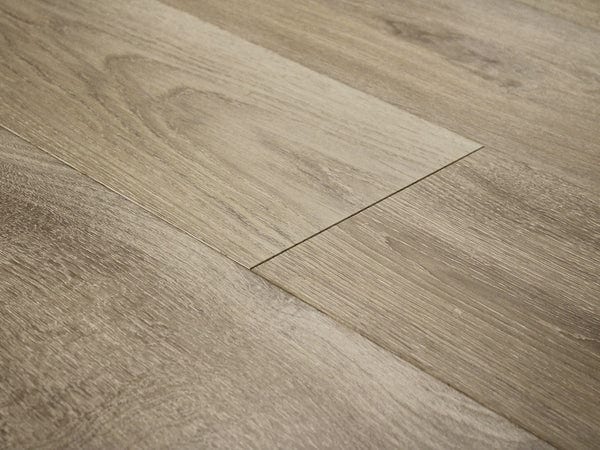
Rigid core vinyl, sold as SPC, is built around a dense stone and plastic core rather than wood fibre. The Republic Floor planks in our range use the manufacturer's Pure SPC Max construction, described as rigid core vinyl with a denser core. Examples include Republic Floor North Water Desert Taupe, Republic Floor Walnut Hills Collection Gray Mist and Republic Floor Summer Lake Collection Atlantis Cream.
Because the core does not absorb water, the plank itself will not swell, cup or come apart from moisture rising through a slab. That is the real advantage, and on a slab that tests damp it is decisive. It is why rigid core vinyl is the default we reach for in a sunken family room or a converted garage.
What waterproof construction does not do is dry the slab. Moisture still arrives at the underside of the plank, and if it has nowhere to go it can sit there. Rigid core vinyl makers typically call for a vapour barrier film over a damp slab, and you should follow the manufacturer's installation instructions exactly.
Rigid core vinyl also has trade-offs that have nothing to do with water. It feels harder and sounds a little hollower underfoot than wood. It cannot be sanded, so the surface you buy is the surface you keep.
Engineered hardwood: what a plywood core can tolerate
Prefinished engineered hardwood is a real wood top layer bonded to a core of plywood or hardwood lumber. The core is what makes it more stable than solid hardwood. Stable is not the same as waterproof, and on a damp slab that distinction is the whole decision.
The Monarch Plank Vinland boards are a useful reference. Monarch Plank Vinland WHITE OAK SELECT is a Select grade White Oak plank, 6" wide and 5/8" thick, with a 4 mm wear layer over a hardwood plywood core. The Monarch Plank Vinland HICKORY SELECT in the photograph at the top of this page shares that build in Hickory.
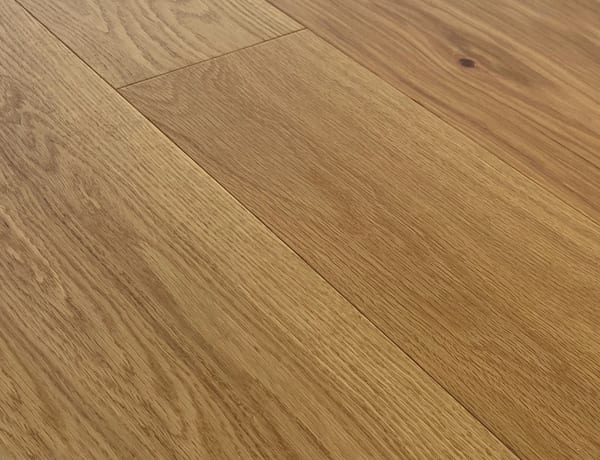
A real wood wear layer can usually be sanded and refinished by a professional, which rigid core vinyl can never offer. Plywood cores resist seasonal movement well in a dry or moderately humid room. Neither fact protects the board from water arriving continuously from below.
When an engineered floor on a slab fails, it usually fails slowly. Boards cup as their undersides take on moisture, seams open in the dry season and close in the wet one, and adhesive can lose its grip. None of that shows on installation day.
Engineered hardwood can work on a slab that tests dry, or one that has been properly sealed. The installer will usually either glue the boards down with a moisture barrier adhesive or float them over a vapour barrier and underlayment. The method for a given product is set by its manufacturer, so ask for the installation instructions before you commit.
Wider planks, thicker builds, and what changes
Plank width matters on a slab. A wider board has more face to cup across, so it shows moisture movement sooner than a narrow one. The 6" Vinland boards sit at the narrower end of our engineered range, while the Hokkaido and Regent boards run 7-1/2" wide.
Monarch Plank Hokkaido NARA NATURAL is a Rustic grade Nara, or Japanese oak, plank 7-1/2" wide and 5/8" thick, with a 4 mm wear layer on a plywood core. Its knots and grain variation hide everyday wear well. On a slab, the wider face simply asks for a more careful moisture result before it goes down.
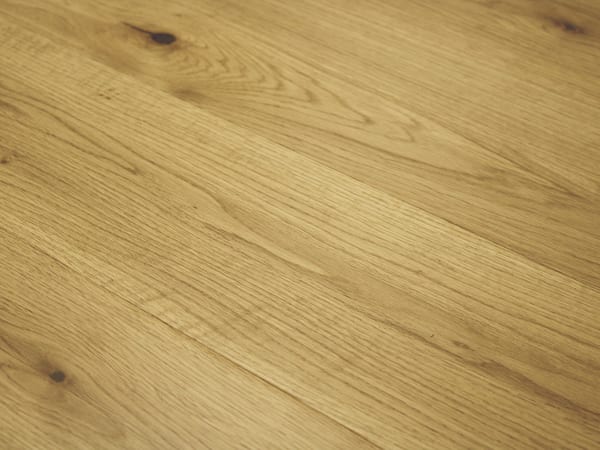
The Regent boards take a different approach to the core. Monarch Plank Regent ELIZABETH is a Prime grade European Oak plank, 7-1/2" wide and 5/8" thick, with a 4 mm wear layer on a hardwood lumber core of hevea. A lumber core behaves differently from plywood, which is one more reason to read that product's own instructions for a slab.
At the wide end, Monarch Plank Domaine II Collection NEBBIA is a Rustic grade European Oak board, 9-1/2" wide and 3/4" thick, with a 6 mm wear layer over a hardwood lumber core. It is a substantial floor. It is also exactly the kind of board that needs a slab confirmed dry, because a wide face shows every change in moisture beneath it.
Where each material is the wrong choice
Engineered hardwood is the wrong floor for a slab that tests wet and cannot be fixed. That includes a room where ground moisture is constant, where the slab cannot be sealed, or where water has come in before. A wood floor that cups is not a saving.
Rigid core vinyl is the wrong floor when the slab is damp because of a leak nobody has found. Its waterproof construction can hide a problem for a long time while mildew builds up underneath. Find the source first, then choose the floor.
Rigid core vinyl can also be the wrong answer when the slab is perfectly dry. If the slab tests dry and you want real wood, engineered hardwood is a reasonable choice and you give up nothing on moisture. Choosing vinyl on a dry slab is a matter of preference, not protection.
What we would ask before recommending either
Before we recommend a floor for a slab, we want to know a handful of things. Has the slab been moisture tested, by what method, and against which manufacturer's limit? Is there a known vapour barrier under the concrete?
We also ask what the room is for. A family room on a slab sees spills and wet shoes, a bedroom does not, and that changes how much risk you can carry. Our piece on what a bathroom floor finish can and cannot stop covers the surface side of that question.
Finally, we ask how long you plan to stay. Engineered hardwood with a sandable wear layer pays off over a long ownership. Rigid core vinyl asks less of the slab and less of you, but it never gets a second surface.
Whichever you choose, slab preparation is part of the job. Our guide to preparing for flooring installation day lists what to clear and check. A free in-home laser measurement gives you the square feet of the room, and you can request a quote from there.
Common questions about flooring on a damp slab
Is a waterproof plank the same as a moisture-proof installation?
No. The plank resists water, but moisture can still collect beneath it. A vapour barrier, installed as the manufacturer specifies, is what manages the slab.
Can engineered hardwood be glued straight to concrete?
Many engineered floors can be glued to a slab that tests within the manufacturer's limit. The adhesive and any barrier must be ones that manufacturer approves. Check the instructions for the specific product before you buy.
Does a thicker wear layer help with slab moisture?
No. The wear layer is the top skin of real wood, and it governs how many times the floor can be refinished. Moisture trouble starts at the core and the underside, which is why our article on how much wear layer you need treats it as a separate decision.
Should I trust a plastic sheet test?
Treat it as a first look. It can show that moisture is coming through, but it cannot tell you how much. Ask for a proper moisture test before any wood goes down.
Will a dehumidifier fix a damp slab?
It can help the air in the room, but it does not stop moisture rising from the ground. Drainage outside and a barrier under the floor do more for the slab itself.
The next step
If your slab tests damp, start with rigid core vinyl and a properly installed barrier. If it tests dry and you want wood, compare the engineered boards by width, grade and wear layer. You can browse the flooring range side by side, with full specifications on every product page.