
SPC vs vinyl flooring: what actually differs
SPC vs vinyl flooring sounds like a contest between two materials, but SPC is vinyl. SPC is a vinyl plank built on a rigid stone polymer composite core, and it usually clicks together and floats. What most people mean by plain vinyl is a thin, flexible plank that is glued down to the subfloor.
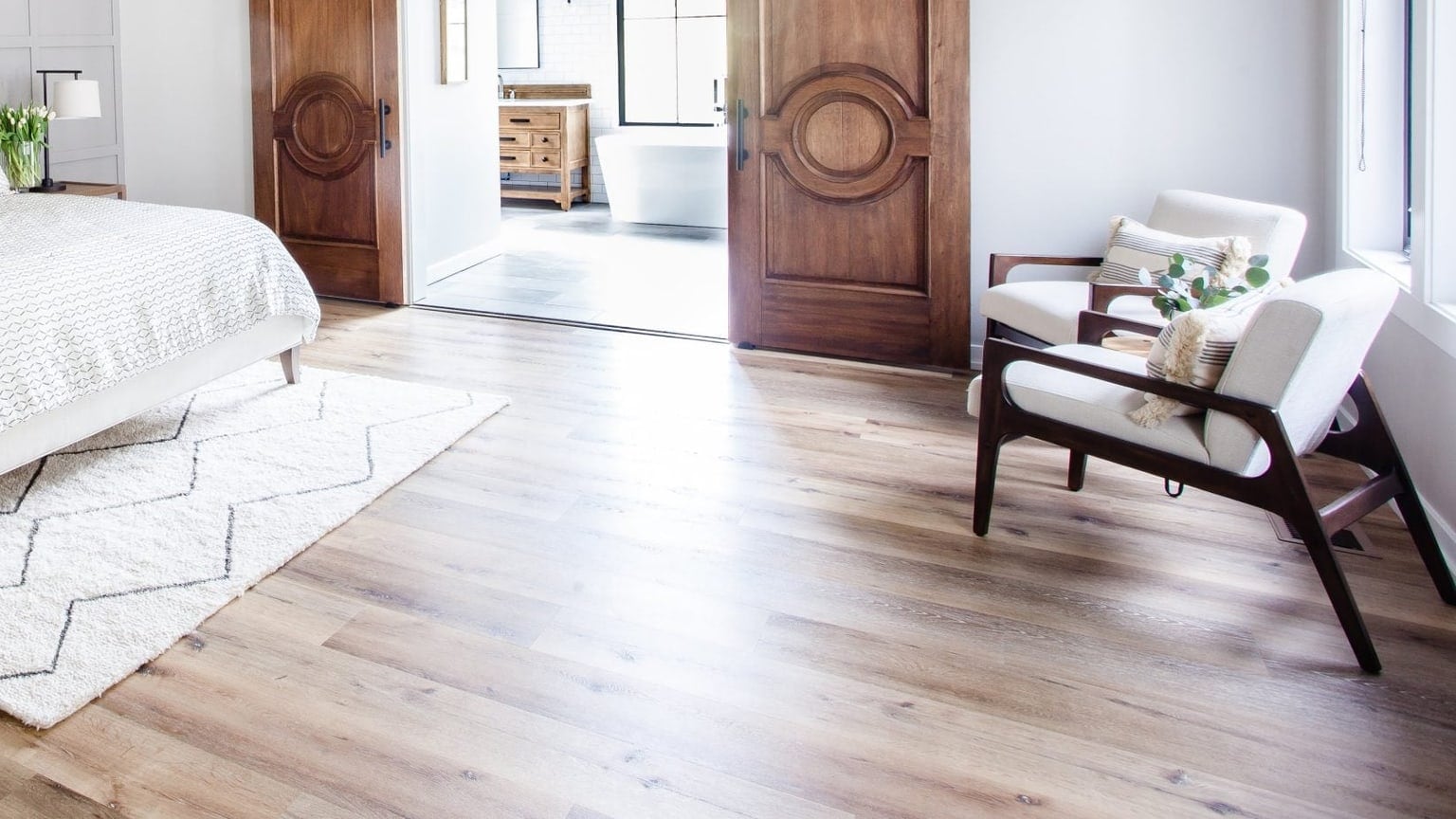
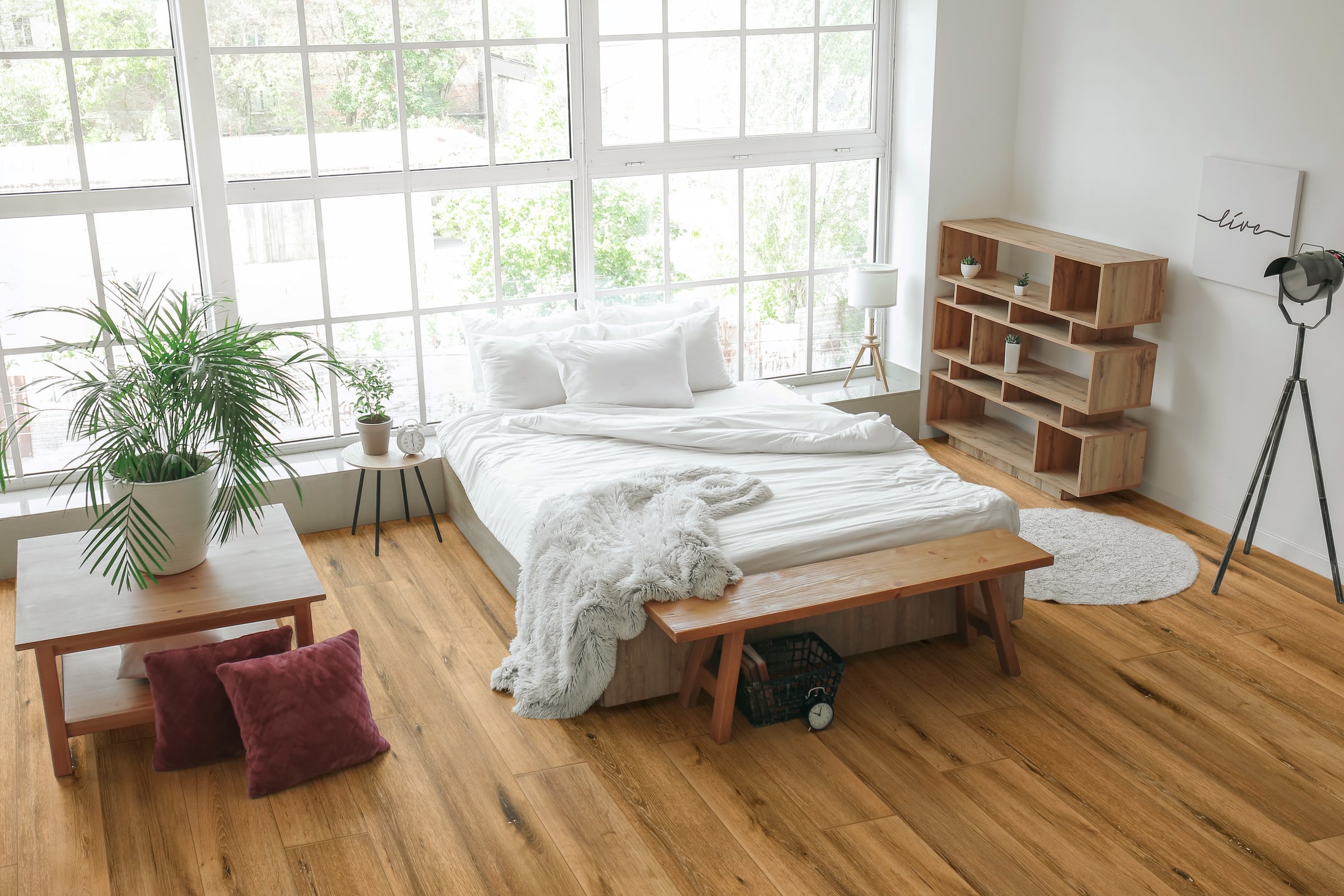
So the real decision is rigid core or flexible glue-down. In most rooms the subfloor underneath makes that choice before you do, and the look of the plank comes second. The photograph above shows Duchateau LUXETECH 20 Youngscombe, a rigid core plank, in a bedroom.
What SPC and plain vinyl actually are
Every vinyl plank has the same top half. There is a printed design layer that carries the wood or stone look, and over it sits the wear layer: the clear top skin that takes the scuffs. The difference is what sits underneath that skin.
A flexible vinyl plank, often sold as LVT, is vinyl through its whole thickness. It bends in your hand, and it is thin. Garrison Country Charm Hanna is a good example: its construction is listed as LVT Glue-Down, it is 3mm thick, and it goes down with adhesive.
An SPC plank adds a stiff core of stone polymer composite under the vinyl top. It does not bend, it is thicker, and it locks to its neighbours along the edges. Garrison AquaBlue II WPC Copper lists SPC as its construction, is 6.5mm thick, and installs by Easy Click Installation.
There is also WPC, a third member of the family. WPC uses a wood polymer composite core instead of stone, and it tends to be built thicker. Garrison AquaBlue II WPC Vista Oak, for example, is listed at 12mm.
Where the difference shows up in your own room
The two constructions behave differently in the room, and almost all of it traces back to stiffness. A stiff plank bridges small dips. A flexible plank follows the surface it sits on, flaws included.
The subfloor. A glue-down plank telegraphs everything underneath it. A ridge in the plywood, a trowel mark in the slab or a screw head can show through as a line or bump once light rakes across the floor. A rigid core plank hides minor unevenness better, although it still needs a reasonably flat surface for the locking joints to hold.
Height at the doorways. A 3mm glue-down plank adds very little height, which matters where the new floor meets tile, carpet or an exterior door. A floating plank with an attached underlayment is taller. A 12mm WPC plank is taller again, and doors, dishwashers and transitions need checking before anyone orders.
Feel and sound underfoot. A rigid core plank with an attached pad feels firmer and a little warmer than vinyl glued to concrete. It can also sound hollower when you walk on it, because it floats. Glue-down vinyl sits tight to the subfloor, so it sounds quieter in the room itself but feels harder.
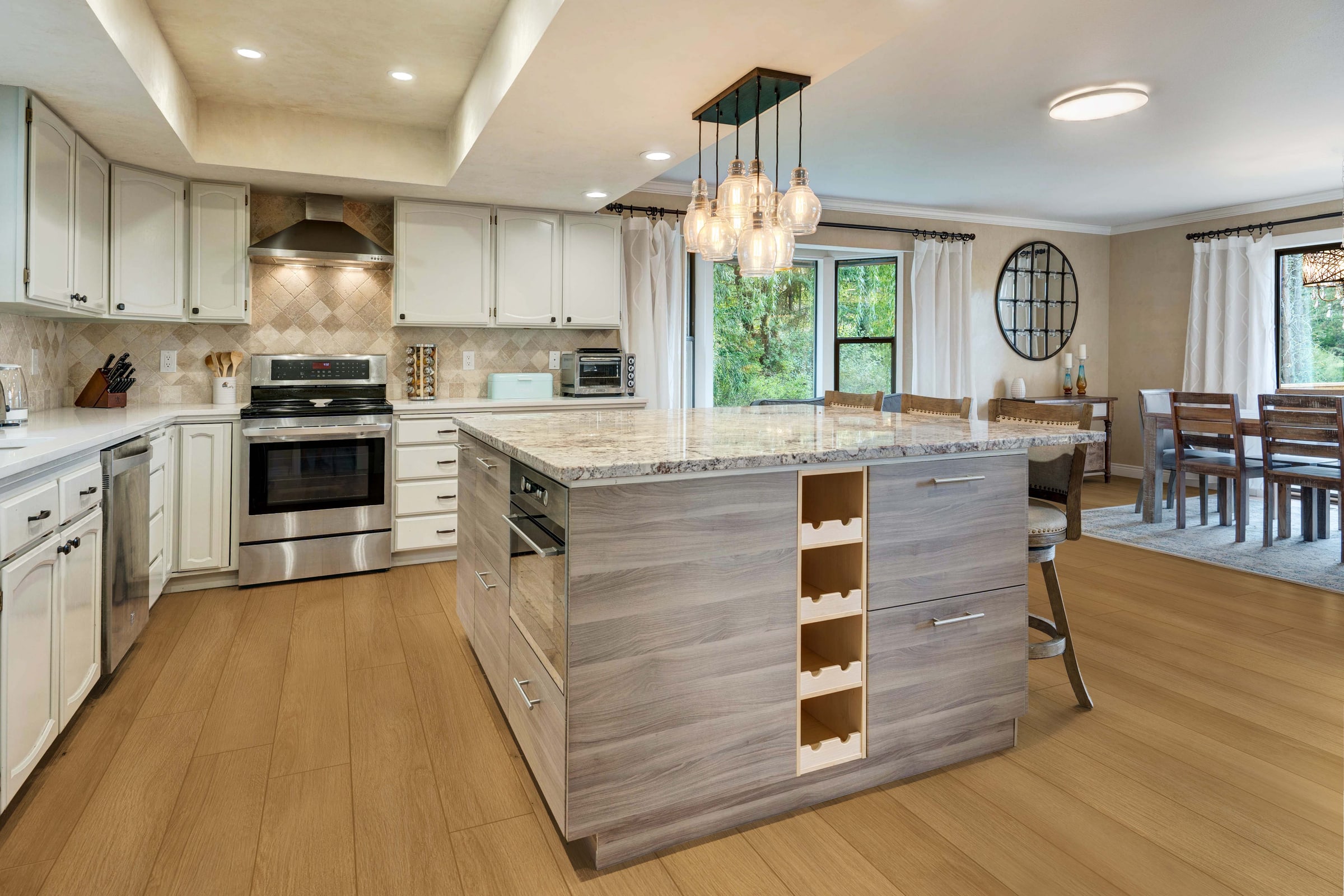
Rooms with heavy fixed weight. A floating floor needs to move slightly with the house. Kitchen islands, built-in cabinets and heavy pianos pinning a floating floor in place can stress the joints. Glue-down vinyl does not mind being pinned, which is one reason it suits a kitchen with a large island.
Repairs. A damaged glue-down plank can be cut out and a new one bonded in. A damaged click plank is usually replaced by unlocking the run from the nearest wall, or by a careful cut-in repair. Neither is difficult for an experienced installer, but keep a box of spare planks either way.
Water: read the maker's own words
Both constructions are vinyl on top, so neither soaks up a spill the way wood or standard laminate can. The weak point is the seams and the edges of the room, not the plank face. Water that gets under the floor is a subfloor problem whatever you choose.
The wording on the manufacturer's page matters more than the category name. Garrison describes its SPC and WPC lines as water-resistant rather than waterproof, and its Country Charm glue-down line the same way. Read the maker's own page for the exact plank, not a general claim about the category.
For a slab that holds moisture, the question shifts from the plank to the slab. We cover that case in flooring for a damp concrete slab. In a bathroom or a laundry room, the installer's job at the perimeter decides more than the core does.
Names on the label can mislead
Read the construction line on the spec sheet, not the collection name. Product names are marketing, and the construction field is the fact.
Two planks in the AquaBlue II WPC collection show why. Garrison AquaBlue II WPC Vista Oak lists its construction as WPC and its thickness as 12mm. Garrison AquaBlue II WPC Bronze, in the same collection, lists its construction as SPC and its thickness as 6.5mm.
The same caution applies to the letters LVT and LVP. They describe a printed vinyl format, not a grade or a core. A rigid core plank and a glue-down plank can both be sold under them.
If you are comparing SPC with laminate rather than with flexible vinyl, the trade-offs move again. Our piece on rigid vinyl or laminate walks through the core, thickness and feel of each.
What stays the same: the wear layer
The wear layer is the part that decides how a vinyl floor looks after years of chairs, grit and pets. It has nothing to do with whether the core is rigid or flexible. That is worth knowing, because a rigid plank is not automatically tougher on its surface.
Garrison Country Charm Hanna, a glue-down plank, lists 20 mil / 0.5 mm, and Garrison AquaBlue II WPC Copper, a click plank, lists 0.5 mm (20 mil). Duchateau LUXETECH 20 Smoke, a glue-down plank, lists 0.55mm (22mil).
So compare wear layers directly, plank against plank. If you are weighing how much is enough for a rental or a busy household, read whether a 20 mil SPC wear layer is enough.
Which one fits which room
A second floor over plywood, or an older house with some movement. A rigid core plank is usually the easier choice. It floats over minor unevenness, and its attached pad adds some comfort. Duchateau LUXETECH 20 Barris is a rigid core vinyl plank that floats on a 5G Click system with HushWalk underlayment.
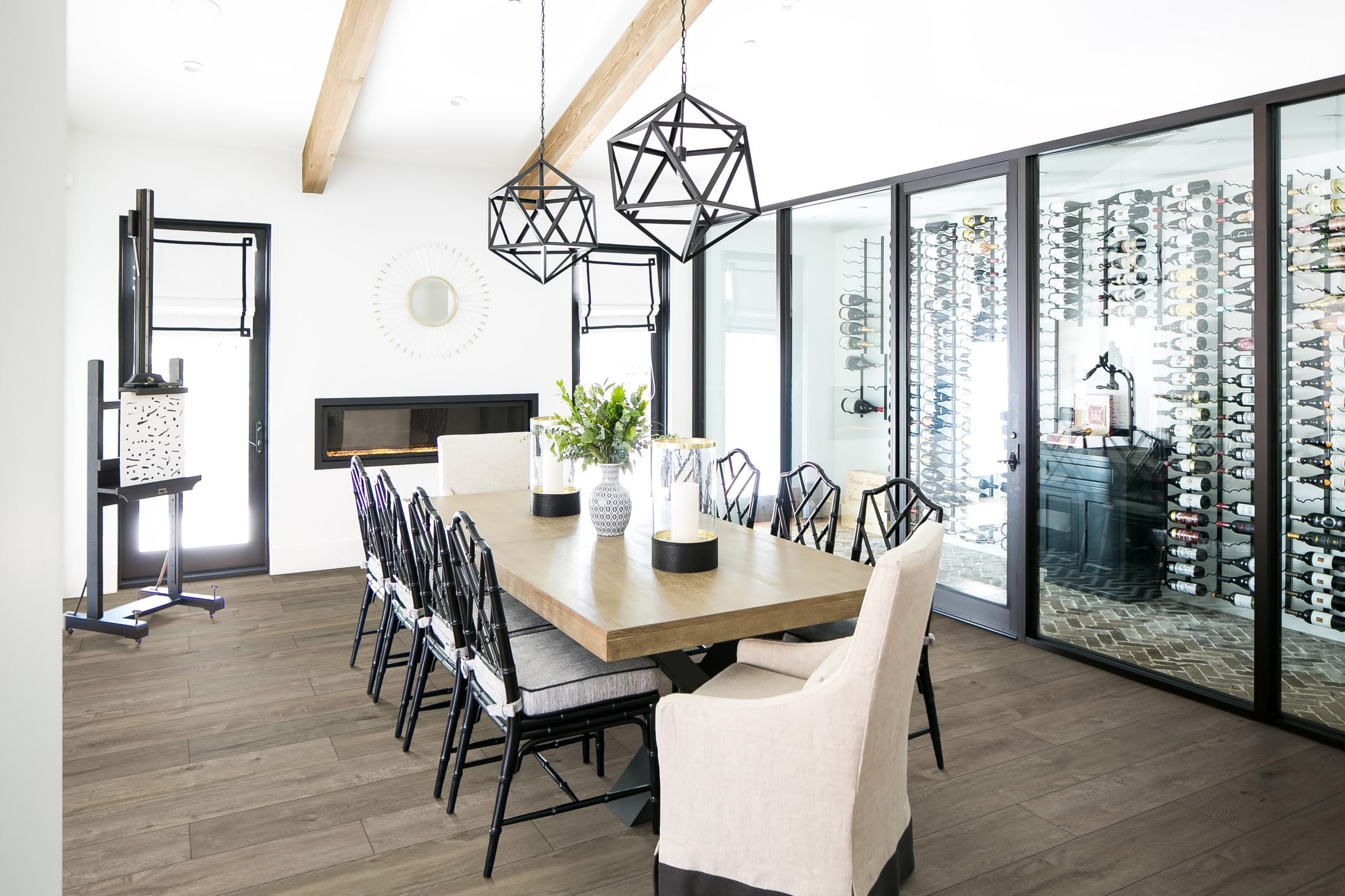
A kitchen with an island, or a long open run. Glue-down vinyl usually handles fixed weight and long runs without the expansion gaps a floating floor needs. It does ask for a carefully prepared, very flat subfloor, and that preparation is where the labour goes.
A ground floor on a slab. Either can work once the slab is tested and prepared. A floating rigid core plank tolerates small dips in the slab better. Glue-down vinyl depends on the slab surface and on an adhesive the slab conditions allow.
Bedrooms and living rooms upstairs. Here comfort and sound tend to lead. A rigid core plank with an attached pad feels softer underfoot, and the right underlayment can reduce noise to the rooms below. Our guide to choosing underlayment covers what the pad does and does not change.
Over radiant heat. Check the maker's own instructions for the exact plank before you choose. Duchateau lists radiant heat for LUXETECH 20 Barris as approved, with a pointer to its installation instructions. Follow the manufacturer's installation instructions for any heated floor.
What we would ask before recommending one
Before we recommend either construction, we want to know what is under the floor now. Concrete, plywood or an old floor left in place each change the answer. We also ask how flat it is, because flatness decides how much preparation the room needs.
Then we ask about the room itself: islands or built-in furniture, where the floor meets tile, carpet or an exterior door, and whether there is radiant heat. We also ask whether anyone below hears footsteps today.
The answers usually narrow the field to one construction quickly. A free in-home laser measurement gives you the square feet, and the installer sees the subfloor before anything is ordered. That visit is where the rigid or glue-down question is settled for your own room.
SPC vs vinyl flooring: common questions
Is SPC flooring the same as vinyl flooring?
SPC is a type of vinyl flooring. It has a vinyl top layer like any vinyl plank, built on a rigid stone polymer composite core. Plain vinyl usually means a thin, flexible plank that is glued down.
Which is more durable, SPC or vinyl?
Surface durability comes from the wear layer, not the core. Compare the wear layer on each plank's spec sheet. The rigid core mainly helps with bridging small dips and resisting dents from point loads.
Can SPC go over an uneven subfloor?
It tolerates minor unevenness better than glue-down vinyl, because it does not follow every dip. Larger humps and hollows still need levelling, or the locking joints can flex and open. Follow the manufacturer's flatness tolerance for the exact plank.
Is glue-down vinyl old-fashioned?
No. It is still the practical choice where a floor has to stay low at a threshold, or where islands and cabinets pin it in place. It needs a well-prepared subfloor to look right.
Is SPC waterproof?
It depends on the maker's own wording for that plank. Garrison calls its SPC lines water-resistant. Whatever the label says, water that gets under the floor at the edges reaches the subfloor.
Can I see the two side by side before choosing?
Yes. You can order samples of both constructions, or start with the full flooring range and read the construction line on each product page. Holding a rigid plank and a flexible one in your hands makes the difference obvious.
The construction line on the spec sheet tells you which kind of vinyl you are looking at, and the subfloor tells you which kind you need. When you are ready to compare real planks, see the range on our flooring category page, and book a free in-home laser measurement when you want the room checked.