
Maple flooring vs luxury vinyl tile: what differs
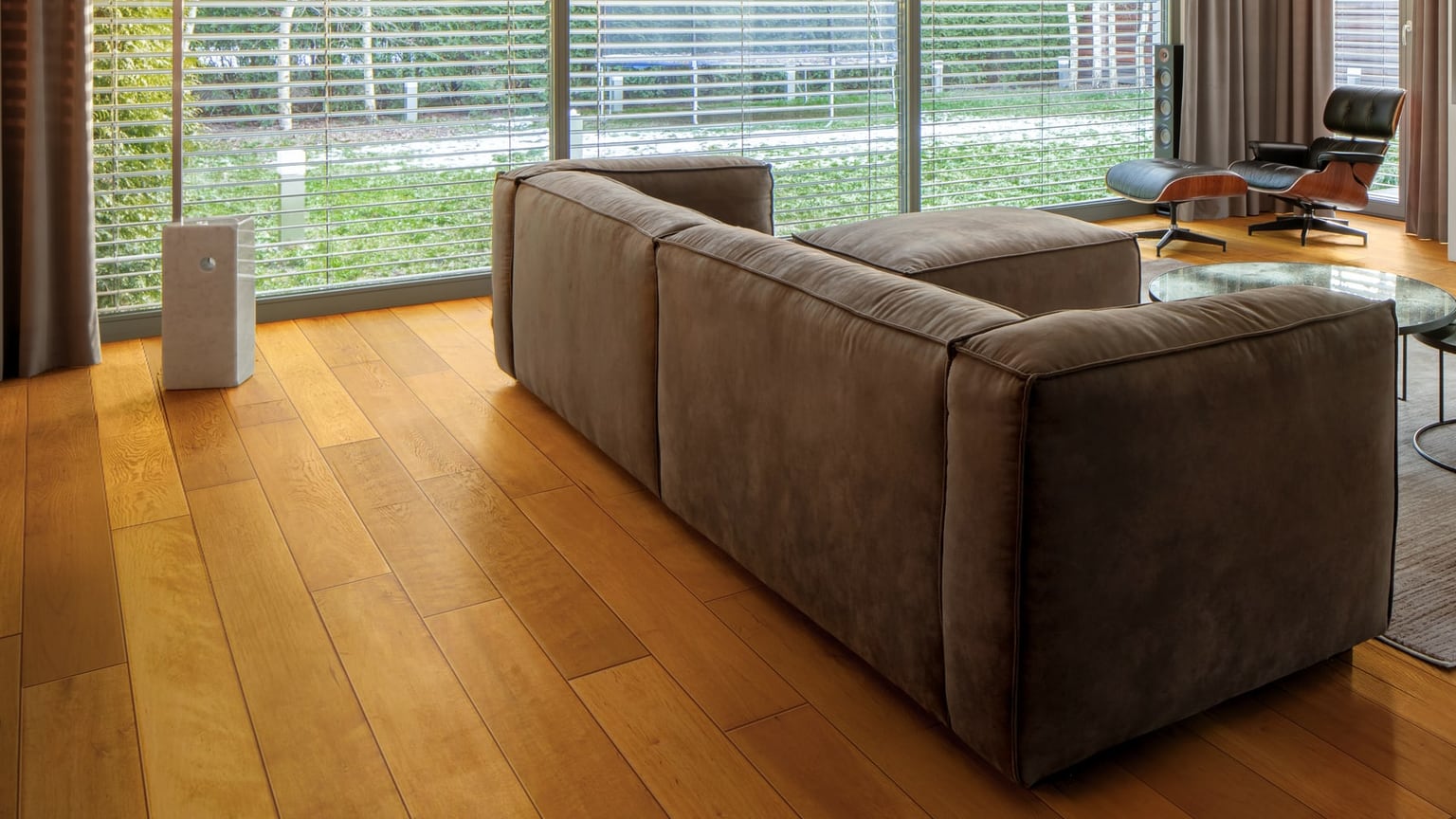
Maple is real hardwood with a tight, even grain that can be refinished, and luxury vinyl tile is a layered synthetic plank built to shrug off water. If you want a natural surface and accept that it needs care around moisture, choose maple. If you want a floor that tolerates splashes and a damp subfloor with less worry, luxury vinyl tile is the safer starting point. This page sets maple flooring vs luxury vinyl tile side by side, using the specifications we can verify, so you can match the material to the room and not the other way round.
What each floor actually is
Maple is a close-grained hardwood. The face of the board is a thin sheet of real maple, and the grain is fine and fairly uniform compared with open-grained species such as oak. That makes maple a good canvas for stain, which is why you see it in tones from pale blond to deep espresso.
The maple boards in our range are engineered rather than solid. An engineered board has a real wood top layer bonded to a plywood core, and the layers run in different directions so the board stays more stable across its width.
Luxury vinyl tile, usually called LVT, is made from vinyl layers with a printed image of wood or stone under a clear wear layer. It contains no timber face at all. Everything you see is a photograph protected by that clear top skin, which is why the wear layer figure on the spec sheet matters so much.
Hardness and dents
Hardness is where the two floors feel different. Maple is a hard timber, and the Janka rating is the standard way to compare hardwoods. Garrison Garrison II Smooth Chestnut is a maple floor listed at 1450 on the Janka scale. That figure belongs to the species and describes resistance to denting.
A hard wood still dents. A dropped pan or a pointed heel can leave a mark, and wood shows that mark permanently until the surface is refinished. Distressed boards hide this better, because the hand-worked texture is already irregular.
Vinyl dents in a different way. It is softer under a point load, so a heavy furniture leg can leave an impression, but the surface rarely chips or splinters. The honest summary is that maple resists a dent better and shows a mark more, while vinyl gives under pressure and shows less.
Water, humidity and the subfloor
Moisture is the biggest practical difference. A wood floor responds to humidity in the house, and an engineered maple board is more stable than a solid one but is still wood. It belongs in rooms where spills are wiped up and humidity stays steady.
Luxury vinyl tile does not take up water the way timber does. That makes it the more forgiving choice for a kitchen, a laundry room or an entry where wet shoes come in. It still needs a flat subfloor, and standing moisture beneath it can cause trouble, so the slab or subfloor must be checked either way.
We would not call a floor waterproof unless the maker states it. Check each product's own page and the installation instructions before you rely on one for a wet room. Our guide on which floors handle water in each room sets out the room-by-room reasoning.
Wear layer, finish and what ages
On engineered maple, the wear layer is the real wood above the core. Garrison Garrison II Distressed Espresso lists a 4 mm wear layer, a 9/16" thickness and a 5" width, with a pillowed edge. Its surface treatment is hand-distressed, and its finish is urethane with aluminum oxide.
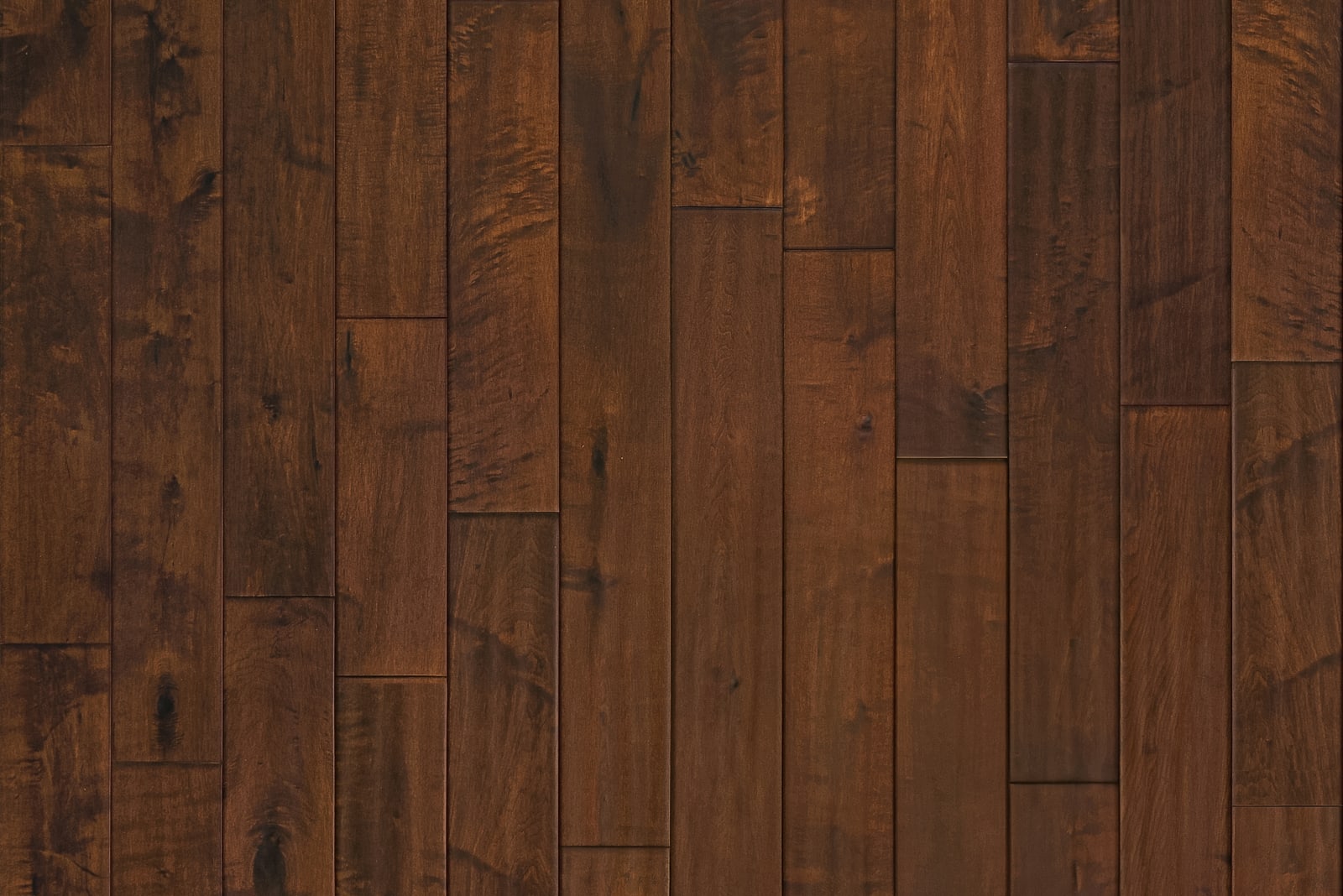
That finish is a hard coating applied at the factory. It protects the surface from daily scuffing, though it is not a licence to ignore grit. A mat at each entry does more for a wood floor than any coating.
On vinyl, the wear layer is a clear synthetic film, and it cannot be sanded and renewed. Once it wears through, the printed layer shows. That is a real difference in how each floor ages. A maple floor can usually be refinished, and a vinyl floor is replaced when it is worn.
Look, sound and feel underfoot
Maple has the warmth of real wood, with a grain that changes board to board, and it feels firm and slightly cool underfoot. It looks the part in a living room or a bedroom where you want the floor to read as natural timber. A distressed board adds character and hides small marks.
Luxury vinyl tile can imitate wood convincingly, and a good printed pattern repeats over a long run so the floor does not look copied. It often feels a little softer and quieter under a shoe than a hard timber does. Up close, though, you can tell the surface is printed, and some people notice that.
Plank width changes how either floor reads across a room. Wider planks show fewer seams and suit larger rooms, while narrower planks suit smaller ones. Our article on flooring plank width helps with that choice.
Common questions about maple and luxury vinyl tile
Is maple harder than luxury vinyl tile?
Maple is a hard timber and resists a dent well, with the Garrison II range listed at 1450 on the Janka scale. Vinyl is measured differently, so the two numbers are not comparable. Vinyl gives under a point load, while maple resists it.
Can I put maple in a kitchen?
You can, with care. Engineered maple is more stable than solid wood, but spills must be wiped promptly and humidity kept steady. If the kitchen sees heavy water use, vinyl is the lower-risk choice.
Can maple be refinished?
Engineered maple with a real wood wear layer can usually be refinished, within the limits of that layer and the maker's guidance. Vinyl cannot be refinished. Ask the maker how many times a given board can be renewed.
Does vinyl last longer than maple?
It depends on how it is used. Vinyl resists water and stains well, but its wear layer cannot be renewed. Maple can be refreshed, which can extend its life, and it needs more care around water.
Which one is easier to maintain?
Vinyl is easier day to day, because it tolerates wet cleaning and spills. Maple asks for dry or barely damp cleaning and a mat at the door. Both want grit swept away promptly.
What we would ask before recommending one
We would ask which room it is, whether water or wet shoes come into it, and what the subfloor is. We would ask whether you want the floor to look like natural timber or whether easy care matters more. Then we would narrow the choice to two boards and let you see samples in your own light, which are paid and final sale.
The free in-home laser measurement gives you accurate room dimensions before you commit. You can pay after measurement, or pay now by card. Delivery and professional installation available across our service area covers the Bay Area and out into the Central Valley, and local installation partners do the work.
For a deeper look at the vinyl side, read how SPC differs from vinyl flooring, then browse the flooring range or send a quote request with your room details.