
Waterproof laminate vs WPC: core, feel and water
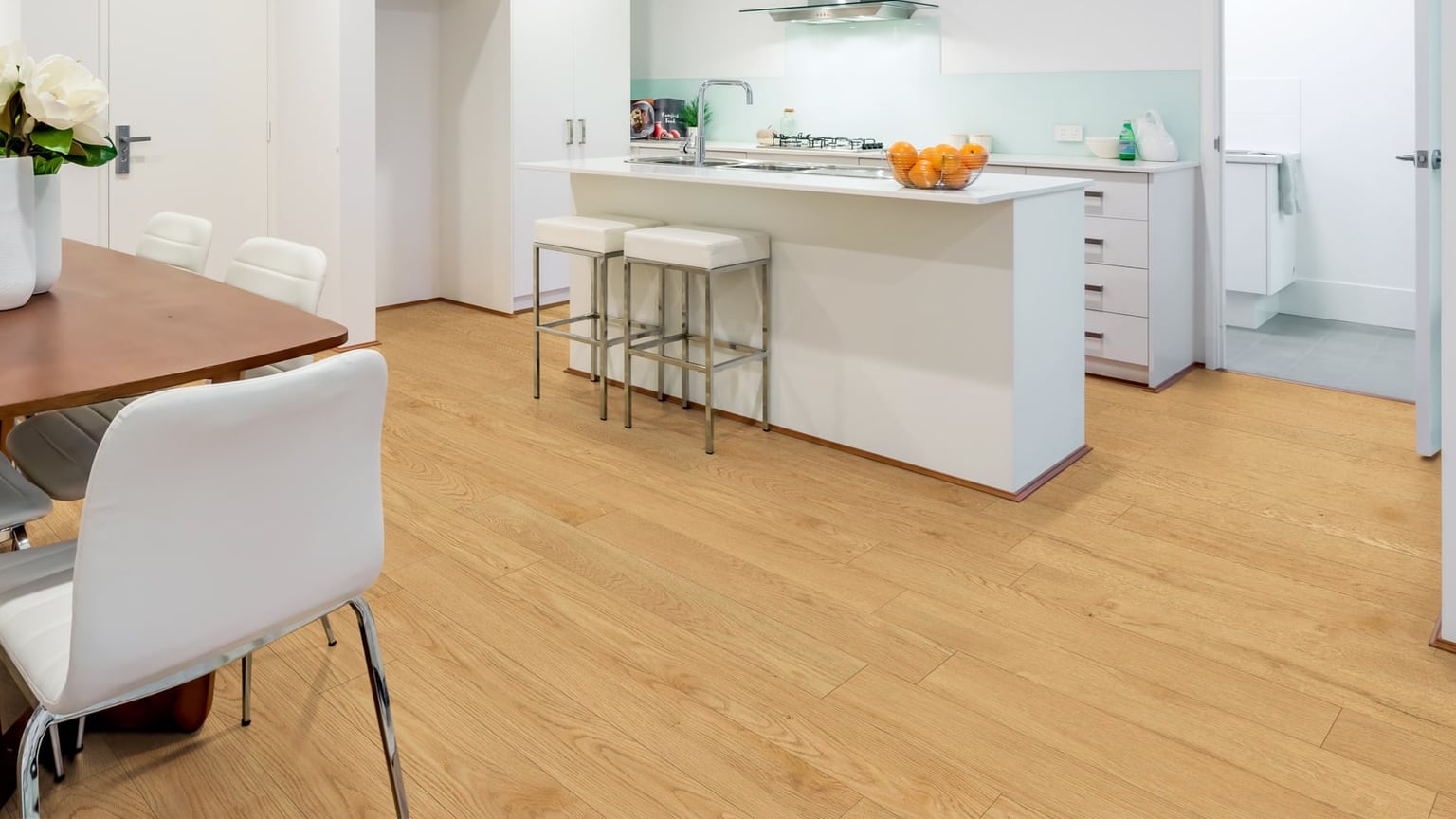
Waterproof laminate vs WPC comes down to what sits inside the plank. Waterproof laminate is a dense wood-fibre core with a printed image under a hard resin surface, built and sealed so spills do not swell it. WPC vinyl is a wood-plastic composite core topped with a vinyl image layer and a clear wear layer.
The laminate is harder and resists scratches better at the surface. The WPC is softer underfoot and indifferent to water by its chemistry. Neither one fixes a wet subfloor, and neither is right for every room, so the rest of this piece walks through the differences that change the decision.
What is inside each plank
Laminate starts as wood. The core is high-density fibreboard: wood fibre pressed with resin into a hard, flat board. On top sits a photographic print of the grain and a clear surface layer that carries the scratch resistance.
Ordinary laminate's weakness was always that core. Water reaching a joint wicked into the fibre, and the edges swelled and peaked. Waterproof laminate answers that with a denser, treated core and tighter joints, so a spill stays on top.
WPC works from the other direction. Its core is a composite of plastic and wood or mineral filler, lightly foamed so it is lighter and has some give. Above it sits a printed vinyl film and a clear vinyl wear layer, the top skin that takes the traffic.
The difference matters because it decides everything after it. A fibre core is hard and rigid, but water that gets underneath and stays can still harm it. A plastic composite core does not drink water at all, but its softer top layer marks more easily.
How each one handles water
This is where labels need reading, not trusting. "Waterproof" on a laminate box means the maker has tested the plank and its joints against surface water on its own terms. It does not mean the floor can sit in a flood.
Garrison is plain about this in its own documents. Its waterproof rating for the Garrison ILLUMIN8 Waterproof Laminate Luster and the rest of that line covers typical use and spills, not standing water or extreme conditions. That is an honest description of the category: a floor for kitchens, entries and family rooms where water arrives in cups, not buckets.
Lago states its AquaPro planks are waterproof on every product page. The Lago AquaPro 10mm Maple Charm pairs an 8 mm waterproof core with 2 mm Super Acoustic Underlayment. Even so, the installation instructions still govern how edges, gaps and perimeters are treated near wet areas.
WPC is waterproof in a more literal sense, because neither the core nor the vinyl top absorbs water. The catch is the same for both floors: water that runs under a floating floor sits on the subfloor. A waterproof plank over a damp slab or wet plywood protects the plank, not the house.
If your worry is a concrete slab rather than a dishwasher, read what to check on a concrete slab before flooring first. The slab test decides more than the plank does.
Scratches, dents and the surface you walk on
Laminate and WPC describe their surfaces in different terms, which is why comparisons get muddled. Laminate is rated by abrasion class under the European laminate standard. Every Lago plank in this comparison carries an AC4 rating, which the maker calls heavy duty, under a Lago Scratch Shield coating.
WPC is described by the thickness of its clear vinyl wear layer. A thicker wear layer lasts longer, but vinyl is still softer than a laminate surface, so grit under a chair leg or a dog's claws will mark it sooner. Our piece on hickory or white oak for dogs covers what claws do to different surfaces.
Dents run the other way. A dense laminate surface resists scratching but can chip if a heavy pan lands on a plank edge. A WPC plank has more give, so a dropped object tends to bounce rather than chip, though a heavy point load can leave a dimple.
The Garrison line pairs an Aluminum Oxide (Matte) finish with a light emboss on most colours. Matte and embossed surfaces both hide fine scratches better than a smooth sheen, which counts for more in a busy kitchen than the colour does.
Feel and sound underfoot
This is the difference people notice within moments of standing on a sample. Laminate feels firm, and over a thin pad a hard heel makes a crisper, slightly hollow sound. WPC feels a little warmer and softer because its core has some cushion.
Thicker laminates close much of that gap. The Lago AquaPro Max 15mm Hickora is built from a 12 mm waterproof core with 3 mm Super Acoustic Underlayment, and Lago lists it at IIC 72 and STC 73. The Lago AquaPro 10mm Pearl lists IIC 70 and STC 71.
Those ratings describe sound passing through the floor to the room below, not the sound in the room you stand in. IIC is impact noise, like footsteps; STC is airborne noise, like voices. If you live above someone, our article on bedroom floor noise and the limits of underlay explains what those ratings can and cannot do.
Thickness also changes how a floor meets doors, stairs and other floors. A 15 mm plank sits higher than a thinner WPC plank, so door bottoms, transitions and appliance clearances need checking before you choose. That is a measurement question, not a style one.
Where each one fits in the house
Kitchens are where this choice usually comes up. Waterproof laminate gives a harder surface against dropped cutlery and chair legs, and its water rating covers the spills a kitchen produces. In a kitchen with grey shaker cabinets, a dark plank such as the Garrison ILLUMIN8 Waterproof Laminate Dusk reads as wood from standing height.
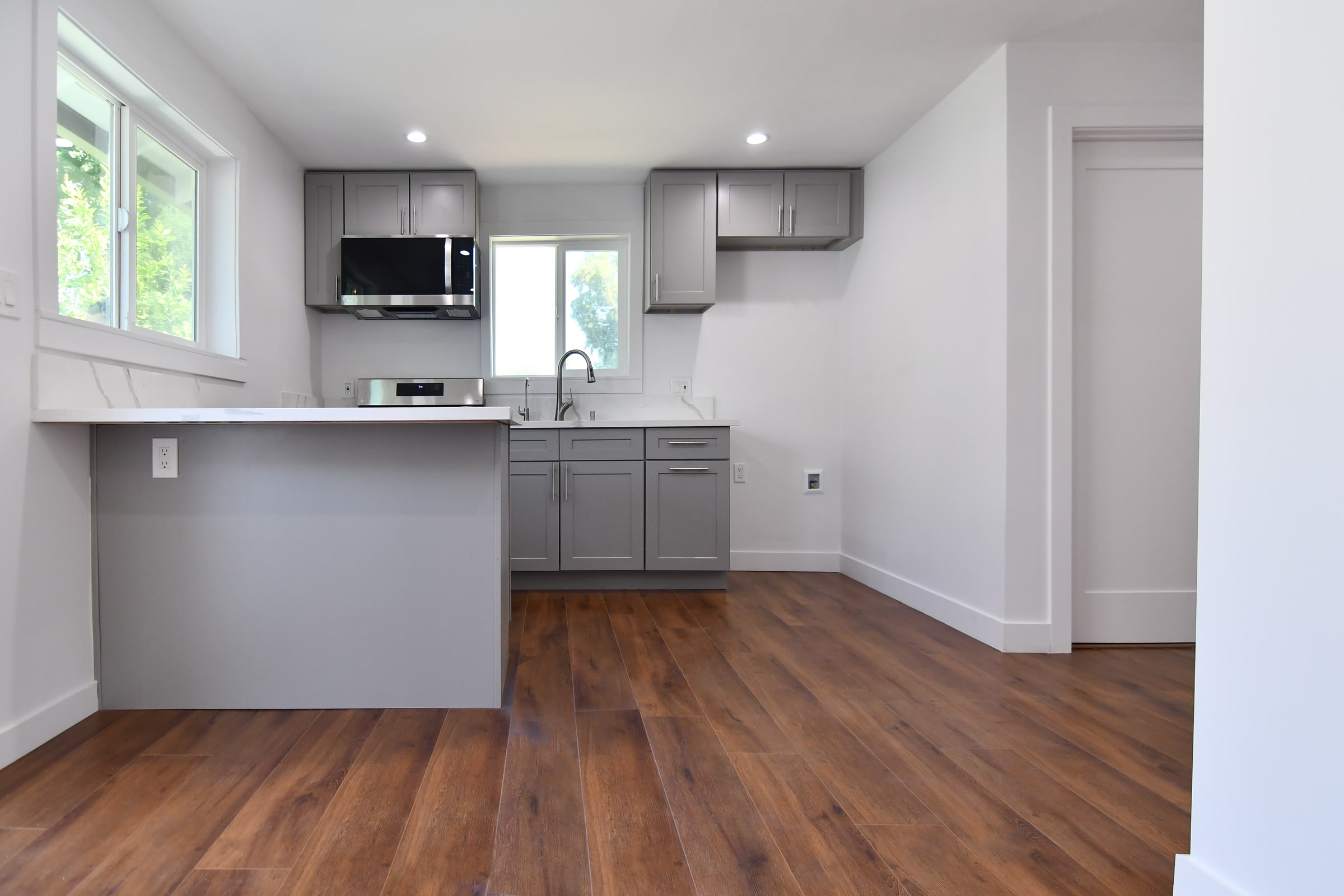
WPC gives a softer stand at the counter and more tolerance if a slow leak goes unnoticed under the sink. If you cook for long stretches, that comfort is a fair reason to choose it. If chairs and dropped pans worry you more, the laminate surface is the better match.
Living rooms, bedrooms and hallways come down to the look and feel you prefer, because water rarely decides anything there. Wide boards such as the Lago AquaPro Max 15mm Corin, at 11-7/8" wide, suit long open rooms. A narrower board like the Lago AquaPro Max 15mm Rio Glen, at 7-3/4" wide, sits comfortably in a smaller room.
Full bathrooms are where we would be cautious with laminate. A spill rating is not a daily shower-splash rating, and Garrison's own wording excludes standing water. WPC, or tile, is the safer answer for a bathroom with a tub or shower.
Over radiant heat, check the maker's limit before choosing. Lago lists its AquaPro and AquaPro Max planks as suitable over radiant heat within a stated temperature limit, and that limit belongs in the installer's plan.
What we would ask before recommending either
Before we suggest one over the other, we want to know what is under the floor now. A slab, a plywood subfloor and an old tile floor each change the preparation. The preparation often moves the quote more than the plank does.
We would also ask who uses the room. Dogs, rolling chairs and young children push toward the harder laminate surface. A cook who stands for long stretches, or a room prone to leaks, pushes toward WPC.
Then we would ask about height. Thicker planks change door clearances and how the floor meets stairs and other rooms. A free in-home laser measurement records those heights along with the square feet, so the comparison happens on your floor rather than on a display board.
Last, look at both in your own light. Order flooring samples of each and leave them where the room gets full sun and where it stays dim. A laminate print and a vinyl print can look identical in a box and quite different by evening.
Common questions about waterproof laminate and WPC
Is waterproof laminate really waterproof?
It is waterproof against the water a household normally spills, within the maker's own definition. Garrison's rating for its waterproof laminate covers typical use and spills, not standing water. Read each maker's wording before using laminate near a tub or a washing machine.
Which one resists scratches better?
Waterproof laminate, as a rule. Its hard resin surface, rated by abrasion class, holds up to grit better than a vinyl wear layer. The Lago planks discussed here carry an AC4 rating and a Lago Scratch Shield coating.
Which one is quieter?
It depends on the build more than the category. Thicker laminates with attached acoustic underlayment, such as the Lago AquaPro Max 15mm Oak Hollow, list sound ratings that answer the hollow-sound complaint. WPC feels softer underfoot, but check the listed ratings either way.
Can either one go over a concrete slab?
Both can float over a slab, but neither makes a damp slab safe. A waterproof plank stops water entering the plank, not moisture rising through the concrete beneath it. Test the slab and follow the maker's moisture barrier requirements.
How are they installed?
Both are usually floating click floors. The Garrison line installs as a floating floor with an easy click joint, and the Lago planks use Uniclic® angle-angle or angle-snap joints. Follow the manufacturer's installation instructions for expansion gaps and acclimation.
Is WPC the same as SPC?
No. WPC has a lighter wood-plastic composite core with some cushion, while SPC has a dense stone-plastic core that is harder and more rigid. Our comparison of WPC vinyl and engineered hardwood covers how WPC behaves against real wood.
If waterproof laminate is where you are leaning, compare the planks side by side: thickness, width, surface and sound ratings sit on each product page. See the flooring range and narrow it to the two or three you would put in your own room.