
Wood species for an entryway: why oak holds up
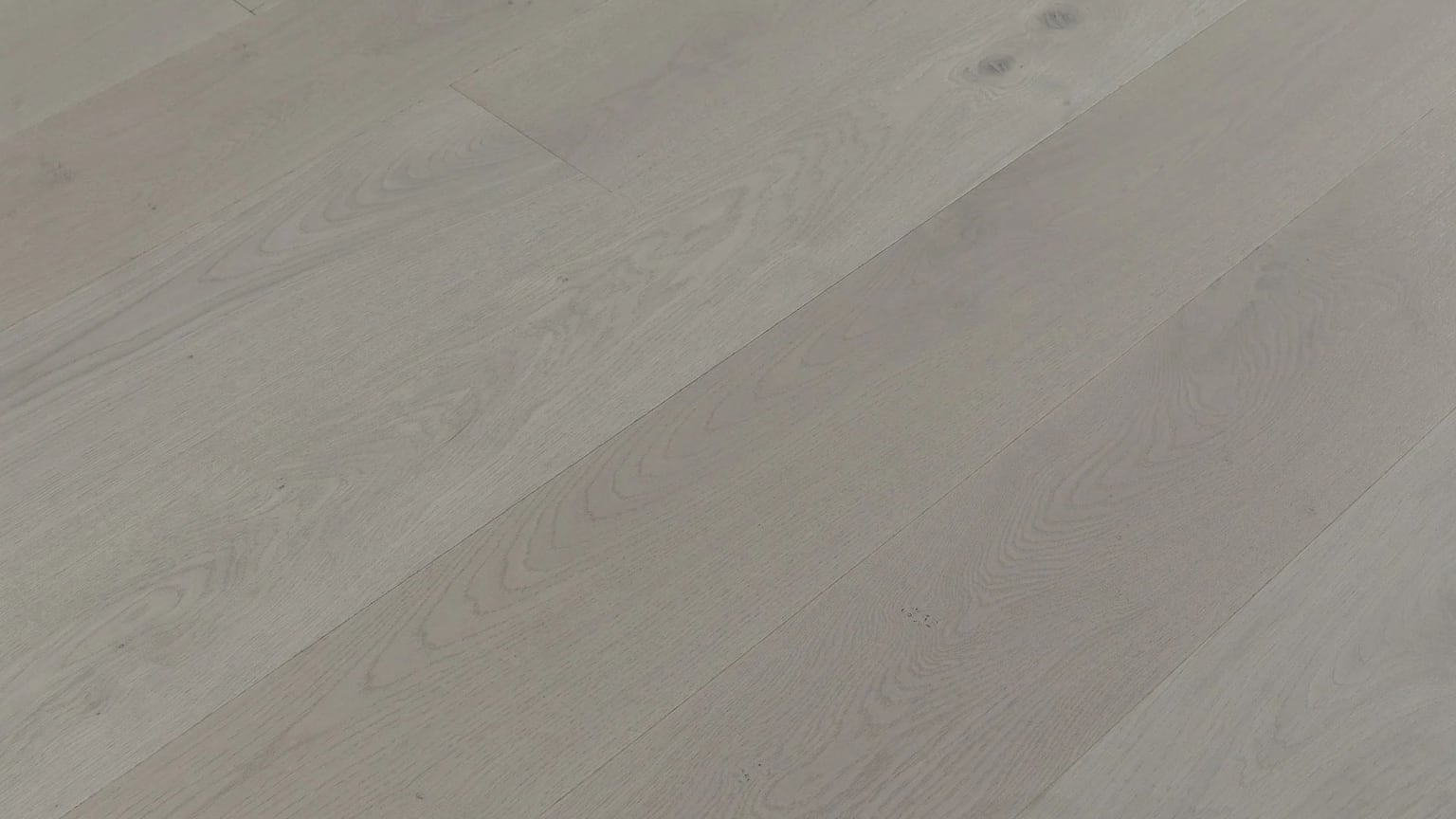
For most homes, the right wood species for an entryway is oak, and white oak in particular, with a textured surface and a matte finish. Oak's open grain and middling hardness hide the fine scratches that grit leaves behind. Maple shows those scratches on its plain face, and walnut dents too easily for the floor nearest the door.
Species is not the whole answer, though. The finish takes the abrasion, the wear layer decides how many times the floor can be renewed, and the texture decides whether damage reads as wear or as character. Species decides how all of that looks once the floor has lived through a wet winter.
What an entryway does to a wood floor
An entry is the one room where the outside arrives on the floor. Grit rides in on shoe soles and works like fine sandpaper underfoot. Water comes with it, from rain, umbrellas, grocery bags and wet dogs.
The damage is rarely structural. It shows first as a dull, scratched lane between the door and the hall, then as small dents where heels land and keys drop. Our article on entryway flooring, grit, wet shoes and the finish covers the coating side of that story.
This article is about the wood underneath the coating. The species cannot stop grit. It decides whether the scratches catch your eye, and whether a dent becomes a scar or simply part of the board.
Why oak is the default species for an entry
Oak sits in the middle of the hardness range for domestic flooring woods. It is hard enough to shrug off most everyday dents, and it sands and refinishes predictably. That balance is why the trade reaches for it whenever a floor has to look decent under traffic.
Its real advantage in an entry is the grain. Oak has open, visible grain with strong figure, so a fine scratch crosses a busy surface and gets lost in it. On a calm, even face, the same scratch would be the first thing you notice.
Maple is harder than oak, but its grain is tight and plain. A scratch on that smooth surface has nothing to hide behind, so a maple entry can look worn sooner than an oak one, even though it dents less. Walnut is the opposite problem: it is softer than oak and takes dents readily.
Every floor named in this article is oak. Bergamo and Riva list theirs as European White Oak, Reward lists Euro Oak, and Monarch Plank lists European Oak. Within that one species, the choices that remain are grade, colour, texture, wear layer and width.
White oak or red oak at the front door
Both are oak, and both hide scratches well. The difference that matters in an entry is water. White oak's pores are largely plugged by natural growths in the wood, so water wicks into the end grain more slowly than it does in red oak.
Red oak's open pores carry moisture further along the board. That is why red oak near a leaking door tends to darken at the board ends first. Red oak also carries a pink cast that some homeowners like and others spend years trying to hide.
If your entry takes rain directly, white oak is the safer species. Our explainers on what WO means on a flooring spec sheet and what RO means for red oak go further into each one.
None of the floors named here is waterproof, white oak included. White oak buys you time against a spill. It does not survive water left standing, so a mat outside the door and another inside it will do more for the floor than any species.
Grade and colour: the part that hides the dirt
Grade describes how much natural character the boards are allowed to show: knots, mineral streaks and colour variation between boards. In an entry, character works in your favour. A knot or a filled check makes a new dent look as if it was always there.
Reward AVALON Euro Oak Galahad is a Rustic grade board with a wire-brushed texture and an ultra-matte gloss level. Its open knots are filled dark, so the surface is already busy before the first pair of boots crosses it.
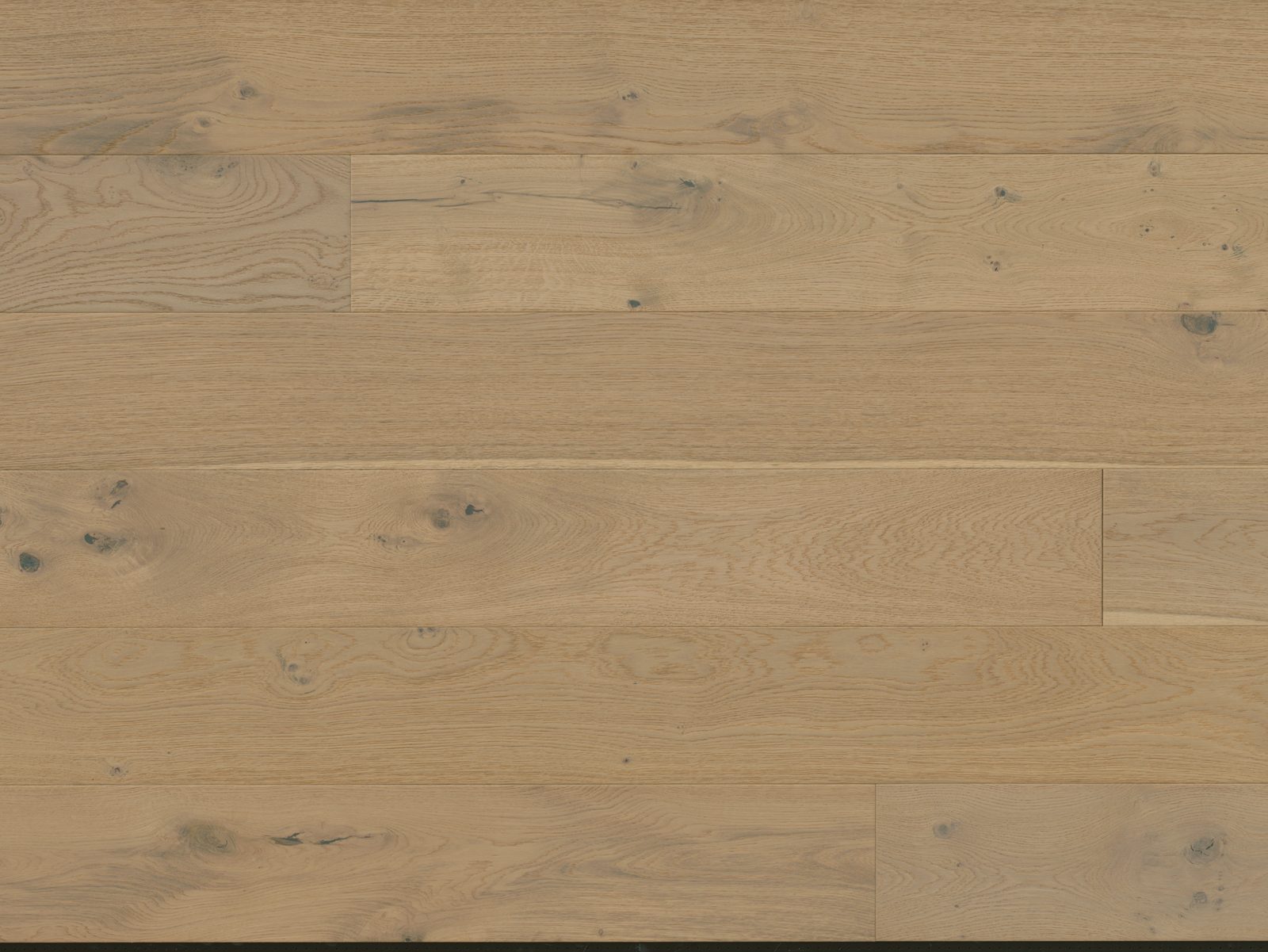
The trade-off is the wear layer. Galahad's top layer is 1.5mm, which leaves limited wood for sanding later. It suits an entry where you plan to recoat the finish over time, not one you expect to sand back to bare wood.
Colour matters as much as grade. Very dark floors show dust, dried water spots and pale grit. Very pale floors show tracked-in soil, so a mid-tone greige or a light honey tends to hide both.
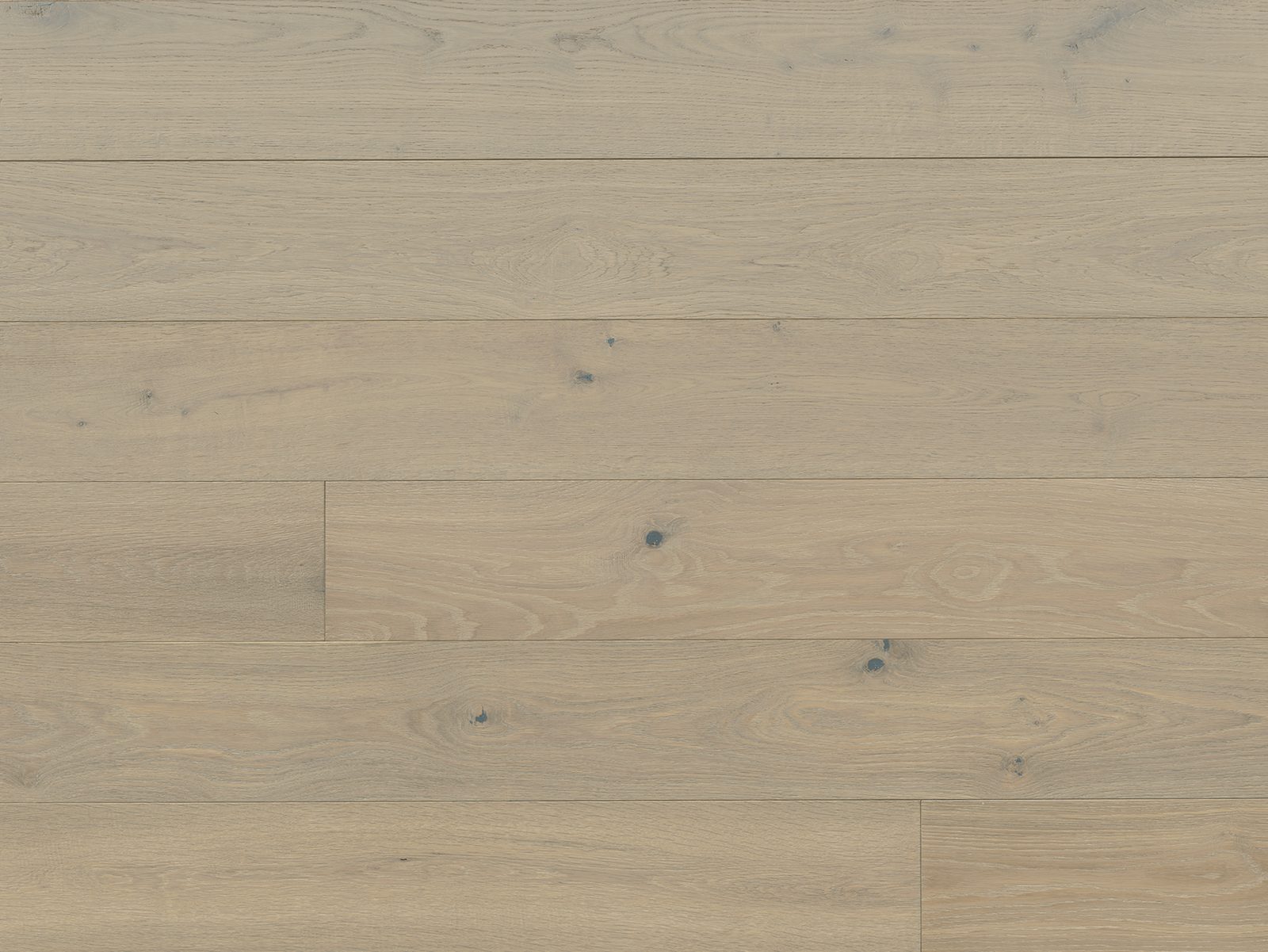
Reward COSTA Euro Oak Ancona sits close to that middle ground. It pairs a soft grey wash with small filled knots, a subtle hand-scrape, wire-brushed texture and a 4mm wear layer, so it has room to be sanded later.
Texture and sheen decide what the scratches look like
A smooth, glossy board shows every scratch as a bright line, because the scratch catches light the surrounding finish does not. Wire-brushing opens the softer grain so the surface already carries a fine texture. New scratches fall into that texture and read as part of it.
Sheen works the same way. An ultra-matte finish reflects little light, so scratches and dust stay quiet instead of glinting at you from the doorway. Several of the floors named here carry an ultra-matte gloss level.
Monarch Plank La Grande Grenoble takes texture further, with a soft hand-scrape on European Oak in a Rustic grade. Its sister floor, Monarch Plank La Grande Parsenn, is listed as smooth. For an entry, the hand-scraped board is the one we would put forward.
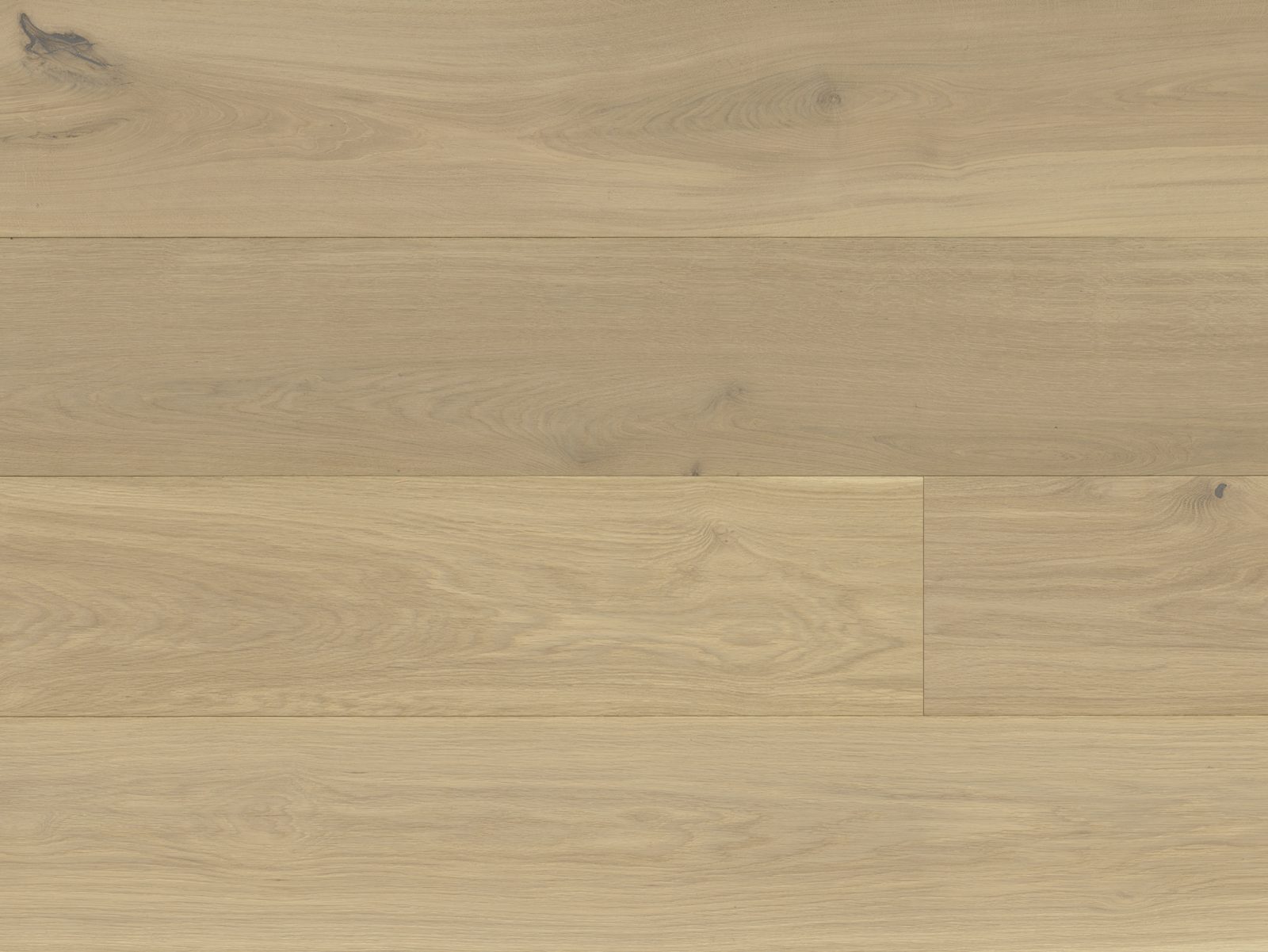
Both La Grande floors are 11-3/8" wide. In a large entry hall that width shows few seams, which leaves grit fewer joints to settle into. In a narrow entry, the same board can look oversized, so judge it against the room.
Wear layer and edges near the door
The wear layer is the solid hardwood on top of an engineered board, the part that can be sanded. In an entry, the finish wears through first. The wear layer decides whether you can renew the floor, or whether worn boards have to come out.
The Bergamo floors carry a 4mm top layer on cross-bonded Baltic birch plywood. The Reward COSTA boards also carry 4mm, on hardwood plywood. Monarch Plank La Grande Grenoble carries 6 mm, and the Reward AVALON boards carry 1.5mm, which makes them a recoat floor rather than a sanding floor.
The floor in the photograph at the top of this page is Bergamo Oak Usini Bene. It is European White Oak in a Light Character grade, 9.5" (242mm) wide, with a matte-brushed UV-cured water-based polyurethane.
Its long sides are micro-bevelled and its short ends are square. A shallow micro bevel gives grit a small edge to settle in rather than a deep groove to fill. In an entry, that makes the floor easier to sweep clean.
Herringbone in a small entry
A defined entry, a square of floor inside the door before the hall begins, is a natural place for a pattern. Herringbone is laid in short pieces, so a worn or stained piece near the threshold is easier to replace than a full-length plank.
Bergamo Oak Turin Herringbone is European White Oak in a Prime grade, 4" (100mm) wide, with a 4mm top layer and a matte-brushed finish. Prime grade means fewer knots, so the pattern does the work of hiding wear instead of the wood's character.
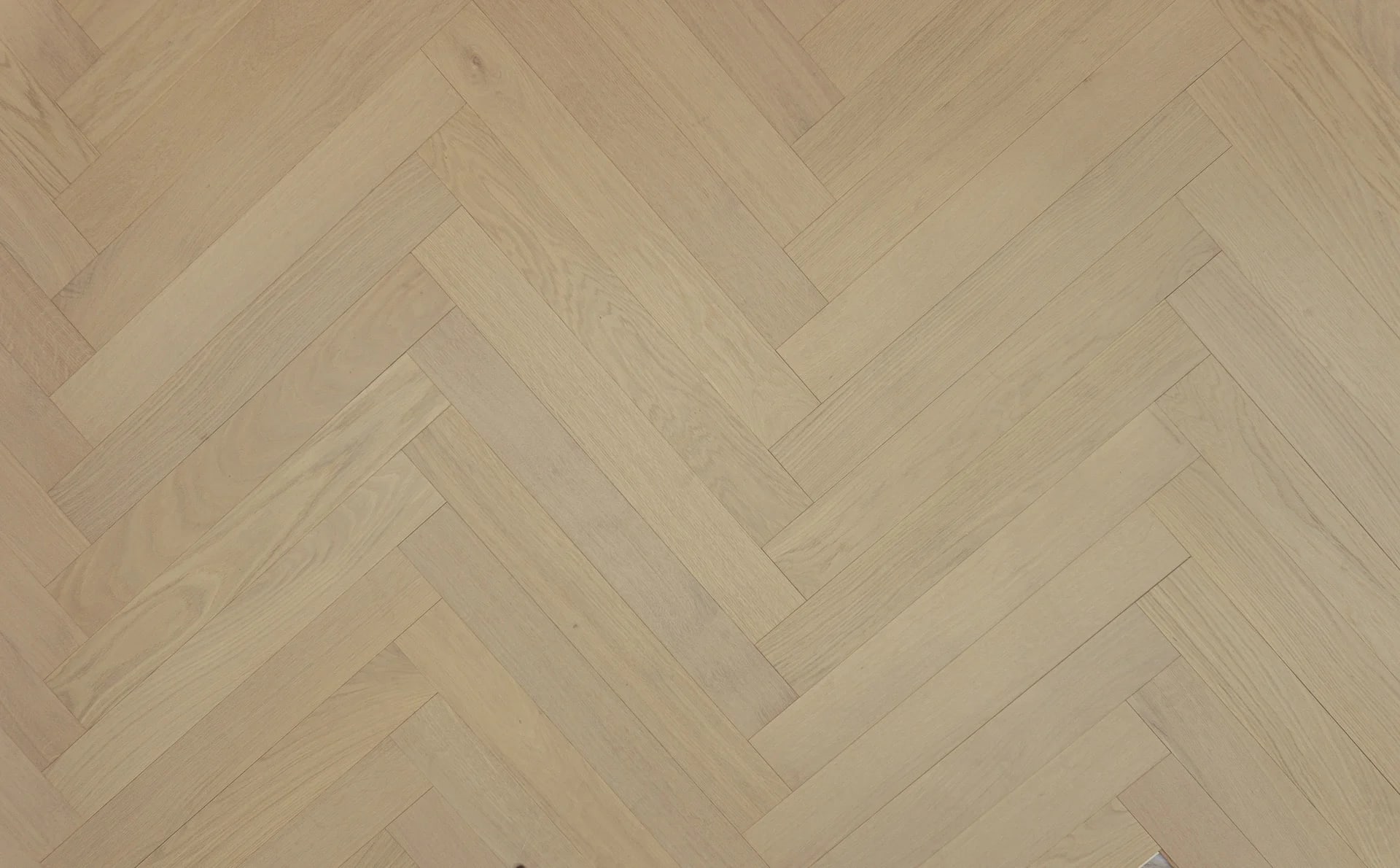
The trade-off is labour and the transition. A pattern takes longer to lay than straight planks. It also needs a clean border where it meets the hall floor, and that border should be planned before anything is ordered.
What we would ask before recommending a species
Before we put a species forward for an entry, we ask a short set of questions. Does the door open straight onto the weather, or onto a covered porch? Is there a mat outside and a rug inside, or will there be?
We also ask what the floor sits on. A concrete slab and a wood subfloor over a crawlspace behave differently with moisture, and that changes the construction more than the species does.
Then we ask whether the entry floor runs on into the living room. If it does, the species choice is really a whole-house choice. The entry is simply where that choice has to work hardest.
This is where free in-home laser measurement earns its place. We see the threshold, the subfloor and the run into the next room before recommending a floor for any of them.
Common questions about entryway wood species
Is maple or hickory a better entry floor than oak?
Both are harder than oak and dent less. Maple's tight, plain grain shows scratches clearly, though. In an entry, how a floor looks once scratched matters as much as whether it dents.
Does a wire-brushed surface trap dirt?
It holds a little more fine dust in the grain than a smooth board, and a vacuum with a soft brush head lifts it. For an entry, that is usually a fair trade, because the same texture hides scratches.
Will a mat or rug damage the floor?
A mat with a rubber or latex back can trap moisture and discolour some finishes. Choose one the floor's manufacturer approves, and lift it to let the floor dry after a wet day.
Is white oak waterproof?
No. White oak resists water wicking into its grain better than red oak, but it is still wood. Wipe up standing water promptly, and follow the manufacturer's care instructions for the finish.
Should the entry match the rest of the floor?
Usually, yes. A continuous floor has no threshold strip for grit to catch against, and the house reads as one space. Choose the species for the entry, because that is the room it has to survive.
How do I compare species in my own entry?
Order samples and lay them inside the door for a week of real traffic. Look at them dry, wet and in evening light, then compare the scratches you can actually see.
Where to start
Start with oak, then narrow the choice by texture, wear layer and colour. Every floor named here has its species, grade, width and wear layer listed on its own page, so you can compare the specs side by side in our flooring range. When you have a shortlist, we can measure the entry and the rooms it opens into.